
Performance reviews, succession planning, and engagement surveys surface critical development insights. But their impact depends on employee follow-through.
The challenge isn’t generating talent data—most organizations have plenty of that sitting in Workday. The challenge is activating that data so it actually changes behavior. When development insights live in systems employees have to remember to check, they get buried by daily work demands.
AI coaching surfaces Workday data as guidance in the tools employees use daily—a Slack message before a difficult conversation, coaching in Teams before a one-on-one, or prompts in email when giving feedback.
Get the 2026 AI coaching playbook for talent development to accelerate team performance.
What’s different about AI coaching inside Workday
There’s a wealth of information that lives in Workday and other core HR systems. Performance reviews. Engagement data. Feedback. Succession plans. The question is: how do we tap into that to really customize and personalize coaching for individuals?
Historically, coaching was really only accessible to the top one to three percent of people in an organization, and it was very expensive at that. For the same amount of money that you were spending to reach that top one percent, with an AI coaching solution, you could really get that out to the entire organization.
But here’s what makes integration different from just “making coaching available”: it’s about layering behavioral coaching on top of existing Workday functionality rather than asking people to go somewhere else.
Coaching at the point of action
Take feedback inside Workday. When you go to give feedback on someone, AI coaching can immediately pull in your feedback style—how you’re naturally wired to give feedback and how the other person likes to receive it.
Then you type in what you’re trying to communicate, and the coaching responds: “Here’s how you’re likely approaching this. Here’s how this person wants to receive it. You did a good job of this, but maybe make sure you start with an affirmation.” And then: “Can we go a step further? Here’s some additional things you might want to consider adding.”
That capability only exists at the point in time when you’re giving feedback. Whether it’s lightweight for a weekly one-on-one or something you’re writing up for the end of year, there’s a richness you can layer on top of how people are already engaging with Workday that just takes it to the next level.
This isn’t about replacing training programs or learning content. It’s about the sustainment strategy. Training can teach things like feedback frameworks. AI coaching surfaces those same frameworks right before managers need them—when they’re about to give feedback, not weeks after the workshop.
See How Cloverleaf’s AI Coach Works
How HRIS integration activates coaching when it matters
One of the beautiful things about building on top of Workday is the ability to tap into organizational context and build on top of features and capabilities that already exist. HRIS integration means coaching knows who reports to whom, when promotions happen, when performance reviews are completed, and when teams restructure—and responds to those changes automatically.
Coaching responds to what’s changing in someone’s role
Many tools integrate with Workday primarily to keep employee records and org charts current. Coaching may be available, but it isn’t connected to what’s actually changing in someone’s role, team, or responsibilities.
When someone gets promoted in Workday, the system detects this during daily sync and delivers leadership transition coaching within 24 hours—before their first meeting as a manager.
Here’s a real example:
We had three people undergoing a pretty massive change in their roles. Maybe half of what they were doing no longer was a key part of their responsibilities.
That uncertainty and fear was real—it was impacting not only their experience at work but also affecting their ability to actually do the work they were doing today, let alone navigate the change meaningfully.
I was able to go into the system and say, “I want to coach this leader through this change in a way that respects the needs and challenges that these three people are feeling.”
The system understood that those three people reported to this particular leader, and then it gave a very specific three-week strategy—reminders, role-play opportunities, very specific approaches to each person.
One of them needed repetition and information delivered in a certain way. Another needed it to be more collaborative. The system gave different strategies that allowed the leader to navigate this change in a way that avoided unnecessary struggle.
The behavioral context layer
What makes this different from generic AI coaching is the behavioral context. Cloverleaf uses assessment data—whether it’s Enneagram, DISC, or other tools—and break those individual traits and characteristics down to literally thousands of data points.
Cloverleaf connects those data points to very specific challenges people are facing in their day-to-day work life. By having access to all of that information and looking at the individual context, the people involved, the power dynamics, and the past feedback and experiences they’ve had with each other, there’s just a richness and depth that goes far beyond just knowing someone’s assessment type.
For more on how behavioral infrastructure operationalizes development frameworks, see how talent development frameworks need behavioral infrastructure.
How this solves the forgetting curve problem
The biggest challenge with traditional learning and development models is the forgetting curve. Within the first day—within twenty-four hours—you forget about seventy percent of what you learn. And by the end of a week, you’ve forgotten well more than ninety percent of what you learned in those sessions.
Sustainment strategy, not replacement
AI coaching doesn’t replace coaches, facilitators, or internal learning and development professionals. It enhances and accelerates the work they’re doing. Whether it’s coaches delivering programs or learning professionals standing up in front of a room delivering great content, there is additional context and experience that happens in those contexts that’s really important.
But having a digital solution that comes alongside those tools, where employees are working, really helps sustain that learning so the forgetting curve isn’t as steep. More importantly, they can apply it at the points in time where they need it.
We all know that learning is most effective when people have an opportunity to actually practice it. It’s not just theory—it’s specific to the people they’re leading or specific to the people they’re engaging with on a daily basis.
Meeting people in the tools they actually use
Most salespeople primarily work in email because they’re interacting externally with customers and prospects. But product and engineering teams live in Slack or Microsoft Teams every day.
Cloverleaf has built integrations so AI coaching can come to people in the tools they want to use. And we give them the ability to configure that experience so they get to choose how and when they interact.
The tool is going to give them great suggestions regardless, and then they get to pick and choose how often or how frequently or where they’re engaging with us.
There’s a fine line between being intrusive and being valuable, and putting employees at the center of the experience—letting them configure exactly how they want to interact—is what allows us to overcome data privacy challenges while ensuring coaching actually shows up when it’s useful.
What this means for talent development leaders
When you activate talent data that already exists in Workday—performance reviews, engagement surveys, succession planning, organizational changes—and connect it with behavioral context from assessments, you create coaching that’s personalized to individuals, contextual to the moment, and delivered where work actually happens.
This isn’t about adding another system for people to log into. Coaching layers onto the processes and tools they’re already using, so the insights you’ve invested in generating actually translate into behavior change.
Feedback training from a workshop surfaces as coaching before a manager’s next one-on-one. A development goal from a performance review reappears when an employee starts a project where that capability matters. Assessment insights activate when team composition changes.
To learn more about how Cloverleaf integrates with Workday to turn talent data into daily coaching, see Workday AI coaching integration. You can also explore the Cloverleaf app on Workday Marketplace.
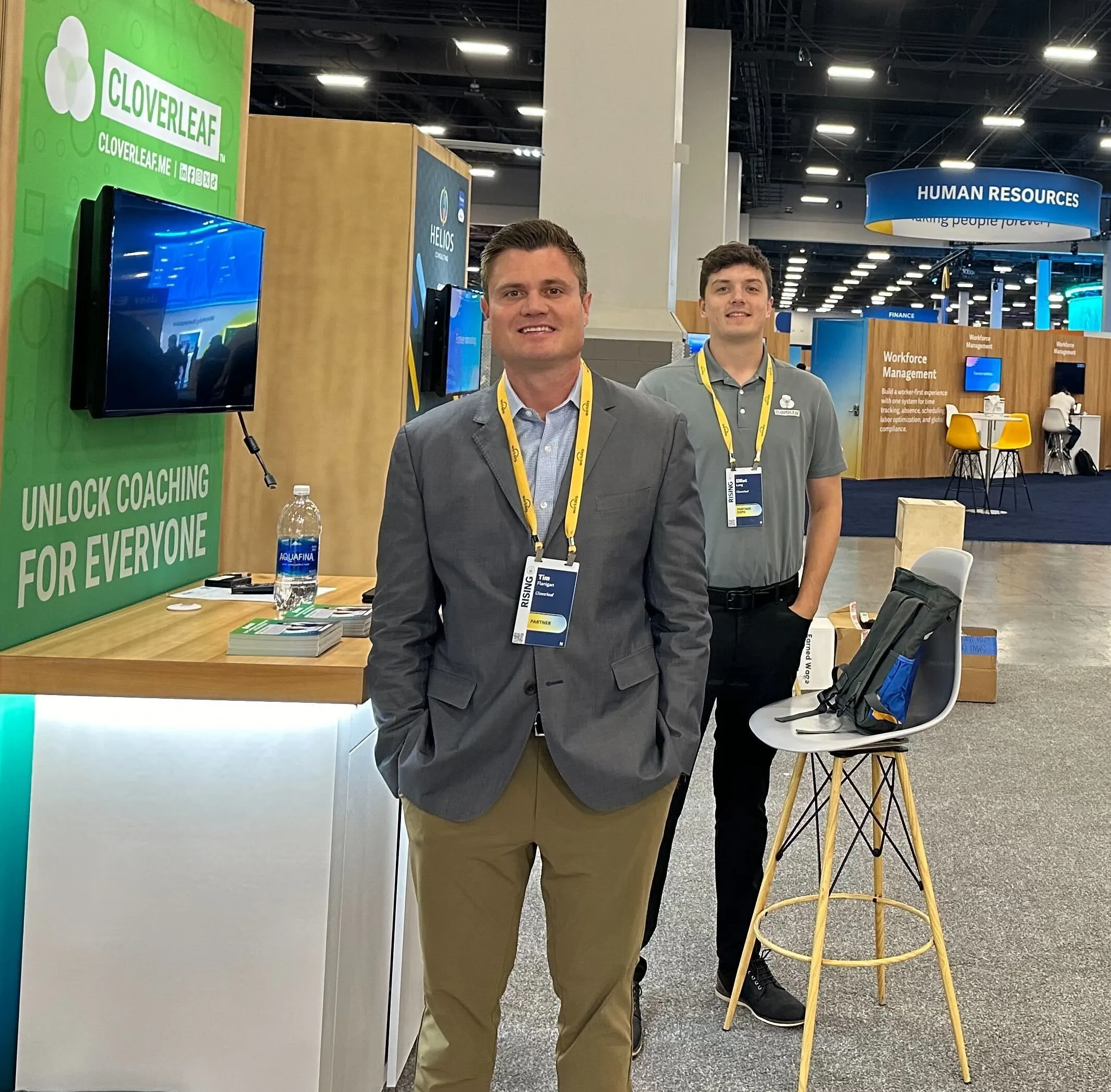
Cloverleaf at Workday Rising: A Week of Innovation, Learning, and Partnership
Last week, Cloverleaf had the incredible opportunity to attend Workday Rising, our first experience at this event. What an impactful week it turned out to be! From networking with innovative leaders to learning from industry experts, we walked away inspired and energized about our future with Workday.
Throughout the week, our team connected with customers, other partners, and the Workday team, soaking in insights that are shaping the future of work. Between the inspiring keynotes, informative sessions, and conversations at our booth, the theme of innovation was front and center. The new features and advancements Workday announced promise to elevate the workplace experience even further, aligning perfectly with our mission to make coaching accessible to everyone.
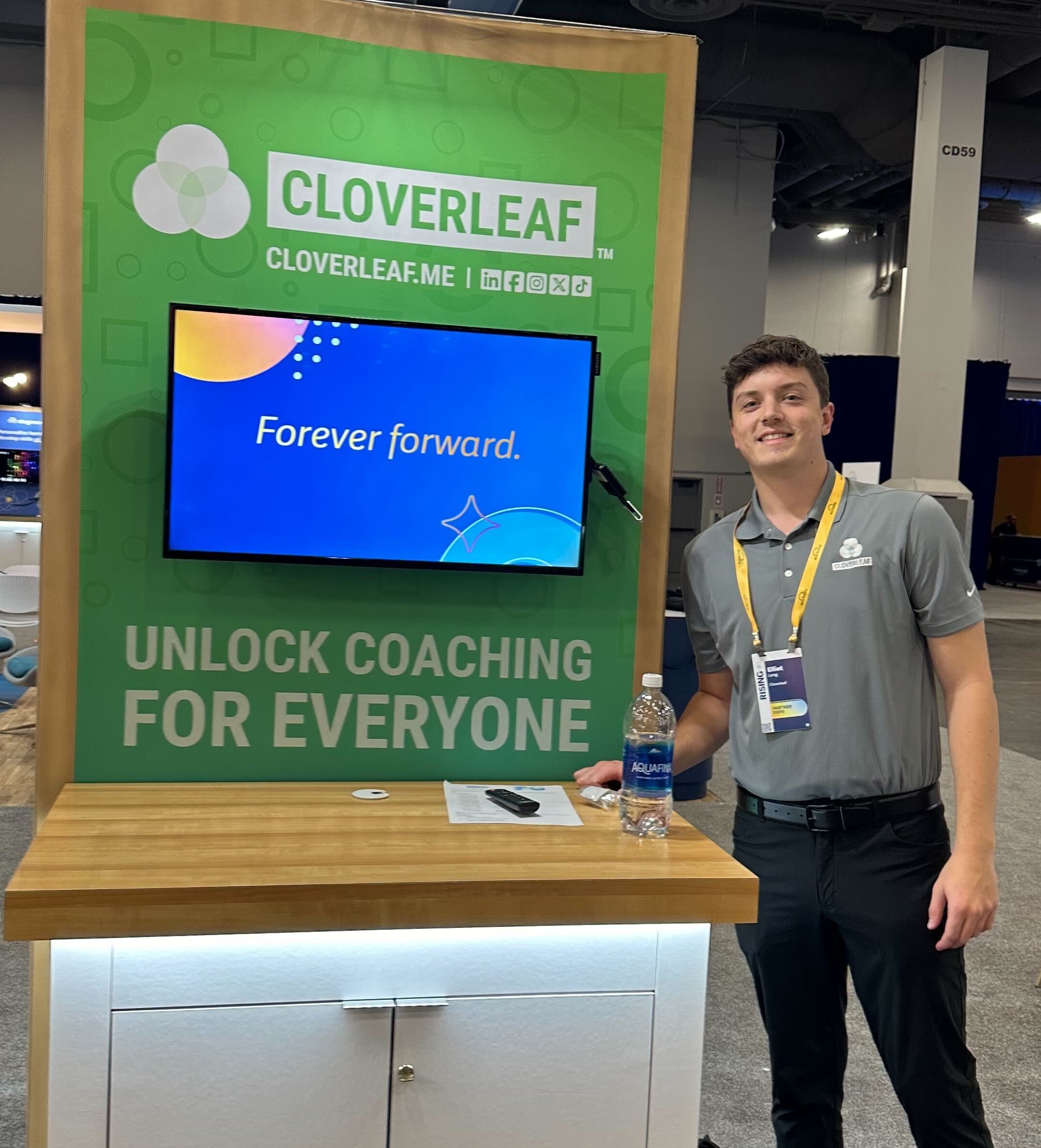
The excitement within the Workday partner ecosystem was palpable, and we couldn’t be more thrilled to be part of this thriving community. The shared enthusiasm around our partnership strengthens our belief in the impact we can create together. As we look ahead, we’re excited to continue collaborating, learning, and innovating with both the Workday team and other partners.
We are proud to be a Workday partner and can’t wait to see how this partnership continues to shape the future of work.
Want To Scale Your People Development Strategy?
See How Tech Can Help Your Team Make Personal Development a Daily Practice