
The moments where people need coaching insight are happening inside AI conversations.
Cloverleaf’s MCP integration puts coaching data directly into the AI conversation, exactly when it’s needed.
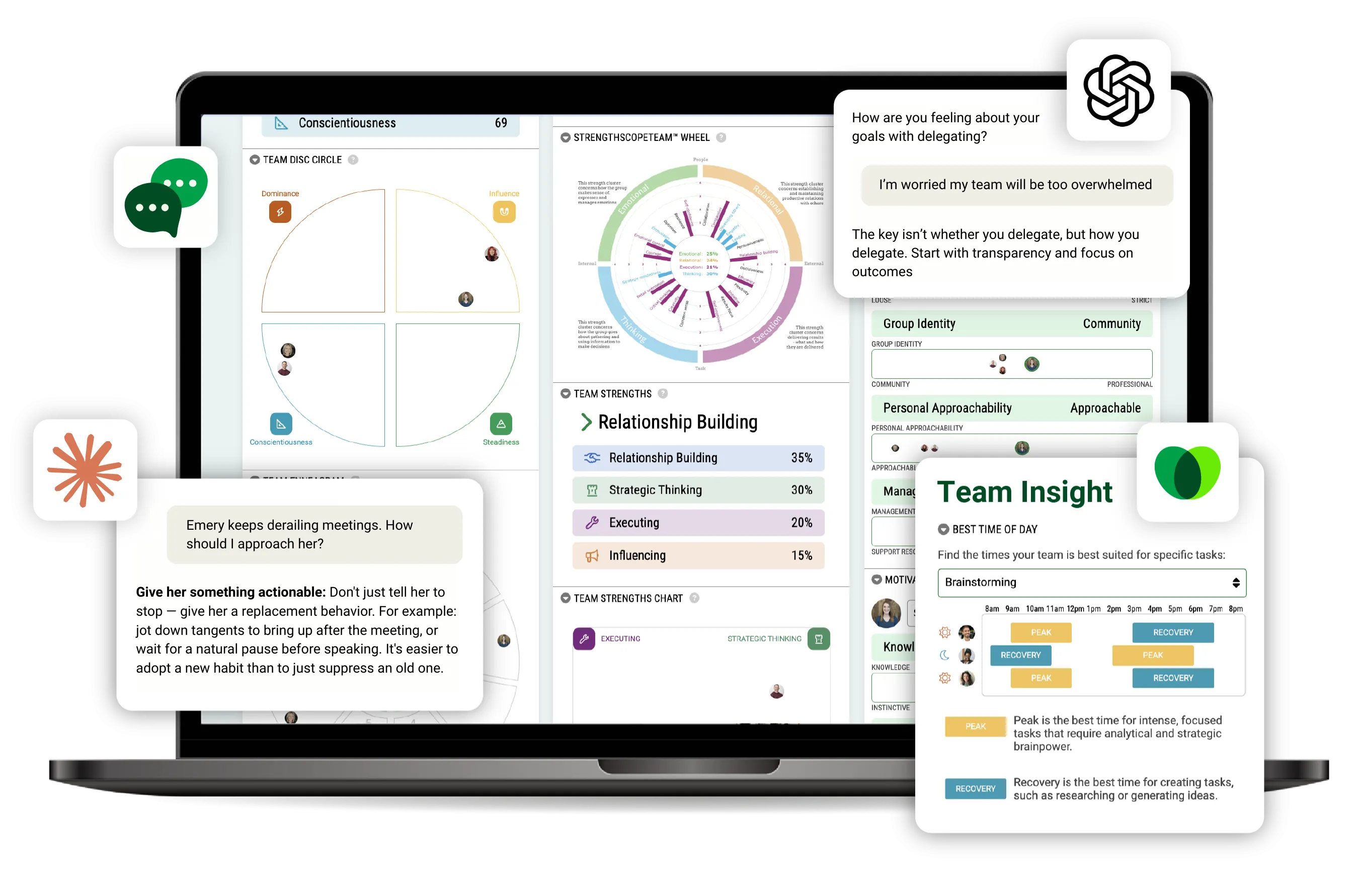
The moments where people need coaching insight are happening inside AI conversations.
Cloverleaf’s MCP integration puts coaching data directly into the AI conversation, exactly when it’s needed.
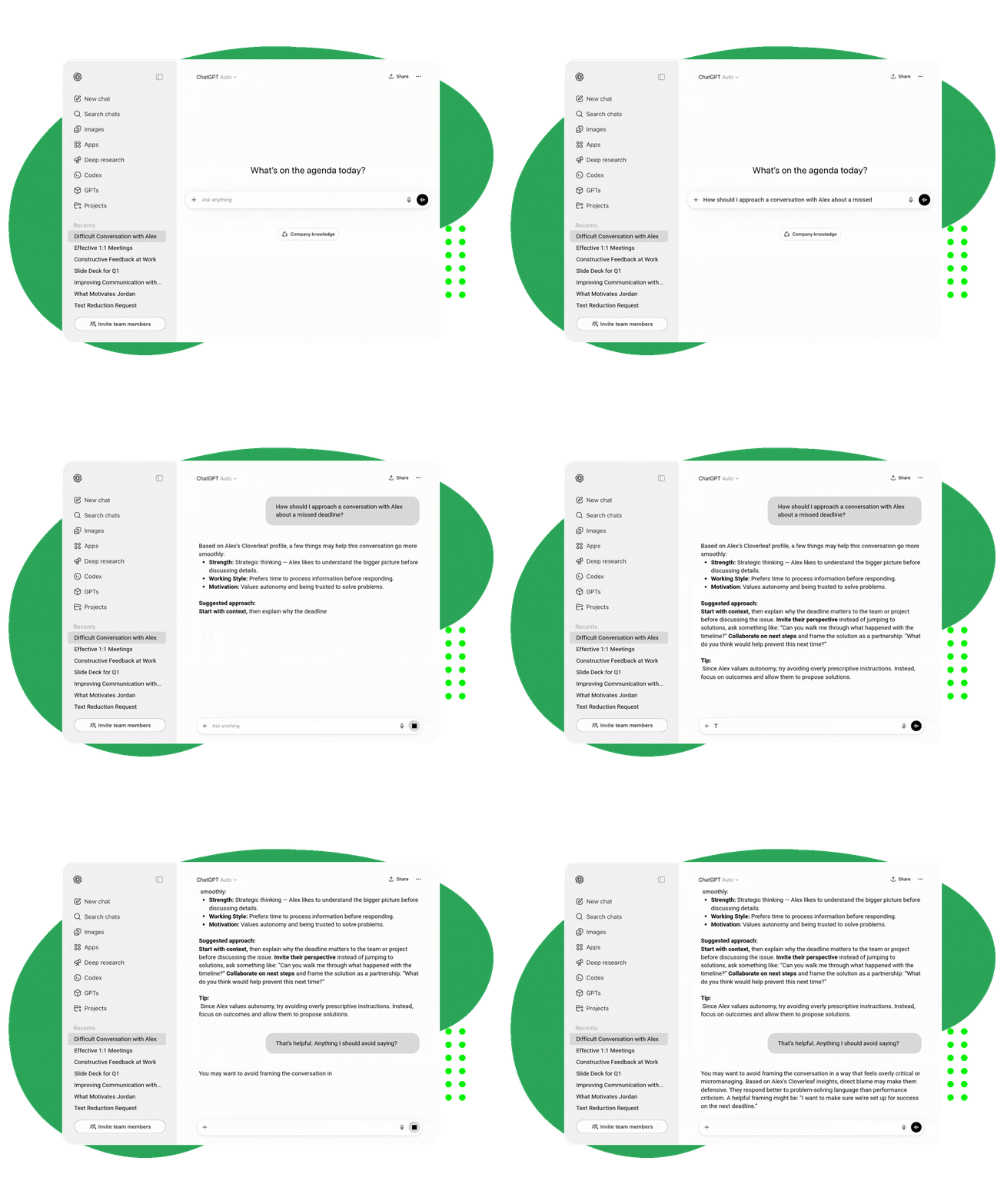
Your managers are already using AI assistants for real work—prepping for meetings, drafting feedback, planning conversations. Cloverleaf’s MCP integration delivers personality insights and coaching recommendations directly in those AI conversations, eliminating app-switching.
Behavioral assessment data typically sits in systems managers rarely open. MCP makes that data accessible inside Claude and ChatGPT. Managers ask about a teammate’s communication style and receive insights from actual assessment results—instantly.
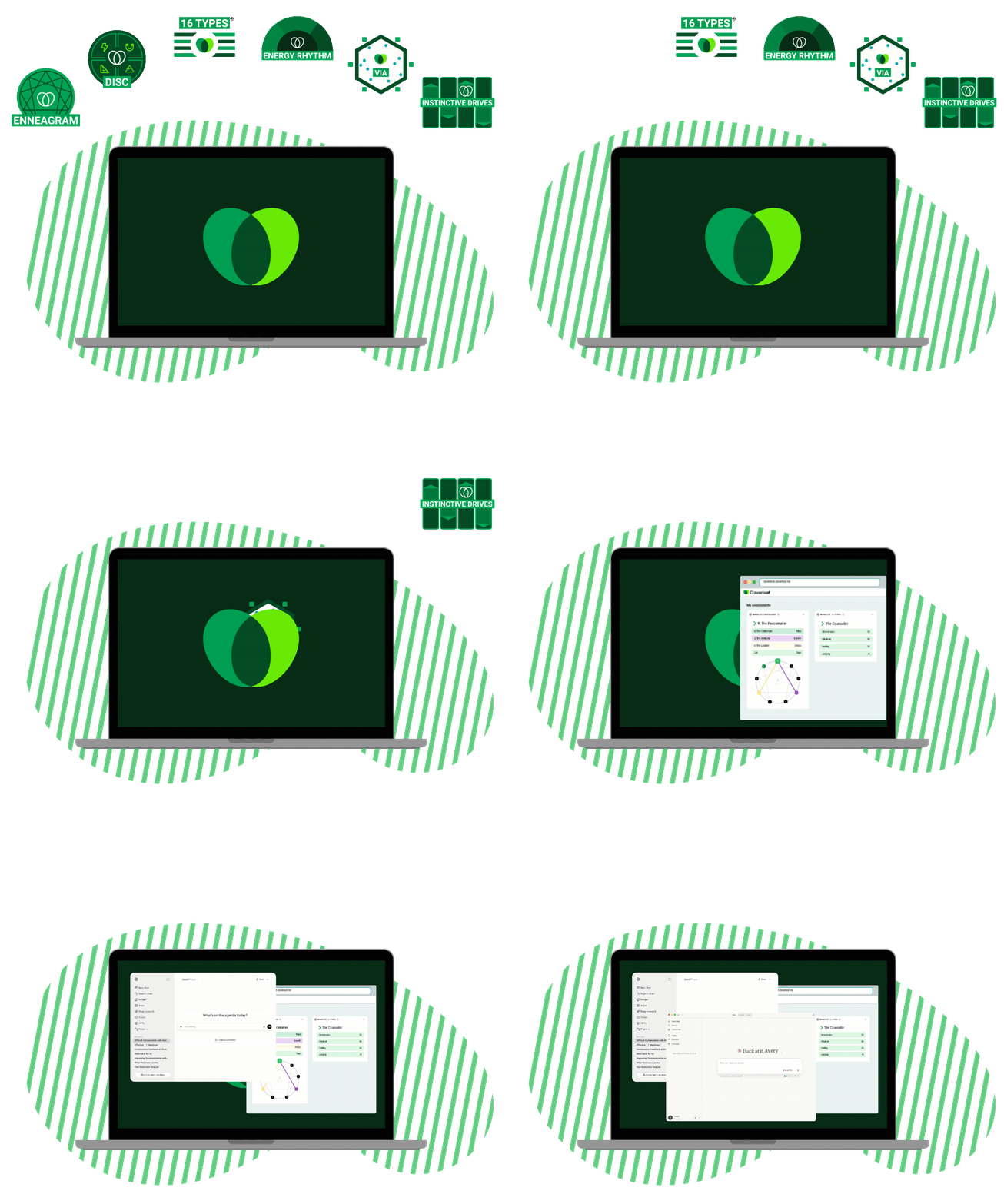

Admins enable MCP with a single toggle. Team members connect their AI assistant using their existing Cloverleaf credentials. No API keys to manage, no separate vendor implementation process.
Cloverleaf is the first coaching platform to offer a native MCP integration that lets AI assistants like Claude and ChatGPT securely access external data. Cloverleaf makes coaching data available to whatever AI tools your people choose to use.

Support your managers and teams wherever they're already working. From everyday conversations to critical development moments.

Admins toggle MCP on in Organization Settings. Individual team members connect their AI assistant using their existing Cloverleaf credentials. No vendor implementation project, no API keys to manage.

When managers ask their AI assistant about a teammate, Cloverleaf surfaces personality insights, communication preferences, and coaching recommendations based on actual DISC, Enneagram, and assessment data—directly in the conversation.

Preparing for difficult feedback? Onboarding a new team member? Addressing conflict? Coaching insights deliver when managers need them most—not when they remember to log into a separate platform.
Cloverleaf is SOC 2 Type II and ISO 27001 certified, and GDPR aligned. Because Merge sits in the data path, enterprises should review both; security documentation is available upon request.



Admins enable MCP with a single toggle in Organization Settings—this takes less than one minute. Individual team members connect their AI assistant in approximately 2-3 minutes using their existing Cloverleaf credentials and a standard URL. There is no vendor implementation project, no API key configuration, and no IT ticket required. Total time from admin enablement to first manager using coaching insights in their AI conversations is typically under 5 minutes. The simplicity is intentional: MCP uses the Model Context Protocol, an open standard that handles authentication and connection automatically.
Cloverleaf connects to Claude, ChatGPT, and other AI assistants through the Model Context Protocol (MCP), an open standard developed by Anthropic for connecting AI assistants to external data sources. The integration uses OAuth2 authentication with dynamic client registration, meaning each person authorizes individually with their own Cloverleaf credentials—there are no static API keys or shared secrets to manage. When a user connects their AI assistant, they authenticate once through a browser-based flow, similar to connecting any modern app. The integration respects Cloverleaf’s existing permission model: users see the same people and data through MCP that they’d see logged into Cloverleaf directly. Cloverleaf does not write data back to the AI assistant or modify any records—it provides read-only access to personality profiles and coaching insights.
Currently supported: Claude (Anthropic) via desktop app and web interface, ChatGPT (OpenAI) via web interface, and any AI client that supports the Model Context Protocol standard. Because MCP is an open standard, as new MCP-compatible AI assistants emerge, Cloverleaf works with them automatically without requiring separate integration development. This open standard approach means Cloverleaf isn’t locked to any single AI vendor. Organizations can support whichever AI assistants their teams prefer—or multiple assistants simultaneously—without additional configuration.
Cloverleaf’s MCP integration maintains the same privacy and security standards as the core platform. Every person authenticates individually—there are no shared tokens or admin-level access granted through the integration. Each user sees exactly what they’d see in Cloverleaf itself: their network, their teams, their permissions. Nothing more. Employees choose whether to connect their AI assistant; it’s never required. Cloverleaf never sells employee data, and it’s never used to train external AI models. Your organization retains full ownership and control. The integration is backed by the same enterprise-grade security framework that already protects your data: SOC 2 Type II certification, ISO 27001:2022 certification, and full GDPR alignment. Connecting Cloverleaf to an AI assistant doesn’t change any of that—it extends the same trust model into a new workflow.
Cloverleaf is SOC 2 Type II certified across all five Trust Service Criteria, ISO 27001:2022 certified, and GDPR aligned, with encryption across all storage and API connections. The MCP integration maintains these same standards. Because MCP uses OAuth2 authentication with individual user credentials, there are no static API keys or shared secrets that could be compromised. Each connection is isolated to the individual user who authenticated it.
Security documentation and resources:
Security documentation is available as part of standard procurement and review processes.
No. Cloverleaf does not use customer data to train external AI models.
When users connect Cloverleaf to Claude, ChatGPT, or other AI assistants through MCP, the AI assistant processes coaching data to respond to user queries—but that data is not used to train the underlying AI models. AI at Cloverleaf is designed to support people, not replace judgment. The platform does not make automated decisions about employees, and AI interactions are logged, monitored, and auditable. Organizations can also limit or disable MCP integration if they are not ready to use it.
Your organization controls whether MCP is enabled organization-wide. Admins toggle MCP on or off in Organization Settings—when disabled, no users can connect their AI assistants. When enabled, individual team members choose whether to connect their own AI assistant using their existing Cloverleaf credentials. The integration respects Cloverleaf’s existing permission model: users can only access data about people in their network, based on their role and permissions. Administrative settings ensure data access aligns with your governance requirements and privacy expectations.
Most organizations involve a small group: HR or Talent Development leaders to decide whether to enable MCP for the organization, and optionally an IT or Security partner to review the integration’s technical architecture and security model. Because there is no vendor implementation project, API key configuration, or custom development required, the internal lift is minimal. Admins enable MCP with a single toggle. Individual team members connect their AI assistant using their existing Cloverleaf credentials—no IT involvement needed. Cloverleaf provides documentation to support this process and make internal alignment easier.
Many tools make assessment data available through search or lookup features. What makes Cloverleaf’s MCP integration different is that coaching insights surface based on the actual question a manager is asking in their AI conversation. When a manager asks “How should I approach feedback with this teammate?” the AI assistant doesn’t just retrieve a personality profile—it synthesizes that person’s DISC, Enneagram, communication preferences, and coaching insights into specific guidance relevant to the manager’s question. The same assessment data informs different recommendations depending on context: preparing for a difficult conversation, onboarding a new team member, resolving conflict, or planning a meeting. Assessment data that typically sits static in an LMS becomes dynamic coaching that responds to what managers actually need in the moment.
Users can search for teammates in their Cloverleaf network and retrieve full personality and coaching profiles—including DISC, Enneagram, 16-Types, StrengthsFinder, and other assessment results the organization has enabled. They can also access communication preferences, working style insights, and coaching recommendations based on those assessments. Users can only access data about people they’re already connected to in Cloverleaf based on their role and permissions—the same data they’d see if they logged into Cloverleaf directly. Admins control which assessments are available organization-wide and which teams or individuals receive coaching.