

Maintaining a work-life balance can be hard for people who deal with long commutes and extended hours at work. They’re trying to stay productive during standard working time, which aren’t always the best hours for them. Remote work is becoming increasingly popular as an option, with many employees seeking out this perk of working from home or from anywhere in the world. A report by Flexjobs found that 74 percent of respondents believe that flexible working options, like remote work, are the “new normal” for employees in the modern business world. Upwork’s Future Workplace Report has found that 69 percent of managers in younger generations, like Millennials, have team members who are working remotely. Managing a distributed team requires a much different approach from leading people that you see in person every day. Here are eight new tips to help set yourself and your team up for success.
1. USE A SOLUTION THAT PROVIDES TEAM INSIGHTS
Many of the opportunities to learn more about your employees are less readily available when you’re working in a distributed or remote team. It’s best to leverage the right technology and tools to create these opportunities in a digital medium so that you can get valuable insights into how remote team members from different parts of the world work together, and how your employees can improve.
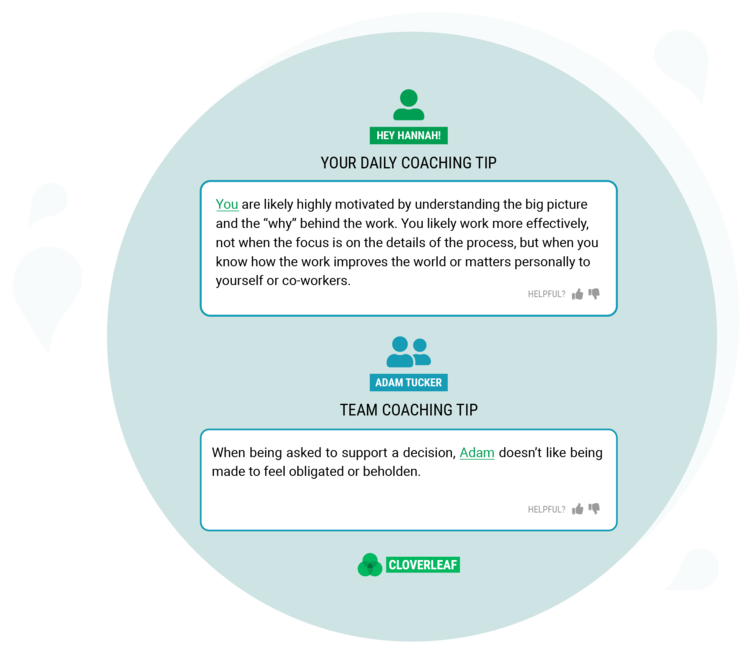
Cloverleaf is an essential tool in managing a distributed and partially remote team. This new platform can help you know the personalities and strengths of the remote workers you manage from afar. You can use these management tools to learn about your remote worker’s motivations, work styles, preferences, and other essential details, and there’s one key feature that sets Cloverleaf apart from similar platforms. Every remote team member receives insights from each other directly to their inbox. You’re getting a virtual run-in at the coffee station right in your email.
2. USE COMMUNICATION TOOLS THAT SUPPORT COLLABORATION AND CONNECTION
The right real-time communication tools are the lifeblood that makes remote work possible. Since you can’t casually drop by someone’s desk throughout the day, you need ways to help team discussions feel natural and easy to use. Many organizations with a distributed or partially remote team like Slack or similar chat platforms. Here are a few key features and characteristics that you should look for when selecting the right tools that make the most sense for your distributed team:
- Multiple channels: When your company tries to have a single channel for everything going on in remote teams, it can quickly become cluttered and hard to follow. You’re trying to improve communication for those working remotely, keep track of available multi-channel configurations. At the very least, you’ll want to keep a work-related channel and an off-topic channel for video meetings or a virtual get together. The Off-topic chat provides your team with a way to spend time with one another and grow their interpersonal relationships. It’s a great way to blow off steam during difficult deadlines, share non-work-related messages, and get insight into every member’s personalities.
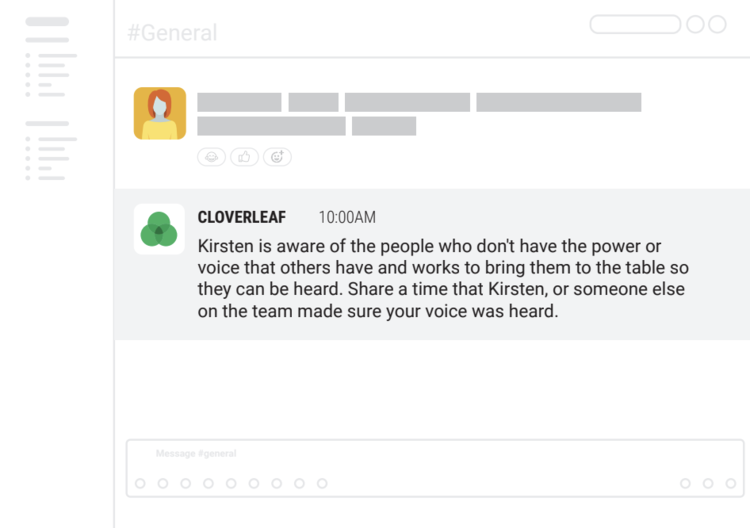
- Text, voice, and video chat: Text isn’t always the ideal medium when you need to share ideas and information. Sometimes you can deliver a clear explanation faster through voice chat or need a meeting set up in video chat. When you have all of these options in a single communications tool, you keep them straightforward to use. Compare that to having separate software for each type of chat, which can get complicated rather quickly. That kind of setup also discourages people from using the tools that they have available to them.
One-on-one messaging: Private messaging tools are best for conversations that aren’t appropriate for the group channel. Sometimes people want to share what they feel or they have questions and concerns that are better addressed privately. Private messaging tools can allow for quick and anonymous conflict resolution.
Ad-hoc channels: You don’t always need an official chat channel for a particular project or conversation, but it would help to separate out that discussion from the rest of the chat. Being able to create channels on the fly makes it possible to have these spontaneous group performance conversations without being disruptive to the rest of the team’s communication.
GIF and emoji support: Text often fails to show the emotional tone of a person’s message. It’s easy for employees to take things the wrong way or to assume a meaning that was not actually intended. Emojis and GIFs are great ways for employees to add the appropriate tone, and they’re often a hallmark of the off-topic channel. When you keep visual media available for online discussions, you create more opportunities for people to connect, show off personalities, and express how they feel. Keep note of a clear GIF and emoji usage policy in place so that they are used in ways that are not inappropriate in a work environment.
Third-party plugins and integration: It’s rare to find a good communications platform that has everything you need out of the box. When it integrates with the third-party tools that you’re already using, or it has support for plugins that are created for various use cases, you can customize your chat experience in the exact way your distributed team needs.
Robust search tools: Most of your team communication takes place through this type of platform. Make sure you know that the search tools are up to the task so that important messages are not lost in the shuffle.
File upload support: If you’re going to have a central location for most of your distributed team’s company activities, then it may help to know which tools can upload and share files through this platform.
3. ARRANGE FOR IN-PERSON TIME THROUGH TEAM RETREATS
Your team may be too far-flung to arrange for weekly in-person office meetings to touch base with one another, but team retreats offer a valuable way to learn more about your people and reward them for a job well done. Typically, these retreats are done on a yearly, bi-yearly, or quarterly basis, depending on the resources you have available. The sky is the limit on what part of the world these retreats can take place. You’ll want to customize it to your team members’ preferences, so you don’t end up spending a week together in a location that every person hates. One of the best ways to figure out whether every team member will be onboard for your idea is to offer a poll of several promising places. You can book the retreats based on that information.
4. SET UP ASYNCHRONOUS SOLUTIONS
Handling fully remote employees in different time zones is one of the biggest challenges when you manage a distributed team. In some cases, you may be dealing with fully remote workers from all over the world. Ideally, you’re able to set up some overlap in time between everyone. However, even when that’s possible, you’ll still want to promote software that offers asynchronous responses for everyone. Asynchronous management allows employee engagement based on their ideal work hours throughout the week, rather than trying to wake up in the middle of the night or take time during their least productive hours to work. Ultimately, with remote work, you want to give employees the opportunity to do their best work and accomplish their daily or weekly goals in their productive hours.
5. MOVE AWAY FROM EMAIL
Email is not an efficient way of communicating most information in remote teams. It’s easy for important data and files to get lost in a worker’s inbox, especially if everyone’s messages are automatically deleted when they leave the company. If a person is on vacation, they may have something important to a project deadline in their inbox with no way to reach them. Email is great for insight emails, personalized training opportunities, human resources communication, and similar messages.
6. EMPOWER REMOTE WORKERS WITH THE RIGHT RESOURCES
Do your remote employees have everything they need at their workspace to do their best? Is the mission-critical software everyone uses supportive of remote connections? Are they able to access company data that is necessary for their duties? As a manager, you want to make sure your distributed team is set up for success, whether that means sending them a company laptop, reimbursing them for the cost of an internet speed upgrade for their home office, or deploying an app that works well with a remote workforce.
7. CREATE ACCOUNTABILITY THROUGH WORK PROCESSES
Remote work involves a lot of trust among every manager and employee involved. You don’t have a way to stop by someone’s remote work office to track what they’re doing during their work hours; you only see the outputs that they make and the discussions they have. Be sure to build accountability in the work processes of your remote team through video meetings, weekly or more frequent project check-ins, progress reports, and other ways to ensure that your project stays on track and your team remains productive and results-oriented in an unconventional work environment. If you have team members who are doing remote work for the first time, reach out for video meetings and provide tips on how they can create a distraction-free space in their homes so that they can do their job well. It does take adjustment time and discipline to get used to this type of freedom, so be patient with new employees in a distributed team environment. Set clear expectations so everyone is on the same page on essential matters, like what they must do first when they start their workday, how they can spend their hours, how flexible they can be with scheduling, and other details that influence their success at remote work.
8. INVEST IN YOUR ONBOARDING EFFORTS AND ONGOING TRAINING
Onboard effectively by knowing your employees before they start.
It’s a lot harder for a new hire to get immediate help from team members based on the other side of the world if they have questions about the company, policies, procedures, processes, expected outputs and results, and other areas. Your onboarding process and the training materials available to that worker should be comprehensive and cover everything they need to get off on the right foot. You may want to create a channel in your communications platform specifically for fielding these types of questions. If you have senior team members of your remote team, see if someone wants to mentor new hires and track their progress. This type of leadership opportunity is a great way for someone to show off their capabilities.
Consider offering training materials in several formats. Every person has an ideal learning style, so adding flexibility means that they can pick the method most suitable for their needs. Some companies have remote hires go on-site for the initial training and meetings, but that may not be a viable option for everyone depending on where they are located. Take the time to have some one-on-one video chats with the new person to learn more about them, their background in remote teams, and what they need to personally do their best work.
Remote work is the way of the future in the business world, and preparing for this environment as a manager is one of the best things you can do for your career.
Pitfalls of Managing Distributed Teams
While working with a diverse team from around the world has many advantages, it also comes with a set of challenges like a possible language barrier, different time zones, and errors resulting from miscommunication. To help resolve these, be sure that team members are on board with a standardized language and grammar style, frequent, effective communication, and clear roles, standards, and expected results.
How Does Agile Manage Distributed Teams?
Agile is a method of project management that requires constant team communication, client involvement, and frequent reviews of the work-in-progress. Some of the popular Agile frameworks like Scrum, Kanban, Extreme Programming, and DSDM are great. While the Agile approach is more intuitive in teams that are working face-to-face, the concept can be tailored to distributed team management by emphasizing availability and clear, open communication and an optimized file sharing method.
How do you Manage a Distributed Team?
There are some effective tips for managing a remote team. For effective distributed team management, a distributed Scrum team will need clear, well-defined remote work contracts, an agreement on communication and collaboration tools that suit the entire team, and an established structure for video meetings. Self-organization and self-reliance are two necessary team management attributes in a distributed Scrum team. Just like in traditional co-located team meetings, make sure remote team members know the Scrum values: Commitment, Courage, Focus, Openness, and Respect.

HUMAN SKILL PROGRAMS ARE HITTING LIMITATIONS...
5 THINGS THIS FREE RESOURCE WILL TEACH YOU
- Close the widening gap between learning and on-the-job application
- Overcome the tension of pausing productivity for development opportunities
- Integrate learning so it is actually in the flow of work
- The evolution of human skill development
- What Automated Coaching™ is and how it works.
Do you know those days at work that feel fun, when you’re doing work you really enjoy? You probably want your people to feel the same way, but how do you know if they do?
According to Gallup® “Nearly 85% of employees worldwide are still not engaged or are actively disengaged at work, despite more effort from companies.”
Employee engagement metrics like these reveal how vital it is for managers to adjust their strategies and make employee engagement a priority.

Engaged employees are less likely to look for positions at other companies, will recommend the company as a great place to work, and often have a sense of pride about being involved in the organization.
If this sounds interesting, keep reading for 10 employee engagement initiatives that will lead to an improved employee experience that leads to increased productivity, growth, resiliency, and happier employees.
1: PROVIDING MULTIPLE EMPLOYEE FEEDBACK CHANNELS
Employee engagement surveys say that employees want to feel heard, so make it easy for them to leave feedback and get in touch with you. Also, offer multiple feedback channels, including an anonymous option.
As part of your performance management efforts, be responsive by going through this feedback and decide when it makes sense for the organization and your team.
Always be authentic and transparent with your team so they feel comfortable coming to you when they need to have a conversation.
2: RESPONDING SUBSTANTIVELY TO COMMENTS ABOUT COMPANY CULTURE
Have you ever been in a workplace that feels toxic? Did you really want to be there? Probably not. It’s vital to create a culture that promotes fairness, civility, and inclusiveness for employees from the start of the hiring process, through onboarding, promotions, and moving through the ranks.
Misaligned company culture can create an environment that’s counterproductive to what you’re aiming for, which is high employee engagement.
Whether the issues are very evident or very subtle, they may impact your team. When you can’t change the whole company culture, personalize a team culture that works best for your people.
3. PERFORMING EXIT INTERVIEWS
While current employees may shy away from fully open and honest feedback, exit interviews with an employee leaving for another company may be able to help you measure employee engagement and identify existing problems.
It’s important to identify any gaps and common trends in the feedback to learn and implement how to engage your people best and reduce employee turnover.
4. USING A COACHING TOOL TO KEEP EMPLOYEES ENGAGED
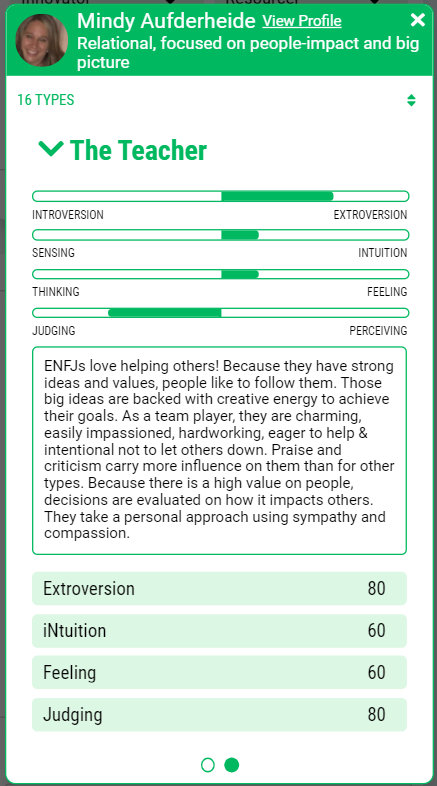
Imagine having a coaching tool that fits effortlessly into your team’s workflow and can help you drive your employee engagement initiative. Cloverleaf does just that. You can visualize your team on the Team Dashboard to get a quick view of everyone involved in engagement efforts.
Automated Coaching™ and personalized tips go straight to your team’s inboxes, providing employee engagement ideas ranging from simple reminders of each employee’s birthday to strategies to improve the work environment.
5. ENCOURAGE AND ORGANIZE VOLUNTEERING OPPORTUNITIES
Some employees donate their time and money to causes outside of work, so why not offer opportunities to express that altruistic spirit together with their co-workers?
Opportunities to volunteer for a good cause are effective employee engagement activities, promoting team building and encouraging employees to think of the company as giving. They can demonstrate company values and follow through on the company’s mission statement. Partner with local businesses to show the community what your company stands for.
Empower employees to propose volunteer activities and win back disengaged employees by helping them support causes that they believe in.
6. KEEP TECHNOLOGY AND TOOLS MODERN AND EFFECTIVE
Do your employees have computers that take way too long to boot up, struggle to load essential software, and email systems that lose important messages? If this is true employee performance will decline, and new employees struggle with glitchy hardware and software.
It’s hard to keep employees engaged when they’re working with old, slow, or insufficient tools, so empower them with the right ones. Use technology to engage remote employees, create a collaborative office environment, and encourage cross-team communication.
Make Technology a Team Effort
Talk to your team about the way they work and the problems with their current tools. Employee job satisfaction will go up when they have solutions that support their business processes and work efficiently.
When your organization chooses new software and tools, make sure to ask the end-users of these solutions which features are must-have first to avoid problems later.
7. INVEST IN YOUR EMPLOYEES
Investing in professional development for your employees will make them feel valued, improving happiness and health. Invest in both professional and personal development by promoting healthy work-life balance.
Allow employees opportunities for remote work and flexible office hours, particularly if they are facing problems in their personal lives, raising a family, or investing in their career by taking time for training and education.
8. RECOGNIZE YOUR EMPLOYEES!
Provide recognition for what your employees achieve, from extraordinary efforts to everyday personal celebrations. These are drivers of employee engagement that will help develop self-esteem and well-being. You can set up an employee of the month award or create category-specific options for your team members.
Try to make awards personalized and unique for your team so you build a sense of team identity. You can offer perks, such as gifts or additional paid time off, to engage employees to put in more effort without creating an overly competitive environment among employees.
9. CREATE AN EMPLOYEE MENTORING SYSTEM
When a new employee is onboarded, they get up to speed on business processes and other basics, but new employees have to pick up on skills and knowledge that go beyond the job description.
An employee mentoring system could match up each new employee with an engaged employee who has experience. Different employees have different learning styles, so be sure each mentor is a good match.
Reward employees who are successful mentors with pathways to senior leadership positions. Encourage employees to share knowledge and support one another by creating an open office space. Incorporate mentorship into the onboarding process by encouraging fellow employees to welcome and guide new hires.
10. ENCOURAGE SIDE PROJECTS AS A TEAM MANAGER
Your people are likely curious and have ideas for personal projects related to the organization, so provide time and resources for them.
Reward Innovation
Innovation can come from the most unlikely places. For example, Google is one of the most well-known for empowering employees to pursue side projects, which are known as 20 percent projects due to the amount of work time they can take up.
If team members have different skillsets and a similar idea, you can pair them up together to collaborate and bring it to life.
Team lunches encourage innovation by allowing team members to share ideas in a relaxed setting.
OTHER WAYS TO RECOGNIZE EMPLOYEES
Celebrate other fun things, such as birthdays, holidays, and significant life events that employees are willing to share with the team. Give employees positive affirmations if someone has a baby, adopts a pet, or achieves a personal goal.
Some people may not feel comfortable sharing much of their personal life with work, and that’s okay too. Focus more on those employees’ professional efforts, such as earning certifications or having high-performance ratings during a particularly tough project.
Employee engagement initiatives provide many benefits for the individuals, your team, and the organization as a whole. Do you want to improve employee satisfaction? Get off to a good start with these 10 employee engagement strategy initiatives.

I often get asked – “Why the name Cloverleaf?” After all, there are a lot of clover-related company names – heck, we didn’t even get the dot com for this name.
It boils down to the simple concept and vision of what Cloverleaf would become in those early days. For those of you that have previously founded a company you understand that there is often a weird phase at the beginning where you just have an idea or concept but you don’t have a name or brand. It is as if you had a child and had to wait until he/she could walk before naming the child.
When Cloverleaf was in that weird in-between stage we would often describe our idea by drawing a Venn diagram with three overlapping circles.
These circles represented three important concepts of how we, as individuals, do work. Each circle represented what we believed were really important pieces to align to do our best work. Let’s look at each in a little more detail:
Proficiency – in the early days we called this skill but eventually settled on an alliteration that eventually became known as the 3 Ps. When we looked across the landscape of talent tools (from talent acquisition to performance management) we saw that most focused almost exclusively on skill. We felt skill was obviously important and is often the price of admission but rather than stopping there we knew there were real differentiators that weren’t used. Whether by choice or not, we felt like this was a real miss in the talent management space.
Personality – the set of behaviors that were either used to process information or how others perceived your actions. We debated whether we should use this word (remember the 3 Ps?) since what we really cared about was behaviors and personality often left people thinking about the “Which Star Wars character are you?” tests that have become the hallmark of social media. Even today we work hard to avoid using the word personality in our marketing and in our product. Regardless of the word, what we cared about was shedding light on our behaviors and how those would likely impact our performance with others.
Preference – again, we debated what word to use. Ultimately we wanted a measure that could shed light on culture. But culture is such a loaded word. Everyone has a different way of thinking about what constitutes culture. Ultimately we give organizations several ways to assess this for their teams or organizations. We offer values-based assessments and work style preference assessments to provide insight into culture.
Next, we believe there is an important intersection of these elements that come together not just for the individual but for collections of people that form teams and organizations. This acts as an almost three-dimensional model that can provide tremendous insight into now only how individuals can do their best work but how they can do their best work with the people they are working with.
Another way to think about how these three things work in conjunction to grow your potential is to think of behaviors (personality) as the outcome of your skills or knowledge (proficiency) that is influenced by your beliefs or values (preferences). You can get more knowledge or develop your skills and that will impact your behaviors and that is where much of corporate development dollars are spent. Values are less changing but are important factors in decision-making. And these can change over time but are less volatile over time. As an example, if you get married and have kids your values may shift and what motivates you changes, perhaps slowly at first but maybe more pronounced over time.
So it is important to know all three aspects of the Cloverleaf to be able to effectively modify performance over time.
Now that you know the background on the three leaves of the Cloverleaf logo, you may be asking why not a fourth leaf, and to that I reply – the fourth leaf is luck and you don’t need to be lucky to do great work.
HUMAN SKILL PROGRAMS ARE HITTING LIMITATIONS...
5 THINGS THIS FREE RESOURCE WILL TEACH YOU
- Close the widening gap between learning and on-the-job application
- Overcome the tension of pausing productivity for development opportunities
- Integrate learning so it is actually in the flow of work
- The evolution of human skill development
- What Automated Coaching™ is and how it works.
Have you ever sat next to someone in a gate at the airport without speaking … then a delay is announced with the possibility of cancellation and suddenly your whole section of the gate is navigating the trials of air travel together? You just had a shared experience. Crazy how the relationship leaps from the “Can I use the outlet next to you to charge my phone?”, to running through the airport together to get the next best flight.
Sharing experiences make people a team.
At Cloverleaf, we are all about taking a group of people and making them into a true team. While we do this through Automated Coaching™, we wholeheartedly believe that shared experiences are an amazing way to increase team effectiveness.
4 Effective Ways To Create Shared Experiences With Your Teammates At Work
1 – Rush through the team development stages, (fancy way of saying: “you’ll have no choice but to get to know each other better”)
Part of the way teams can become more effective is “rushing” the different stages of becoming a team. Tuckman’s Model of Team Development has four stages that teams go through:
Forming – Newly formed team, beginning to work through goals, expectations and the tasks at hand
Storming – When team members begin to voice their opinions, push boundaries and experience conflict as power is assigned
Norming – team members take responsibility and have a shared sense of ownership group goals
Performing – roles are clearly established and team is achieving their common goals by autonomous work
The quicker that working together and spending time together gets a team through these phases, the quicker a team is at their peak productivity levels in the “Performing” stage. *This is also a cycle that can be started over, but once again, the faster you can move through stages – the quicker you are back to a productive state.
2 – Create Memories Together
In this thesis, which talks about transactive memory, the more time you spend together, the more easily a pair or group of people is able to recognize each person’s unique abilities and natural strengths. While this process eventually happens when working with a team regardless, sharing experiences speeds up the process. As you are learning about each other’s uniqueness you are increasing your social and emotional intelligence as team, something that HBR has written on many times including this article.
Aside from fancy science-y talk, shared memories simply gives a team a common experience to look back on and share together. There even becomes shared words and language that gets associated with the experience and memory. This can be especially helpful for remote organizations that typically only communicate online. Most articles on remote teams like this one, explain how it is best to get together in person periodically to help the team take shape and work best together.
3- Increase Trust To Make Feedback Easier
Jumping into giving and receiving feedback as a team is hard when you’ve only been in the “work” environment. Trust is something that takes time, and certainly a certain base level of a relationship. This HBR article discusses exactly that, along with other ways to build a feedback-rich culture.
4 – Sharing an experience means a better experience
It’s been proven that sharing an experience amplifies the emotions related to that experience. Why not elevate your senses AND associate an awesome experience with your co-workers with sharing positive experiences. Don’t believe us? Here is a study that proves this very thing (Hint: They find that chocolate tastes better when tasting with others).
HUMAN SKILL PROGRAMS ARE HITTING LIMITATIONS...
5 THINGS THIS FREE RESOURCE WILL TEACH YOU
- Close the widening gap between learning and on-the-job application
- Overcome the tension of pausing productivity for development opportunities
- Integrate learning so it is actually in the flow of work
- The evolution of human skill development
- What Automated Coaching™ is and how it works.