BlueEQ Emotional Intelligence Assessment
Identify emotional intelligence skills employees can develop with BlueEQ. Use Cloverleaf to rehearse difficult conversations, give and receive feedback, and work through conflict.

The 2026 Leadership Coaching and Mentoring Playbook
Improve leadership performance, strengthen the leadership pipeline, and build a coaching culture that drives results.
What you get in this playbook:
- Practical coaching tips, exercises for team meetings
- How teams scale coaching impact
- Examples of how high-performing orgs use assessments
Download the playbook
THE CLOVERLEAF DIFFERENCE
Why use BlueEQ with Cloverleaf
Give employees a starting point for emotional intelligence development, with coaching to support how they respond to feedback, pressure, and conflict.
Identify growth areas
Each person reviews their own emotional intelligence results to understand strengths and areas to develop. BlueEQ scores stay private.
Focus development
Use BlueEQ insights to choose a development priority, then select a related Coaching Topic for ongoing guidance.
Role play
Use Role Play to prepare for feedback or conflict and explore different responses before speaking with a colleague.
In the flow of work
Get coaching through Slack, Microsoft Teams, Workday, email, and supported AI assistants to put development goals into action.
It's incredible how this platform understands my work style and motivates me to strive for better collaboration and personal growth."
- LIEW Sookmun,
Employer Branding Manager, APAC, BASF
What the BlueEQ assessment measures
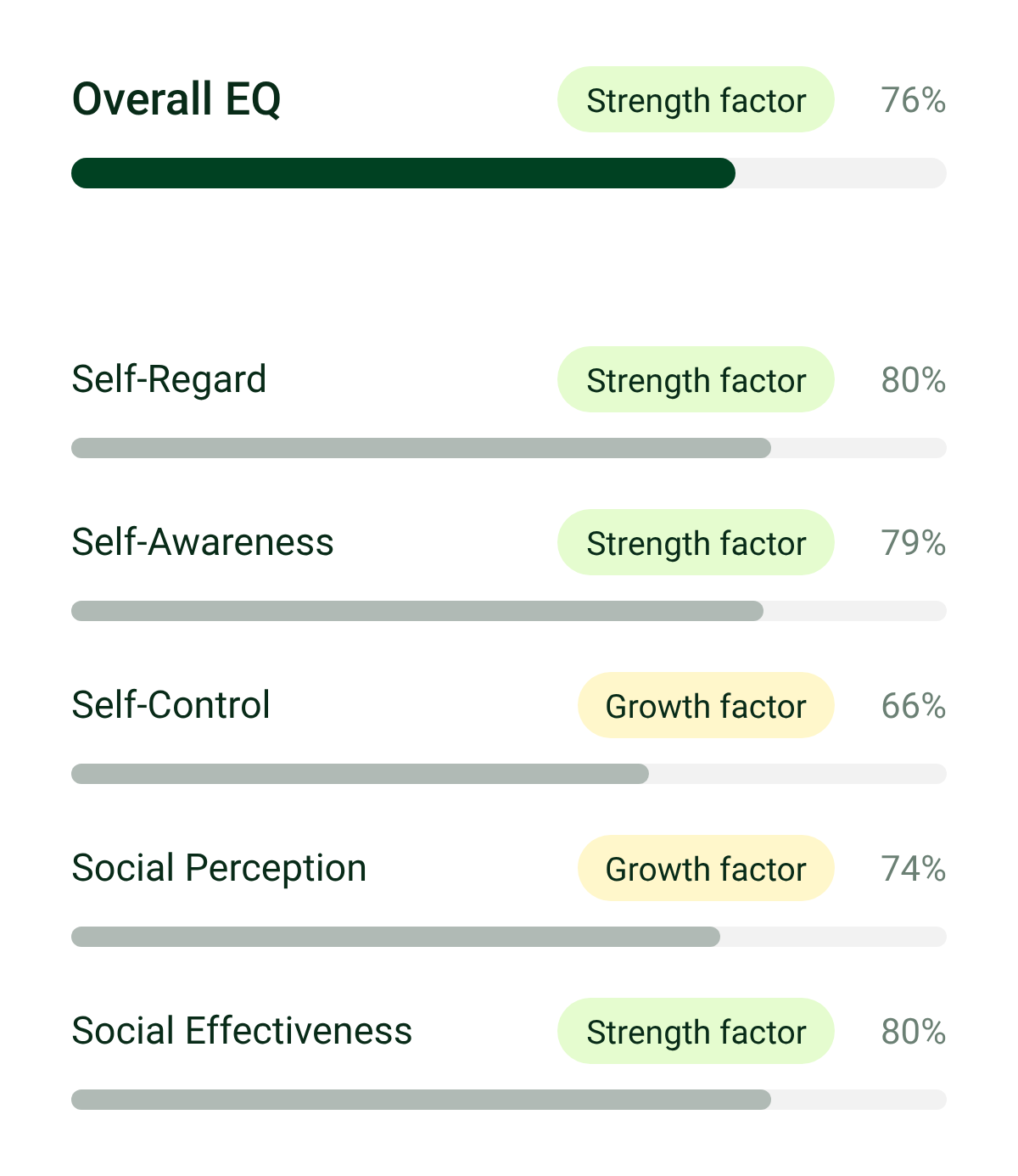
BlueEQ assesses five emotional intelligence skills across 25 dimensions. Results identify strengths and development areas in how people understand emotions, manage reactions, and interact with others.
Self-Awareness
Recognize emotions, understand personal motivations, and reflect on how behavior affects others.
Self-Regard
Value personal strengths and abilities, maintain confidence, and stay motivated through challenges.
Self-Control
Manage emotional reactions, pause before acting, and respond constructively under pressure.
Social Perception
Notice emotional cues, consider others’ perspectives, and check assumptions about what they’re feeling.
Social Effectiveness
Use emotional understanding to navigate conflict, take responsibility, and build productive relationships.
How to start using BlueEQ with Cloverleaf
1
Invite participants
Include BlueEQ in a leadership development program.
2
Privately explore results
Individuals can review their emotional intelligence strengths and growth areas.
3
Develop E.Q.
People can use insights to focus areas to grow in.
Build emotional intelligence for feedback and conflict
Use BlueEQ insights to identify a development focus. Cloverleaf coaching supports employees as they apply it in conversations with managers, direct reports, and peers.
Give feedback that lands
Rehearse a feedback conversation in Role Play. Explain the concern, consider another perspective, and prepare to respond to pushback.
Receive feedback with curiosity
Prepare to ask clarifying questions, recognize an emotional reaction, and consider the feedback before responding.
Respond thoughtfully under pressure
Focus coaching on managing reactions so frustration or urgency doesn’t determine how someone responds to a colleague.
Work through conflict
Use Role Play to explore different responses, explain concerns clearly, and prepare to discuss a next step.
Cloverleaf allows our leaders, our directors, our vice presidents… to truly know what drives and motivates our people."
- Kevin Mills,
Vice President, Organizational Development

Understand what BlueEQ scores mean
BlueEQ provides an overall emotional intelligence score and scores across five skills. Labels such as Strength factor and Growth factor highlight areas to build on and opportunities to develop.
Each person can use their results to choose one or two areas to focus on, such as managing reactions under pressure or understanding another person’s perspective.
The scores provide a starting point for development. They aren’t a performance rating, and they stay private in Cloverleaf.
Bring BlueEQ into leadership and team development
Develop managers
Give first-time managers a starting point for understanding their own reactions as they take on feedback, delegation, and conflict.
Leadership programs
Pair BlueEQ with development priorities and use Cloverleaf coaching to follow through between sessions.
EQ workshops
Build sessions around active listening, feedback, or conflict. Employees use their private BlueEQ insights to choose what they want to develop.
Navigate Change
Support employees in managing their own reactions to uncertainty and preparing to discuss concerns, changing responsibilities, and expectations.
Frequently asked questions
Employees can view their own BlueEQ results. Scores don’t appear on shared profiles or team dashboards, so teammates can’t use Cloverleaf to compare one another’s emotional intelligence results.
BlueEQ assesses emotional intelligence skills, including recognizing emotions, managing reactions, and navigating relationships. DISC describes behavioral and communication tendencies, while CliftonStrengths identifies talent themes. Using them together can give employees different perspectives on their development.
The assessment includes 150 questions and takes about 20 minutes to complete.