Motivating Values: Align work with what people care about
The Motivating Values assessment uncovers the primary influences that drive action—the “why” behind behavior. Learn what each person values most, where tension shows up, and how to design roles, recognition, and communication that boost engagement and results.

THE CLOVERLEAF DIFFERENCE
Why use Motivating Values with Cloverleaf
Motivating Values explains why people initiate behavior (reason), which complements skills (how) and style (behavior). Cloverleaf turns those insights into everyday habits.
Six value lenses
Knowledge, Economic Utility, Environment, Social, Power, Process.
Poles, not boxes
Each motivator sits on a spectrum (e.g., Intellectual ↔ Instinctive).
From insight to action
Coaching tips for motivators, stressors, and overuse patterns.
Team visibility
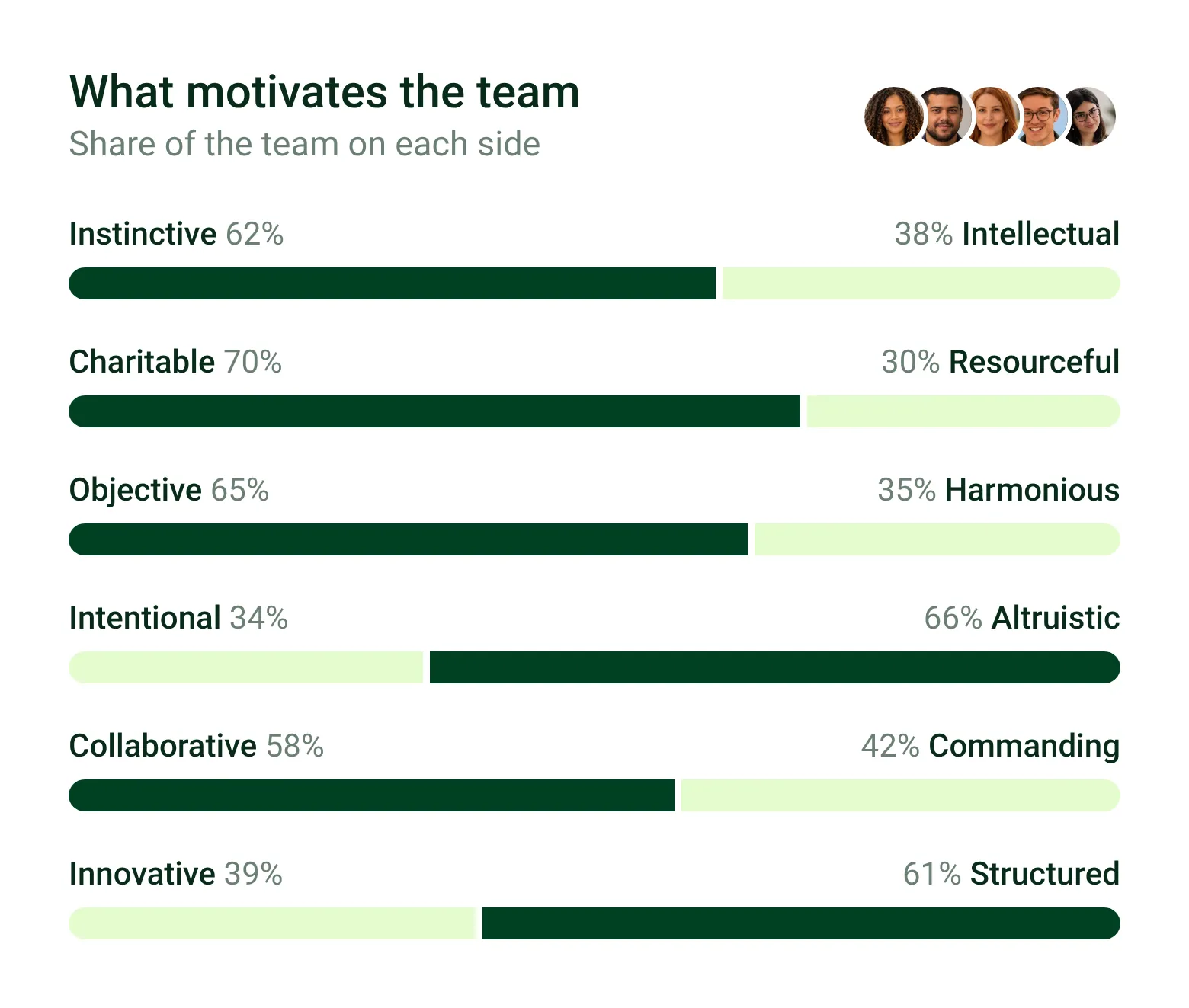
See value diversity and overlap to plan work, recognition, and change.
It's incredible how this platform understands my work style and motivates me to strive for better collaboration and personal growth."
- LIEW Sookmun,
Employer Branding Manager, APAC, BASF
What the Motivating Values assessment measures
Motivating Values identifies the primary influences behind a person’s decisions and effort. Each motivator is plotted on a continuum—both ends carry value and signal different needs, stressors, and strengths. Results indicate why a person acts, not whether they are capable.
Intellectual ↔ Instinctive
Knowledge
Intellectual: Seeks logic, depth, and evidence; values research and structured reasoning.
Instinctive: Decides quickly, trusts experience and gut feel; prioritizes practical application.
Resourceful ↔ Charitable
Economic Utility
Resourceful: Optimizes time, money, and effort; focuses on ROI and measurable outcomes.
Charitable: Prioritizes contribution and service; values impact beyond material return.
Harmonious ↔ Objective
Environment
Harmonious: Values aesthetics, balance, and experience; seeks beauty and creative expression.
Objective: Prioritizes function and efficiency; evaluates by usefulness and results.
Altruistic ↔ Intentional
Social
Altruistic: Gives generously to help others thrive; guided by care and social good.
Intentional: Gives strategically; aligns help with goals and outcomes.
Commanding ↔ Collaborative
Power
Commanding: Seeks influence, recognition, and visible ownership.
Collaborative: Prefers influence through support and coalition; leads from behind the scenes.
Structured ↔ Innovative
Process
Structured: Guided by codes, standards, and consistency; values clear rules and reliability.
Innovative: Favors autonomy & experimentation; adapts systems to improve results.
Overuse and stress
Each motivator can be over‑applied (e.g., analysis tunnel‑vision, changing for change’s sake). Reports flag stressors and provide communication tips to keep motivators productive.
How to start using Culture Pulse with Cloverleaf
1
Set up your team
Invite employees and choose their assessments.
2
Take the assessment
See each person’s primary influences that drive action in one team view.
3
Get personalized coaching
Coaching on how specific teammates work together, based on their strengths.
Why Motivating Values matters for teams
Motivating Values gives leaders the levers to increase engagement and performance—by matching work and recognition to what genuinely matters to people. Leaders use Motivating Values to:
Design motivating roles & goals
Align responsibilities and KPIs to primary motivators.
Tailor recognition & rewards
Match praise, incentives, and visibility to individual values.
Prevent burnout
Spot stressors early and rebalance work before motivation dips.
Improve communication
Adjust framing (facts, impact, aesthetics, autonomy, etc.) to land messages.
Cloverleaf allows our leaders, our directors, our vice presidents… to truly know what drives and motivates our people."
- Kevin Mills,
Vice President, Organizational Development

Why focusing on innate drives creates lasting change
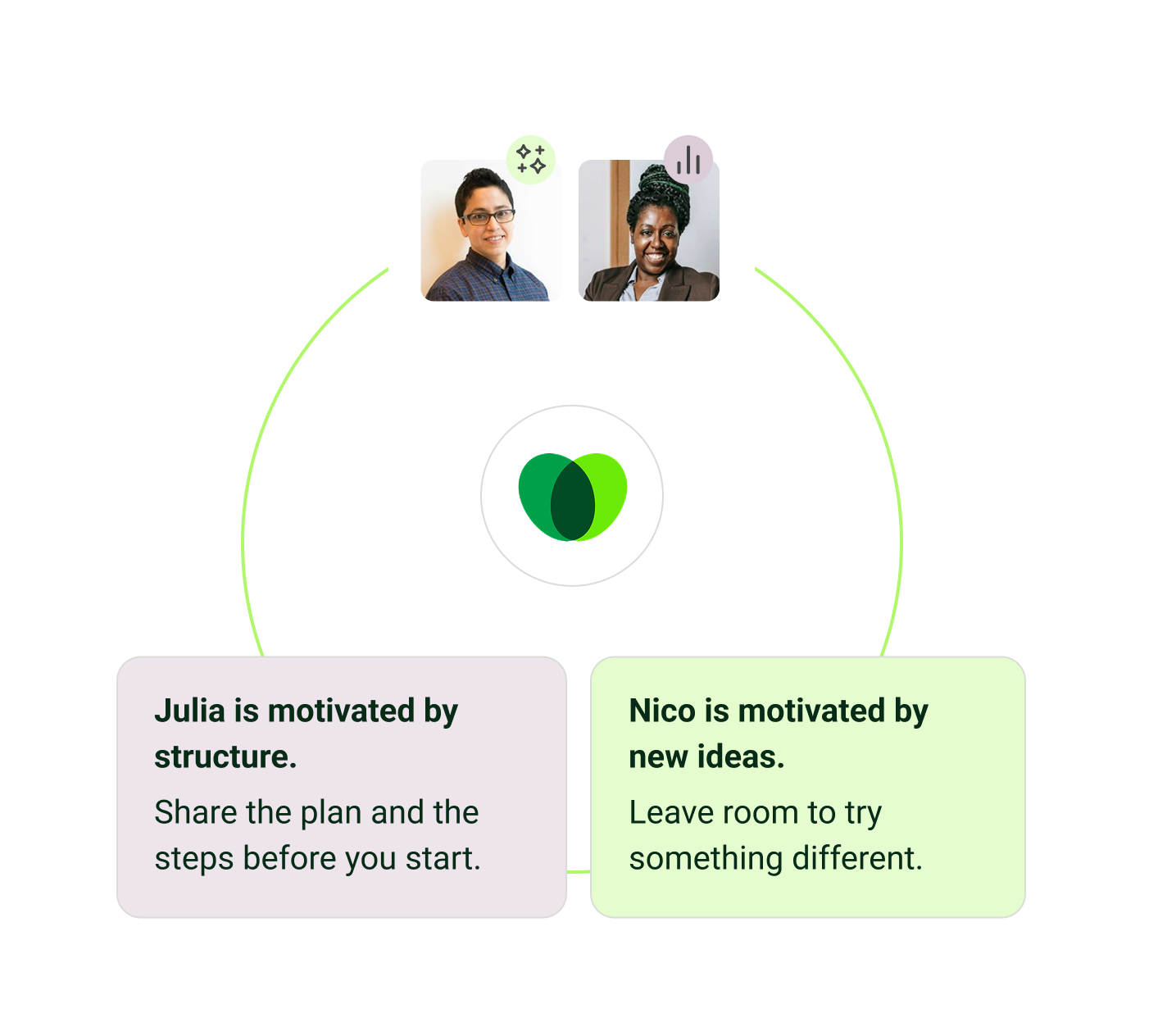
- Explains the “why” behind action—complements behavior (how) and skills (what).
- Spectrum model avoids labels; both poles carry value and distinct needs.
- In‑the‑flow reinforcement makes behavior change stick.
The psychology of needs and natural motivation
The model draws on decades of motivation research and philosophy (e.g., Maslow’s needs, Herzberg’s motivator/hygiene distinction, and Spranger’s six value types). Cloverleaf’s instrument operationalizes these ideas into a practical, workplace‑ready assessment with clear application guidance for leaders and teams.
How to apply Motivating Values with Cloverleaf
Onboarding & role design
Show new hires how their motivators connect to responsibilities, metrics, and growth paths.
Recognition & engagement
Map motivators to reward types (visibility, autonomy, impact, resources) for more meaningful recognition.
Change & alignment
Frame initiatives in language that resonates across motivator profiles to improve buy‑in and reduce resistance.
Manager enablement
Give managers prompts for 1:1s: primary motivators, likely stressors, and overuse watchouts.
Frequently asked questions
It reveals the values that most strongly influence a person’s decisions and effort across six motivators, explaining why they act—not whether they can.
Neither. Each continuum has two valuable perspectives with different needs, stressors, and strengths. Overuse
Personality and behavior describe how someone shows up. Motivating Values explains why they initiate action, so leaders can align work, rewards, and communication more precisely.
Yes. Cloverleaf visualizes motivator diversity and overlap so you can design meetings, roles, and recognition that resonate across the team.
Cloverleaf delivers coaching nudges inside Slack, Teams, Gmail, and Outlook, tailoring tips to each person’s motivators and context.
Yes. It builds on longstanding motivation theories (e.g., Maslow, Herzberg, Spranger) and has been adapted for modern workplace application.
Go further with Motivating Values
Your results are just the beginning. Cloverleaf helps you put those insights to work—every day, with the people who matter most.