
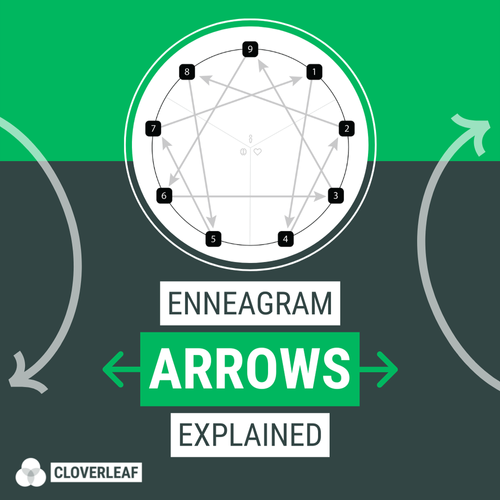
Enneagram Arrows Explained: Stress & Growth Directions
Reading Time: 10 minutesThe Enneagram helps explain different personality types and how they respond in ties of stress and growth. The arrows in the Enneagram diagram map out these patterns, revealing where each type might struggle under pressure and where they naturally grow when thriving. Instead of being stuck in one type, you move between connected points—tapping into different strengths or challenges depending on your circumstances. Every type connects to two others: One shows where you go under stress, often bringing out reactive or unhelpful patterns. The other shows your path to growth, revealing strengths that help you develop and expand. Understanding these movements adds another layer to your Enneagram knowledge—helping you recognize patterns, make better choices, and move toward growth with intention. Understanding the Enneagram Diagram: What the Arrows Mean The Enneagram diagram is not a static chart of personality types—it’s a map of movement. The arrows indicate how each type responds to stress and growth, giving insight into both challenges and opportunities for personal development. How the Arrows Work Each Enneagram type connects to two other types with arrows:😩 Stress Arrow → The tendencies you fall into when feeling pressured or overwhelmed.🙂 Growth Arrow → The qualities you develop when operating at your best. For example, look at Type 1 in the diagram above. You’ll see two arrows connected to it: One arrow points toward Type 4—this represents how Ones tend to take on unhealthy Four-like tendencies (becoming more self-critical or emotionally withdrawn) when under stress. The other arrow connects to Type 7—this shows how Ones adopt more flexibility, spontaneity, and joy like a secure type seven when growing in a healthy direction. These connections help explain why you react the way you do in difficult situations and how you can practice more awareness to choose growth. Rather than staying stuck in stressful behaviors, recognizing your arrows gives you a practical path forward. Enneagram Stress Arrows Your Direction of Stress represents how you act under stress. The sequences are 1-4-2-8-5-7-1 and 9-6-3-9. Returning to the Enneagram One for our example, their Direction of Stress is toward Type Four. Under stress, a One may behave like an unhealthy Four. This arrow generally represents a negative and a downhill course of action; until it is recognized, it could have an unfavorable effect on you and others. The Enneagram Guide To Healthy Teams See How High-Performing Teams Use the Enneagram to Strengthen Collaboration Enneagram Arrows Explained For Each Type Select The Enneagram Type To Learn About Their Stress and Growth Arrows Enneagram 1 Enneagram 2 Enneagram 3 Enneagram 4 Enneagram 5 Enneagram 6 Enneagram 7 Enneagram 8 Enneagram 9 Enneagram 1 Stress and Growth Arrows Type 1s are principled, detail-oriented, and driven by a desire to do things the right way. Their arrows show how they respond when things feel out of control versus when they are growing into their best self. Stress Arrow → Type 4 (The Individualist) When overwhelmed, frustrated, or feeling like their high standards aren’t being met, Ones may take on unhealthy traits of Type 4: 👉 Become overly self-critical and withdrawn.👉 Feel misunderstood or resentful when others don’t meet their expectations.👉 Get stuck in negative emotions, dwelling on what should have been. Growth Arrow → Type 7 (The Enthusiast) When thriving, Ones move toward the best qualities of Type 7: 🪴 Embrace spontaneity and find joy in the process, not just the outcome.🪴 Become more adaptable, learning to let go of rigid expectations.🪴 Allow themselves to have fun and enjoy life without guilt. Recognizing This in Yourself and Others 💡 Notice early signs of stress—if you’re withdrawing or feeling frustrated, pause before getting stuck in a perfectionist spiral.💡Give yourself permission to loosen up—small moments of spontaneity can help shift your perspective.💡Encourage flexibility in teams and relationships—trust that things don’t have to be perfect to be good enough. Coaching Tip: If you find yourself getting too rigid or critical, ask: What would a healthy Seven do in this situation? Enneagram 2 Stress and Growth Arrows Type 2s are warm, generous, and driven by a desire to help others. Their arrows show how they respond when they feel unappreciated or overextended versus when they are growing into their healthiest self. Stress Arrow → Type 8 (The Challenger) When feeling overworked, taken for granted, or emotionally drained, Twos may take on unhealthy traits of Type 8: 👉 Become controlling or aggressive, demanding appreciation.👉 Push others away by being overly forceful or defensive.👉 Struggle with resentment, feeling unrecognized for their efforts. Growth Arrow → Type 4 (The Individualist) When thriving, Twos move toward the best qualities of Type 4: 🪴 Prioritize their own emotions and well-being instead of overextending.🪴 Develop a deeper sense of self, finding worth beyond external validation.🪴 Express their feelings more authentically, rather than always focusing on others. Recognizing This in Yourself and Others 💡 Pay attention to resentment—if you feel unappreciated, check if you’ve overextended yourself.💡 Give yourself permission to say no—helping others is meaningful, but your needs matter too.💡 Encourage emotional depth—allow space for personal reflection, not just external connection. Coaching Tip: If you find yourself feeling undervalued or frustrated, ask: What would a healthy Four do in this situation? Enneagram 3 Stress and Growth Arrows Type 3s are ambitious, driven, and focused on success. Their arrows show how they respond when they feel overwhelmed or like they’re failing versus when they are growing into their healthiest self. Stress Arrow → Type 9 (The Peacemaker) When feeling burned out, unrecognized, or unsure of their next step, Threes may take on unhealthy traits of Type 9: 👉 Become disengaged or passive, avoiding important tasks.👉 Struggle with indecision, procrastinating instead of taking action.👉 Disconnect from their own desires, going along with others to keep the peace. Growth Arrow → Type 6 (The Loyalist) When thriving, Threes move toward the best qualities of Type 6: 🪴 Become more team-oriented, valuing collaboration over competition.🪴 Develop deeper loyalty to long-term goals, rather than chasing short-term wins.🪴 Learn to trust others and seek