
Emotional intelligence in the workplace can greatly impact the success and productivity of a team. It involves understanding and managing your own emotions, being aware of other’s emotions, and adapting to new situations.
Traditional leadership models have primarily focused on technical skills rather than soft skills like emotional intelligence. Some leaders may not understand the impact of emotions on workplace performance and decision-making. At the same time, others may believe emotions are personal and have no place in the workplace.
Plus, developing emotional intelligence skills can be time-consuming and may not be seen as a priority for leaders focused on meeting short-term goals and targets. However, as awareness of the importance of emotional intelligence continues to grow, it is becoming increasingly clear that leaders who invest in developing their emotional intelligence and that of their teams can reap significant benefits for their organizations.
How Is Emotional Intelligence Being Used In The Workplace?
Emotional intelligence in the workplace is critical to mastering interpersonal skills, crucial for conflict management and effective communication. It involves understanding and regulating emotions to make thoughtful, objective decisions. With the ability to recognize others and their own emotions, employees can support a more collaborative and empathetic work environment. Assessment tools like MBTI and DISC can identify individual strengths and preferences, helping teammates to understand each other to drive success and well-being.
In this post, we will explore why emotional intelligence is so important in the workplace, provide examples of self-awareness, and share strategies for increasing emotional intelligence among teammates.
Why Is Emotional Intelligence In The Workplace So Valuable?
Individuals with high EQ tend to be better leaders, have stronger interpersonal skills, and are more effective in handling workplace stress and conflict.
For example, a study by TalentSmart found that 90% of top performers have high EQ. Another study by Hay Group found that leaders with high EQ have teams that are more engaged, more productive, and experience less turnover.
Research in the Journal of Organizational Behavior outlines that individuals with high emotional intelligence are better equipped to overcome one of the most significant obstacles in their work-life: employment gaps. These gaps can be involuntary, such as a termination, or voluntary, like taking time off to care for family. The higher an employee’s emotional intelligence, the more likely they are to navigate interruptions in their employment successfully.
It’s no surprise that high EQ is linked to increased job satisfaction, improved job performance, better relationships with coworkers and leaders, and employee retention.
And soft skills aren’t just great for creating a fulfilling and pleasant work environment. The link between profit and leaders with high emotional intelligence is clear. In one study, CEOs whose employees rated them high in character had an average return of 9.35% over a two-year period, nearly five times as much as companies with CEOs who had low character ratings.
Prioritizing emotional intelligence in the workplace can drive significant improvements to an organization’s bottom line. If high EQ among teammates can affect job satisfaction, performance, and employee retention, investing in EQ development within teams can be a wise business decision for leaders.
IF EQ In The Workplace Is So Important, Why Do Top-Level Leaders Resist Prioritizing It?
It’s not uncommon for leaders to push off emotional intelligence initiatives because they are familiar and comfortable with traditional measures of job performance. Things like technical skills and intelligence seem easier to quantify and measure.
A Wall Street Journal survey of 900 executives found that 92% said soft skills were equally important or more important than technical skills. But 89% of those surveyed said they have a “very or somewhat difficult time finding people with the requisite attributes.”
Additionally, they may not realize the impact of soft skills training in achieving long-term success. Further, the lack of an established or standardized method for measuring EQ could also lead to it being overlooked as a valuable metric for success.

For decades scholars have debated the relative importance of cognitive intelligence (IQ) versus emotional intelligence (EQ) to workplace performance. Research shows both are helpful. However, in the era of COVID-19, my bet is on emotional intelligence playing a much stronger role. –fastcompany.com
Remote work and other factors shaping the future workplace experience require stronger levels of communication and collaboration. As traditional workplace dynamics and routines have been disrupted, EQ becomes even more crucial in helping teammates navigate workload, well-being, conflicts, and fulfillment to create a place to thrive in their work.
We define emotional intelligence (EQ) as the power to identify, handle, and express emotions and to comprehend and empathize with the emotions of others. When it comes to the workplace, having a high EQ is crucial for building trust and managing conflict to be an effective team.
Self-awareness emerges from two places:
Internally: Understanding one’s desires, strengths, weaknesses, and impact on others.
Externally: Realizing how others interpret and experience you.
When it comes to internal and external self-awareness, it’s tempting to value one over the other. But leaders must actively work on both seeing themselves clearly and getting feedback to understand how others see them. The most highly self-aware people are actively focused on balancing the scale. – Harvard Business Review
Teams that exercise emotional intelligence do more with less drama. They are tuned into their internal emotional life, can manage those feelings, and transition that energy into positive team momentum.
Do You Want To Increase Emotional Intelligence In Your Workplace?
Find Out How To Quickly:
- Scale development so that it is available to each team member
- Personalize growth to individual strengths and needs
- Integrate learning so it is actually in the flow of work
- Develop human skills fast enough to solve business problems
- Prove the ROI of your development programs
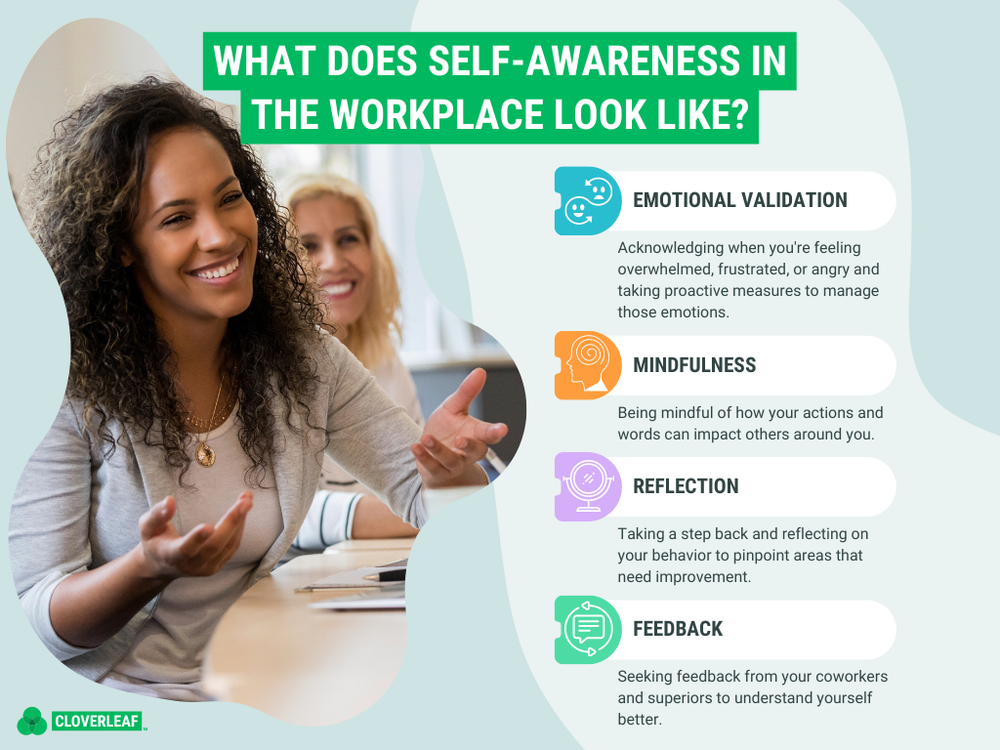
What Does Self-Awareness In The Workplace Look Like?
Self-awareness is crucial to emotional intelligence, starting with understanding your emotions, behaviors, and thoughts. In the workplace, having a strong sense of self-awareness can take many shapes and forms, such as:
Acknowledging when you’re feeling overwhelmed, frustrated, or angry and taking proactive measures to manage those emotions
Being mindful of how your actions and words can impact others around you
Taking a step back and reflecting on your behavior to pinpoint areas that need improvement
Seeking feedback from your coworkers and superiors to understand yourself better.
Emotional intelligence is being able to understand your own emotions and manage them. It’s also the ability to observe others’ emotions, understand a situation, and adapt to remain productive at that moment.
By taking the time to understand your emotions, behavior, and thoughts and being proactive in managing them, teams can foster a positive productive work environment.
Examples Of Self-Awareness In The Workplace
Have you ever had one of those mornings where everything seems to go wrong? You arrive at work feeling overwhelmed. Every person can relate. Maybe you lost your dog, became angry in traffic, or experienced a disagreement with a family member before leaving the house. But, what if you could process those emotions and release them, allowing you to start your work day feeling recentered and in control?
Emotional intelligence can help you acknowledge and understand your emotions to prevent them from dictating your experience at work. Recentering your feelings to ensure they do not influence how you treat your teammates or drive you to make decisions because of things outside of work.
As a leader or coworker, it’s important to not only manage your own emotions but also be aware of the emotions of those around you. If you notice a colleague coming in with a negative demeanor or a bit huffy, take a moment to ask how they’re doing and if everything is okay. By simply asking questions, you can help them process their emotions and release any tension they might be feeling.
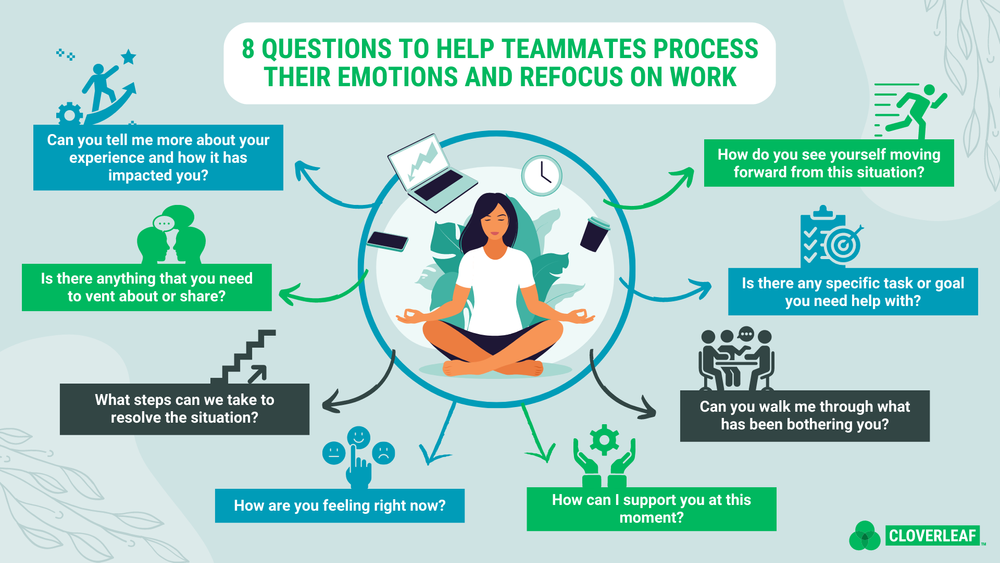
8 Questions To Help Teammates Process Their Emotions And Refocus On Work
How are you feeling right now?
Is there anything that you need to vent about or share?
Can you walk me through what has been bothering you?
What steps can we take to resolve the situation?
How can I support you at this moment?
Is there any specific task or goal you need help with?
Can you tell me more about your experience and how it has impacted you?
How do you see yourself moving forward from this situation?
By actively listening to team members verbalize their feelings, you can help them become more aware of their own emotions to help them feel more centered and able to move forward. This small act of empathy can go a long way in creating a positive work environment and improving overall workplace relationships.
How To Increase Emotional Intelligence Among Teammates
The best way to increase emotional intelligence in the workplace is to help improve self-awareness within each team member. Self-awareness enables individuals to identify areas for improvement, manage their emotions, and make more mindful decisions, which is foundational to increasing emotional intelligence.
Teams can proactively support EQ-based initiatives by implementing strategic efforts to help members feel, recognize, regulate, and communicate their emotions.
Utilize Automated Coaching™: Cloverleaf provides personalized, ongoing coaching tips to help employees develop self-awareness and powerful insight about teammates.
Celebrate Feedback And Reviews: Encourage employees to give and receive feedback in a safe by creating the structure to do so with performance management platforms.
Empower Learning and Development: Offer training programs that hone in on emotional intelligence, self-awareness, and personal growth.
Cultivate Open Communication: Work with your team leaders to establish consistent 1-on-1 meetings with direct reports to establish clear initiatives, trust, collaboration, and relationships.
Leaders play a pivotal role in shaping the culture and dynamics of the workplace. That’s why leaders must make emotional intelligence a priority. If not, the rest of the organization may not value developing their EQ or fully supporting initiatives.
And that’s where things can start to unravel. Even further, teams may lose their best talent as many seek places of employment that recognize the importance of emotional intelligence in the workplace.
Talent turnover is an expensive problem and, therefore, must be solved. Thankfully, it’s a problem that can be solved. For the most part, employees leave for reasons that are within the control of employers:
Culture
Work Environment
Growth Opportunities
Leadership Disconnect

By prioritizing emotional intelligence and creating an environment where employees feel valued and challenged, organizations can retain top talent and even attract it.
Conclusion
The next time you encounter an emotionally charged situation, consider using a simple checklist to guide your response. Ask yourself, “How am I feeling?” and “What can I do about it?”
Encourage others to share their emotions by asking, “How are you feeling today?” and “How do you want to show up for this?”
Starting a meeting with these questions can help team members process their emotions and be more present in the moment. Consider offering support by actively listening, responding, or taking action when addressing a situation. This approach can help increase emotional intelligence and create a more supportive and effective work environment.
If you’re looking for additional ways to enhance emotional intelligence in the workplace, visit the post that details an Employee Engagement Strategy For A Human-Centered Workplace.
A chronotype quiz helps you understand the biological clock that controls your body’s rhythms. Your Chronotype may be why you feel grumpy in the morning or at your best at 5 am. It may be why you feel exhausted in the evening or focused by 8 pm. This genetic, biological clock affects more than your sleep pattern. It affects when your optimal times to work, perform, eat, plan, exercise, and more.
Are you a Starter, Pacer, or Anchor? Take this quiz to find out. Discover your Chronotype today by taking the Energy Rhythm Assessment.
What Does Chronotype Mean?
Unlike a standard clock, not every person’s biological clock keeps the same time or pace. Of course, there’s a reason why people say they’re not a ‘morning person.’
Some individuals are more productive in the morning than others, while some function better in the evening. Everyone has an individual sleep schedule that affects their day-to-day performance.
Your body is programmed to wake, sleep, and function much better at certain times of the day than others. People fall into different ‘Chronotypes’ based on general awake and sleep preferences or needs. Your Chronotype reveals what rhythms are optimal for you to work positively with your body, not against it.
A chronotype quiz can help you understand your biological programming better and discover which Chronotype you relate to the most.
What Are The Three Chronotypes?
There are three primary Chronotypes – Starter, Pacer, and Anchor. These Chronotypes correspond with your unique biological clock.
In the workplace, Chronotype matters because it affects the times of day an individual will feel most alert, focus on tasks the best, and what jobs they do best during certain times of the day.
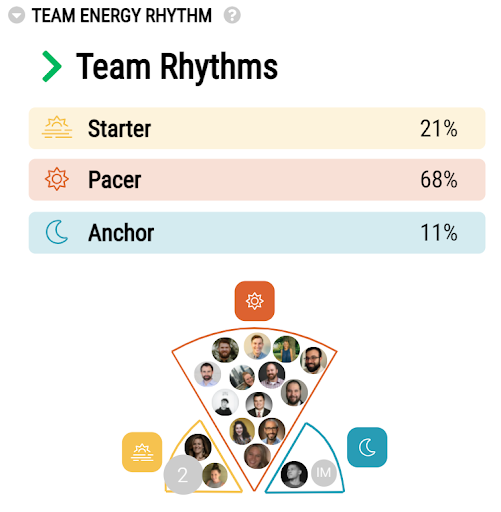
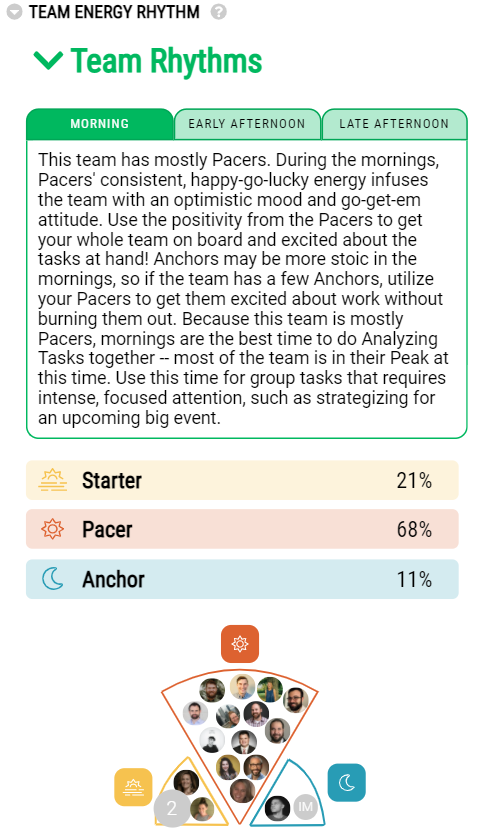
Having varied chronotypes on a team can benefit the team’s productivity and creativity if every team member knows their differences. Teams can get knowledge of their differences, use it to their advantage, and understand how they will feel through healthy collaboration.
The Cloverleaf Chronotype quiz can reveal a lot about a person concerning their energy patterns over a typical 9-5 workday, what tasks are most manageable for them to excel at during specific times of the day, and what their team’s flow may look like daily.
Using the Cloverleaf Chronotype Quiz, you can discover your Chronotype in just 90 seconds. The quiz includes questions to better understand your biological programming to reveal your Chronotype.
Cloverleaf’s Energy Rhythm Assessment draws from research about circadian rhythm and circadian typology. Circadian rhythm refers to the internal processes which regulate the sleep/wake cycle and affect people’s biological and psychological functioning in everyday life, health, and disease (Adan et al., 2012).
Your chronotype is one of three types:
- Morning type (the Starter)
- Midday type (the Pacer)
- Evening type (the Anchor)
The Starter Chronotype is about 15-25 percent of the population.
Starters are morning-type people. The Starter is an individual who enjoys an early sleep schedule and early wake time. Their peak happens in the early morning, and they experience their trough in the middle of the afternoon. This is around 12-1 pm time (lunch hours). Their recovery tends to occur in the late afternoon to early evening, around the end of their 9-5 workday.
The Pacer Chronotype is about 50 percent of the population.
Pacers are most productive during mid-morning. Pacers have a similar energy rhythm to Starters, but their peak happens in the mid-morning portion of the day. Pacers get up early and have their trough mid-afternoon, with a recovery period from late afternoon to early evening towards the end of their 9-5 workday.
The Anchor Chronotype is about 15-25 percent of the population.
Anchors are commonly known as the ‘Night Owl.’ The Anchor will often sleep in and be ready to sleep late in the evening. Their energy rhythm is similar to those that are considered Starters. Anchors experience their peak in the late afternoon to early evening at the end of a typical 9-5 day.
Anchors may have more variability during their trough than Starters or Pacers, but that trough may also be longer. Their trough happens early to mid-afternoon, with a recovery period in the morning (beginning of a typical 9-5 workday). The Anchor will often go to bed late into the night.
Pacers are the most common type among adults. And it’s important to remember that all Starters, Pacers, and Anchors experience a peak, trough, and recovery period in their day.
Understanding Your Chronotype Quiz Results
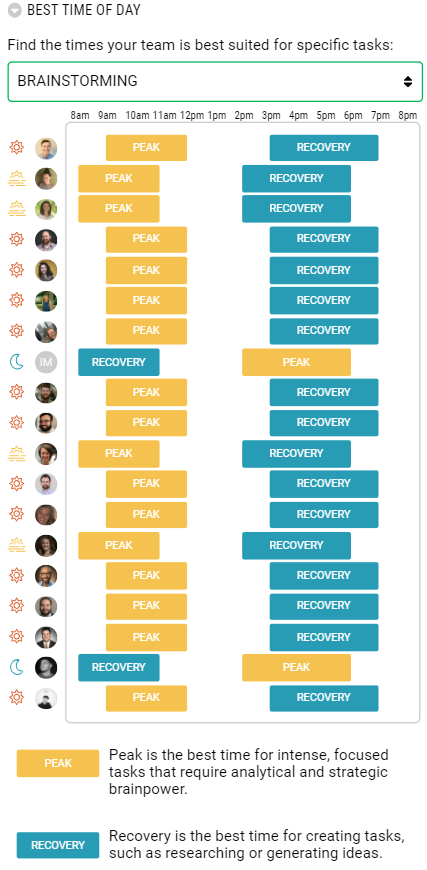
Knowing your Energy Rhythm can help you determine the amount of sleep and energy you need to excel. Learning more about your team member’s assessment results can help improve collaborative efforts.
Peak time is best for analyzing tasks, requiring lots of analytical and strategic brainpower.
A Trough is best for maintenance tasks – those low-brainpower, straightforward tasks like adding to your calendar or answering emails.
Recovery is best for Creating Tasks.
People experience a rise in energy, mood, and vigilance during their peak. People typically experience a dip in energy, mood, sleep performance, and care during their trough. During recovery, energy and mood take a sharp rise. The peak, trough, and recovery periods occur at different times for people, depending on their Chronotype.
Discover your Chronotype today with Cloverleaf. Take the Chronotype quiz to find out which Chronotype you are to start maximizing your effort and better utilizing your energy.
HUMAN SKILL PROGRAMS ARE HITTING LIMITATIONS...
5 THINGS THIS FREE RESOURCE WILL TEACH YOU
- Close the widening gap between learning and on-the-job application
- Overcome the tension of pausing productivity for development opportunities
- Integrate learning so it is actually in the flow of work
- The evolution of human skill development
- What Automated Coaching™ is and how it works.
Introduction
The 16 Types assessment is based on Carl Jung’s Theory of Psychological Types (Jung, 1921), which proposes that there are four primary dimensions among which we can evaluate personality traits. The benefit of the 16 Types assessment is that it broadly covers the most prominent personality traits. This is particularly helpful because personality traits are relatively consistent across time and situation, and can be reliably be connected to observable workplace behaviors.
Cloverleaf uses the Keirsey Temperament Sorter® II (KTS) (Keirsey, 1998), which is based on self-reporting of observable behaviors. Across several studies, external researchers (i.e., unaffiliated with the assessment entity) illustrate construct validity and reliability for the assessment (e.g., Abramson, 2010; Dodd & Bayne, 2007; Kelly & Jugovic, 2001; Quinn et al., 1992; Tucker & Gillespie, 1993; Waskel, 1995). What follows is a construct validity evaluation using Cloverleaf’s 16 Types participants.
The four dimensions of the 16 Types assessment include energy, perception, judgment, and orientation. Each dimension operates along a theoretical continuum with two polar anchors. The energy dimension addresses the degree to which sensory perception is draining (introverted) or energizing (extroverted). The perception dimension addresses the degree to which we process information using micro-level facts and details (sensor) or macro-level abstraction and patterns (intuition). The judgment dimension addresses the degree we place importance on logic-based information (thinker) or values-based information (feeler). The orientation dimension addresses the extent to which we prefer to have a fluid and adaptable approach (perceiver) or an orderly and controlled approach (judger) to our lives.
Respondents are given a series of 70 questions. Each question is specific to one of the four dimensions. For each question, the respondent is asked to select one of two responses. The two response options are representative of each anchor (e.g., introversion versus extroversion, sensor versus intuit, feeler versus thinker, and perceiver versus judger).
The energy dimension has a total of 10 questions, and the remaining three dimensions each have a total of 20 questions. The percentage of the responses representing one anchor or the other dictates their final score for each dimension. The user is then given their type (e.g., INTJ) based upon which of the anchors for each of the four dimensions had the highest percentage.
Sample and Methodology
The sample consisted of 176,424 participants that completed the 16 Types assessment using the Cloverleaf platform. To illustrate construct validity, I employed several techniques. First, I assessed inter-item reliability for each of the four dimensions. Second, I assessed the overall factor structure by conducting confirmatory factor analyses. Third, I assessed convergent and divergent validity by evaluating correlations among related assessment dimensions. Fourth, I assessed test-retest reliability among a subset of users that have taken the assessment multiple times.
Reliability Analyses
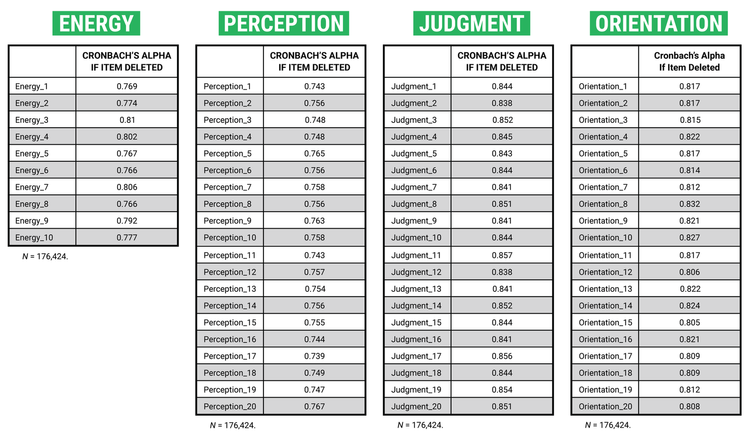
I conducted reliability analyses to evaluate the degree to which the items within the assessment were reliably evaluating the dimensions of interest. Each question offers two options. The first is representative of one endpoint of the continuum (e.g., introverted) and the second is representative of the other endpoint of the continuum (e.g., extroverted). The selections were coded such that the first option was -1 (i.e., introverted, sensor, feeler, and perceiver) and the second option was +1 (extroverted, intuition, thinker, and judger). The 10-item energy dimension (α = .80), the 20-item perception dimension (α = .76), the 20-item judgment dimension (α = .85), and the 20-item orientation dimension (α = .82), all had Cronbach alpha reliabilities above the traditional .70 threshold. Further, the findings illustrated that removal of any one item would not substantially enhance the overall reliability (see Table 1).
Table 1. Reliability Analysis
Factor Analyses
We conducted factor analyses to assess the overall dimensionality of the assessment (see Table 2). Specifically, to investigate whether there is empirical support for the four theoretically derived dimensions, I conducted a forced, four-factor analysis with varimax rotation. Overall, the factor loadings aligned well with the theoretical factor structure.
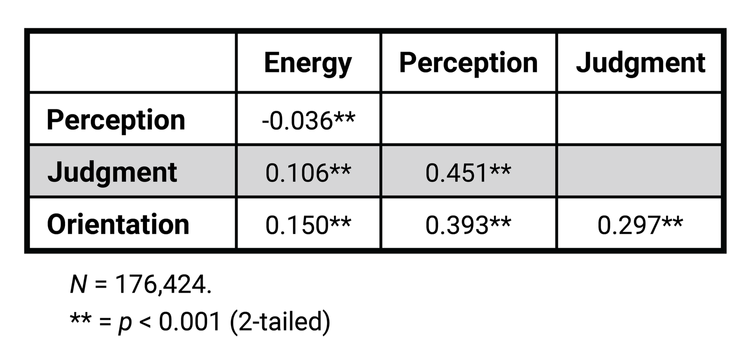
Within the energy dimension, there were no significant cross-loadings. Within the perception dimension, there were four items with cross-loadings on the judgment dimension (i.e., items 10, 12, 13, and 20). Within the judgment dimension, there was one item with a cross-loading on the perception dimension (i.e., item 17). Within the orientation dimension, there were two cross-loading items, one for the perception dimension (i.e., item 13) and one for the judgment dimension (i.e., item 10). In each case, the cross-loadings were relatively minor. Further, in each case, the cross-loadings align with the expected relationships among dimensions. Specifically, correlational analyses illustrate that the perception and judgment dimensions (r = .45, p < .01), the perception and orientation dimensions (r = .39, p < .01), and the judgment and orientation dimensions (r = .30, p < .01), have low to moderate positive associations (see Table 3).
Table 2. Factor Analysis
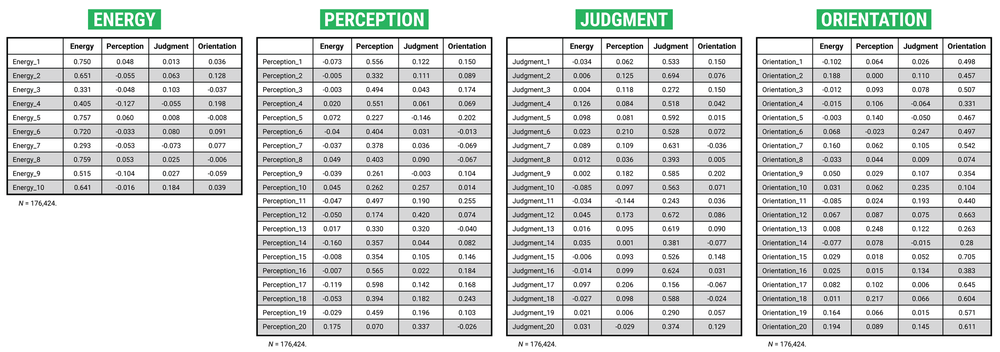
Table 3. Bi-Variate Correlations
Convergent and Divergent Validity
Of the 176,424 participants that completed the 16 Types assessment, 19,466 have completed the DISC personality assessment (Marston, 1928/2013; Merenda & Clarke, 1965), and 8,071 have completed the Instinctive Drive assessment (De Raad & Doddema-Winsemius, 1999; Fitzgerald et al., 2006; Fitzgerald et al., 2011) within the Cloverleaf platform. We conducted correlation analyses within these sub-groups to instigate convergent and divergent validity.
The DISC assesses traits, but with a focus on the approach and outlook one is likely to have when interacting with others. Individuals higher in dominance (D) tend to be confident, blunt, demanding, and task-focused. Individuals higher in influence (I) tend to be enthusiastic, persuasive, optimistic, and relationship-focused. Individuals higher in steadiness (S) tend to be calm, deliberate, loyal, and dependable. Individuals higher in conscientiousness (C) tend to be independent, competent, and detail-focused.
The Instinctive Drives assessment evaluates individuals’ innate behavioral tendencies. Instincts are similar to traits in that they dictate specific sets of behaviors. However, instincts also address why such behaviors are preferred (i.e., what drives the behavior). The assessment determines whether respondents prefer to “use” or “avoid” four instinctive drives: verify, authenticate, complete, and improvise. Individuals that use verify need clarity and are driven to “get it right.” Individuals that use authenticate need open and direct communication and are driven to see tangible results. Individuals that use complete need time to focus and are driven to make progress. Individuals that use improvise need to create and interact with others and are driven to make things possible.
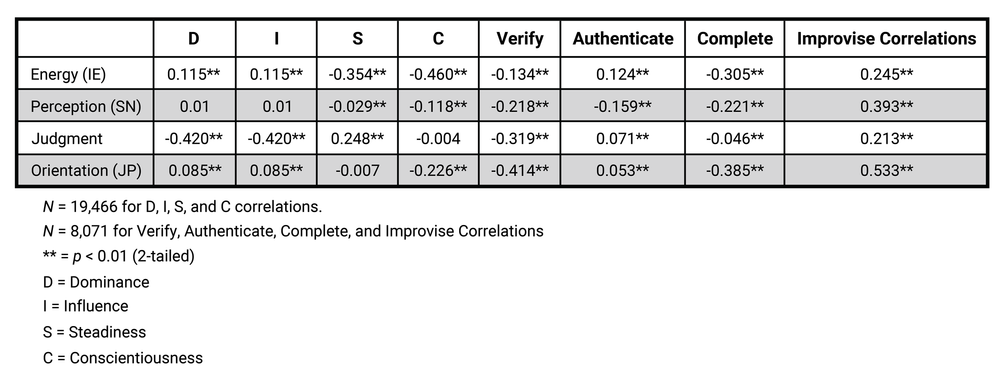
Extroverts are more socially driven than their introverted counterparts. As expected, the findings illustrate that extroversion (higher on energy dimension) was strongly associated with influence (r = .647, p < .01), authenticate (r = .124, p < .01), and improvise (r = .245, p < .01), all of which involve more communicative and relational tendencies. Alternatively, introverts prefer deep-thinking activities that can be done in solitude. Along those lines, introversion (lower on energy dimension) was associated with steadiness (r = -.354, p < .01), conscientiousness (r = -.460, p < .01), verify (r = -.134, p < .01), and complete (r = -.460, p < .01), all of which entail task-focused tendencies.
Intuits notice patterns, focus on the big picture, and are forward-looking. As expected, I found that intuition (higher on perception dimension) was associated with improvise (r = -.393, p < .01), which also entails seeing and pursuing opportunities. Alternatively, sensors focus on facts and details. Along those lines, we found that sensor (lower on perception) was associated with conscientiousness (r = -.118, p < .01), verify (r = -.218, p < .01), authenticate (r = -.159, p < .01), and complete (r = -.221, p < .01), all of which entail the same focus on finding and applying evidence to decision-making.
Feelers tend to be warm and compassionate. The findings support this direction, illustrating that feeler (higher on judgement) is associated with influence (r = .271, p < .01) and steadiness (r = .248 p < .01), which entail being interested in and kind towards others. Alternatively, thinkers tend to focus on logic and seeking the truth. The findings support this direction, illustrating that thinker (lower on judgment) is associated with verify (r = -.319, p < .01), which is also about seeking out the truth through facts. This need for truth and logic can also come across as lacking compassion or empathy, which aligns with findings illustrating that thinking is associated with dominance (r = -.420, p < .01), which can come across as being blunt.
Perceivers like to keep things open-ended. The findings support this direction, illustrating that perceiver (higher on orientation) is positively associated with influence (r = .159, p < .01) and improvise (r = .533, p < .01), which both entail a capacity to be more adaptable. Alternatively, judgers like order and process. Along those lines, the findings illustrate that judger (lower on orientation) is associated with conscientiousness (r = -.226, p < .01), verify (r = -.414, p < .01), and complete (r = .385, p < .01), all of which entail being steadfast in keeping things organized and under control.
Table 4. Bi-Variate Correlations with Related Constructs
Test-Retest Reliability
To evaluate test-retest reliability I selected a random sub-set (N = 224) of participants that completed the 16 Types assessment twice. We conducted a mean difference test to evaluate whether each of the four dimensions had a significant change when comparing the first and second assessment scores. The mean difference for energy (mean difference = .028, p = .589), perception (mean difference = -.060, p = .110), judgment (mean difference = .000, p = .992), and orientation (mean difference = -.027, p = .491), were not statistically significant, offering evidence of test-retest reliability.
References
Keirsey, D. (1998). Please understand me II: Temperament, character, intelligence. Prometheus Nemesis Book Company.
Abramson, N. R. (2010). Internal reliability of the Keirsey Temperament Sorter® II: Cross-national application to American, Canadian, and Korean samples. Journal of Psychological Type, 70(2), 19–30.
De Raad, B., & Doddema-Winsemius, M. (1999). Instincts and personality. Personality and Individual Differences, 27(2), 293–305.
Dodd, N., & Bayne, R. (2007). Internal reliability and item analysis of the Keirsey Temperament Sorter II. Journal of Psychological Type, 67(8), 71–83.
Fitzgerald, J. A., Ferres, N., Dadich, A., & Hamilton, K. (2005). The Instinctive Drives System™: A reliable and valid catalyst for improving team performance. Sydney, NSW: InCITe Research Group, College of Law and Business, University of Western Sydney.
Fitzgerald, A., Sloan, T. R., Hayes, K. J., Dadich, A. M., & Chapman, G. R. (2011). Instinctive Drives® Profiles: Exploring data, presenting results and expanding horizons. Sydney, NSW: InCITe Research Group, College of Law and Business, University of Western Sydney.
Jung, C. (1921). Psychological types. Routledge.
Kelly, K. R., & Jugovic, H. (2001). Concurrent validity of the online version of the Keirsey Temperament Sorter II. Journal of Career Assessment, 9(1), 49–59.
Marston, W. M. (1928/2013). Emotions of normal people. Vol. 158. Routledge.
Merenda, P. F., & Clarke, W. V. (1965). Self-description and personality measurement. Journal of Clinical Psychology, 21, 52–56.
Quinn, M. T., Lewis, R. J., & Fischer, K. L. (1992). A cross-correlation of the Myers-Briggs and Keirsey instruments. Journal of College Student Development, 33, 279-280.
Tucker, I. F., & Gillespie, B. V. (1993). Correlations among three measures of personality type. Perceptual and Motor Skills, 77, 650.
Waskel, S. A. (1995). Temperament types: Midlife death concerns, demographics, and intensity of crisis. The Journal of Psychology, 129, 221-233.

Introduction
The theory underlying DISC comes from William Marston’s work (Marston, 1928/2013), which proposes that individuals’ tendencies can be traced to their emotional responses to environmental stressors. The DISC assessment focuses on (a) how individuals view their environment, and (b) how individuals prefer to influence others within that environment. Along these lines, the DISC is particularly helpful in explaining why individuals react and behave in certain ways when interacting with others at work. Cloverleaf uses Cleaver Company’s version of the DISC, which is based on the original theory and assessment of DISC (Merenda & Clarke, 1965). This version entails four dimensions: Dominance (D), Influence (I), Steadiness (S), and Conscientiousness (C). To verify the validity and reliability of the DISC assessment, Cloverleaf conducted an independent analysis with its existing user base (sample size = 48,158).
Description of the DISC Assessment
The DISC assessment offers 24 questions (also called a question block), each with four adjectives (or phrases). For each of the 24 questions, users must select which of the four adjectives is most like them and which of the four adjectives is least like them. Example adjectives include “persuasive,” “even-tempered,” “self-reliant,” and “generous.” Each of the adjectives within each question block either: (a) contributes to the D, I, S, or C score; (b) detracts from the D, I, S, or C score; or (c) neither contributes nor detracts from the D, I, S, or C score. Scores for D, I, S, and C are generated based on Cleaver Company’s proprietary algorithm. The range of scores for each dimension is between 0 and 100.
Reliability Analysis
Within each of the 24 question blocks, the four items are not independent. Thus, the forced-choice question approach of the assessment does not allow for the traditional reliability analyses applied to Likert-style assessments. Nonetheless, it is possible to approximate this approach using re-coded scores. Note that this approach does not illustrate the degree to which the questions are representative of the dimensions. Instead, it allows for an investigation of individual items to evaluate whether specific items are potentially problematic.
I first created 96 variable scores that represented each of the four dimensions within each of the 24 question blocks. Within the question block, if the user rated a specific adjective that aligned with D, I, S or C as most like them, that specific dimension received a score of 2. Within the same question block, if the user rated a specific adjective aligned with D, I, S, or C as least like them, that specific dimension received a score of 0. The remaining dimensions received a score of 1. Thus, across each of the four dimensions (D, I, S, and C) there are 24 variables (e.g., D_1, D_2…D_24) with scores of 0, 1, or 2, with higher scores representing responses more representative of its dimension.
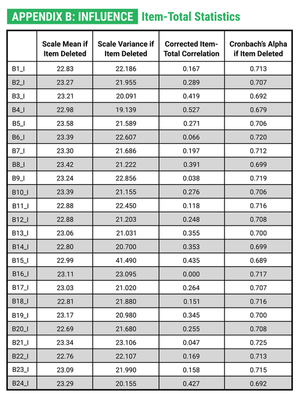
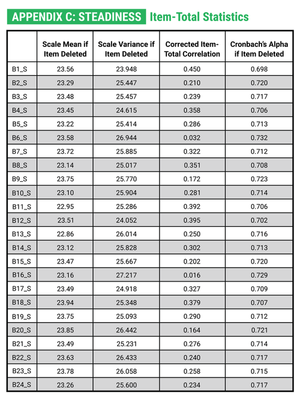
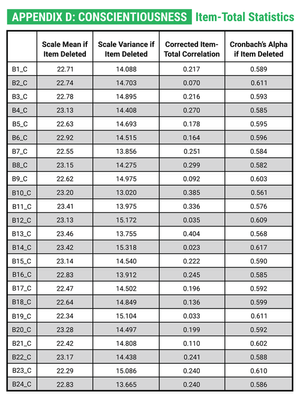
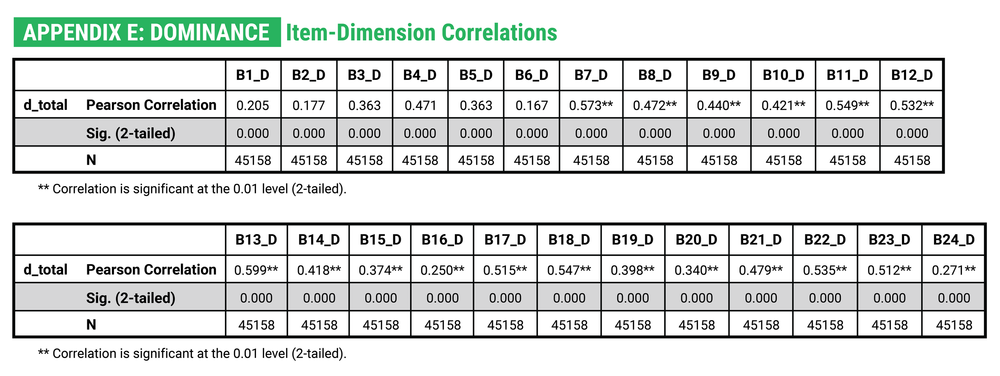
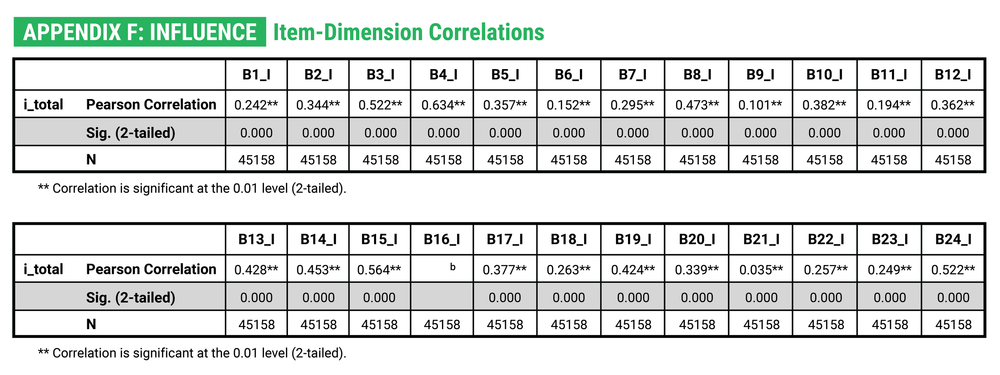
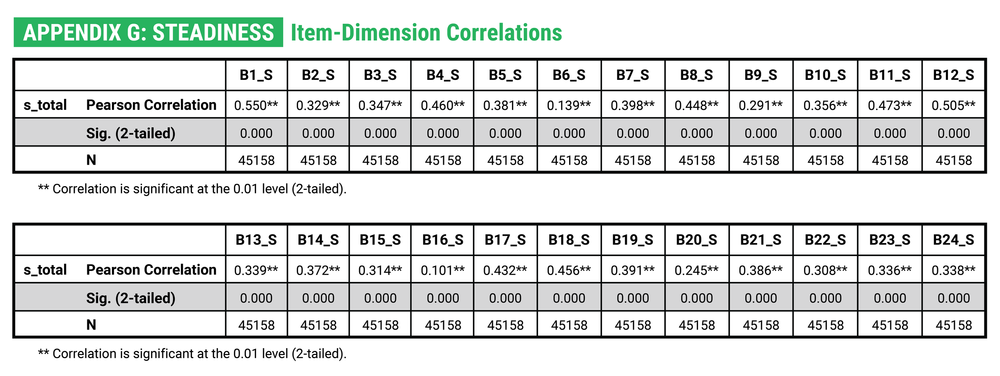
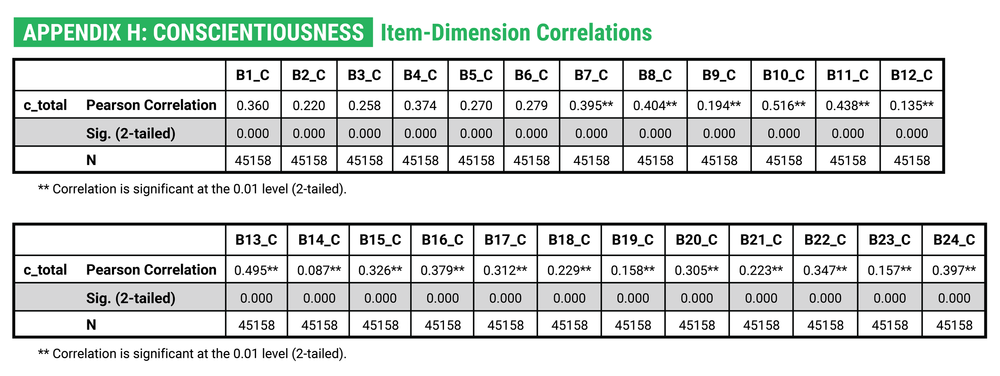
I first conducted a reliability analysis using the 24 variables for each dimension. The alpha reliabilities were .80 for Dominance, .72 for Influence, .72 for Steadiness, and .60 for Conscientiousness. I then investigated whether the alpha reliability would change when deleting any of the 24 items. For all four dimensions, there was no single item that could be deleted that would increase the alpha reliability by .1 or more (see Appendices A-D). I also evaluated the bi-variate correlation between each item and the overall dimension score (see Appendices E-H). All of the correlations were positive and statistically significant (p < .001). The average item-dimension correlation included .40 (range: .17, .60) for Dominance, .35 (range: .04, .63) for Influence, .36 (range: .10, .55) for Steadiness, and .30 (range: .09, .52) for Conscientiousness. In total, these analyses suggest that none of the variables are particularly problematic in their association with the dimension score.
Dimensionality of the DISC Assessment
The DISC is theorized as a circumplex along two continuums. The first is whether individuals view themselves as more powerful or less powerful than their environment (i.e., akin to internal versus external locus of control). The second is whether individuals view their environment as favorable or unfavorable. Dominance entails feeling more powerful than one’s environment and operating within an unfavorable environment. Influence entails feeling more powerful than one’s environment and operating within a favorable environment. Steadiness entails feeling less powerful than one’s environment and operating within a favorable environment. Conscientiousness entails feeling less powerful than one’s environment and operating within an unfavorable environment. Given this dimensionality, we would expect that each dimension is related but relatively unique.
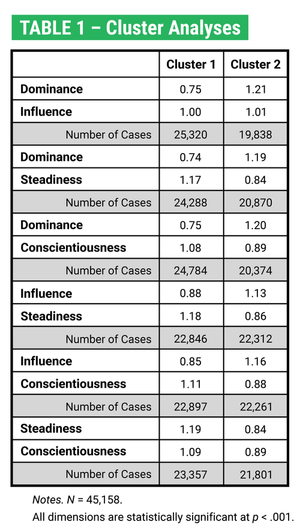
The forced-choice question approach of the assessment does not allow for the traditional factor analysis approach applied to Likert-style assessments. I, therefore, employed a cluster analysis approach to approximate the factor structure. Cluster analyses allow for an investigation of the characteristics of a specified number of profiles (i.e., clusters) within the sample data based on a specified number of dimensions (Scott & Knott, 1974). In this case, I specified two profiles based on two dimensions at a time. I did this for each possible pair (i.e., D and I, D and S, D and C, I and S, I and C, S and C). The underlying theory of DISC would suggest that the two profiles should differ such that the first profile has a higher mean score on one dimension compared to an alternative dimension, and the second profile is the inverse.
I used the mean, dimension-level score for D, I, S, and C in the cluster analyses. The findings of the cluster analyses (see Table 1) generally support a priori expectations. For example, when comparing Dominance and Influence, cluster 1 Dominance (.75) is lower than cluster 1 Influence (1.00), and cluster 2 Dominance (1.21) is higher than cluster 1 Influence (1.01). This suggests that Dominance and Influence are divergent dimensions. This expected pattern does not hold for the Steadiness and Conscientiousness comparison where the cluster scores are similar. However, each of these dimensions shows appropriate differences between the Dominance and Influence dimensions. This suggests that when users feel that they are less powerful than their environment, they might find it challenging to differentiate between their environment being favorable (Steadiness) versus unfavorable (Conscientiousness).
Test-Retest Reliability
A total of 138 users within the sample completed the DISC assessment two or more times. This allowed for investigating whether there were significant differences between the dimension scores across time. Across the 138 users, I conducted a one-sample mean difference t-test. As expected, there were no statistically significant differences for any of the four dimensions (see Table 2 below). This offers support for test-retest reliability.
Conclusion
With respect to inflation bias and social desirability responding, forced-choice measures are considered superior to Likert-style assessments (Anderson et al., 1984). The challenge, however, is that forced-choice measures offer interdependent questions within each forced-choice question block. Thus, it is necessary to impose assumptions to approximate reliability and validity testing. In this case, I created continuous variables by re-scoring questions within each question block. Using this approach I was able to evaluate the general structure of the variables and dimensions. The findings suggest that there are no problematic items and that the four-dimension factor structure is appropriate. Further, findings from our test-retest analyses suggest that DISC scores are likely to remain the same when users take the measure across time.
References
Anderson, C. D., Warner, J. L., & Spencer, C. C. (1984). Inflation bias in self-assessment examinations: Implications for valid employee selection. Journal of Applied Psychology, 69(4), 574–580
Marston, W. M. (1928/2013). Emotions of normal people. Vol. 158. Routledge.
Merenda, P. F., & Clarke, W. V. (1965). Self-description and personality measurement. Journal of Clinical Psychology, 21, 52–56.
Scott, A. J., & Knott, M. (1974). A cluster analysis method for grouping means in the analysis of variance. Biometrics, 507-512.
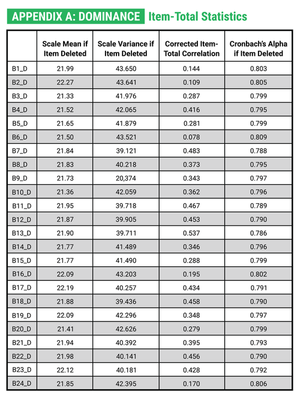
Appendix A
Dominance – Item-Total Statistics
Appendix B
Influence – Item-Total Statistics
Appendix C
Steadiness – Item-Total Statistics
Appendix D
Conscientiousness – Item-Total Statistics
Appendix E
Dominance – Item-Dimension Correlations
Appendix F
Influence – Item-Dimension Correlations
Appendix G
Influence – Item-Dimension Correlations
Appendix H
Conscientiousness – Item-Dimension Correlations
The Big 5 personality traits include conscientiousness, agreeableness, neuroticism, openness to experience, and extroversion. The goal of the Big 5 was lofty—to distill all the possible personality traits into a cohesive, manageable set of factors.
The research signaled that five was ideal, although it could have been more (and some less popular models do have more than five). The selection of five was to ensure that the factors were distinct and comprehensive, such that the factors covered the vast majority of “variance” across all possible personality traits.
The Big 5 has undergone plentiful and robust construct validity analyses and has been included in all sorts of models, making it a solid approach to evaluating how personality traits relate to different types of organizational behavior. More specifically, if the goal is to understand the degree to which a personality trait (e.g., openness to experience) correlates with an outcome of interest (e.g., creativity), the Big 5 is a wise choice.
The challenge with the Big 5, however, is that’s it’s not inherently “practical,” which is the goal in applied settings. The Big 5 is built for research, where the goal is to incrementally advance theory. In applied settings, however, the goal is to facilitate behavior change. This requires a slightly different approach. The factors of interest are still grounded in evidence and have also undergone construct validity analyses. However, the selection of factors (also called dimensions) is based on user utility. Further, the way the assessments are constructed, scored, and reported is more appropriate for those interested in making day-to-day behavior changes. Below, I offer more detailed explanations of these differences.
The first difference is variability. For example, even though conscientiousness is one of the strongest predictors of performance, the mean-level across populations is relatively high. Without variation, it doesn’t add much value to applied settings. Applied, trait-based assessments, such as the dimensions of DISC, 16 types, Enneagram, and Instinctive drives, are built for ensuring that variability exists so that we can glean more specific insights on how the factors show up in work settings.
The second difference is neutrality. The applied, trait-based assessments, for the most part (if done correctly), are purposefully neutral (i.e., they are not “good” or “bad”). Several of the Big 5 have negative connotations—neuroticism in particular. Low levels of agreeableness (i.e., disagreeableness) and low levels of openness to experience (i.e., being close-minded) do as well. Again, although these are clearly universal and important traits, they don’t work well in applied settings. Participants don’t want to be told they are innately flawed. Further, negatively worded assessment questions introduce social desirability bias (i.e., we want to present ourselves to colleagues and supervisors as better than what we really are) and/or inflation bias (i.e., we are biased to think we are better than we really are).
The third difference entails the approach to assessing behavior. The Big five looks at one trait at a time and asks whether you are low to high on that trait through a series of questions. This is the best approach for research settings when you want to evaluate one trait at a time (and statistically “control” for all other traits). This is ideal for incremental science, but not for applied conversations.
Applied assessments look at a factor of interest and then evaluate the poles of that factor. The extroversion trait of the Big 5 does this, with its opposite being introversion, but the others don’t have the same degree of polarity. Being low on neuroticism doesn’t inherently suggest that you are emotionally intelligent, for example (although some have tried to prove that this is the case).
With DISC there is a two-by-two of factors that look at how you view your environment (factor 1 = favorable or unfavorable) and how you approach your environment (factor 2 = aggressive or passive). With 16 Types, the factors cover categories such as “perception” (either sensing or intuition) and “judgment” (either thinking or feeling). Overall, these pole-based approaches ensure that the insights are neutral (not good or bad, just different), people self-rate without bias (no one likes to admit they are neurotic or disagreeable, for example), and those insights can be delivered regardless of where one falls on the factor of interest.
Also important, the personality trait assessments on the Cloverleaf platform do overlap with some of the Big 5 dimensions. In particular, extroversion-introversion is covered in 16 types, and agreeableness is covered, to some degree, in the D vs. I scores of DISC. In my opinion, those are the two most practical factors of the Big 5 in applied work settings.
I’ve heard several academics suggest that using anything except the Big 5 to assess personality is incorrect. This is oversimplified. If the goal is to advance science with respect to personality, the Big 5 is the most suitable. But this is because that is what the Big 5 was built for.
If the goal is to change behavior in applied settings, Cloverleaf’s personality trait assessments—DISC, 16 types, Enneagram, Instinctive Drives—are not only suitable, they are ideal. Academics assume that these practitioner-focused alternatives haven’t undergone construct validity analyses. This is untrue—they just don’t have the data to conduct these analyses. The assessment providers offer some analyses, independent academics have conducted analyses and published the findings in peer-reviewed outlets, and I have conducted our own analyses on our user database. The findings are sound.
In summary, the Big 5 is amazing, especially if you’re conducting research. But as of today, we are focusing on incorporating personality trait assessments that offer as much practical utility as possible.
HUMAN SKILL PROGRAMS ARE HITTING LIMITATIONS...
5 THINGS THIS FREE RESOURCE WILL TEACH YOU
- Close the widening gap between learning and on-the-job application
- Overcome the tension of pausing productivity for development opportunities
- Integrate learning so it is actually in the flow of work
- The evolution of human skill development
- What Automated Coaching™ is and how it works.
We all know the story. Someone hits a wall—exhausted, irritable, going through the motions—and looks up wondering how they didn’t see it coming. The truth is they probably did see it, in their own way. They just didn’t recognize the signal, because the burnout content they’ve consumed described someone else’s version of it.
Every article about workplace burnout gives you the same three dimensions: exhaustion, cynicism, and a feeling of inefficacy. That framing isn’t wrong. Christina Maslach and her team established those three dimensions decades ago and they remain the canonical definition. The problem is that the three dimensions describe what burnout
is once it’s already there. They don’t describe how it shows up for you, two weeks before you can name it.
Recognizing burnout isn’t really about identifying the moment it arrives. It’s about catching the patterns that precede it—patterns that look different depending on how you, personally, respond to stress.
The Three Dimensions Of Burnout In The Workplace
Exhaustion: Most of the time when we talk about job burnout, we are actually thinking about emotional exhaustion. This is that sense of fatigue, lack of energy, and “I don’t want to do this I really just want to take a nap”.
Cynicism: Cynicism adds to emotional exhaustion. It is recognizing that you are mad at the source of emotional exhaustion. It’s a sense of depersonalization where you become cynical about the source of that extreme work-related stress where you think “ I do not want to even be a part of this anymore.”
Inefficacy: The third dimension is a sense of inefficacy. You just don’t feel capable, you do not feel confident to do this. So, it is not just the feeling of fatigue- it is actually where you start to engage in cognitive processes that are fighting against the source of that emotional exhaustion.
Half the U.S. workforce is burned out. The definition has held up for 50 years.
Burnout has been studied for over fifty years and the three-dimensional framing has held up. Exhaustion is the emotional and physical fatigue that doesn’t lift with sleep. Cynicism is the protective distance you build between yourself and the work you used to care about. Inefficacy is the creeping sense that nothing you do is good enough, that the gap between what you produce and what you used to produce is widening.
The World Health Organization added burnout to its International Classification of Diseases in 2019 as an “occupational phenomenon.” Eagle Hill’s 2025 worker burnout survey found that more than half of the U.S. workforce reports being burned out. Recent data from DDI’s Global Leadership Forecast 2025 shows 71% of leaders report significantly higher stress since stepping into their current role, and nearly one in six are facing full burnout.
So the universal framing is real. But the gap between universal and personal is where most people miss the signal.
Burnout can look different depending on your personality type
People don’t experience stress the same way, which means they don’t experience burnout the same way either. A Type 3 on the Enneagram—the Achiever—often masks burnout behind performance. The cynicism shows up before the exhaustion does because the drive to keep producing pushes through fatigue until the body refuses. A Type 9—the Peacemaker—might frequently become passive before any of the three dimensions become visible to colleagues. A high-D on DISC may gets sharp and impatient, then dismissive, well before they’d label themselves as exhausted.
These aren’t just personality quirks. They’re the early signature of how stress is going to compound for you, specifically. The first signal of burnout for an Enneagram 1 (the Perfectionist) is often a rigid, self-critical inner voice that ramps up before any energy depletion. For a Type 7, it’s restlessness—scattering into new projects to outrun emotional discomfort. For a Type 5, it’s withdrawal into knowledge work and a disconnection from the body and team that makes other people notice before they do.
The version of burnout you should be watching for is the one that matches your behavioral patterns. Knowing which patterns you have—through validated assessments like DISC, Enneagram, or Insights Discovery—can help prevent getting to “I’m burned out” and instead help individual recognize, “I see the pattern that seem to precede my burning out, and I can intervene now.”
For a deeper framework on matching the right assessment to your leadership development goals (including stress response and derailment patterns), see which personality assessment is right for your leadership team.
This is why a one-size-fits-all symptom checklist is less useful than people think. The checklist is downstream. The signal you actually need is upstream, and it’s wired into how your stress response works.
Know your own stress signals
Peter McLeod was an acrobatic pilot for Red Bull for years. When I was growing up I used to go fishing in northern Ontario, Canada every year. Peter is the son of the outfitter where we stayed ever since I was little. When Peter was seventeen, he was doing a practice run, and his dad invited us to watch. It was insane—upside-down flyovers, absolutely unreal.
After the trial run, Peter landed and came back to talk with his dad. They went over every detail of how the plane operated—whether the noises sounded different, the seat adjustment, reaching top speed 0.1 seconds faster. It was incredible to listen to. We jokingly asked, “Can you come back and do this tomorrow?” Peter’s response was clinical: “After doing that type of work with this machine, it’s going to take at least a week’s worth of maintenance.”
The real work isn’t the acrobatic flying. The real work is taking care of the machine. Your mind and body are a machine that handles a lot of stress. If you don’t know how your machine responds to stress—the specific noises that mean something is wrong—you’ll miss the signal until you’ve already crashed.
Four questions to spot your burnout pattern earlier
If you want to catch your burnout earlier than the universal symptom list will let you, start by knowing your pattern. A few questions that work harder than the standard “do you feel exhausted?”:
1. When you’re under sustained pressure, do you push harder, withdraw, or chase new distractions? Each is a different early signature, and recognizing which is yours is half the battle.
2. Where does the strain show up first—in your relationships, your output, your body, or your mood? People with different assessment profiles consistently feel it in different places first.
3. What does your “10% off” version of yourself look like? The version that’s not yet exhausted, but isn’t quite running clean either? That’s the version you want to recognize, because it shows up six to eight weeks before the full burnout.
4. Who notices first—you, a colleague, your partner? For some people the external signal is more reliable than the internal one; for others, the inverse is true. Knowing which is yours is part of the work.
These questions don’t replace the validated burnout instruments—they sit upstream of them. They give you a chance to notice the pattern before it compounds into the three dimensions everyone already knows how to name.
Recognized the pattern? Here’s how to recover.
Naming what you’re feeling is the first move, but it’s not enough. Burnout has causes—most of them organizational, not personal—and recovery is a system, not a 14-tip list. If you’ve identified the pattern and you’re ready to address the cause and start recovering, read part two: the causes of burnout and a five-stage recovery framework.
The earlier you catch your version of the pattern, the more options you have. The further it compounds, the fewer.