
Energy Rhythm assessment for teams
See when teammates feel most focused and energized. Plan meetings, protect focus time, and coordinate collaboration with team insights and personalized coaching.
The 2026 Leadership Coaching and Mentoring Playbook
Improve leadership performance, strengthen the leadership pipeline, and build a coaching culture that drives results.
What you get in this playbook:
- Practical coaching tips, exercises for team meetings
- How teams scale coaching impact
- Examples of how high-performing orgs put DISC to use
Download the playbook
THE CLOVERLEAF DIFFERENCE
What makes Cloverleaf’s chronotype assessment different
See team patterns
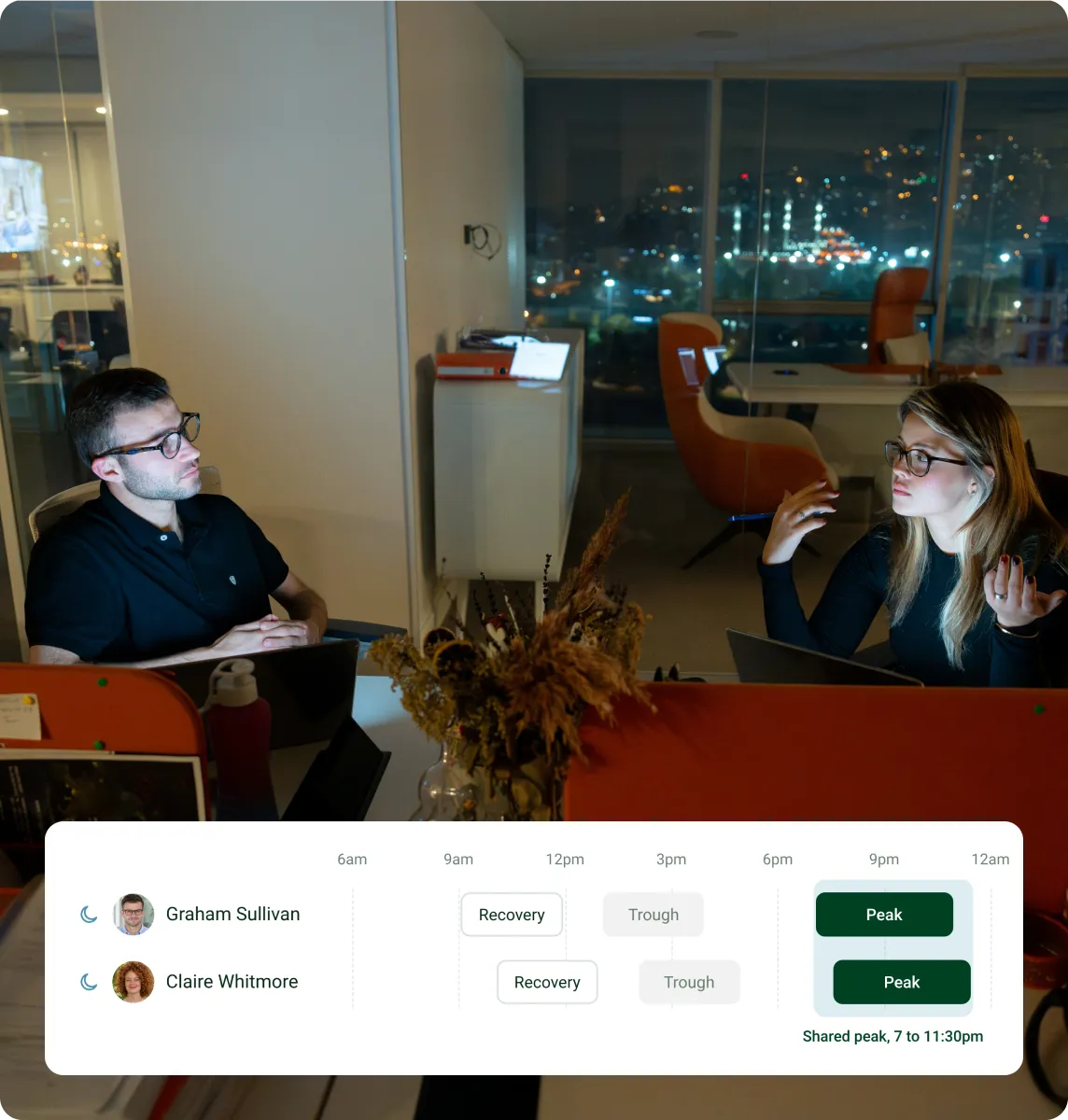
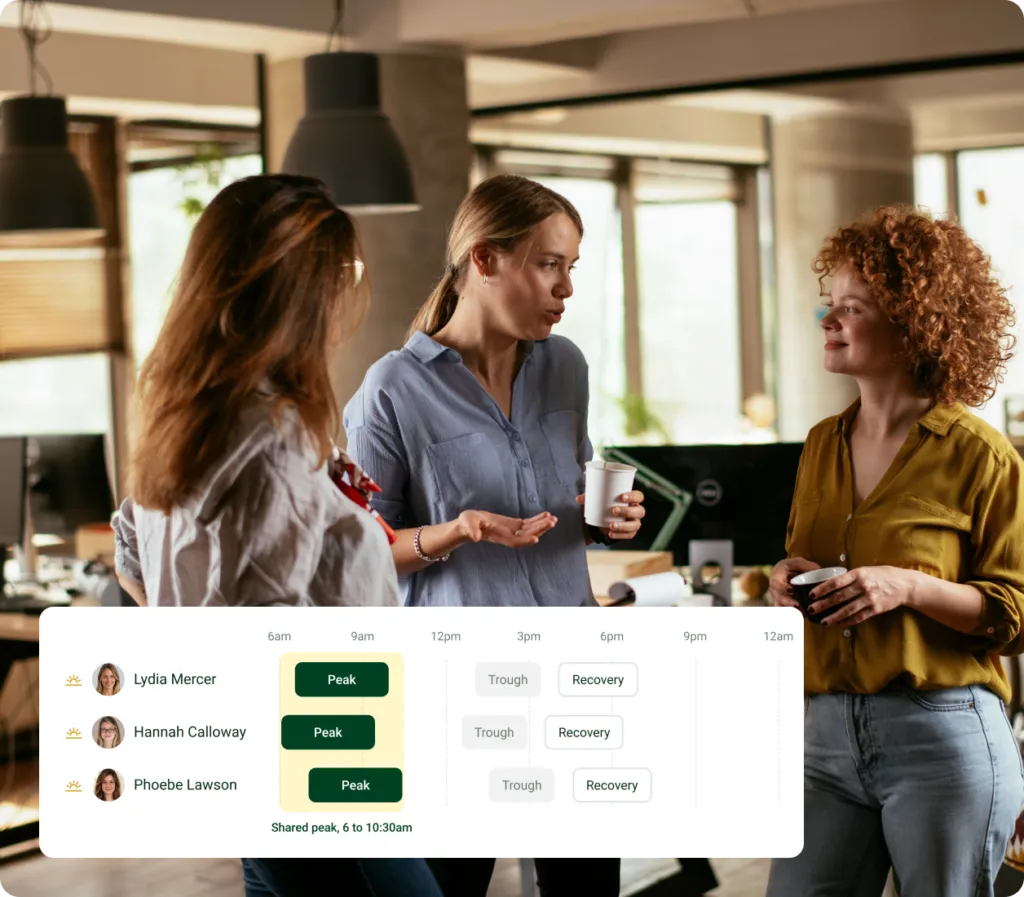
View teammates’ energy rhythms together to discuss meeting times, shared tasks, and opportunities for uninterrupted work.
Connect insights
Understand daily energy patterns alongside communication preferences, strengths, and motivations with multiple assessments in one platform.
Coach collaboration
Get guidance on coordinating with teammates whose energy peaks at different times, including how to discuss focus needs and plan work together.
In the flow of work
Access personalized coaching through Slack, Microsoft Teams, Workday, email, and supported AI assistants as teams put their results into action.
It's incredible how this platform understands my work style and motivates me to strive for better collaboration and personal growth."
- LIEW Sookmun,
Employer Branding Manager, APAC, BASF
What is the Energy Rhythm assessment?
Energy Rhythm is Cloverleaf’s chronotype assessment. A chronotype describes when a person naturally tends to feel alert and energized during the day.
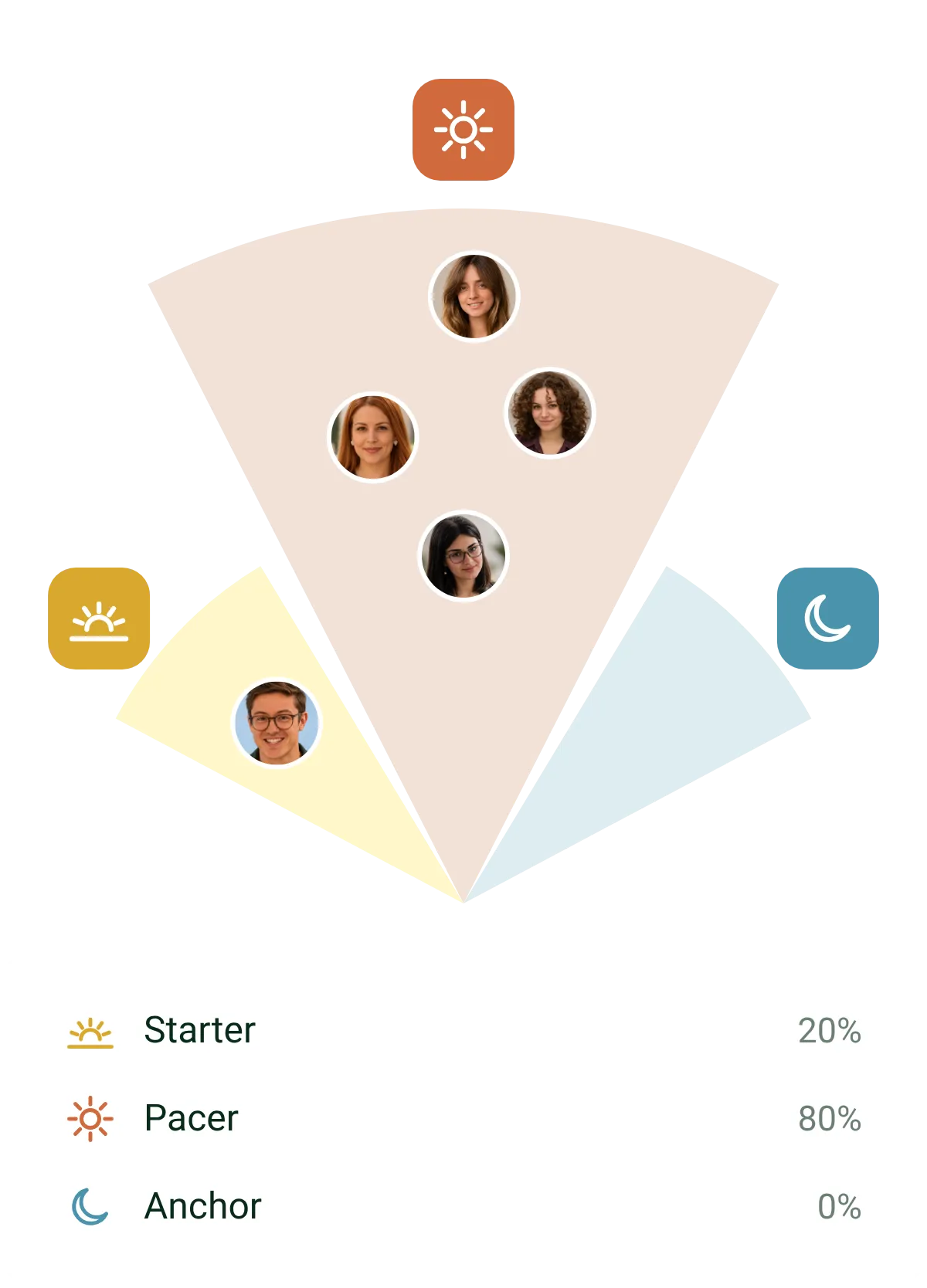
The assessment identifies three patterns: Starter, Pacer, and Anchor. Each describes a different timing for energy peaks, dips, and recovery, giving teammates a shared language for discussing when they prefer to focus, meet, and collaborate.
What the Energy Rhythm assessment measures
The three chronotypes
Energy Rhythm identifies when a person’s energy tends to rise and dip throughout the day. Results fall into three chronotypes: Starter, Pacer, or Anchor.
Morning Type
Starter
Energy peaks early in the morning, dips in the mid-afternoon, and begins to recover later in the day.
Midday type
Pacer
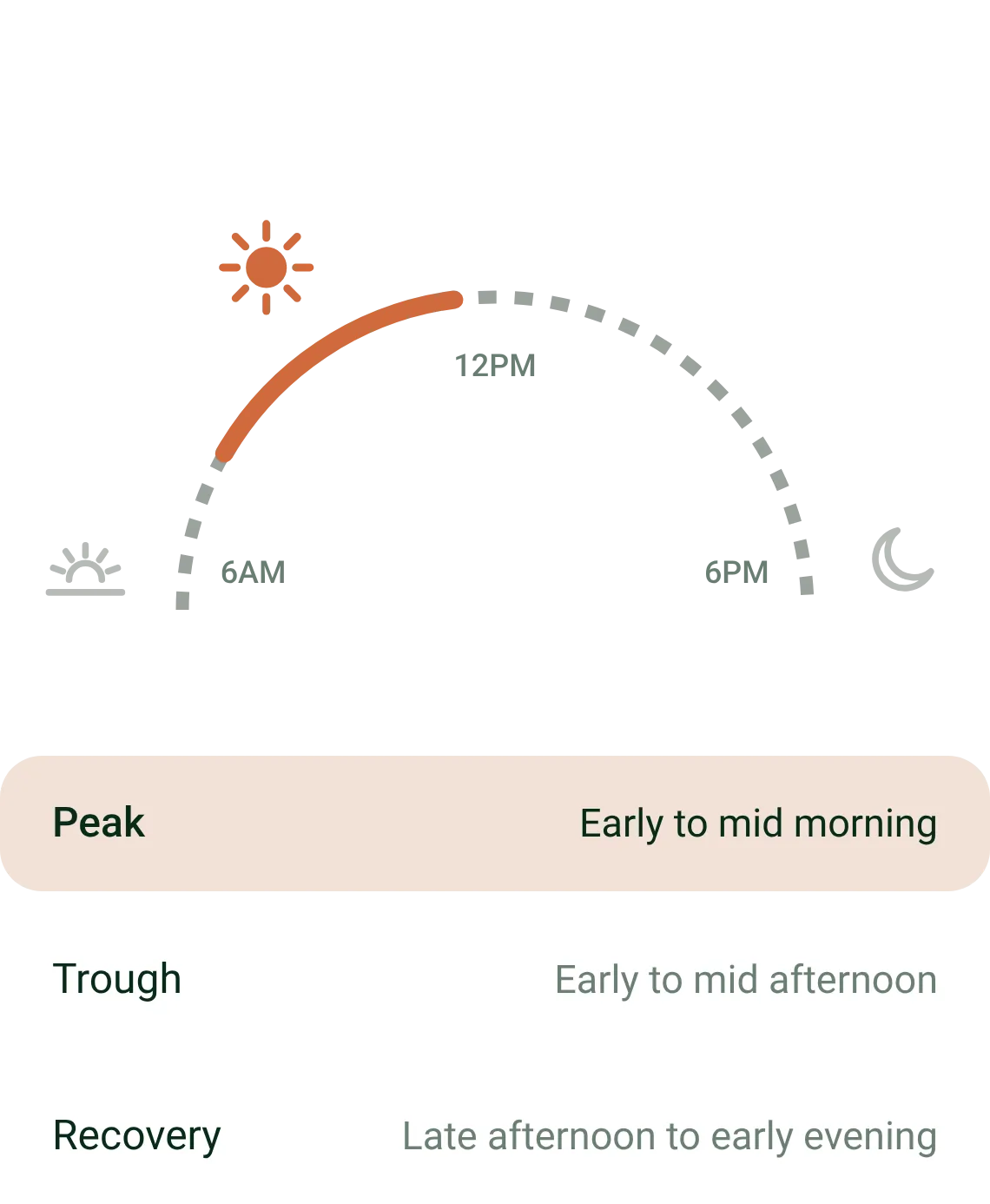
Energy peaks in the mid-morning, dips in the mid-afternoon, and recovers in the late afternoon or early evening.
Evening Type
Anchor
Energy peaks in the late afternoon or evening, with a dip in the early to mid-afternoon and a recovery period in the morning.
How teams can plan work around daily energy levels
Protect focused work
During peak periods, reserve time for analysis, detailed planning, and decisions that require sustained attention.
Make room for routine tasks
During energy dips, consider scheduling administrative work and updates that require less intensive concentration.
Explore ideas together
As energy recovers, consider brainstorming and open discussion. Compare teammates’ rhythms before choosing a time for collaboration.
How to start using Energy Rhythm with Cloverleaf
1
Set up your team
Invite employees and choose their assessments.
2
Explore team results
See where teammates' chronotypes overlap and where they differ.
3
Get personalized coaching
Plan meetings, protect focus time, and collaborate across different energy rhythms.
Bring Energy Rhythm into people development
Give managers and employees a shared starting point for discussing energy, availability, and collaboration.
Onboarding
Include energy preferences in early conversations about meeting times, focused work, and expectations for responding to colleagues.
Manager development
Coach managers to discuss energy differences with direct reports when planning responsibilities, deadlines, and recurring meetings.
Set expectations
Inform conversations about flexible schedules while accounting for customer needs, team availability, and required hours.
Team workshops
Compare energy patterns and identify one change to try, such as moving a recurring meeting or setting aside time without interruptions.
Cloverleaf allows our leaders, our directors, our vice presidents… to truly know what drives and motivates our people."
- Kevin Mills,
Vice President, Organizational Development

The research behind Energy Rhythm
Circadian rhythms and chronotypes
Cloverleaf developed Energy Rhythm using research on circadian rhythms and chronotypes, which examines differences in people’s daily patterns of energy and alertness.
Cloverleaf also tested the seven-question assessment for reliability and validity. Its validation summary reports evidence that the questions measure consistently and assess the intended concept of chronotype.
Frequently asked questions
Even when working hours are fixed, teams can discuss when to schedule demanding tasks, meetings, and focused work within those hours. Results inform those conversations alongside staffing, customer needs, and deadlines.
Energy Rhythm shows when teammates’ energy typically peaks and dips. It gives teams a starting point for discussing meeting times, rather than identifying one ideal time for everyone. Availability and individual experience still matter.
There’s no ideal chronotype mix for a team. Energy Rhythm helps colleagues understand differences and coordinate their work. Results shouldn’t determine team assignments or expectations about someone’s ability or performance.
Chronotype results give teams another factor to consider alongside time zones and availability when scheduling shared work. Teams can discuss which meetings need everyone present and where written updates allow more flexibility. Energy Rhythm informs these decisions; it doesn’t automatically calculate meeting times.
It provides a dashboard and coaching framework so leaders can schedule smarter, balance workloads, and improve engagement.