
People development is no longer a matter of simply offering training sessions. Today’s leaders face a more complex challenge: building stronger teams while proving the ROI of these initiatives, all without sacrificing productivity. With traditional training methods struggling to keep up, the challenge is no longer just about offering learning opportunities but integrating them into everyday work in a way that drives measurable outcomes.
For example, consider companies that invest heavily in leadership workshops but struggle to see these skills applied on the job. This gap between training and real-world application leads to stagnant growth and missed opportunities. Employees are left juggling development and productivity as two opposing forces, often feeling that time spent learning pulls them away from their responsibilities.
What is the real challenge? Training disconnected from daily work feels like a waste to participants and upper level leaders.
Organizations need strategies to improve performance faster. Adding more training sessions is rarely the answer; it often comes down to embedding practical guidance into the flow of work so development happens when it’s needed most—on the job, in real time.
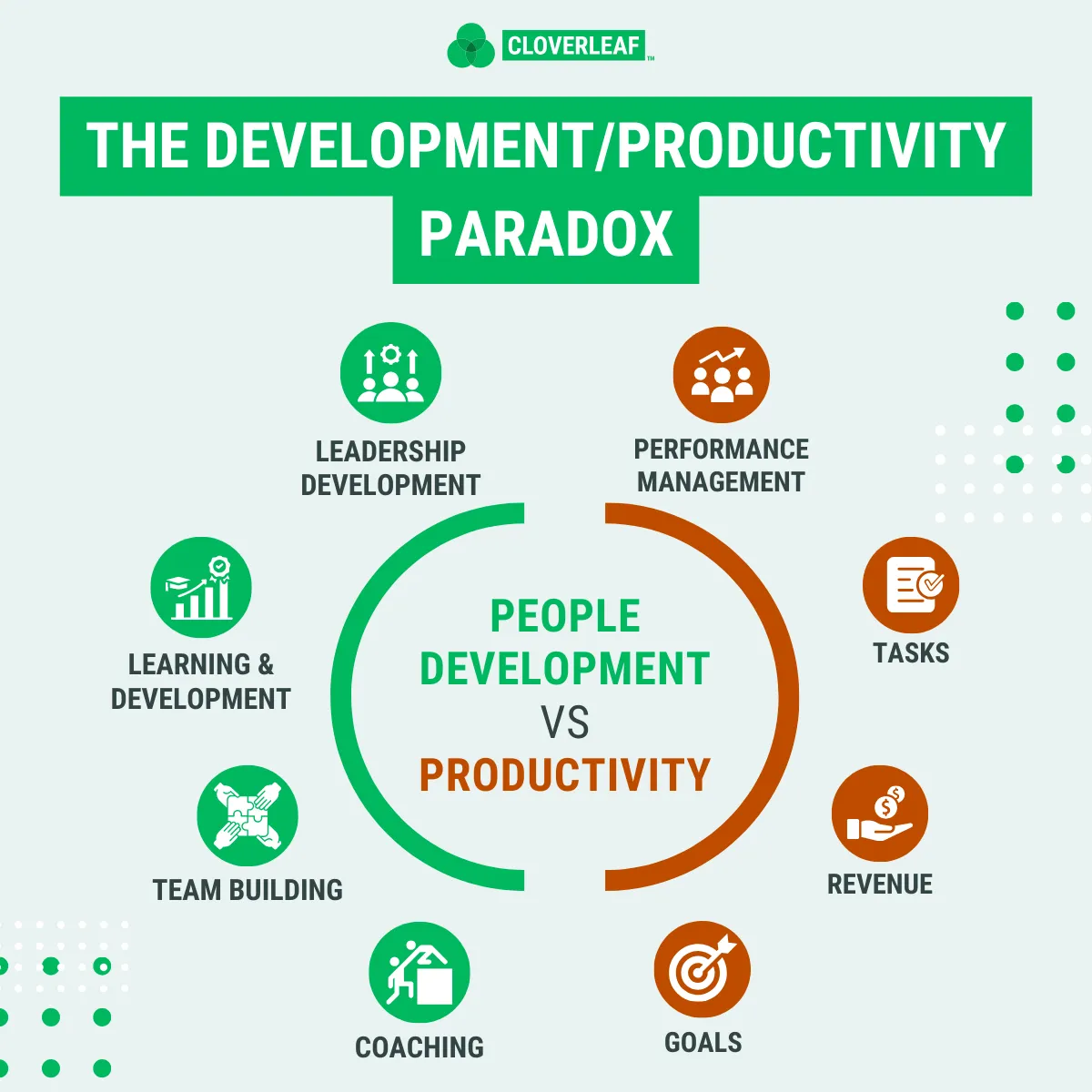
The Productivity vs. People Development Paradox
One of the toughest challenges for Talent Development leaders is the constant pull between getting work done and helping teams grow. High performance is always expected, but so is developing your people. This creates a paradox: time spent learning can result in time lost on the job.
Workshops, one-on-one coaching sessions, or LMS can struggle to bridge this gap. While they can help provide valuable learning, these insights can seem abstract and disconnected from an individual’s daily responsibilities. As a result, people walk away with great ideas but rarely get the chance to apply them where they’d have the most impact.
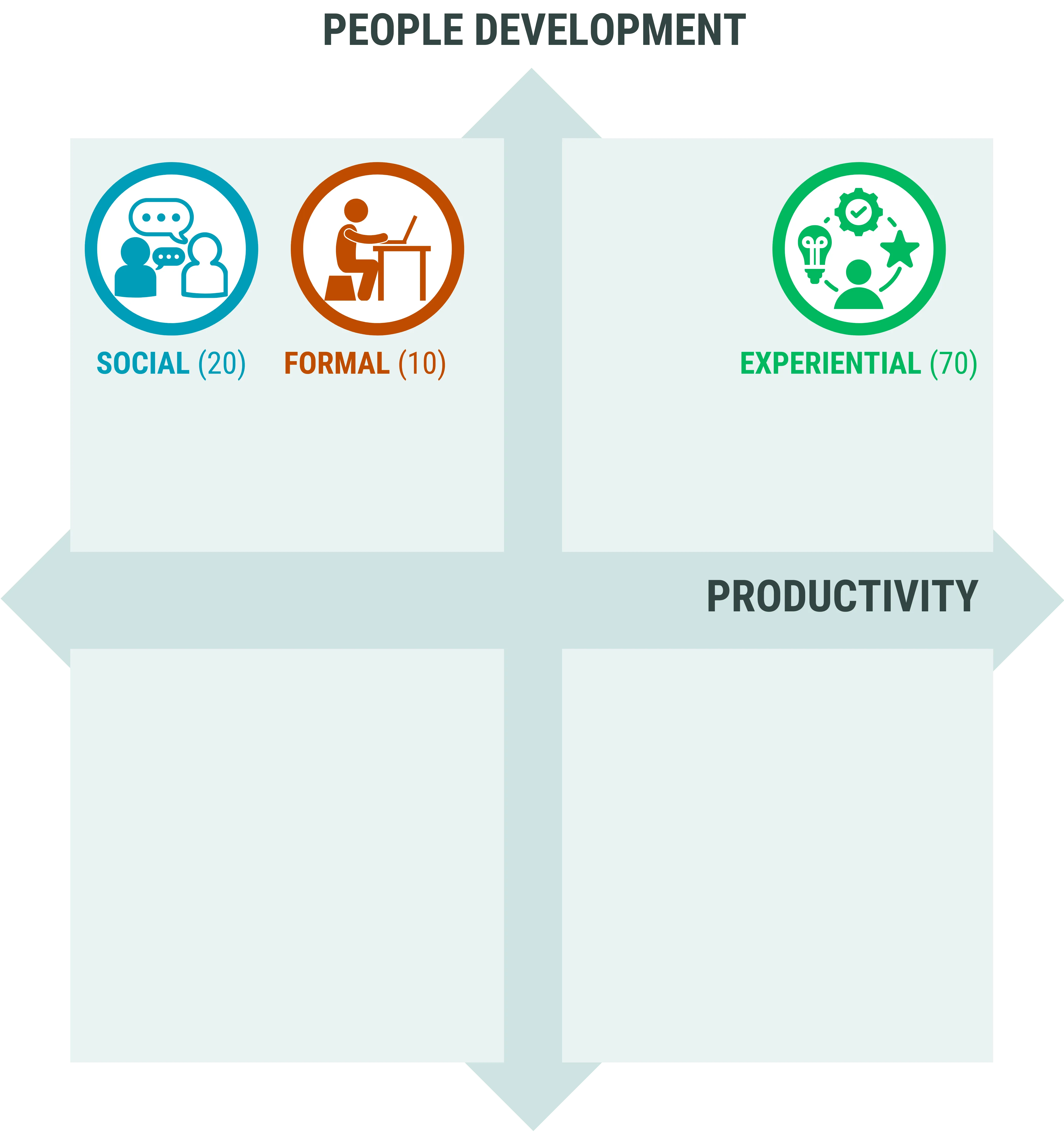
Research shows that growth happens when development isn’t at odds with productivity. The 70-20-10 model shows that learning is most applicable when relevant and contextual to one’s work. The 70-20-10 Model indicates that 70% of learning is experiential—in other words, it happens through doing. Another 20% comes through social interactions like mentorship or team discussions, and only 10% is formal. Yet, most traditional programs focus too heavily on that 10%, missing out on the opportunity to make development relevant to daily work.
How much time and budget are wasted on programs and training models that don’t lead to meaningful improvements in team performance? The cost isn’t just lost time—it’s reflected in low engagement, high turnover, and missed growth opportunities.
Ready To Scale People Development In Your Organization?
People Development Strategies Are Evolving
Workshops, formal training, and one-on-one coaching have their place but can struggle to match the speed and complexity of modern work environments. People need support that speaks directly to their work challenges. Teams face people problems, difficult feedback conversations, or collaboration issues that can’t wait for scheduled training sessions.
What If Development and Work Do Not Have to Compete As Opposing Forces?
Forward-thinking organizations have realized that pulling employees away from their daily responsibilities for formal training is not a one-and-done solution. Instead, development needs to happen where the work happens.
By embedding personalized coaching into employees’ daily routines, companies can ensure that learning is relevant and immediately applicable, driving growth and performance without disrupting productivity.
Effective development cannot happen by squeezing learning into downtime—instead, it should partner with work through practical, actionable learning. Teams need in-the-moment guidance that directly addresses the challenges they’re facing.
It’s not about theory—it’s about helping individuals solve the problems they’re tackling right now, whether it’s managing team dynamics, navigating a tough conversation, or preparing for a project. Providing this kind of actionable support makes development practical and results-driven.
Picture this: a manager preparing for a difficult conversation receives a personalized tip a few hours before the meeting, helping them adjust their approach. It’s fast, easy, and directly impacts the outcome of that interaction. This kind of support not only builds better skills but does so without pulling people away from their work.
When development becomes a natural part of daily tasks, its impact grows exponentially. An integrated approach ensures that development directly influences employee growth and team performance to soften the tension between learning and productivity.
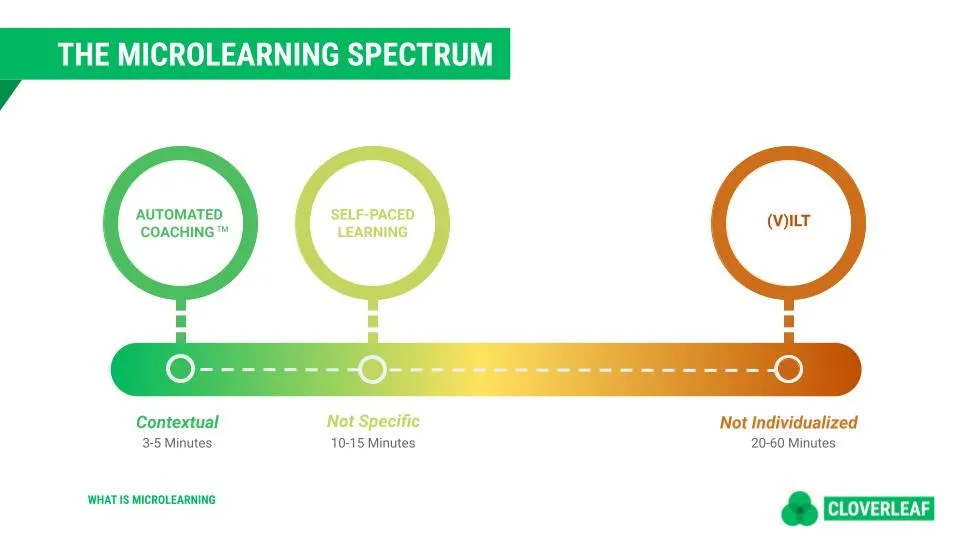
Microlearning Tools To Build Skills in the Moment
Microlearning addresses a critical gap in traditional development. Waiting for scheduled sessions often means teams miss out on immediate solutions to pressing challenges. Teams facing conflicts, feedback issues, or urgent decision-making can’t afford delays. In these fast-paced environments, learning that happens on demand and in direct response to current problems is vital.
For example, an employee dealing with a tough client interaction can’t wait for a quarterly workshop on communication—they need help managing the situation effectively. Microlearning shines in these instances. It integrates learning directly into workflows, providing timely solutions that drive quick decision-making without interrupting productivity.
Time-sensitive problem-solving becomes seamless when learning is immediately available. Whether it’s handling a difficult conversation or adapting project strategies, microlearning delivers insights precisely when needed, ensuring that development is actionable and applicable in the moment.
This approach doesn’t just build skills—it ensures those skills are immediately put to use, allowing for continuous improvement and growth without sacrificing team performance.
Using Tech To Support & Develop People In Every Role
Personalized coaching used to be limited to top executives; however, with massive technological advancements, so much is possible today that was implausible a few short years ago. Using data from behavioral and strength assessments, learning can now be customized to each individual’s specific needs and situations. This means employees receive relevant guidance based on what they’re currently facing, whether it’s a challenging meeting or improving communication with a teammate.

Unlike one-size-fits-all solutions, people development tools can provide context-specific advice that speaks directly to the person and their role. For instance, someone preparing for an important meeting might receive tips on how to better collaborate with a teammate who has a different problem-solving style. This way, coaching becomes practical, directly helping people navigate their daily responsibilities.
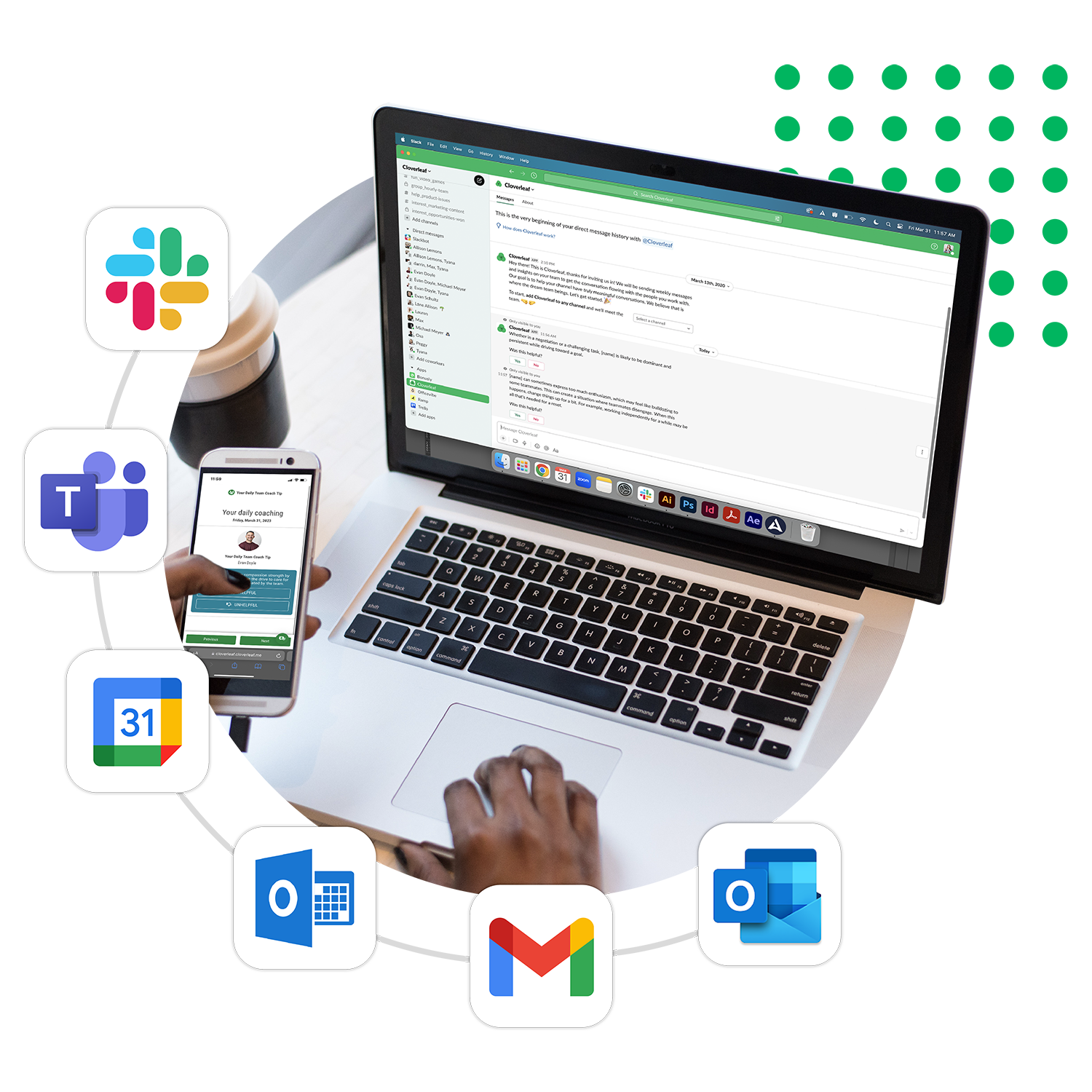
Because this coaching is embedded into tools teams already use, like Slack or Microsoft Teams, consuming it is easy because it’s a natural part of the workday—not an additional burden. By providing this kind of continuous, on-the-spot support, automated coaching ensures that development happens in a way that’s personal, helpful, and scalable for every person, from entry-level to senior leaders.
Comparing People Development Strategies
Let’s compare common development approaches to automated coaching technology.
Strategy A: Passive Development with Delayed Impact
A middle manager is recommended by their direct leader to attend a virtual course on giving feedback. Excited by the opportunity, they sign up for a 90-minute session. The course is insightful, offering various perspectives and techniques. By the end, they walk away with a handful of ideas and some potential strategies to try. But when they return to their desk, they find 25 unread emails and 15 Teams messages. Overwhelmed by the backlog, the actionable ideas from the training quickly fade as they scramble to catch up.
The time investment feels heavy, and by the time they’ve cleared their inbox, the training’s value has already begun to slip away.
- A manager completes a feedback training session but struggles to implement the lessons amid their workload.
- Training feels disconnected from their day-to-day tasks, resulting in lost opportunities to apply what they learned.
- Insights quickly fade without reinforcement or immediate context, diminishing the effectiveness of the development effort.
Strategy B: Continuous Development with On Demand Support
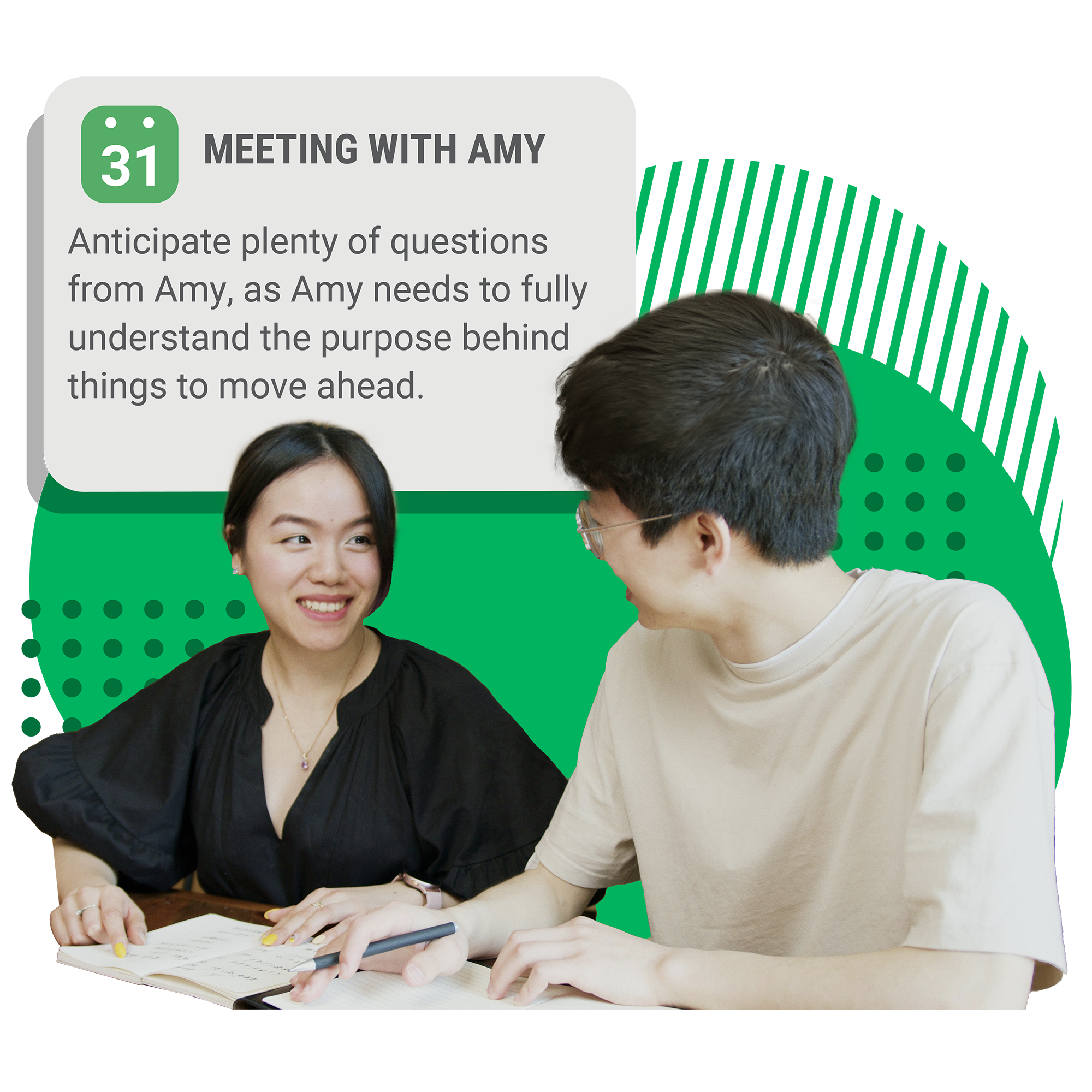
Instead of carving out time for a lengthy training, imagine the same middle manager receiving personalized, actionable insights just one day before a 1-1 meeting with a direct report. They get tailored Automated Coaching™ tips that explain how their direct report prefers logical, direct feedback without unnecessary small talk. They can also search for different coaching tips to add to their strategy. The tips suggest sending an agenda before the meeting to set clear expectations.
With this quick, relevant coaching, the manager adjusts their approach and adds a simple agenda to the invite. The process is brief (think minutes, not hours) and is done seamlessly between their responsibilities or even in the moment with a customized dashboard.
The result? They’re better prepared, and the feedback conversation feels more productive and personalized.
- Automated Coaching provides timely, personalized tips for upcoming tasks or meetings, such as preparing for a feedback session.
- The manager receives guidance directly relevant to the team’s dynamics and communication styles.
- Development can happen at the moment in just a couple of minutes, ensuring that learnings are immediately applied for better team outcomes.
Bridging Learning with Real-World Application
Embedding development into daily work isn’t just a matter of convenience; it’s a breakthrough in creating lasting behavior change. Learning is more effective when it’s applied immediately, as the brain is better at retaining knowledge when it’s used in real scenarios rather than abstract settings. Traditional learning methods often leave a gap between theory and practice, causing valuable insights to fade before they are implemented.
If learning isn’t applied immediately, teams miss critical growth opportunities. Delayed application can lead to a lagging leadership pipeline, eroding team culture, and underdeveloped skills. These lapses create a ripple effect—hindering productivity, growing frustration, and diminishing team performance over time.
Applying learning in directly related teamwork also builds muscle memory around key human skills such as communication, feedback, and collaboration. These skills are crucial to team performance, but they’re often undervalued when left to traditional training methods that don’t offer immediate reinforcement.
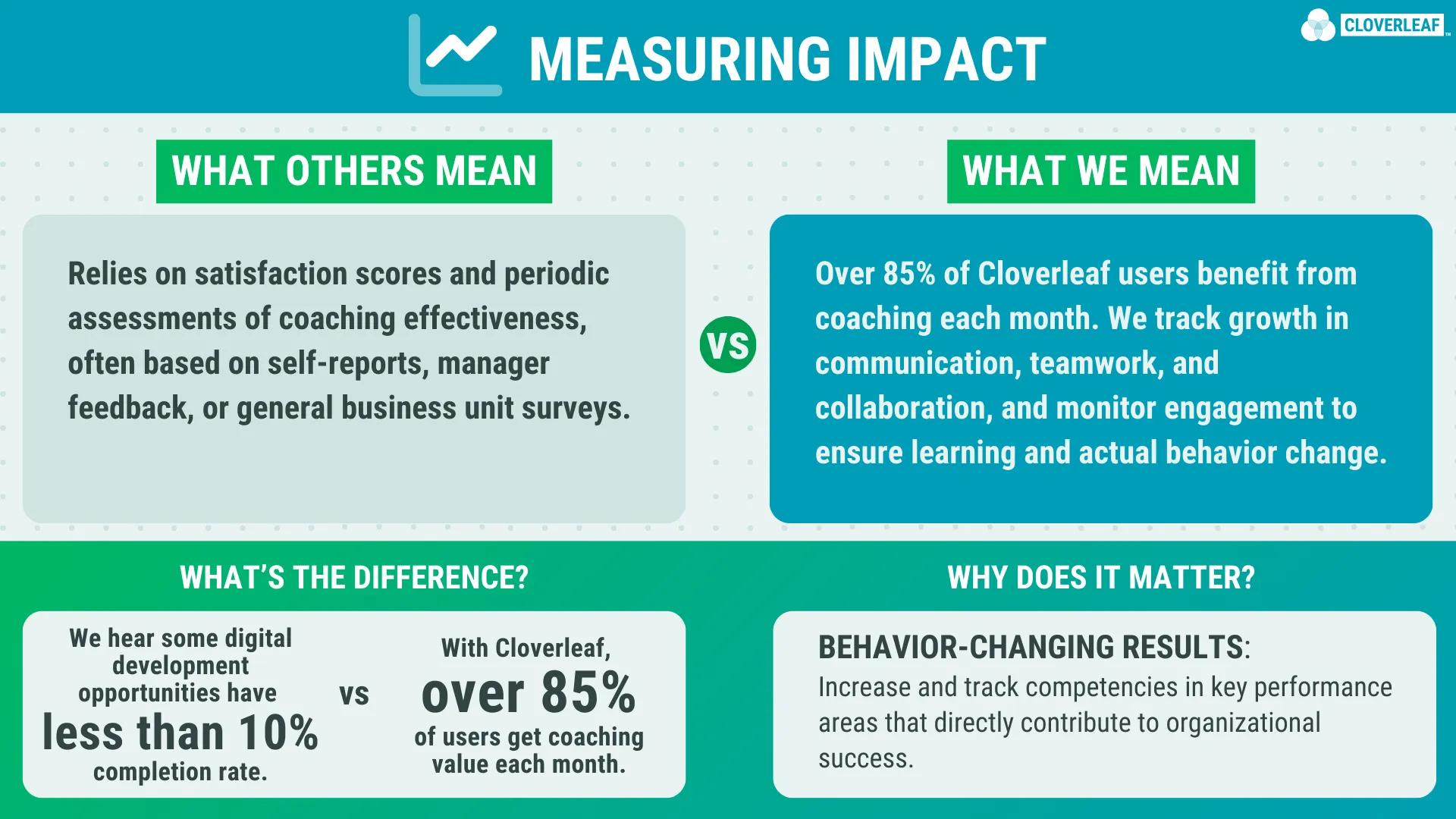
Measuring the ROI of People Development: Uncovering the True Value of Human Skills
For too long, human skills like collaboration, communication, and leadership have been undervalued because they’re difficult to measure. Yet, these skills are often the most critical factors in a team’s success. As the pace of work accelerates, organizations can no longer afford to overlook the real impact that effective people development can have on both performance and profitability.
The challenge for People Strategy Leaders? Proving the connection between these “soft” skills and hard business results.
This disconnect exists because most organizations focus on measuring the wrong things. Attendance rates at training sessions or simple pulse surveys only tell part of the story—they don’t reflect whether teams are truly growing in ways that impact the business.
The solution lies in shifting from measuring participation to measuring behavior change. Tools like Cloverleaf’s Automated Coaching™ provide leaders with data that shows how development efforts are driving real, measurable improvements over time. For example, by tracking how individuals adapt their communication styles or improve in areas like conflict resolution and teamwork, Cloverleaf helps leaders see a direct correlation between skills growth and team performance.
How Cloverleaf Quantifies Human Skills:
- Behavioral Insights: Cloverleaf uses data-driven insights to track improvements in key areas like communication, collaboration, and leadership. It’s not about whether someone attended training—it’s about how their behavior changes in real work scenarios.
- Collaboration as a Measurable Asset: Cloverleaf analyzes the quality of team interactions, such as feedback loops and communication effectiveness, to show how well teams are working together. Effective collaboration is no longer intangible—it’s measurable.
- Real-Time Impact: Rather than waiting months for performance reviews or quarterly reports, Cloverleaf provides real-time data on how development initiatives are impacting individual and team performance. This makes it easier for leaders to pivot their strategy based on immediate insights.
By quantifying the human element—the relationships, communication styles, and leadership qualities that fuel high-performing teams—leaders can finally draw a clear line between people development and business outcomes. This data-driven approach provides more than just proof of ROI; it helps organizations optimize their investment in the human skills that drive long-term success.
Taking the Next Step in People Development
People development is not a one-size-fits-all endeavor—it’s about understanding and responding to each individual’s specific, ever-evolving needs. Today’s leaders must embrace tools that adapt to these complexities and support personal growth without interrupting productivity. The future of people development lies in deep personalization and the ability to deliver insights that guide individuals toward their best performance in the moment it’s needed most.
By leveraging behavioral insights and focusing on practical, applied learning, tools like Cloverleaf’s Automated Coaching™ don’t just train individuals—they transform how teams collaborate, solve problems, and achieve success. It’s not about offering more learning opportunities; it’s about making learning integrated, accessible, and relevant at every step of the journey.
The ability to build high-performing, adaptive teams that can rise to the challenges of a rapidly changing workplace is at stake. Are you ready to equip your teams with the tools they need to grow where it matters most—on the job?
Cloverleaf provides a scalable, personalized solution to do just that. Schedule a demo to explore how our platform can redefine your strategy for people development and drive meaningful, lasting change across your organization.
Your team is busy—navigating tight deadlines, back-to-back meetings, and shifting priorities. Traditional coaching programs? Of course, they’re valuable, but they can often cause those participating to feel like it is an additional task that competes with their productivity. It’s a challenge to designate time, space, and mental energy to lengthy sessions or wait for their next performance review to get the feedback they need. And teams are often scattered, hybrid, or remote, and the demands for agility are higher than ever.
That’s why leaders are turning to micro-coaching. Think bite-sized, actionable nudges delivered directly within the workday—digital coaching that meets your team where they are, when they need it most. It’s not about scheduling sessions; it’s ongoing, accessible development that drives growth without disrupting the workday.
Micro-coaching can make personalized coaching possible for entry-level employees to executive leaders – everyone can have an equal opportunity to develop. Let’s explore why this approach is more than a trend; it’s a necessary evolution for teams striving to grow and adapt as the workplace seems to reinvent itself daily.
Overcoming Coaching Bottlenecks To Organization-Wide Development
One of the primary barriers to impactful coaching is its resource-intensive nature. Whether it’s one-on-one sessions, workshops, or coaching at group levels, these approaches are simply too costly and logistically challenging to scale across a fast-moving, dynamic workforce. A survey by the Institute of Coaching found that only 23% of employees receive the coaching support they need to thrive.
Employees require immediate, context-specific feedback that addresses the challenges they’re facing in the moment—not at the next scheduled coaching session. What happens in the meantime? Employees spend days or weeks struggling with tasks or team dynamics, missing the opportunity for improvement when they need it most.
People think and work differently, have different motivators, and face different obstacles. Employees crave relevant guidance that fits their specific needs and helps them solve immediate problems. This not only serves the individual but the overall organization. According to Gallup, 80% of employees who have received meaningful feedback in the past week are fully engaged.
Can Coaching Scale Without Losing Personalization?
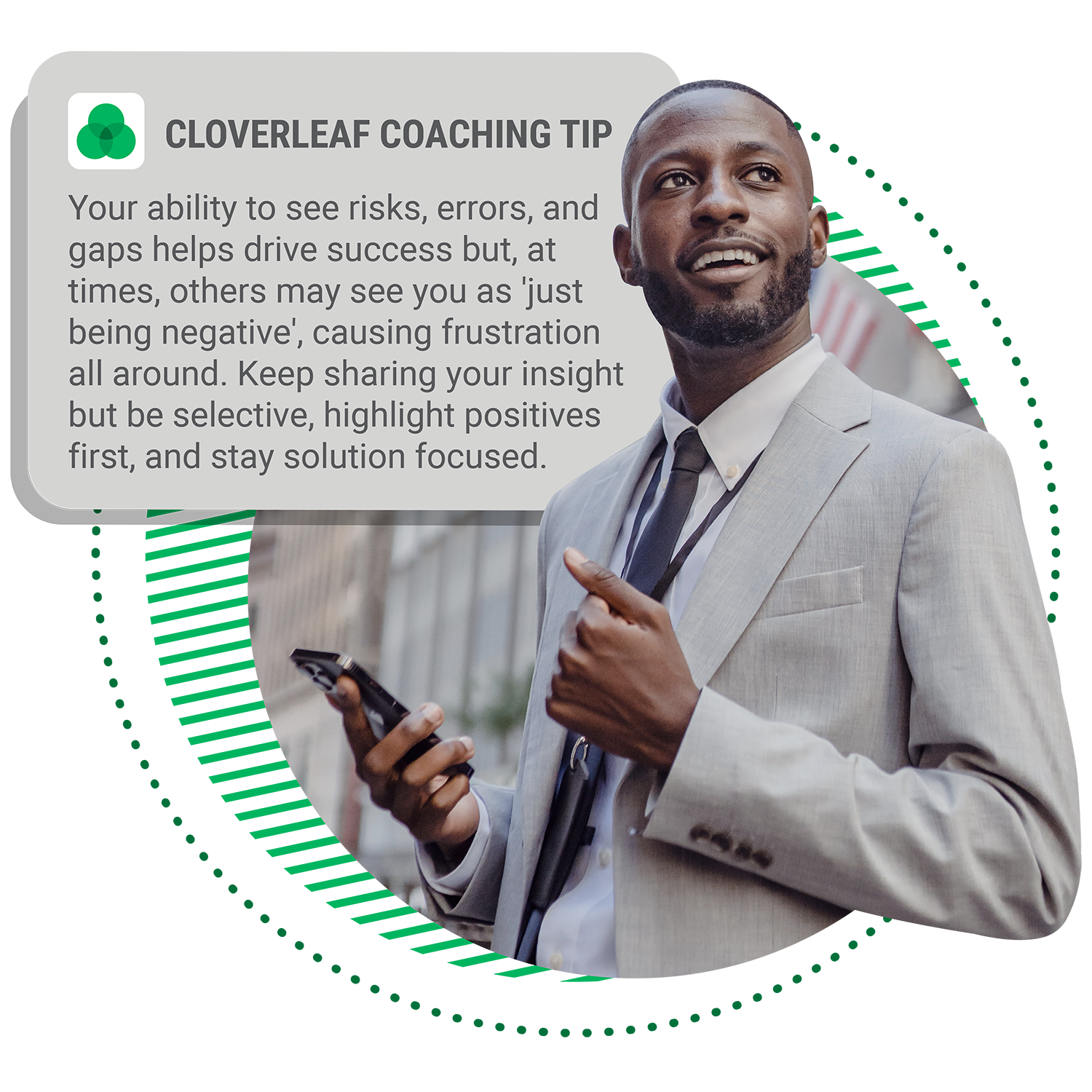
The barrier to widespread coaching is the ability to scale without losing personalization. Tools like automated coaching eliminate this problem by personalized coaching within the platforms teams use—such as Slack, Microsoft Teams, or email. These insights are more than simple tips—they’re personalized, real-time feedback designed to fit seamlessly into daily workflows.
This high level of personalization is possible through data from validated assessments. Tools like Automated Coaching™ use insights from behavioral and strength-based assessments (e.g., DISC, 16 Types, Enneagram) to tailor nuanced, in-depth coaching tips. For example, if someone is about to enter a meeting with a teammate who approaches problem-solving differently, the tool can provide a nudge on how best to communicate or collaborate effectively with that colleague.
These nudges are not generic—they’re context-specific, grounded in each person’s behavioral tendencies and current work context. By embedding these micro-coaching moments directly into the platforms teams are already using, the learning becomes timely and relevant, aligning with the specific situation an employee is navigating at that moment. This makes coaching timely and integrated into the workflow rather than something external and time-consuming.
Ready To Provide Personalized Mico Coaching To Your Team?
Making Coaching Personal and Practical for Every Person, Every Day
Scaling coaching without losing its personalized impact can be a major hurdle. This is where micro-coaching, especially automated micro coaching, makes a real difference. Let’s break down why this matters:
1. Scalability Without Sacrificing Personalization:
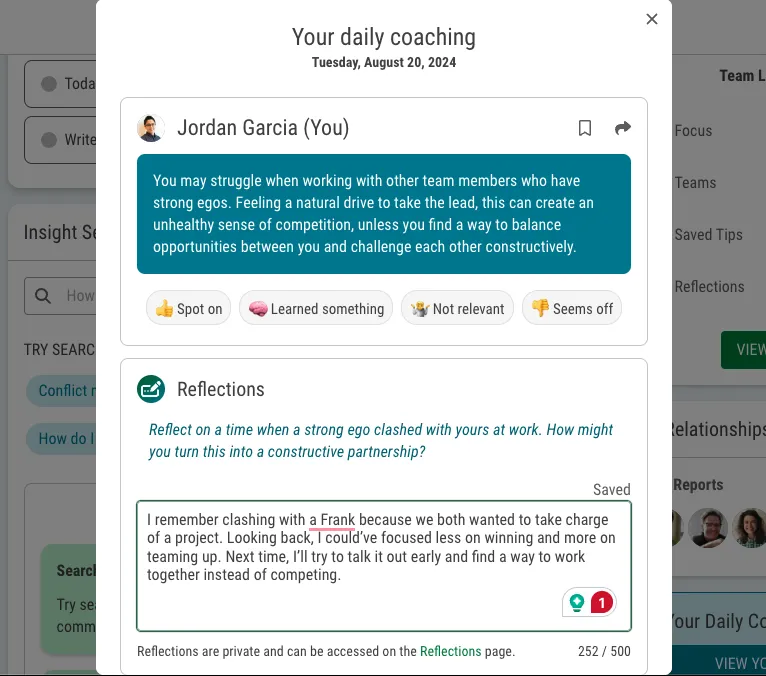
Traditional coaching often fails to scale because it requires one-on-one sessions or lengthy group workshops. Automated Coaching™ solves this by delivering tailored, actionable insights to every employee, from entry-level to leadership. Unlike other solutions that rely on broad recommendations, each nudge is powered by deep psychometric data, ensuring feedback is relevant to both the individual and the situation they’re navigating. This transforms coaching into something personal, not cookie-cutter.
2. Timely, Context-Specific Insights:
Coaching should be relevant to what’s happening right now—whether someone’s preparing for a difficult meeting or handling team dynamics. The key to Automated Coaching™ lies in its integration with platforms like Slack, Microsoft Teams, and email. Each tip isn’t just random advice—it’s triggered by current work scenarios and team interactions, offering on-the-spot guidance that helps employees overcome specific challenges in real-time. This personalized coaching isn’t based on generic templates but aligned with each person’s work style and behavioral tendencies.
3. Continuous Learning Without Disruption:
Instead of waiting for performance reviews or scheduled coaching sessions, automated micro coaching can deliver daily, digestible tips that promote ongoing development. Learning happens in the moment, without pulling people away from their daily workflow. By embedding micro-coaching into the tools your teams already use, the entire process feels seamless. Development is no longer an interruption—it becomes part of the daily rhythm, allowing immediate application of new skills and reinforcing them regularly.
4. Measurable Impact on Engagement:
Research shows that companies fostering strong coaching cultures report a 62% increase in employee engagement and 51% higher revenue. Regular micro-coaching creates more touchpoints for feedback, which directly correlates to increased job satisfaction and productivity, ensuring teams don’t just burn out but thrive.
How to Introduce Micro-Coaching Successfully To Your Team
Introducing any new coaching initiative can be met with hesitation or outright resistance, whether it’s due to change fatigue, skepticism about effectiveness, or concerns over time commitment. The key to overcoming this resistance and ensuring sustained engagement lies in thoughtful strategy and alignment with employee needs. Here are a few key strategies that can make all the difference:
1. Start with Clear Communication and Transparency.
Employees may not understand the benefits or worry that it’s just another task added to their full plate. It’s not enough to say, “here’s a new tool.” People want to know why it matters to them. Make the introduction of micro-coaching personal by showing how it addresses pain points they’re experiencing today—whether juggling multiple priorities, resolving conflicts faster, or collaborating more effectively. Gather key stakeholders in a live session, but make the conversation interactive—ask for concerns and suggestions so it is collaborative rather than top-down.
IMPORTANT: Email should never be used to introduce a new idea or concept. Email is for notification (i.e., “Here are the meeting notes,” “Attached is the proposal”), not communication.
2. Highlight Immediate Value and Quick Wins.
It’s critical to showcase immediate, practical benefits, such as helping them solve current challenges or improve day-to-day interactions so team members can see the value right away. For example, micro coaching can deliver tips for approaching a challenging meeting or handling communication issues. These contextual, bite-sized tips solve real problems at the moment, which builds trust and engagement over time. When people see the value early on, they’re more likely to stay engaged.
3. Always Lead by Example.
Leadership buy-in is essential. Managers need to not only use micro-coaching but also share how it’s made a difference in their work. They could provide specific examples of how an insight helped them defuse a conflict or guide their team more effectively. When people see their leaders investing in the same growth tools, they’re more likely to follow suit.
4. Use Data to Prove Impact.
Showing employees the tangible results of micro-coaching, like improved team collaboration, higher engagement, or faster problem-solving, reinforces the initiative’s effectiveness. Tools like Cloverleaf track can help you offer actionable data that leaders can share to prove micro-coaching is driving real results.
Introducing micro-coaching to your team may require changing mindsets about ways coaching can happen inside your organization. Leaders can ensure that it is embraced by communicating the benefits clearly, focusing on quick wins, modeling leadership, and proving impact with data.
From Theory to Reality: How Micro-Coaching Is Transforming Leadership Development
It’s one thing to understand the theory behind micro-coaching, but what does it look like in practice? How do you ensure it’s more than just another initiative that fades into the background? Leaders need to see clear, tangible results that prove its effectiveness in organizations just like yours.
Here’s a real-world example of how Automated Micro Coaching was integrated into a 6-month leadership program involving over 200 leaders—from first-time managers to C-level executives. Throughout the program, leaders received personalized coaching nudges and saw firsthand how micro-coaching could seamlessly fit into their daily routines while delivering impactful results.
What Leaders Had to Say:
- I have interacted with team members differently based on what I learned about their thinking and outlook on Cloverleaf. For example, I am more direct with one team member than I have been in the past. It also has helped me understand that my outlook on several things is specific to me and may not be the way everyone looks at the world.
- Using Cloverleaf actually built confidence in the way I approach conversations with my employees. I’m having to talk to individuals and to larger size groups of people more often in my role. Using Cloverleaf to plan communications helps me to keep important things in mind when coaching leaders through some of the issues they face with our staff. Cloverleaf coaching insights helped me learn how to listen, re-direct conversations, and check for understanding so that everyone is clear on the issue.
- I had to have a discussion with one of my managers to clear expectations for the position. I took some time prior to the meeting to use Cloverleaf to plan how the conversation would be presented and structured, specific to the person I was speaking to. It helped by creating an organized discussion.
- I appreciate Cloverleaf’s suggestions on how to interact with all individuals of my team and the teams I am on. It helps me prepare for meetings to have more effective 1-1 and team conversations.
- I read the daily assessment of myself and used the information to practice interactions between coworkers with different personalities. It has helped progress relationships.
Micro-Coaching's Role In The Future of Talent Development
As businesses race toward personalization and adaptability, micro-coaching is rapidly becoming the linchpin of talent development strategies. The future of this approach is clear: data-driven insights from tools that use AI for seamless integration into everyday workflows will not only refine how teams learn and grow but also revolutionize how we think about development altogether.
- AI-Powered Precision: Imagine a system where coaching is so finely tuned that it can predict when a manager needs feedback on delegation before a meeting or nudge an employee toward collaboration techniques just as they’re about to start a high-stakes project. This level of personalization ensures that employees get relevant guidance exactly when needed.
- Data-Driven Insights: Data insights will move beyond generic performance metrics. With real-time tracking, leaders will have access to behavioral shifts, engagement increases, and conflict resolution success rates—pinpointing exactly where coaching delivers its most powerful impact. These metrics will not only refine coaching programs but demonstrate clear ROI, ensuring sustained investment in talent development.
Every day, you and your team navigate the complexities of training. It’s challenging because scheduling workshops or other designated times for learning pull employees away from their work.
The reality is that our brains struggle to retain information from one-time sessions, conversations, or readings. Despite our best efforts, most of what is learned in these settings is quickly forgotten. This isn’t due to a lack of engagement or interest; it’s simply how our brains function.
For learning to truly stick and be applied effectively in the right situations, continuous reinforcement is essential. However, Talent Development professionals can’t be present in every situation to ensure concepts are reinforced. Managers often lack the tools and expertise to effectively embed these learnings into daily work routines. This gap highlights the need for a new approach to development—one that integrates learning seamlessly into the flow of work, providing ongoing, relevant reinforcement exactly when it’s needed.
What if learning didn’t require stepping away from work but instead enhanced it? People need insights and development opportunities to appear organically within their workflow so that learning is continuous, contextual, and immediately relevant. This approach not only respects the demands on your team’s time but also ensures that development is a natural part of their daily routine.
Why should productivity and personal development compete? In this article, we’ll explore the possibility of integrating learning into daily activities to help resolve the tension that can arise between prioritizing productivity and development.

The Development/Productivity Paradox
Employees often see development as a distraction from their core responsibilities, viewing training as an interruption rather than an enhancement. This perception highlights the development/productivity paradox.
The 70-20-10 model reveals that effective growth happens when learning is integrated into daily tasks. Learning must be embedded into the workflow so that development becomes a natural extension of daily work. Continuous reinforcement ensures that new knowledge is immediately applied so that retention and meaningful behavior change occur.
The Challenges of Traditional Learning Methods
The Old Way Isn’t Working: 4 Common Pitfalls of Traditional Learning Strategies Traditional learning methods often fail to deliver sustainable results for several reasons. Workshops and training sessions, while well-intentioned, pull employees away from their daily tasks, creating disruption and information overload.- Disruption of Workflow: Scheduled sessions interrupt the flow of daily work, causing productivity dips and backlog. This disruption makes it challenging for employees to balance their work responsibilities with learning commitments.
- Information Overload: Large volumes of information delivered in a short period can overwhelm employees, leading to poor retention. Studies show that within one hour, learners forget an average of 50% of the information presented; within 24 hours, they forget 70%, and within a week, they forget up to 90% (Bridge) (Indegene).
- One-Size-Fits-All Approach: Generic training content, normally only specific to roles often fails to address the specific needs and contexts of individual employees. This lack of personalization reduces the effectiveness of learning interventions.
- Lack of Continuous Reinforcement: Without ongoing support, the skills and knowledge gained in one-time sessions quickly fade. Continuous reinforcement is essential for retention and application of new skills.
What Do These Gaps Mean
- Retention Rates: According to research, learners forget approximately 70% of new information within 24 hours and 90% within a week without reinforcement (Indegene). This highlights the need for continuous learning strategies to ensure knowledge retention.
- Engagement Levels: A LinkedIn Learning report found that 58% of employees prefer to learn at their own pace and on-demand, rather than in structured, time-bound sessions (SHIFT). This preference indicates a need for more flexible and personalized learning solutions.
- Impact of Microlearning: Microlearning, which delivers content in short, focused bursts, has been shown to boost retention rates by 25% to 60%. It also boasts an average completion rate of 82%, making it a highly effective method for engaging learners and improving retention (SHIFT).
HUMAN SKILL PROGRAMS ARE HITTING LIMITATIONS...
Get Strategies To:
- Close the gap between learning and on-the-job application
- Overcome the tension of pausing productivity for development opportunities
- Experience done for you learning in the flow of work
- Stay ahead of human skill development
- Prove the ROI of your talent development programs
What Makes Continuous Learning Effective For An Organization?
Continuous learning means embedding development opportunities directly into the daily workflow. This approach ensures that learning is contextual, personalized, and integrated into the tools employees are already using every day, such as Slack, Microsoft Teams, email, and others. The goal is to make learning a natural, seamless part of the workday, providing real-time, situational coaching that is immediately relevant and actionable.
3 Components That Make Continuous Learning Possible
1. Ongoing Learning Opportunities:
Learning should not be a one-time event but an ongoing process. Continuous learning opportunities ensure that employees can regularly reinforce and build upon their knowledge and skills. Integrating learning directly into daily tools and routines provides constant reinforcement without disrupting workflow.
- Example: Imagine a project manager receiving daily insights not just on generic leadership skills but specific, personalized guidance on how to best collaborate with individual team members based on their unique personalities and work styles. For instance, they might receive a tip about leveraging the analytical skills of a detail-oriented team member during a planning meeting.
2. Personalized, Contextual Insights:
Providing insights tailored to individual needs and specific situations helps ensure that the learning is relevant and immediately applicable. Personalized coaching can address unique challenges and leverage individual strengths. Cloverleaf’s Automated Coaching™ delivers personalized, context-specific tips that are tailored to the unique psychology and interactions of each user.
- Example: Imagine a team lead receiving real-time, personalized advice on how to approach a one-on-one meeting with a particular team member. The coaching might suggest ways to motivate that team member based on their personality type, such as recognizing their achievements in a way that aligns with their need for validation.
3. Integration with Daily Tools:
By embedding learning into tools that employees already use the development process becomes a seamless part of their daily workflow. This integration minimizes disruption and maximizes the relevance and impact of the learning.
- Example: Consider a team receiving coaching tips and developmental insights directly in their workplace tools. For instance, a Slack notification might suggest adjusting communication approaches for an upcoming meeting with a team member who prefers concise, data-driven discussions.
Making Learning In Context A Reality
At Cloverleaf, we’ve redefined continuous learning in the flow of work with Automated Coaching™. Here’s how we excel:
- Seamless Integration: Learning is embedded into the tools you already use, ensuring a smooth, disruption-free experience.
- Real-Time Insights: Receive tailored coaching precisely when you need it, aligned with your specific tasks and interactions.
- Engaging Microlearning: Continuous, bite-sized learning opportunities keep you engaged and enhance retention without overwhelming you.
Automated Coaching Outperforms Traditional Learning Approaches
Maximizing the Impact of Contextual Learning
- Improved Retention and Application: Ongoing, in-the-moment learning ensures skills are retained and immediately applied.
- Scalable and Inclusive: Personalized coaching is available to all employees, promoting equal development opportunities across the organization.
- Proven Impact: Trackable data showcases the tangible improvements in performance and ROI, validating the effectiveness of development initiatives.
Why We Believe Context Makes Continuous Learning Meaningful
At Cloverleaf, our commitment to learning in context is deeply rooted in rigorous research and continuous improvement. Here’s how our studies support this innovative approach:
Research and Commitment to Continuous Improvement
We recently conducted an analysis involving over 100 employees across 12 organizations, focusing on the impact of Automated Coaching™ on team communication and collaboration. The study revealed a 31% increase in these scores after just three months, demonstrating the effectiveness of contextual learning.
Further research with a client showed that engagement with our platform led to an 18% increase in employees feeling their skills were valued, a 36% increase in feeling recognized by team members, and a 36% improvement in perceived teamwork quality. These results underscore how embedding learning into daily workflows enhances both individual and team performance.
In a daily trends analysis, employees who engaged with Cloverleaf showed increased self-awareness and relational energy. This engagement resulted in more stamina, willingness to tackle new challenges, and higher quality teamwork, indicating that learning in context promotes continuous personal and professional growth.
Our qualitative interviews, validated by a global team of PhDs, highlight that users trust Automated Coaching™ for its unbiased, comprehensive insights. This trust facilitates significant improvements in self- and others-awareness, which are crucial for effective communication and collaboration within teams.
Development and Productivity No Longer Need To Compete
Learning doesn’t have to be disruptive. By integrating learning into the daily workflow, leaders can make sure that learning is continuous, personalized, and relevant to what people are doing right now. This approach tackles common problems with traditional training, like interrupting work, overwhelming people with too much information at once, and not being tailored to individual needs.
Key Takeaways:
- Embedded Learning: Development opportunities should fit seamlessly into the tools and routines that employees already use, minimizing disruption and making learning directly applicable.
- Continuous Reinforcement: Learning should be an ongoing process with regular reminders and tips to help people retain and apply new knowledge.
- Personalized Insights: Providing real-time, tailored insights makes learning more effective and relevant to each person’s specific situation.
- Scalability and Accessibility: Using technology like Automated Coaching™ allows us to offer coaching and development to everyone in the organization, not just a select few.
In this new era, we need a more scalable and “sticky” way to elevate collaboration across our organizations. It’s imperative. Collaboration is already making or breaking projects and organizations, and with the increasing pace of work, the need for effective collaboration is only growing. We must change our tactics to achieve consistently high-quality collaboration, or our personal and collective success—and wellbeing—will suffer.
Organizations face numerous challenges in this area. By and large, they don’t define, measure, or invest in collaboration effectively. While the term is often used, real investment and measurement reveal a wide variety of gaps. Collaboration, cross-functional teamwork, and related skills are rarely trained for or measured. When training does occur, it’s usually focused on individuals, typically leaders, who are then expected to apply these skills in teams that lack similar training. This siloed approach, if it exists at all, often falls short.
Investing in the quality of collaboration is often relegated to the category of “soft skills,” implying it’s less valuable. This perception persists because the industry hasn’t cracked the code on measuring collaboration effectively and proving its connection to profits. However, focusing on human skills like communication, empathy, and teamwork can transform the way organizations operate. By embedding these skills into daily practices, organizations can strengthen trust, innovation, and agility, ultimately turning human skills into a competitive advantage.
The Limitations of Traditional "Collaboration Tools"
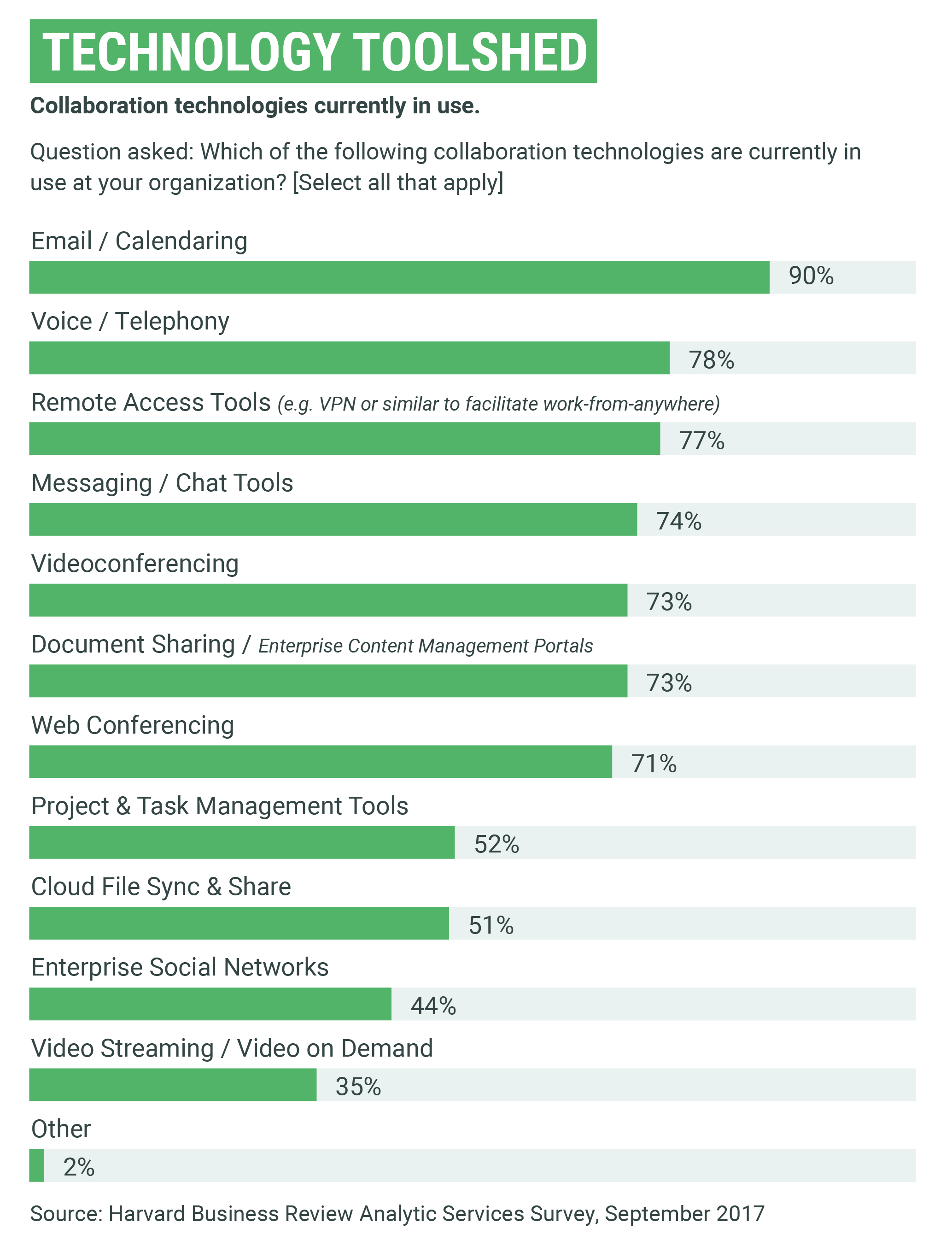
In the broader technology market, many products are labeled as “collaboration tools.” However, these tools are mostly just communication or productivity tools. Few, if any, of the software tools currently classified as collaboration actually focus on the human (behavioral) element of collaboration.
Simply providing another channel to communicate doesn’t necessarily improve collaboration. In fact, it can often be a barrier by introducing confusion about where and how to communicate with each other. More channels can be more confusing if there isn’t a shared understanding of which channels to use and when. This often leaves people questioning where to expect a response from teammates. Email, Slack, or text? No one knows.
This Harvard Business Review survey found that while organizations use various tools to share words and files, these tools often fail to enhance true collaborative efforts. The survey revealed that while communication tools facilitate message exchange, they do not necessarily improve the effectiveness of these messages to create shared understanding and meaningful collaboration. We have too many ways to transfer messages and not enough support to build true relationships and quality communication.
We need new tools and approaches that address the work humans do to navigate our differences and achieve outcomes that build true value for the organizations we serve.
HUMAN SKILL PROGRAMS ARE HITTING LIMITATIONS...
5 THINGS THIS FREE RESOURCE WILL TEACH YOU
- Close the widening gap between learning and on-the-job application
- Overcome the tension of pausing productivity for development opportunities
- Integrate learning so it is actually in the flow of work
- The evolution of human skill development
- What Automated Coaching™ is and how it works.

Growing Collaboration Beyond Communication Tools
Current collaboration tools often fall short because they fail to address the core human elements of collaboration. Here are some specific issues:
- Overwhelming Channels: Multiple communication platforms can lead to confusion about where to communicate.
- Lack of Focus on Relationships: Effective collaboration requires tools that foster understanding and relationships, not just message exchanges.
- Missing the Behavioral Aspect: True collaboration involves navigating human behaviors and differences, which current tools do not adequately support.
The Need for Human-Centered Collaboration Tools
To truly improve collaboration, we need tools that:
1. Facilitate Understanding: Tools should help team members understand each other’s strengths, communication styles, and working preferences right in the flow of work. (Josh Bersin).
2. Build Relationships: Effective collaboration tools should focus on relationship-building and trust. (mckinsey.com)
3. Support Behavioral Changes: Tools should provide insights and nudges that help teams navigate differences and improve their collaborative efforts. Continuous learning and development platforms that offer real-time coaching and feedback can drive sustained behavioral change to improve collaboration.
Shifting the focus from mere communication to understanding and relationship-building, organizations can unlock the true potential of collaboration.
The Misnomer Of “Soft Skills“
Unfortunately, what we’re talking about here is often lumped into a broader category in the organizational context referred to as “soft skills.” This is a really annoying moniker on many levels for those of us who have dedicated our lives to improving people and organizational effectiveness. The word “soft” would seem to imply that it’s less necessary or less relevant than hard skills like software development or financial forecasting. This is also why many in talent management circles have started referring to these soft skills as “human skills”—an even more appropriate moniker in an era of artificial intelligence.
The Value of Human Skills
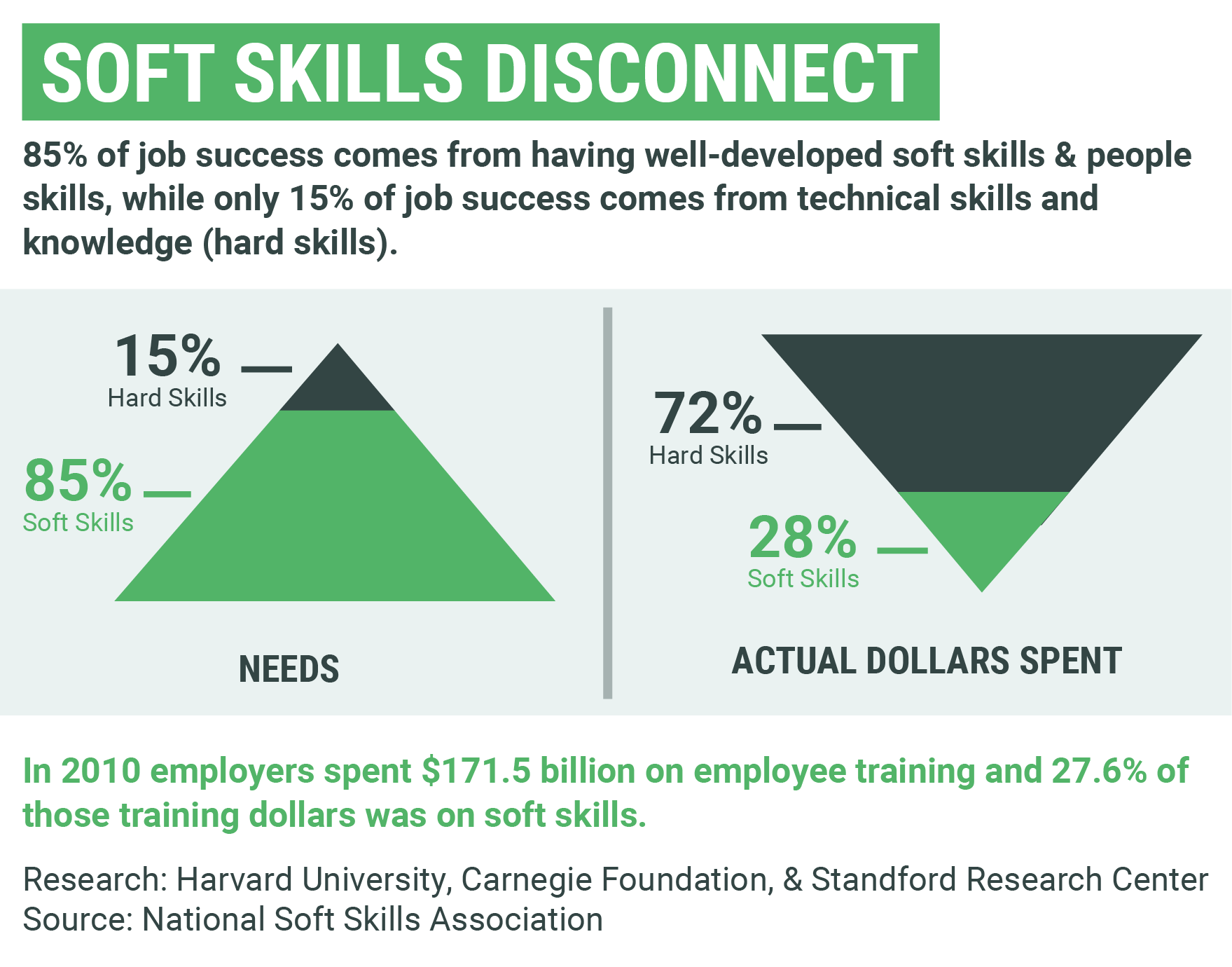
CFOs often like to gloss over these investments in soft skill training as frivolous and the most expendable when budget cuts are necessary. This disconnect is illustrated clearly when we examine where we are investing our talent development dollars versus what the organization and its leaders identify as the most critical skills for business success.
Despite the pervasive influence of Artificial Intelligence (AI) tools, human skills are the least likely to be displaced or replaced by AI. These skills offer exponential returns on investment compared to the incremental returns of most hard skills. For instance, learning how to use Excel better or adopting a new sales technique might improve efficiency marginally. However, understanding your teammates’ unique strengths can help avoid unnecessary conflicts and navigate differences toward significantly higher performance.
The Return on Investment (ROI) of Human Skills:
- Conflict Avoidance and Performance: A better understanding of human skills can help teams avoid conflicts and work more harmoniously, leading to higher productivity and better results.
- Market Relevance: Insights into human skills can guide the development of products and services that better meet customer needs, enhancing market success.
- Enhanced Customer Interactions: Skills in empathy, communication, and problem-solving improve customer support and sales effectiveness.
3 Challenges of Measuring Human Skills Impact
The disconnect between the investment in development dollars and the types of skills that have an outsized impact on performance boils down to measurement issues.
Challenges in Measuring Collaboration Health:
1. Lack of Standardization: There is no standardized way to measure soft skills across different organizations, making it difficult to benchmark or track progress uniformly.
2. Isolation of Impact: It is challenging to isolate the specific impact of a human skills intervention from other variables that influence performance.
3. Linkage to Financial Success: Drawing a direct and clear line between improvements in human skills and financial metrics like revenue growth or churn rates is complex and often indirect.
Let’s look at each of these in more detail.
1. The Need for Standardized Measurement in Human Skills
When discussing gross margin, businesses can quickly provide a percentage that reflects a standardized calculation. Unfortunately, such standardization for human skills and collaboration metrics is lacking. While we can measure turnover and engagement, how do we quantify collaboration, psychological safety, trust, or leadership?
Measuring Human Capital: SEC’s Steps
The SEC has recognized this gap. On August 26, 2020, they mandated that companies disclose their human capital resources in quarterly and annual reports. This includes any human capital measures or objectives that are key to managing the business.
Trends in Human Capital Reporting
Gibson Dunn’s study on the S&P 500’s compliance reveals significant variability in disclosures:
- Disclosures ranged from 109 to 1,995 words, averaging 960 words.
- 25% of companies avoided quantitative metrics, and 10% included only headcount numbers.
- Significant increases in disclosures on talent attraction, retention, compensation, diversity, health, and pay equity were noted.
There is no standardization in human capital metrics across companies. This variability underscores a lack of understanding of the value human skills bring to organizational success.
The SEC’s requirements are a start, pushing us towards more transparency and investment in people. International standards like ISO 30414 offer some guidance but remain voluntary.
By moving towards standardized measurements for human skills, organizations can better align investments with the factors that drive success, ultimately gaining more actionable insights into their most valuable assets: their people.
2. Isolating the Impact of an Intervention
Organizations invest $350 billion annually in learning and development (L&D) across various interventions, including online courses, in-person training, assessments, coaching, and more. How do we measure the impact of these development opportunities?
Consider an employee named Raj, who improved his performance after participating in multiple programs and moving to a new team with a new manager. How can we determine whether his performance boost was due to the training, the new team, or the new manager?
Current Measurement Practices: Many L&D leaders rely on surveys to gauge effectiveness:
- Surveys ask if the training was helpful.
- Surveys ask if managers are effective.
- Surveys ask if employees feel they have access to needed development programs.
Limitations of Surveys
- Sentiment vs. Metrics: Surveys measure feelings, not direct ties to business metrics like revenue or turnover.
- Survey Fatigue: People are tired of surveys, leading to low completion rates.
- Time-Based Approach: Pre- and post-intervention surveys measure short-term changes, but it’s hard to ensure lasting impact. Studies show that most training knowledge is forgotten within a week.
How can you know if someone’s behavior change will stick? Study after study shows that people forget most of what they learn in training courses within a week. How can development professionals truly measure if their programs create lasting change for months and years?
3. Linking Investments to Financial Success
How do investments in people translate into financial success? While studies show that companies investing in salary, benefits, or L&D are more productive, proving a direct link is tough.
How do investments in people translate into financial success? While studies show that companies investing in salary, benefits, or L&D are more productive, proving a direct link is tough. Demonstrating the ROI of collaboration is even harder. Before Organizational Network Analysis (ONA), quantifying collaborative activity was nearly impossible. Now, tools like Microsoft 365, Google Suite, Slack, Salesforce, and GitHub generate vast data showing who is connecting and communicating within teams.
ONA can identify key connectors, highlight areas of isolation, and pinpoint communication breakdowns. However, it still doesn’t easily link these activities to financial metrics. It measures communication quantity, not quality. High volumes might indicate miscommunication, gossip, productive brainstorming, disengagement, or efficient alignment.
Organizational Development leaders face challenges in proving the impact of leadership programs on emotional intelligence and psychological safety, which are crucial for reducing turnover, increasing engagement, and accelerating innovation. Surveys can gauge sentiment but often fail to show direct ties to financial outcomes. This gap makes it hard to secure budget approval for development initiatives without leaders’ belief in the value of investing in people.
Unlocking the Potential of Quality Collaboration
Valuable collaboration is under-invested because we think of it in terms of quantity or channels rather than quality. We lack a common language and numerical proof linking it directly to profit. However, effective collaboration leads to profit and enhances the quality of life for employees and customers.
The convergence of macro-trends, SEC requirements for human capital considerations, and technological advancements present an opportunity to empower effective human skill interventions and measure high-quality collaboration’s impact.
The explosion of data and new techniques promises a future where we better understand how collaboration impacts productivity, innovation, and value creation. For now, approaches remain inconsistent across companies and teams.
At Cloverleaf, we have a front-row seat with millions of people in tens of thousands of teams across hundreds of organizations both large and small, for what is working and what is ineffective in collaboration. We built Automated Coaching around proven concepts that work, grounded in decades of research and validated by real-world applications, resulting in quality collaboration, value creation, and life-changing outcomes. To see Cloverleaf in action or schedule a demo, click here.
Every team has a star player who exhibits enthusiasm and vision beyond their current role. A clear indication of this is when a direct report, during a 1-1 call, eagerly declares their intention: “They would like to be a manager!” This ambition is commendable but also prompts an essential question: Are they ready for the challenge?
Such aspirations reflect personal ambition and mirror the shifting expectations in modern workspaces. With platforms like LinkedIn showcasing management training success stories, there’s no shortage of inspiration. However, understanding and evaluating managerial readiness is critical. How can you determine if you or someone on your team is cut out for a management role? How does an organization measure this readiness, and what does it encompass?
Key Takeaways
The Multifaceted Nature of Managerial Readiness: Managerial readiness isn’t one-size-fits-all. Depending on the sector and organizational goals, defining what constitutes readiness requires understanding both technical expertise and leadership acumen.
- Leadership Beyond Expertise: Being an expert in a particular domain doesn’t guarantee effective management. True leadership blends strategic foresight with interpersonal prowess, ensuring managers can inspire, guide, and set a vision.
- Recognizing Potential Leaders: Identifying the next generation of managers is an art refined through observation and engagement—attributes such as active listening, emotional regulation, and a team-oriented approach signal managerial promise.
- Cultivating Leadership from Within: Proactive nurturing of budding leaders through feedback, mentoring, and development opportunities ensures a robust future for the organization. Tailoring developmental programs and providing the necessary tools and resources are pivotal.
- Investment in People Equals Organizational Resilience: In a rapidly changing landscape, an organization’s success hinges on its dedication to cultivating and championing its people’s growth and potential.

What is management readiness?
The Multifaceted Nature of Leadership
Managerial readiness is not a monolithic concept—it varies based on the sector, organizational goals, and even the cultural context. For instance, what constitutes a successful manager in the field of manufacturing could be poles apart from what’s needed in marketing. At its core, the idea of managerial readiness revolves around an organization’s priorities and purpose.
Technical Know-How vs. Leadership Acumen
A prevalent misconception many companies fall victim to is the idea that subject matter expertise or technical knowledge is the sole criterion for a management position. While this know-how is undeniably valuable, it doesn’t inherently prepare one for a leadership role.
The truth is that being highly knowledgeable about a specific area is a strong asset, but it isn’t the sole indicator of effective managers. The management landscape is laden with experts who falter when placed in a leadership role. The essence of leadership goes beyond expertise; it’s about being able to inspire, guide, and set a vision for a team. Thus, managers must be LEADERS, combining their technical know-how and leadership skills. It’s about gauging leadership acumen—understanding that a manager’s responsibility is multi-dimensional, blending strategic foresight and interpersonal prowess.
Crafting A Blueprint of an Ideal Leader
To properly define managerial readiness in your organization, it’s crucial to invest time and effort in sketching out a profile of the ideal leadership figure for the job description. This profile serves as a benchmark for aspiring leaders and will aid in shaping organizational culture. To help you start, consider the following aspects to help you define what is essential to your team.
7 Key Considerations in Crafting Your Leadership Profile
- Organizational Values: What ethos should leaders embody? How should they reflect and champion the organization’s values?
- Interpersonal Dynamics: Leadership isn’t just about strategy; it’s about people. What interpersonal skills are paramount for success?
- Guidance and Mentorship: Leaders shape their teams. How will they enhance both individual and collective performance?
- Technical and Business Acumen: What degree of business or technical understanding is required for different levels of leadership?
- Navigating Change: Leaders need adept change management and problem-solving skills to lead through change and uncertainty. What resources are available to support them?
- Communication Skills: Beyond just conveying information, how should leaders foster a work environment of open dialogue and cross-functional collaboration?
- Values Integration: A leader’s approach should align with the organization’s values. Whether it’s being approachable or offering timely feedback, how can these values be translated into daily actions?
Defining managerial readiness isn’t just about setting specific benchmarks or criteria. It’s about understanding the multifaceted nature of leadership and ensuring that the individuals being considered for managerial roles embody the technical expertise and leadership capabilities uniquely required in their specific domain. Each organization must critically examine what leadership means to them, what values and behaviors they cherish, and how they foresee leaders propelling the organization forward.
As we’ve outlined, managerial readiness goes beyond technical know-how and deepens into leadership acumen, interpersonal skills, organizational values, and adaptability to change. However, once this foundation is established, the next step is to recognize these attributes in potential leaders.
Up Next: Recognizing the traits of future managers and understanding the subtle yet impactful signs that someone is ready to lead.
HUMAN SKILL PROGRAMS ARE HITTING LIMITATIONS...
5 THINGS THIS FREE RESOURCE WILL TEACH YOU
- Close the widening gap between learning and on-the-job application
- Overcome the tension of pausing productivity for development opportunities
- Integrate learning so it is actually in the flow of work
- The evolution of human skill development
- What Automated Coaching™ is and how it works.

Recognizing Management Readiness
Lena, a seasoned manager at a fast-growing tech firm, often found herself silently observing the dynamics among her team. As a seasoned leader, she knew recognizing potential managers was an art honed through years of experience. As she settled into her chair for her regular one-on-one sessions with her team members, she couldn’t help but reflect on the subtle signs of leadership that had caught her attention.
She remembered Jacob, always the team player. He was the first to step in whenever the team was up against a tight deadline, offering assistance even if it meant going beyond his job description. His dedication was not just about completing tasks but genuinely ensuring the team’s success.
Then there was Sara, who had recently admitted to a mistake she made on a project. Her accountability stood out. Instead of deflecting the responsibility, she owned up to it, ensuring lessons were learned and similar errors were avoided in the future.
During team meetings, Lena noticed how Michael always listened intently, absorbing what others were saying without bringing the spotlight back to himself. Such active listening was a rare trait and spoke volumes about his potential as a manager.
Amidst the hustle and bustle of corporate life, it was Maria who set an example for work-life balance. She ensured her well-being was in check, understanding the significance of setting healthy boundaries. Her balanced approach was a testament to how she’d be able to lead without burning out, ensuring the well-being of those she leads.
Lena also recalled a recent presentation by Emma. The way she communicated complex ideas with such clarity and effectiveness left an impression on everyone in the room. Her peers respected her for her technical expertise and ability to connect effectively.
And when tensions ran high in the team, Raj showcased impeccable emotional intelligence. He’d ensure the atmosphere remained calm, diffusing potential conflicts and ensuring everyone was heard.
These observations led Lena to incorporate specific questions during her one-on-ones, subtly inquiring about their aspirations and sharing her comments about their leadership potential. She believed in nurturing leadership from within and took it upon herself to guide those budding leaders, even if they didn’t yet recognize their potential.
It’s in these everyday moments, through observation and active engagement, that leaders like Lena identify new managers. By paying attention to the nuances of team dynamics, they cultivate the next generation of leadership, ensuring a robust and visionary future for their organization.
7 Signs Someone Is Ready To Become A Manager
While expressing intent is a clear indicator of managerial aspiration, there are more subtle signs that individuals often exhibit, revealing their potential. Here are some signs that hint at a person’s readiness to step into a managerial role:- Team player with a servant-minded approach. Proactively stepping up, especially during critical moments, showcases their dedication and willingness to go the extra mile.
- Willingness to take accountability for their actions. A budding leader isn’t the type to deflect responsibility or pass the buck. High-potential employees own their actions, develop new skills, and are able to admit mistakes.
- Skillful in active listening. Great listening skills are essential to leading others. People interested in just speaking and directing can find themselves disconnected from their teams. People who actively listen and don’t constantly bring the subject back to themselves may be great candidates for manager roles.
- Prioritize their own well-being and understand healthy boundaries around work. Healthy managers lead to healthy teams. Work is only part of life; it is not responsible for providing for all of our social and emotional needs. Someone who is constantly burning out or overly relying on the organization will have unrealistic expectations of the organization and of others.
- Able to effectively speak and communicate clearly. Great leaders communicate succinctly, clearly, to and with the right people and in a timely fashion.
- Well-respected by other team members. Earning respect from their team signifies an individual’s ability to create a comfortable and trusting environment. This trait is indicative of someone adept at forging strong and effective connections with others.
- Takes time to regulate their emotions. Effective leaders balance vulnerability with diplomacy, especially during challenging communications. They maintain composure and adeptly navigate tense situations to find resolutions.
Cultivating Leadership Potential
A leader can recognize an individual contributor with leadership promise by actively observing these attributes. Regular one-on-one meetings offer a platform to integrate development into everyday work conversations. It’s essential to share feedback about where you notice their leadership potential. Inquire about their vision for the future – do they see themselves leading? Even if they don’t have an immediate vision of stepping into management, continuous encouragement, validation, and guidance can help nurture their latent potential. The key is to stay persistent and committed to cultivating leadership abilities throughout the organization.How Can You Support Someone Who Is Ready to Lead Or Manage?
When supporting those who are preparing to lead or manage, it’s important to articulate strengths and opportunities for growth. Whether a specific position is available, developing these individuals through stretch assignments, coaching, and project management opportunities is still important.
Guided conversations are a cornerstone of leadership development. Whether they’re part of a formal evaluation or casual check-ins, these dialogues can offer invaluable insights into an individual’s leadership trajectory. When engaging in such conversations with potential leaders, delve into these crucial areas:

6 Supportive Ways To Develop New Managers
- Understanding Leadership Styles: Ask them to articulate their vision of leadership. Do they see themselves as more directive or leaning towards a supportive role? How familiar are they with a coaching style of leadership? Our Boss to Coach Playbook can offer more insights into this perspective.
- Harnessing Leadership Strengths: Encourage them to introspect and share their perceived leadership strengths. Discussing how they can further amplify these strengths in their current roles can yield actionable strategies.
- Addressing Leadership Challenges: Just as it’s essential to identify and build upon strengths, recognizing challenges or areas where they can grow is equally crucial. Setting concrete objectives to bridge these gaps can be a proactive step toward leadership readiness.
- Aligning with Organizational Leadership: Gauge their perception of an ideal leader within the organization’s context. Comparing this with the organization’s defined leadership profile can help align their aspirations and the organization’s expectations.
- Seeking Managerial Support: It is vital to understand the specific types of support they expect from their immediate supervisors. This can streamline their journey, ensuring they have the necessary resources and mentorship.
- Resource and Development Needs: Lastly, discuss the tools, resources, or training they feel would best assist them in their aspirations. This feedback can guide the organization in tailoring its developmental programs for maximum impact.
Cloverleaf: A One-Stop-Shop To Help Your People Be Their Best Selves
A Roadmap for Success
Once you’ve identified the traits and requirements, it’s time to lay down a roadmap for their journey to leadership.
- Management Training: Consider introducing comprehensive management training programs. This will give them the necessary tools and knowledge to tackle new challenges.
- Readiness Assessment Templates: Providing templates or frameworks for self-assessment can empower these potential leaders to regularly evaluate their progress and readiness.
- Networking Opportunities: Encourage them to tap into the power of social media. Platforms like LinkedIn can be instrumental for young managers to connect, learn, and share insights with a global community of leaders.
- Regular Feedback: Continuous, specific, and timely feedback can fast-track their development. This feedback loop ensures they’re always aligned with the organization’s goals and personal development trajectory.
By investing in their growth and providing a structured path, you’re not just preparing an individual for a managerial role but strengthening the entire organization’s leadership foundation.
Final Thoughts
Managerial readiness is a gradual transformation, a process nurtured over time by exceptional leadership. When stalwarts guide the leaders of tomorrow, the outcome is twofold: organizations not only retain their top talent but also harness their immeasurable potential.
In an era marked by constant flux, where challenges are ever-evolving and new opportunities emerge at every turn, it becomes increasingly evident that the true mark of an organization’s resilience and success is its investment in its people. Those who prioritize and champion this endeavor are the ones poised to navigate the future with confidence and vision.
Potential is such a loaded word and can be incredibly subjective. Yet we throw it around a lot in leadership development circles. In fact, multiple talent management models (including the popular 9 Box approach) use potential as a cornerstone element.
When leadership performance and potential are assessed and plotted on the graph, individuals in the upper right quadrant (Box 1) are identified as high-potential candidates for succession, while those in the lower left quadrant (Box 9) may need to be reassigned or removed from the organization. – shrm.org
Identifying high-potential employees should be on the radar of every leader; however, using a definition for hipo (high-potential) team members that clarifies how your organization recognizes and retains top talent is crucial.
How to Identify High-Potential Employees
The most important thing your team can do to retain future leaders is move from a fixed mindset concerning high-potential employees to a growth mindset.
What actually is potential? According to the dictionary, it is “having or showing the capacity to become or develop into something in the future.”
The problem talent management leaders face is we all have different definitions for what that something is. In other words, what is the “something” you are developing hipo individuals into?
Depending on the organization, role, experience, or your manager’s perspective, potential can mean many things.
One challenge with defining what is ‘potential’ in organizations is that the process of gauging it is elusive and imprecise — and can be highly subjective. And despite what some leaders would like to believe, potential does not equate to current or past performance. – shrm.org.
What I typically hear when I ask others what they mean by the term potential is “management potential.” This definition implies that those who want a technical or craft-focused role have no potential for that organization over the intermediate or long term.
And this is precisely why using potential as a key component of talent evaluation is so dangerous. The criteria for how a CTO evaluates potential relative to a Sales Manager or Marketing Leader vary widely.
This mentality is a fixed mindset approach to talent evaluation that only sees the world in black and white (possibly with some limited shades of gray) instead of being full of vibrant color.

What Do You Want Employees To Have High Potential For?
Limiting a team member’s potential to a specific role will decrease your ability to mentor growth opportunities that are much more expansive than a position and more valuable to your organization.
If your only lens for evaluating potential is fixed according to your organization’s immediate needs rather than using a spectrum that empowers top talent to contribute and even create new ways of providing value, you will hinder future leaders.
…science reveals that regardless of the context, job, and industry, such individuals tend to share a range of measurable qualities, which can be identified fairly early in the process. – hbr.org
Another definition of potential is “qualities or abilities that may be developed and lead to future success.” I like this definition much better, and it should represent how talent management views the potential of their workforce.
To identify high-potential employees, leaders must expand their definition of potential to include room for the unique value that every team member offers. Next, mentor hipo individuals to empower them to contribute significantly to the organization.
The reality is that everyone on your team has potential. At Cloverleaf, we have a saying that ‘everyone has value.’
How our team aligns this value with the organization’s needs is fluid. We work to manage this dynamic rather than control it because we believe it grants freedom for our team to contribute their best work uniquely.
Would you rather help develop someone’s potential towards a fixed expectation or increase their capacity to add value?
Strictly adhering to labels like potential without mentoring team members to develop their unique leadership will minimize or cap the value each person brings to our teams and organizations.
HUMAN SKILL PROGRAMS ARE HITTING LIMITATIONS...
5 THINGS THIS FREE RESOURCE WILL TEACH YOU
- Close the widening gap between learning and on-the-job application
- Overcome the tension of pausing productivity for development opportunities
- Integrate learning so it is actually in the flow of work
- The evolution of human skill development
- What Automated Coaching™ is and how it works.
3 Effective Ways To Ensure You Consistently Develop High-Potential Employees To Provide Value
Adopting the belief that everyone has value (or potential) will impact how we lead, build culture, and make talent decisions. Doing so can help leaders increase collaboration and productivity as they choose to honor, empower, and coach hipo employees.
Here are three ways to effectively build a culture of developing high-potential employees:
1. Prioritize Coaching For Your Team That Is Personalized And Values-Based.
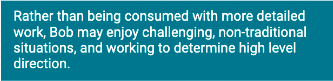
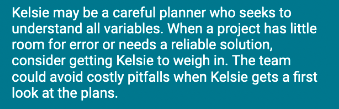
The Cloverleaf team uses our integrated coaching product to constantly reinforce these unique elements of value brought by each team member in a way that broadens everyone’s view of potential over time.
For example, imagine helping your team to further realize their strengths and those of their teammates.
Providing your team with relevant insights into themselves and those they work with will boost self-awareness, strengthen collaborative efforts, and minimize workplace drama.
2. Embed Recognition Of One Another’s Unique Value Into Your Teams Rhythms And Rituals.
Creating a practice that habituates celebrating team members’ competencies and accomplishments is a powerful way to supplement your employee development strategy.
This practice can include an all-team lunch weekly through Zoom, shout-outs that are rewarded with bonus opportunities, quarterly all-team off-sites, and regular team coaching sessions.
3. Allow Team Members Roles To Evolve Based On Their Motivation And Strengths.
Facilitating space for individuals to pivot within your organization that aligns with their giftings and natural drivers organically creates development opportunities for your entire team.
Although Cloverleaf is a smaller team, we have a track record of Internal mobility where roles evolve as stronger recognition of an individual’s strengths and interests surface. Repeatedly, we experience the benefits of innovation and engagement by permitting these types of transitions.
In Summary
It’s possible to limit your team’s potential by limiting your definition of what it means to develop it.
We should expand the definition of potential and create pathways for everyone to understand the unique value inherent in each of us and seek to align that with the needs of our organizations.
Stop using antiquated methods to identify high-potential employees according to the organization’s current needs. I encourage talent and people leaders to develop potential by fostering and coaching the inherent value each member offers your team.
You can begin the journey of multiplying your team’s potential by starting a free trial with Cloverleaf today.