


THE FINDING
Across 29,374 coaching conversations on the Cloverleaf platform, employees asked how to understand and align with a specific colleague 2.5 times as often as they asked how to resolve a conflict. About half of all coaching questions named a specific person, not a skill in the abstract (Cloverleaf, Relational Work Index).
About the research: findings come from 29,374 coaching conversations on the Cloverleaf platform (January to April 2026), categorized by topic and by whether the question named a specific colleague. Guided-practice conversations were scored across four skills: composure, clarity, attunement, and solution orientation.
That changes what conflict management means for a manager. The most valuable work begins before escalation: understanding how each person works, aligning expectations early, addressing small tensions, and closing difficult conversations with a concrete next step. Here are the eight skills managers need to do that.
See where your managers most want coaching
The Relational Work Index draws on nearly 30,000 real coaching conversations to show why the relationship layer deserves more attention than cleanup after conflict, and where to aim development next.
Conflict management is a core manager skill
Unaddressed conflict erodes trust, stalls decisions, and pushes good people out. The costs are real, but the response usually is not. Most organizations expect managers to navigate hard moments on their own, without teaching them how.
The stakes are not soft. Gallup‘s analysis of 183,806 business units found the most engaged teams are 23% more profitable and 18% more productive in sales terms than the least engaged. Engagement is broader than relationship quality, but the two are closely linked, and engagement is scarce: Gallup’s 2026 report found only 20% of employees worldwide were engaged in 2025, with low engagement costing the global economy an estimated $10 trillion. The space between people, how they read and align with each other, is where much of that performance is won or lost, and it is the layer most development programs never touch.
Why managers struggle with conflict
Most managers do not avoid conflict because they do not care. They avoid it because they have never been shown how to handle it well. Three patterns show up again and again.
No training for the actual job
Most managers do not avoid conflict because they do not care. They avoid it because they have never been shown how to handle it well. Three patterns show up again and again.
Fear of damaging the relationship
Without a clear approach, managers worry that raising an issue will make the dynamic worse, so they let it slide.
No reinforcement in daily work
Even when managers do get training, it is usually a one-time event, disconnected from the specific people they lead and the real conversations in front of them. A skill you practice once and never revisit does not stick.
The organizations that treat conflict management as a capability to build, not a personality trait to hope for, get stronger teams and better decisions. The rest leave managers to default to avoidance.
8 conflict management skills every manager needs
Most of what follows is preventive: the earlier you apply these skills, the less refereeing you will ever have to do. The eighth is the one the coaching data singles out as the biggest gap, and it is where most conversations quietly fall apart.
01
Active listening: understand before you respond
Most conflict is less about the problem itself and more about how people feel about it, and nothing escalates frustration faster than feeling unheard. Skilled managers paraphrase to confirm understanding, ask clarifying questions to surface the real concern, and acknowledge emotion before moving to solutions.
IN PRACTICE
Slow down before you fix anything. Try: “It sounds like you are frustrated because the timeline keeps shifting. Am I hearing that right?” That lowers defensiveness and makes the rest of the conversation productive.
02
Self-awareness: know your own conflict pattern
You cannot guide a team through tension you do not understand in yourself. Do you avoid hard conversations, get overly direct, or smooth things over to keep the peace? Self-awareness is the single most common thing managers bring to coaching in the Cloverleaf data, at 12% of their questions. Managers already know this is the work.
IN PRACTICE
Understand your default reaction under pressure, then watch for it. A manager who tends to avoid friction can catch that pattern and lean into a conversation earlier, before a small issue grows.
03
Emotional regulation: stay grounded when tension rises
Most conflict is less about the problem itself and more about how people feel about it, and nothing escalates frustration faster than feeling unheard. Skilled managers paraphrase to confirm understanding, ask clarifying questions to surface the real concern, and acknowledge emotion before moving to solutions.
IN PRACTICE
If a report gets defensive, resetting beats pushing. “I can tell this is landing hard. Let us step back. What is your biggest concern here?” lowers the temperature and reopens the door.
04
Style adaptability: meet people where they are
People do not handle conflict the same way. Some want the point fast; others need context before they engage. The most effective managers adjust to the person in front of them, which is exactly where knowing how each person works changes the outcome.
IN PRACTICE
Try giving a direct person the headline first. Give a more measured person the reasoning and a moment to process. Same message, delivered so it lands.
05
Framing: turn opposing sides into a shared problem
How a manager frames a disagreement often decides whether it resolves or hardens. Instead of dwelling on what went wrong, effective managers name the shared goal, use neutral language, and shift the focus to what happens next.
IN PRACTICE
“You both clearly want this project to land well. Let us find the approach that uses what each of you sees.” That moves the conversation from opposition to a problem the two of them solve together.
06
Addressing tension early: get ahead of it
Most workplace conflict does not start big. It builds through clipped emails, a quiet shift in a meeting, small resentments that accumulate. Managers who notice those signals and step in early prevent the breakdown later. This is prevention in its most practical form, and it is what the coaching data shows people want most.
IN PRACTICE
A low-stakes check-in works: “I noticed some friction in the last couple of discussions. What is your read on what is happening?” Raised early, with curiosity, most of these never become conflicts.
07
Building a culture where it is safe to disagree
Conflict is not inherently harmful. What is harmful is a team where people are afraid to speak up, because that fear turns disagreement into silent resentment. Managers set the conditions for psychological safety by inviting honest input, leading with curiosity, and admitting when they got something wrong. Google’s Project Aristotle identified psychological safety as the most important of five team dynamics associated with team effectiveness.
IN PRACTICE
When you notice hesitation, name it. “I want to make sure we are considering every angle. What is a concern or alternate view we have not put on the table yet?” That signals dissent is wanted, not just tolerated.
08
Closing the conversation with a concrete next step
Here is the skill almost no one talks about, and the one the coaching data says matters most. In guided practice, employees scored 4.07 out of 5 on composure, the highest of any skill measured. What broke down was the ending: solution orientation, the ability to move a conversation to a workable resolution, scored 2.63 out of 5, dead last. People stay calm and hear the other person out. Where they stall is the close, and a conversation that ends without a decision leaves the misalignment exactly where it started. This is a teachable skill, not a personality trait.
IN PRACTICE
Before anyone leaves, agree on one action, an owner, and a timeline. “So here is what I am hearing us agree to: you will draft the revised scope by Thursday, I will clear it with the client Friday. Does that work?” Managers who close create momentum. Managers who cannot create drag, one unresolved conversation at a time.

Before anyone leaves, agree on one action, an owner, and a timeline. “So here is what I am hearing us agree to: you will draft the revised scope by Thursday, I will clear it with the client Friday. Does that work?” Managers who close create momentum. Managers who cannot create drag, one unresolved conversation at a time.
– Stephanie Licata, M.A., A.C.C.
Senior Learning Strategist, Cloverleaf. Masters in Organizational Psychology, Columbia University.
Conflict, handled early, makes teams stronger
Conflict is not a roadblock. Handled well, and handled early, it is a turning point. Teams that get good at it challenge ideas without damaging relationships, work through tension before it derails progress, and treat disagreement as a signal rather than a threat.
The shift worth making is away from “keep the peace” and toward “get ahead of the friction.” A team that never disagrees is not collaborating. It is avoiding. The rest of this guide makes that shift practical: the patterns worth watching for, and how to build these skills into daily work.
7 patterns causing the most workplace conflict
Conflict is not random. It follows patterns, and once a manager can see one forming, most can be headed off before they escalate.
|
Conflict Pattern
|
How to get ahead of it
|
|---|---|
|
Communication breakdowns
|
Normalize clarifying questions and confirm expectations early instead of assuming alignment.
|
|
Unclear expectations
|
Set roles, priorities, and ownership up front, and revisit them when things shift.
|
|
Workload imbalance
|
Check how work is distributed and make it safe to say "I am stretched too thin."
|
|
Personality and work-style differences
|
|
|
Defensive reactions to feedback
|
Frame feedback as a dialogue tied to shared success, not a verdict.
|
|
Inconsistent or changing processes
|
Be transparent about why a change is happening and leave room for concerns.
|
|
Past experiences and assumptions
|
Build a norm where concerns get voiced instead of assumed.
|
How to build these conflict management skills in the flow of work
Most conflict training does not change behavior, because it is event-based, theoretical, and disconnected from the people a manager actually leads. Conflict management has to be practiced and reinforced in the moments that matter. Three things make that possible.
Embed coaching for it daily work, not a separate initiative.
Conflict is a daily reality, so the support has to arrive in daily work: a relevant nudge before a tough conversation, a prompt after a miscommunication, reinforcement during a team disagreement. Cloverleaf’s AI accelerated platform integrates into the flow of work, so managers build the skill through repetition rather than a single workshop.
Build the whole team’s capability, not just the manager’s.
Working through friction is a team skill, not a solo one. When a team develops it together, they build a shared language for tension, learn to work through disagreement instead of routing every issue to the manager, and stop relying on one person to solve every people problem. The training session ends. The coaching does not.
Personalize it to how each person is operates.
One-size-fits-many training misses, because every manager and every team operates differently. Development that adapts to a manager’s natural approach, their team’s communication norms, and the specific friction they hit most often is what actually changes behavior. Confidence matters as much as technique here. Many managers know the
TAKEAWAY
Conflict management is not a personality trait to hope for. It is a set of skills, practiced in real conversations with the real people involved.
FAQ: conflict management for managers
What are the five conflict management styles?
The Thomas-Kilmann model describes five approaches: competing, collaborating, compromising, avoiding, and accommodating. They are a useful vocabulary for how people default under tension, but they all describe how to respond once conflict exists. They say nothing about preventing it, which the coaching data shows is what managers and their teams actually want.
How do I resolve conflict between two team members?
Understand each person’s view separately, then bring them back to a shared goal rather than relitigating who was right. Use neutral language, focus on what happens next, and do not end the conversation until there is a concrete next step, an owner, and a timeline. The close is where most attempts quietly fail.
When should a manager step in versus let the team resolve it?
Step in when the friction is harming collaboration, causing disengagement, or turning personal. Let the team work it out when the disagreement is respectful and they are already moving toward a resolution. Part of building a capable team is not solving every disagreement for them.
How do I prevent conflict before it starts?
Make how each person works visible, align on expectations and priorities early, and address small tensions while they are still small. The coaching data is clear that prevention is what people reach for: employees ask how to understand a colleague 2.5 times as often as they ask how to resolve conflict.
How do I stay neutral during a team conflict?
Separate what you feel from what is factual, avoid taking a side before you have heard both views fully, and frame the issue as a shared problem to solve rather than a case to judge. Your job is to help them reach resolution, not to hand down a verdict.
How does Cloverleaf help managers get ahead of conflict?
Many conflict resources focus on resolution after tension has escalated. Cloverleaf is built to help managers see it coming. It is the only AI platform that coaches the relationships between people, not just individuals, so a manager can understand how a specific pairing is likely to work before the moment that matters.
Cloverleaf’s Relationship Intelligence Engine maps how two specific people will work together, drawing on 13+ market leading behavioral assessments and more than one million behavioral signals to surface likely friction points, communication differences, and what each person needs. Before a 1:1, a performance conversation, or a new team’s first meeting, a manager can see how this specific person tends to receive feedback and where tension is likely to form, and prepare. That guidance is grounded in Cloverleaf’s assessment and team data, not general knowledge about solving conflict.
Cloverleaf does not referee the conflict for you, and it is not a coach with a name or a persona. Every insight points one person toward another, because the friction, the negotiation, and the repair are human work. Proven across 45,000 teams, the platform’s job is to help a manager walk in prepared. The confidence to have the conversation, and to close it, still comes from people.
See where employees most want help concerning conflict
The Relational Work Index reveals where to aim development next, drawn from nearly 30,000 real coaching conversations.
Conflict is not the problem for managers. Not knowing how to navigate it is.
High-performing teams do not eliminate conflict. They get better at having it, and better at closing it. The managers who make that possible are not the ones who keep the peace by shutting hard conversations down. They understand their people well enough to prevent most friction, and they are skilled enough to close the conversations that do happen with a real decision. That is a set of skills, and skills can be built. The future of leadership is not conflict-free. It is conflict-capable.
STILL COMPARING OPTIONS
SOURCES
Cloverleaf, Relational Work Index (29,374 coaching conversations, 2026); Gallup, Q12 Meta-Analysis, 11th edition (183,806 business units); Gallup, State of the Global Workplace 2026 (20% engaged, ~$10 trillion cost); Google re:Work, Project Aristotle
We’ve all heard the stories—a newly hired C-Suite leader, brimming with technical expertise, suddenly finds themselves losing their cool in high-stakes meetings. The table-slamming, the shouting, the profanities—it’s a pattern that repeats itself far too often in organizations.
But what if these outbursts were more than just isolated incidents?
What if they were symptoms of a deeper issue that Talent Development Leaders must address?
In a conversation, a client shared his experience with a newly hired C-Suite leader who started to lose his cool a few months into the job. He described instances just like those above. It took HR exactly two weeks after a number of employees started to report these types of interactions to let the person go.
The gaps in this leader’s human skills, turned an amazing opportunity into a humiliating failure for him. While he was technically highly proficient and had the exact experience and background the company needed, none of it could save him.
When these kinds of behaviors surface, they often stem from gaps in essential human skills like emotional intelligence and conflict management. These gaps can turn extraordinary opportunities into catastrophic failures—not just for the individual but for the entire organization. While technical proficiency and experience are critical, they cannot compensate for the lack of core human skills that are crucial for effective leadership. To address these leadership breakdowns, we must look beyond the surface and tackle the root causes head-on.
Addressing the Root Causes of Leadership Failures
While it’s easy to focus on the visible manifestations of leadership breakdowns—like the outbursts and poor behavior mentioned earlier—the real challenge lies in addressing the underlying causes. These incidents are often symptomatic of deeper issues such as unaddressed stress, inadequate emotional intelligence, and a lack of continuous development in critical human skills. For Talent Development Leaders, this is where the opportunity—and responsibility—truly lies.
Improving human skills isn’t solely about avoiding such dramatic fallouts. It’s about proactively building social and human capital within the organization, creating an environment where employees can experience meaningful personal growth that makes them not just better professionals but better leaders.
Conventional approaches to leadership development often fail to provide the ongoing support managers need to navigate today’s complex work environments. Continuous development isn’t just a best practice—it’s a necessity, given the increasing pressures on leaders.
People skills are not just a benefit but a requirement. Organizations can no longer afford to take a reactive approach. Leaders need real-time, personalized insights to manage stress, improve emotional intelligence, and maintain their composure in high-pressure situations.
For organizations, the stakes extend beyond individual incidents. The ripple effects of a leadership failure can be felt across teams, departments, and even the entire organization. By proactively equipping leaders with the tools they need to succeed—not just through traditional training but through continuous, context-specific coaching—you can build a resilient leadership culture that not only prevents failures but also supports consistent growth and development.
How To Improve Human Skills In Management: From Big Picture Vision to Ground-Level Growth
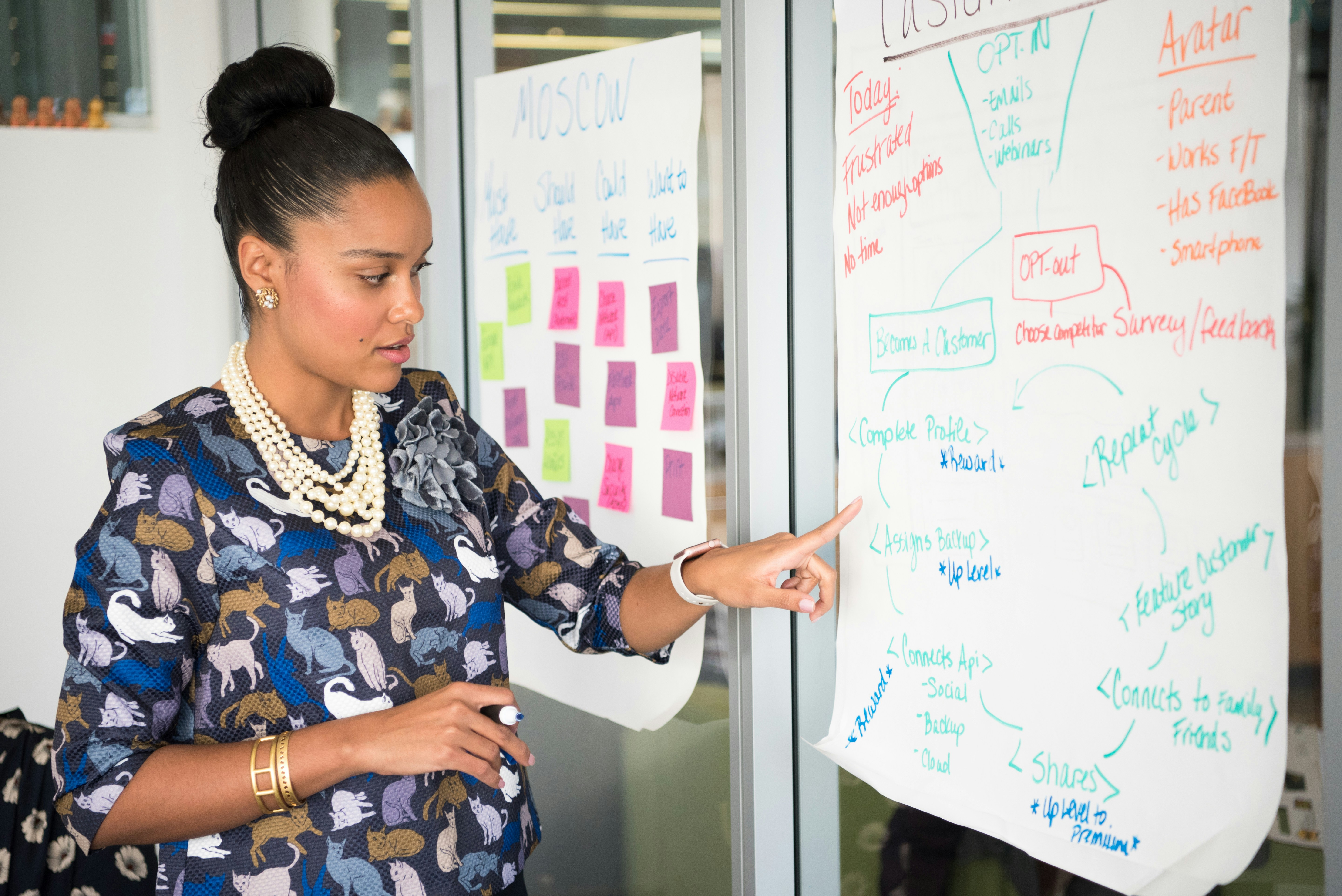
Top-Down Leadership: Aligning Strategy with Human Skills
Misalignment in leadership values and approaches is more than just a growing pain—it’s a critical risk that can derail organizational success. When leaders are not aligned on core values and competencies, it leads to inefficiencies, employee dissatisfaction, and, ultimately, missed business objectives.
Step 1: Define Core Leadership Values and Competencies
The first step is clearly defining the leadership values and competencies critical to your organization’s success. This involves identifying the key qualities and skills that every leader should embody, from the C-Suite to middle management. These values should reflect the company’s long-term goals and cultural priorities.
For example, an engineering team at a startup might have been built up by a leader who cultivated a flexible work environment and prioritized mental health. However, as the company grows, it may bring in a CTO with a different leadership style that emphasizes performance in high-pressure environments. This shift can lead to misalignment if the core values and competencies are not clearly defined from the top.
Step 2: Communicate and Align Leadership Teams
Once these values and competencies are defined, the next step is communicating them across all leadership levels. Every leader must understand and buy into these principles. Regular alignment meetings, workshops, and leadership training sessions can effectively ensure that all leaders are on the same page.
To prevent misalignment, organizations must define their desired leadership values and approaches from the top down. However, defining these values is only the first step. Continuous alignment and reinforcement are necessary to ensure these values are lived daily.
Step 3: Utilize Continuous Feedback and Coaching Tools
With core values and competencies defined and communicated, the focus shifts to continuous alignment and reinforcement. This is where tools like Automated Coaching can strengthen culture and support ongoing development. By providing leaders with real-time, personalized insights, these tools help reinforce the company’s core values and leadership competencies in every interaction, ensuring that leaders consistently model the behaviors expected of them.
Step 4: Identify Skill Gaps Using Data-Driven Insights
The next step is to identify potential skill gaps among current leaders. This process should be driven by data, leveraging tools that comprehensively analyze where leaders stand regarding the desired competencies. Cloverleaf’s platform, for instance, offers detailed assessments and continuous feedback, enabling organizations to create targeted, data-driven learning paths that address these gaps effectively.
Step 5: Implement Targeted Development Programs
Finally, after identifying the gaps, organizations should execute targeted development programs. These programs should be designed to address specific gaps and reinforce the core competencies identified earlier. Regularly reviewing progress and adjusting these programs as needed will ensure that the development is ongoing and aligned with evolving organizational needs.
Ultimately, a well-executed top-down approach to leadership development, supported by continuous alignment and personalized coaching, helps individual leaders succeed and drives the organization toward its strategic goals. By ensuring that every leader is on the same page and equipped with the necessary skills, companies can build a resilient leadership culture that is ready to navigate the complexities of today’s business environment.
Ready To Build Human Skills At Scale With Your TEam?
Find Out How To Quickly:
- Close the gap between learning and on-the-job application
- Personalize growth to individual strengths and needs
- Integrate learning so it is actually in the flow of work
- Develop human skills fast enough to solve business problems
- Prove the ROI of your development programs
Bottom-Up Leadership: Building Skills from the Ground Up
While top-down alignment is critical, developing human skills within your managers through a bottom-up approach is equally vital. This method is not an alternative but a complementary strategy that, when combined with top-down efforts, yields the best results.
Step 1: Establish a Foundation of Self-Awareness
The journey begins with self-awareness, much like constructing a sturdy building requires a strong foundation. Managers must first understand their own strengths and weaknesses, recognize their natural talents, and identify areas for growth. This self-awareness forms the basis for all personal development and leadership growth.
In a study highlighted by Harvard Business Publishing, leaders who actively engaged in self-awareness exercises, such as using the “Ladder of Inference,” significantly improved their decision-making and ability to adapt as a leader. These leaders were better equipped to manage their emotional responses and lead more effectively by consciously reflecting on their thought processes and challenging their assumptions. Organizations that integrate tools to facilitate this type of reflection are better positioned to build leaders who possess a high degree of self-awareness and can remain calm and focused in the face of adversity.
Step 2: Personalized Development Journeys
Learning becomes more fruitful when managers understand their development journey and see how building on their strengths while addressing gaps can accelerate their career growth. This recognition of the organization’s investment in its growth builds trust and loyalty as managers receive the personalized support they need to enhance their performance and increase the value they bring to the organization.
The success of the bottom-up approach relies heavily on the manager’s ability to drive their learning. Continuous support and personalized feedback are critical. The following section will cover the APS Method for leadership development as a tool to support managers in developing human skills.

The APS Method for Leadership Development
The APS Method stands for Awareness, Principles, and System and is a framework for leadership development. It is a proprietary method developed by Archova that examines human skills not just tactically but incorporates the importance of awareness to begin with, the guiding principles and values that underlie a leader’s skill set, and the systematic approach to ensure skills are incorporated into and reflected by the leader’s routines and behaviors.
1. Awareness: The Foundation of Leadership Development
Awareness is the foundation of the APS Method. It involves understanding yourself as a leader—your strengths, growth areas, natural leadership style, and how you may respond to different situations. Developing self-awareness allows you to see how your behaviors and actions influence your team. It’s about knowing what makes you tick and how your actions affect others.
However, for managers to develop strong human skills, they need to become more than just self-aware; they also need to become aware of the preferences, strengths, and styles of those they work with, such as their manager, their direct reports, and other stakeholders. This awareness allows them to engage effectively with a range of different people and personalities.
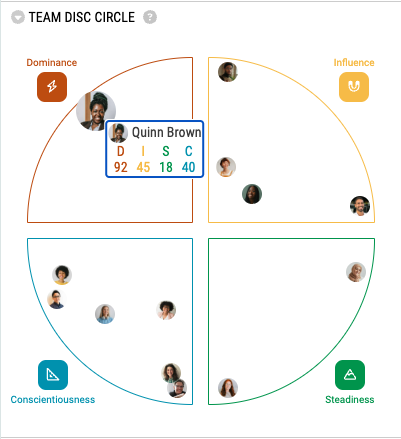
Tools like Cloverleaf’s DISC assessment can be a great starting point for managers to identify their natural tendencies and possible blind spots and learn about others. Knowing we may be relationship-driven and inspired by new ideas is one thing. Still, it’s another to realize that a key person on your team operates best with clear guidelines, solid project plans, and a high degree of independent work. This dynamic, for example, will call for the manager to engage in a different approach than the type of leadership style they might personally prefer. The ability to see the DISC profiles of an entire team is a key benefit Cloverleaf offers.
2. Principles: Guiding Leadership with Core Values
Principles are the core beliefs that guide your actions and decisions. These are the enacted values you stand by and use to navigate your leadership journey. For example, principles might include acting with integrity, assuming positive intent, and putting people before productivity.
Why It Matters: Leaders without clearly defined principles often seem reactive and can easily be swayed in their decision-making process. When leaders define their principles and communicate them to others, the team tends to see consistency and reliability, which increases trust and makes it easier for them to work effectively with their leader.
3. System: Establishing Structured Routines and Practices
System refers to the structured routines and practices you implement as a leader. It involves creating and maintaining processes that ensure effective team management, such as regular one-on-one meetings, feedback loops, and performance tracking. A solid system helps you lead your team predictably and efficiently, allowing for better outcomes and a more cohesive team environment.
How Leaders Can Use the APS Method to Help Managers Strengthen Human Skills
The APS Method provides a clear path for leaders to develop their human skills through self-awareness, strong guiding principles, and effective systems. Here’s how you can apply these concepts practically, day-to-day.
1. Applying Self-Awareness in Leadership
Developing self-awareness and awareness of others is crucial for effective leadership. Here are some practical steps:
- Conduct Regular Self-Assessments: Use tools like DISC, Enneagram, or 16 Types to understand your leadership style, strengths, and growth areas. Leveraging multiple assessments gives you a nuanced understanding of yourself and your team, allowing for more informed decision-making and personalized leadership strategies.
- Seek Feedback from Team Members: Regularly gather feedback from those you work with to gain diverse perspectives on how your leadership style impacts others. This input helps identify areas for improvement that you might not see on your own.
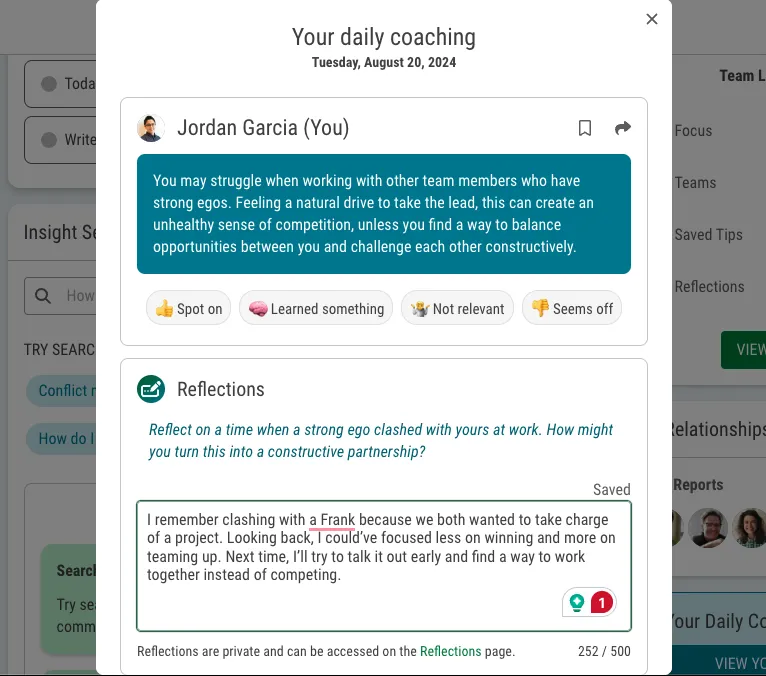
- Reflect on Your Responses and Behaviors: Consider how your tendencies influenced recent interactions and what adjustments you might need to make. Use tools like the Reflections feature to regularly assess how your actions and decisions align with your self-awareness insights.
2. Establishing Your Leadership Principles
Leadership principles guide your decisions and actions, ensuring consistency and integrity in your leadership style. Here’s how to define and implement these principles effectively:
- Define Your Core Leadership Values: Begin by identifying the values that are most important to your leadership. Write these values down and think about the principles that best represent them. Consider how you will demonstrate these values in your daily leadership practices—how will your team see and experience these values in action?
- Communicate These Principles to Your Team: Once you’ve defined your principles, clearly communicating them to your team is essential. This ensures that everyone understands the standards you hold yourself to and can align their expectations accordingly.
- Regularly Review and Adapt Your Principles: Leadership is dynamic, and your principles may need to evolve as you and your organization grow. Set aside time to review your leadership principles regularly to ensure they remain relevant and effective. If you find that certain principles need adjustment, be open to making those changes and communicating them to your team.
3. Developing Your Leadership System
Creating a leadership system is about establishing routines and practices that reinforce your principles and self-awareness. This system should be flexible, allowing you to adapt as you grow and as your team’s needs evolve.
Here are three simple ways to build and maintain your leadership system:
1. Establish Regular Routines and Check-Ins
- Create Consistent Check-Ins: Schedule regular one-on-one meetings with your team members. These meetings provide opportunities to discuss progress, challenges, and development goals. Consistency in these check-ins helps build trust and ensures that your team feels supported.
- Set Up Feedback Loops: Implement a structured feedback system that includes both giving and receiving feedback. This system should encourage open communication and ensure timely and constructive feedback. Regular feedback helps identify areas for improvement and fosters a continuous growth culture.
2. Monitor and Adjust Your System
- Track Performance and Progress: Implement performance-tracking mechanisms to monitor how well your leadership practices work. Use tools and metrics to assess whether your routines and practices are helping you achieve your leadership goals.
- Reflect and Adjust: Regularly reflect on the effectiveness of your leadership system. Consider whether your routines produce the desired outcomes and adjust as needed. This reflection ensures that your system evolves with your leadership journey.
3. Document Your Leadership System
- Create a Leadership Playbook: Document your leadership system, including your routines, principles, and feedback processes. This playbook serves as a reference for yourself and can be shared with others in leadership roles to ensure consistency across the organization.
- Regularly Update Your Documentation: Keep your documentation updated as your leadership practices evolve. This living document will help you stay aligned with your goals and ensure that your leadership approach remains relevant and effective.
A Strategic Path to Leadership Excellence
By focusing on the three pillars of the APS Method—Awareness, Principles, and System—leaders can adopt a proactive, reflective, and systematic approach to developing human skills. This not only leads to sustainable results and continuous improvement but also cultivates a leadership culture that thrives on growth and adaptability.
The importance of developing human skills cannot be overstated. The downfall of technically proficient yet emotionally unaware leaders highlights the need for a balanced approach that marries technical expertise with strong interpersonal skills. These skills are not merely complementary; they are essential for navigating the complexities of modern leadership.
A Dual Approach for Lasting Impact
Adopting both a top-down and bottom-up approach to building human skills enables organizations to create a cohesive leadership culture that aligns with their core values while empowering individual leaders on their personal growth journeys. This dual strategy ensures that leadership development is holistic, addressing both organizational alignment and individual capabilities.
The APS Method offers a practical, actionable framework for managers to cultivate the essential human skills that define effective leadership. By integrating self-awareness, clearly defined principles, and structured systems into daily practice, leaders can ensure that their growth is consistent and deeply embedded in their leadership style.
Moving Forward: Building a Thriving Leadership Culture
Investing in developing leadership competencies is not just a preventive measure against leadership failures; it’s a strategic move to nurture an environment where leaders and their teams can thrive. This investment pays dividends in the form of resilient, adaptable teams that are capable of driving the organization forward in an ever-changing landscape.
As you reflect on the concepts discussed, consider how you can begin to apply the APS Method within your own leadership context. Start by assessing where you currently stand regarding self-awareness, principles, and systems. Then, take concrete steps to enhance these areas, using the tools and strategies provided. The journey towards leadership excellence is continuous, but with the APS Method and tools like Automated Coaching, you have a clear path to follow.