Reading Time: 7 minutes

Learning professionals have long used the term “soft skills,” but it’s time for a redefinition. Traditionally seen as secondary—invested only when budgets allow—soft skills are actually crucial for effective workplace functioning. These encompass a range of competencies like effective communication, conflict resolution, giving and receiving feedback, employee recognition, cross-functional management, time management, and adaptability to change.

In contrast to hard skills, which are the technical skills specific to an industry or role, soft skills are fundamental for holistic human interaction in the workplace. According to LinkedIn’s 2023 Workplace Learning Report, 89% of L&D professionals recognize the growing importance of soft skills in navigating the evolving future of work.

developing soft skills training

What Are Soft Skills?

Soft skills are the interpersonal attributes and personal traits that determine how individuals interact in social and professional settings. They are crucial for collaboration, leadership, and maintaining a positive work culture. Examples of soft skills in today’s workforce include:

1. Effective Communication: The ability to clearly convey ideas and actively listen.

2. Teamwork: Collaborating effectively with others to achieve common goals.

3. Emotional Intelligence: Understanding and managing one’s emotions and those of others.

4. Problem-Solving: Creatively addressing challenges and finding solutions.

5. Adaptability: Adjusting to new conditions and learning quickly.

The Importance of Soft Skills

Despite their significance, a common challenge is measuring the effectiveness of soft skills training. Unlike hard skills, which can be quantified, soft skills require qualitative assessment. Therefore, nuanced solutions include integrating feedback opportunities, performance metrics related to teamwork and communication, and observing changes in workplace dynamics.

A study by MIT Sloan revealed a striking 250% ROI from a 12-month soft skills training trial in five factories. This trial, focusing on crucial skills like problem-solving and decision-making, not only led to increased productivity and efficiency but also improved employee attendance.

3 Steps To Implement Soft Skills Training

1. Identify Skill Set Gaps: Conduct surveys or interviews to determine which soft skills need strengthening.

2. Choose Relevant Training Methods: Opt for interactive e-learning modules, workshops, mentoring sessions, or embed coaching into the daily workflow of your team members.

3. Measure and Adjust: Continuously gather feedback and adjust development programs accordingly.

This approach allows businesses to foster a more engaged, collaborative, and adaptable workforce, essential for navigating today’s fast-paced workplace.

The Rising Significance of Soft Essential Skills

‘Soft’ skills have evolved beyond their traditional perception, becoming crucial for organizational competitiveness, retaining talent, and fostering cultures of accountability and inclusivity.

Significant data support this evolution:

Korn Ferry’s Survey of 550 HR Thought Leaders identifies their top priorities, including developing strategies that align people with business objectives, enhancing employee experiences, empowering managers to motivate and retain talent, and creating more attractive employment propositions.

According to the Gallup 2023 State of the Global Workplace Report, 59% of employees are disengaged, prioritizing engagement and cultural alignment over salary and benefits. The report suggests that employees seek more recognition, approachable management, and learning opportunities.

Supporting this, a collaborative study by Boston College, Harvard University, and the University of Michigan demonstrated a 250% return on investment from soft skills training, showing its substantial impact on team performance. The training led to more effective collaboration among teams, ranging from sales to customer response departments, and contributed to better business outcomes.

These cases highlight how soft skills training can positively affect different teams within an organization. Enhancing management, communication, problem-solving skills, and managerial effectiveness allows companies to build compelling people strategies that engage and retain top talent while strengthening employer branding.

Now What?

Having established the critical role of soft skills in today’s workplace, the next step is understanding how to implement and measure soft skills training programs effectively.

Cover image of Cloverleaf’s free guide on scaling talent development and driving lasting behavior change in teams in the age of AI

HUMAN SKILL PROGRAMS ARE HITTING LIMITATIONS...​

5 THINGS THIS FREE RESOURCE WILL TEACH YOU

4 Ways To Understand and Implement Effective Soft Skills Training

1. Identify and Address Learning Gaps

The first step in creating a culture of engagement with high morale and strong collaboration is to equip every employee with essential soft skills. However, identifying which soft skills need strengthening is a challenge. HR and learning leaders must engage in direct conversations with employees to pinpoint these learning gaps.

2. Engage and Retain Learners

To ensure development, it’s crucial to focus on the type of learning that resonates most with employees. Research has shown that applying skills immediately, rather than in prolonged training sessions, significantly increases employee retention. A micro-learning approach, which breaks down training into small, digestible segments, can be more effective and actionable. This method allows for immediate application of learned skills, fostering a more dynamic learning environment.

3. Move Beyond Traditional Training Methods

It’s important to recognize that training programs are not the only solution for increasing soft skills. Technology can play a pivotal role in making soft skills training for employees scalable across an organization.

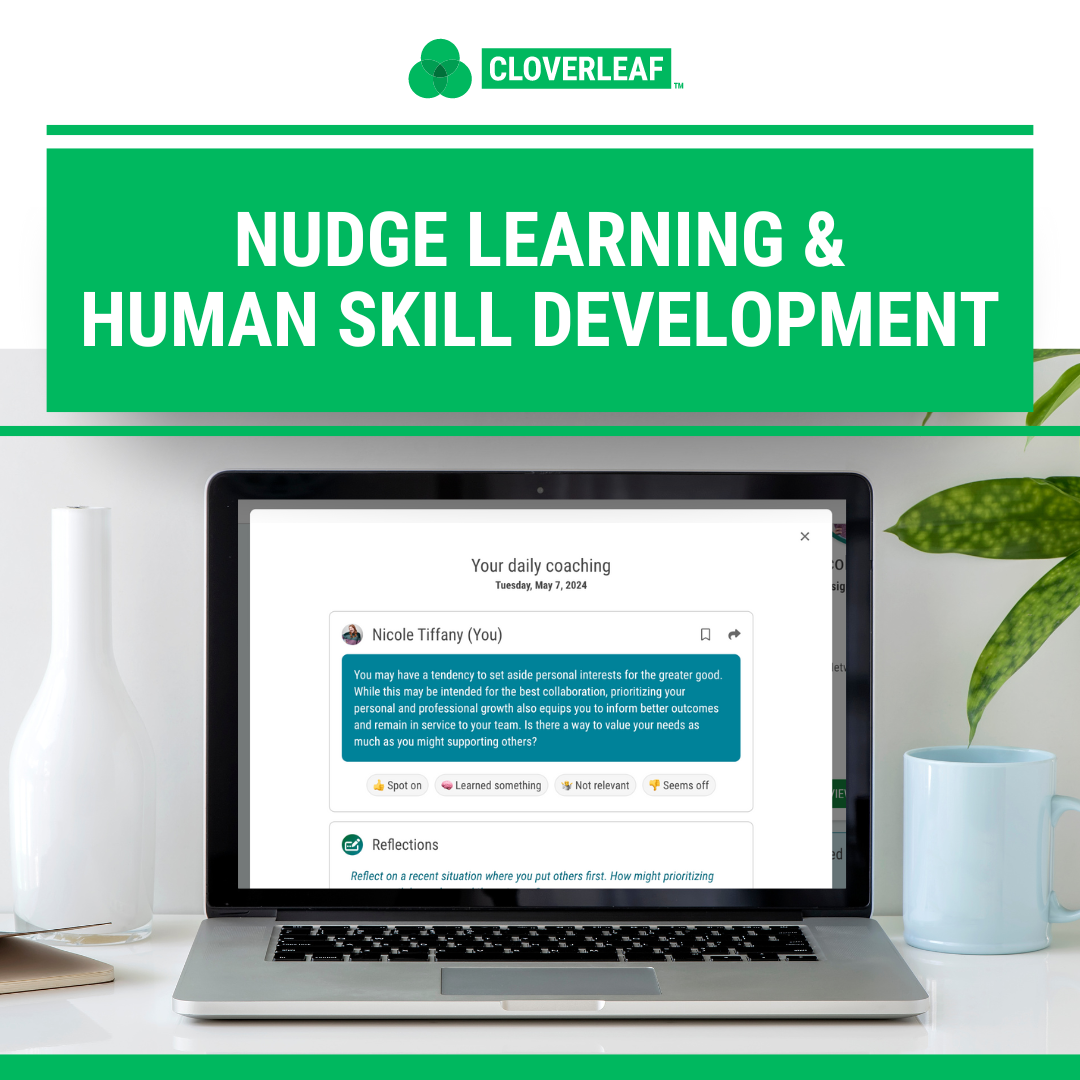
At Cloverleaf, we help integrate automated coaching and development tools to help employees strengthen interpersonal skills and professional development. This approach enables continuous learning tailored to the unique needs of each team and individual.

Practical Implementation Steps

1. Conduct Skills Assessments: Use workplace assessments to identify specific areas of strengths and potential skills gaps within your workforce.

2. Implement Micro-Learning: Utilize short, accessible, in-the-moment training that employees can immediately apply in their day-to-day activities.

3. Foster a Feedback Culture: Encourage regular feedback, allowing employees to discuss their learning experiences and provide insights into the training process.

4. Leverage Technology: Utilize platforms like Cloverleaf for automated coaching and development, ensuring a consistent and personalized learning experience.

4. Measure Training Effectiveness

Measuring the effectiveness of soft skills training can be challenging due to its qualitative nature. However, practical methods like observing changes in workplace dynamics, using performance metrics related to communication and teamwork, and integrating feedback mechanisms can provide valuable insights into the impact of these training programs.
By adopting these approaches, organizations can develop a more engaged, skilled, and cohesive team that is well-equipped to meet the challenges of the modern work environment.

soft skill training examples

It All Starts at the Top: Leadership's Role in Soft Skills Development

Successfully implementing and integrating soft skills within an organization begins at the highest level. It’s a common misconception to view supervisors and managers solely as the root of challenges in people skills. In truth, the embodiment of these skills must start with senior leaders and be mirrored in the company’s core values and behaviors.

Senior leaders play a pivotal role in setting the standard for soft skills within an organization. They must advocate for these skills and demonstrate them in their daily interactions and decision-making processes. Learning and HR leaders are often tasked with creating systems to evaluate leadership effectiveness, particularly in how they exhibit and foster soft skills. This evaluation should include mechanisms for delivering specific and timely feedback, ensuring leaders can identify and address any gaps in their leadership skills.

The Impact of Leadership on Psychological Needs

Research underscores the importance of workplace recognition, psychological safety, and personal development. A study conducted by the Center for Creative Leadership (CCL) sheds light on the profound influence that leadership styles have on team dynamics, particularly in terms of engagement from the team.

It’s also worth noting that approximately 60% of employees experience declining engagement and productivity due to poor frontline leadership, affecting 25% of organizations financially.

Conversely, engaged leadership, characterized by managers who are connected, empathetic, and supportive of their teams, can significantly enhance employee trust, loyalty, and overall satisfaction. This is contrasted with more authoritative or distant leadership styles, which can lead to disengagement and decreased productivity.

3 Benefits Of Soft Skills Training

1. Psychological Safety Increases: Leaders who excel in soft skills such as emotional intelligence, active listening, and positive reinforcement are more likely to address the psychological needs of their employees effectively.

2. Teams Retain Top Talent: One of the study’s significant observations is the correlation between leadership style and employee turnover. Leaders who actively engage in understanding and meeting the psychological needs of their employees significantly reduce turnover rates.

3. Strengthens Belonging: The study underscores the necessity for leaders to create a supportive and inclusive work environment. Such an atmosphere encourages open dialogue, mutual respect, and a sense of belonging.

Soft Skills Are Necessary For A Culture of Psychological Safety

Emotional intelligence, interpersonal communication, and active listening are most important soft skills for building a culture of psychological safety. This environment allows teammates to feel valued, understood, and safe to express their ideas and concerns. By prioritizing soft skills at the leadership level, organizations can foster a workplace where psychological safety is ingrained in the team and organizational culture.

Soft Skills In Action: Real-World Impact

One of our Cloverleaf Partners exemplifies this approach, delivering leadership communication training to thousands across various industries. In the last three years, they have integrated regular use of Cloverleaf into their leadership training, focusing on equipping leaders with the essential communication skills necessary for fostering trust and enhancing team performance.

A striking example of the program’s effectiveness is seen in the training of over 250 leaders from a hospitality organization. The most significant outcome, as reported by participants, was an increase in team retention. This improvement was attributed to the leaders learning and applying one fundamental skill: listening. Leaders boosted trust and approachability by simply taking the time to listen to their teams. This program has impacted leaders at all levels, from the C-suite to first-time managers.

While it’s challenging to directly correlate the financial investment in essential skill training to monetary returns, the benefits are evident in business goals to improve employee experiences, leadership effectiveness, and internal and external relationships. Essential skills competencies elevate the quality of work and positively impact customer experiences.

Thus, the focus should not be on if but on how to invest in soft skill training. The action taken in this direction is crucial, and the results speak for themselves. Your employees, and by extension, your customers, will appreciate and benefit from this commitment to developing essential skills.

Explore how Cloverleaf can transform your team. Dive into our innovative approach to aligning talent management, leadership development, and employee experience with your core business objectives. Discover how we validate ROI and elevate team dynamics, enhancing overall performance. Start your journey to strategic success with Cloverleaf today.

Reading Time: 8 minutes

Understanding the unique capabilities each employee brings to the table and the areas where they may require support is not just about filling gaps or enhancing performance. It’s about creating a dynamic and adaptable workforce that can meet the challenges of today’s fast-paced business environment.

When employees know their strengths, they can leverage them to contribute more effectively, increasing job satisfaction and productivity. Conversely, identifying and managing weaknesses can prevent potential pitfalls and enable a proactive approach to career development.

The essence of this article is to explore the nuanced art and science of discerning and developing diverse talents within a workforce. We will delve into strategies for identifying strengths at various stages of the employee lifecycle, the importance of addressing weaknesses constructively, and how to integrate this knowledge into robust development plans.

employee strengths and weaknesses

Evaluating Employee Performance: The Strengths vs. Weaknesses Debate

A pivotal question arises in talent management: Should leaders amplify employee strengths or dedicate efforts to remediate weaknesses? The debate is rich with varying perspectives, each backed by its own set of principles and outcomes.

The Reason For Developing Strengths

Advocates for a strengths-based approach, such as those posited by Gallup’s research, suggest that focusing on what team members naturally do best can lead to higher employee engagement, increased productivity, and greater profitability.

Dr. Donald O. Clifton’s work in positive psychology underpins this strategy, emphasizing that when individuals apply their core strengths, they are more likely to excel and remain motivated. For instance, a salesperson with a natural charisma may be encouraged to harness this trait to foster better client relationships, thus driving sales.

The Necessity Of Addressing Weaknesses

Conversely, proponents of developmental focus, drawing upon the work of renowned psychologist Carol Dweck, argue for the growth mindset’s potential to transform weaknesses into competence areas. The rationale is that neglecting weaknesses, especially those that hinder performance, can harm individual and team success. For example, a project manager struggling with time management could benefit from targeted skill development, as this weakness directly impacts their core responsibilities.

Applying A New Approach To Strengths And Weaknesses

The nuanced truth may lie in a blended approach that acknowledges the multifaceted nature of our development strategies. As Marcus Buckingham says, A strength is not what you are good at, and a weakness is not what you are bad at. A strength is an activity that strengthens you. It draws you in, makes time fly by while you’re doing it, and makes you feel strong.

Of course, we want people to leverage their strengths, but when developing their weaknesses or opportunities for growth would directly impact their role, performance, and career development, it only serves the individual, team, and organization to strengthen areas in need.

This perspective underscores the benefits and importance of aligning employee roles with their strengths while strategically developing weaknesses that limit their potential. It’s not about a binary choice between strengths or weaknesses but rather an awareness of both, ensuring that employees are positioned to excel while evolving in areas that contribute to their role’s demands and career trajectory.

Do we need to force a person to develop the ability to design great presentations when it’s not essential to their role or future within the company? Probably not. But it would serve them to improve their active listening, ability to give feedback or overall communication skills. Those interpersonal skills are role and function-agnostic.

The debate is not about choosing one approach; it’s more advantageous to foster a robust and adaptable workforce intentionally. Organizations can create a continuous growth and resilience culture by leveraging strengths and judiciously improving upon weaknesses when necessary.

Cover image of Cloverleaf’s free guide on scaling talent development and driving lasting behavior change in teams in the age of AI

Do You Want To Unleash The Strength's Of Your TEam?

Find Out How To Quickly:
how to identify strengths and weaknesses

How To Identify Employee Strengths And Weaknesses

Understanding and leveraging employee strengths is a cornerstone of effective talent management. Strengths are more than tasks an employee excels at; they are activities that invigorate and inspire, leading to peak performance and job satisfaction.

4 Strategies for Uncovering Strengths:

1. Interview Process: Begin at the recruitment stage by asking candidates to articulate their strengths as they pertain to the role. Inquire how they’ve previously harnessed these strengths professionally, which can offer predictive insights into their future performance.

2. Onboarding Observations: The initial months of employment are telling. Observe which tasks new hires gravitate towards and excel in, and note any hesitancy or reluctance in other areas. This period is ideal for identifying natural aptitudes and potential areas for growth.

3. Ongoing Dialogue: Regular one-on-one meetings between managers and employees should be a platform for discussing strengths. Encourage employees to reflect on their successes and how they can apply their strengths to current and future projects.

4. Performance Reviews: Incorporate self-assessment in performance evaluations to prompt employees to consider their strengths critically. Goal setting should then align with these strengths, fostering a sense of achievement and progress.

all cloverleaf assessments

The Role of Psychometric Assessment Tools:

Psychometric tools such as the 16 Type Indicator (MBTI), DISC, and CliftonStrengths® offer valuable insights into an employee’s strengths. These assessments can help increase self-awareness and guide personal development, ensuring each member’s strengths are fully utilized.

Cloverleaf takes the insights from traditional assessments and transforms them into actionable coaching. By integrating Cloverleaf’s insights into daily workflows, managers and employees can have more strategic conversations about performance and development, leading to a more engaged and productive workforce.

Recognizing Employee Weaknesses

In a professional context, weakness is an area where an employee may lack proficiency, impacting their performance or growth potential. Identifying these areas is not about highlighting shortcomings but about fostering an environment of continuous improvement.

3 Methods for Uncovering Areas for Development:

1. Candid Feedback: Create a culture where feedback is seen as a tool for growth. Encourage managers to provide candid feedback to help employees understand their development areas while supporting them.

2. Self-Assessment: Empower employees to self-reflect on their performance and identify areas they wish to improve. This self-directed approach to professional development can lead to more meaningful and personalized growth paths.

3. Integrate Coaching: Foster a coaching culture where leaders facilitate employee development, empowering individuals to identify and develop their strengths and address growth areas in alignment with organizational objectives.

Addressing weaknesses should be a supportive process that aligns with the employee’s career aspirations and the organization’s goals. Employees can approach their weaknesses as opportunities for growth and learning by focusing on development rather than deficiencies.

Harnessing Strengths and Addressing Growth Opportunities in Employee Development Plans

With a clear understanding of personal strengths and areas for growth, the next step is to integrate this insight into a cohesive development strategy. Organizations thrive when they establish systematic processes that recognize and harness individual strengths and constructively address and support growth opportunities.

Incorporating this dual focus into performance evaluations and career pathing plans is crucial. Such an approach ensures that development is not a one-size-fits-all program but a tailored journey that aligns with each individual’s unique capabilities and aspirations.

4 Ways Employees Can Advocate For Their Strengths and Development

Proactive communication and feedback are vital for individuals to leverage strengths and identify growth opportunities. Here’s how to effectively engage in this process:

1. Practice Good Communication: Discuss your key strengths with your manager, ensuring they know where you excel and how to utilize them. This transparency can help prevent burnout and lead to more fulfilling and suitable projects.

2. Be Self-Motivated: Actively seek out and express interest in projects that align with your strengths. Request that your manager keeps you in mind for upcoming opportunities that match your skill set, allowing you to contribute effectively and grow within the organization.

3. Welcome Feedback for Growth: When challenges arise, approach your manager for constructive feedback. Collaboratively set realistic and measurable improvement goals in areas causing stress or difficulty. This approach not only aids in personal development but also demonstrates your commitment to professional growth.

4. Integrate Continuous Learning: Take ownership of your development by seeking resources such as articles, books, and training sessions to sharpen your existing strengths and help you develop new skills. Attend conferences and engage in experiences that broaden your perspective and enhance your competencies.

9 Key Practices for Managers to Optimize Team Strengths

For leaders, the art of nurturing employee growth is both a responsibility and a privilege. Here’s a roadmap to best practices in this endeavor:

1. Utilize Development Frameworks: Engage with established performance and career development frameworks already available.

2. Integrate Development into Dialogues: Ensure that discussions of strengths and growth areas are a staple of one-on-one meetings. This consistent focus helps to personalize development plans and reinforces the importance of continuous improvement.

3. Celebrate Successes: Regularly recognize and celebrate achievements in both individual and team settings. This can boost morale and reinforce the behaviors and strengths contributing to a thriving workplace culture.

4. Foster Peer Recognition: Encourage a culture of appreciation by starting team meetings with “shout outs,” where team members can celebrate each other’s strengths and contributions.

5. Host Strengths Roundtables: Organize sessions where teammates share their strengths and how they can use them to promote teamwork.

6. Provide Timely, Constructive Feedback: Address areas for development promptly and constructively. Timely feedback prevents minor issues from becoming more significant problems and guides employees toward quality work.

7. Distribute Learning Resources: Share and promote access to resources, training, and learning opportunities.

8. Adopt a Coaching Mindset: When discussing areas for development, take a coaching approach by asking insightful questions that prompt self-reflection, adaptability, and emotional intelligence, such as:

  • “What patterns have you noticed in this area?”
  • “In what ways do you feel you need support here?”
  • “What does success look like for you in overcoming this challenge?”
  • “What step could you take to enhance your abilities here?”

By implementing these practices, leaders can create an environment that recognizes and utilizes employee strengths and compassionately and effectively addresses areas for growth, fostering a development culture.

employees strengths and weaknesses

S.R. Residence Hotel Phetchabun: Harnessing Employee Strengths for Enhanced Service Quality

In the heart of Thailand’s Phetchabun province, S.R. Residence Hotel faced a common industry challenge: maintaining exceptional service quality in a demanding work environment. The hotel’s management recognized that the key to sustaining high standards lay in the well-being and satisfaction of their staff. They embarked on a study to explore the impact of work-life balance strategies on service quality, focusing on leveraging employee strengths.

S.R. Residence Hotel introduced a series of work-life balance initiatives tailored to the strengths and needs of its workforce. These included flexible scheduling to accommodate personal commitments and health and wellness programs to ensure employees felt valued and supported. The hotel aimed to create a more dynamic and responsive service environment by focusing on its staff’s strengths.

The results were telling. The hotel markedly improved across all five service quality dimensions: tangibles, reliability, responsiveness, assurance, and empathy. Customer satisfaction scores soared, and employee feedback reflected a newfound sense of engagement and morale. The study directly correlated the strength-based work-life balance strategies and the elevated service quality.

The case of S.R. Residence Hotel illustrates the profound impact of aligning employee development with individual strengths and life needs. It underscores the importance of a supportive management team and a company culture that values personal growth and work-life balance. For organizations looking to replicate this success, the case study offers a blueprint: invest in your employees’ strengths, support their well-being, and watch as they, in turn, elevate your business.

Final Thoughts:
The journey to harnessing employee strengths and addressing weaknesses is instrumental to a thriving workplace. Embracing both aspects with a balanced strategy can revolutionize a work environment, enhancing individual and collective performance.

Acknowledging strengths ignites engagement and drives motivation, while tackling weaknesses head-on is indispensable for a holistic approach to development. Leaders are crucial in championing this dual approach, creating a supportive atmosphere that encourages growth and recognizes value.

By integrating platforms such as behavioral and strength-based assessments like Cloverleaf, organizations can gain deeper insights into their workforce, enabling them to effectively align individual strengths with the company’s goals.

In essence, the interplay of strengths and weaknesses within development strategies is not just a managerial task—it’s a leadership skill for fostering a resilient and adaptive organizational culture.

Reading Time: 10 minutes

Navigating the complexities of nurturing long-term, committed professional talent requires more than just a managerial title; it demands a leadership style that resonates with the evolving needs of today’s workforce. Managers and leaders are finding themselves at a crossroads where fostering responsibility, personal growth, and innovation is not just encouraged but expected.

The workplace is evolving, and with it, the workforce’s expectations. Today’s employees seek more than just a paycheck; they yearn for purpose, growth, and a sense of belonging.

Coaching leadership meets these needs head-on, offering a framework for managers to mentor rather than micromanage and inspire rather than impose. It’s a style that aligns with the human-centric focus of contemporary business ethos, where the growth of individuals is inextricably linked to the organization’s success.

The essence of a coaching leadership style lies in its capacity to cultivate a culture of collaboration and proactive engagement. While not every manager may naturally exhibit this approach, the good news is that it’s a skill that can be honed. This style of leadership is not about wielding authority but about empowering teams to discover their path to success.

In this post, you’ll explore the multifaceted nature of coaching leadership style, the application of emotional intelligence, and their transformative effects on leadership development and effectiveness. We’ll also examine how these strategies enhance individual skills and reinforce a team’s growth mindset.

what is a coaching leadership style

What Is A Coaching Leadership Style?

The coaching leadership style is a relational and developmental approach, where the leader acts as a facilitator rather than a director, guiding individuals towards self-awareness and reaching their potential. It is characterized by a leader’s understanding and appreciation of each team member’s unique strengths and areas for growth.

This style is underpinned by the belief that every teammate has the potential to excel, and the leader’s role is to foster an environment that nurtures this potential into performance. Through personalized engagement, constructive feedback, and a commitment to the professional development of each individual, leaders who coach aim to unlock the latent talents within their teams, paving the way for collective success and individual fulfillment.

The origins of coaching leadership skills in the business sphere can be traced back to the late 20th century, with thought leaders like Sir John Whitmore pioneering the principles of performance coaching: Coaching is unlocking people’s potential to maximize their own performance. It is helping them to learn rather than teaching them. It’s a style that emphasizes developing people’s skills, creativity, and resourcefulness rather than simply directing and controlling.

The Shift from Traditional Leadership Styles to Coaching Leadership

The transition from traditional leadership methods to a coaching approach reflects a broader cultural shift in our understanding of work. Once the command-and-control model reigned supreme, predicated on strict oversight and rigid structures, the modern workplace calls for a more nuanced touch.

The essence of generative feedback and the avoidance of the ‘poop sandwich’ (criticism in between two positive comments) approach to criticism are emblematic of this shift. Leaders now recognize that the carrot-and-stick methods of the past are less effective with today’s workforce, which values autonomy, purpose, and self-expression.

A coaching style of leadership represents a move towards a more personalized, strengths-based approach, where the leader’s role is to help employees achieve their full potential by asking thought-provoking questions and facilitating problem-solving rather than providing all the answers.

The Role of Coaching Leadership in Today’s Business Environment

In today’s fast-paced, innovation-driven business environment, coaching is not just beneficial; it’s essential. The ability to provide feedback that is both candid and growth-minded is a hallmark of a leader who is a good coach. This style suits the contemporary work climate, where agility, continuous learning, and adaptability are critical.

Coaching akin to servant leadership helps create a culture where team members feel valued and understood, and their contributions are considered integral to the team’s success. They foster an environment where employees are encouraged to take ownership of their roles, set development goals, and pursue professional growth within the supportive framework of the team. In essence, coaching is about cultivating a company culture that is not only productive but also deeply human, resonating with the intrinsic motivations and aspirations of every person.

Cover image of Cloverleaf’s free guide on scaling talent development and driving lasting behavior change in teams in the age of AI

HUMAN SKILL PROGRAMS ARE HITTING LIMITATIONS...​

5 THINGS THIS FREE RESOURCE WILL TEACH YOU

Adobe’s Performance Review Revolution:

Adobe Systems Incorporated made headlines when they replaced their annual performance reviews with a “Check-In” system, emphasizing ongoing feedback and expectations setting. Under the leadership of Donna Morris, the Executive Vice President of Customer and Employee Experience, Adobe has seen a 30% reduction in voluntary turnover. The Check-In system is a prime example of coaching leadership in action, focusing on real-time development opportunities and fostering open communication between managers and employees.

Google’s Project Oxygen:

Google’s internal study, Project Oxygen, sought to understand what makes a manager great at Google. The findings emphasized coaching as one of the top traits of their best managers. This led to the development of training programs focused on coaching skills for managers across the company. As a result, Google saw improvements in teamwork, employee satisfaction, and retention rates.

The Impact on Employee Satisfaction and Retention

A Gallup study revealed that managers who adopt a coaching style have teams with higher employee engagement and satisfaction levels. In an era where the cost of replacing an employee can be substantial, retaining talent through effective leadership benefits team morale and the company’s bottom line.

The benefits of coaching are multi-faceted, affecting not just the performance metrics but also the human elements of business. By investing in a coaching leadership style, organizations can create a sustainable environment that nurtures talent, drives performance, and maintains a competitive edge in the ever-evolving business landscape.

Not to mention, the influence of coaching extends beyond immediate team performance, deeply affecting employee satisfaction and retention. A coaching leader’s commitment to personal development can significantly enhance an employee’s connection to their workplace.

At PepsiCo, former CEO Indra Nooyi’s practice of writing personal letters to the parents of her executive team members to share their impact exemplifies how to be an impactful leader. This personal touch contributed to a culture where employees felt genuinely appreciated, leading to increased loyalty and decreased turnover intentions.

Similarly, Best Buy’s resurgence under CEO Hubert Joly was fueled by a leadership style prioritizing human connections and individual growth. By transforming managers into coaches, Best Buy not only improved customer service but also saw a rise in employee morale and a drop in turnover, proving that when employees are coached to success, they are more likely to stay and contribute to the company’s success.

coaching styles of leadership

7 Key Skills of Effective Coaching Leaders

Emotional intelligence is the bedrock of impactful coaching, comprising several key traits that allow leaders to navigate the complexities of human interactions and foster a positive work culture. Let’s explore these traits through the lens of experts in each field:

1. Self-awareness: Brené Brown exemplifies self-awareness through her introspective research on vulnerability and courage. She teaches leaders to embrace their strengths and vulnerabilities, understanding that this self-knowledge is crucial for authentic leadership that resonates with others.

2. Self-regulation: Marc Brackett’s work on emotional regulation gives leaders the tools to effectively manage their impulses and moods. His emphasis on pausing to think before reacting helps leaders maintain a calm and productive work environment.

3. Social awareness: Simon Sinek’s insights into what motivates people reflect a deep understanding of social awareness. He guides leaders in recognizing and responding to the emotional needs of their teams, which is essential for building trust and fostering collaboration.

4. Relationship management: Liz Wiseman’s concept of “Multipliers” is a testament to her expertise in relationship management. She demonstrates how leaders can amplify the capabilities of their direct reports through clear communication, inspiration, and effective conflict resolution.

5. Motivation: A coaching leader’s approach to motivation is characterized by an understanding of what drives their team members. This understanding fosters a workplace where intrinsic motivation is nurtured, and individuals are encouraged to pursue their goals within the context of the team’s vision.

6. Empathy: Empathy goes beyond mere understanding to genuinely sharing in the feelings of others. It’s a trait that enables leaders to connect with their team members on a human level, ensuring that interactions are compassionate and supportive, and that the workplace is a place of equality and empowerment.

7. Social Skills: Effective coaching leaders leverage social skills to relate to and engage with teammates. They prioritize collective growth and guide rather than control, creating an environment where constructive feedback and action are encouraged.

By integrating these EI components into their leadership style, coaching leaders can cultivate a work environment that supports the growth of individuals and enhances the collective well-being and productivity of the team.

Why Coaching Leadership Outshines 5 Traditional Types Of Leadership Styles

Leadership is a multifaceted endeavor, with various styles offering different benefits and drawbacks. However, when compared to traditional leadership approaches, coaching leadership often stands out as a more adaptive and empowering method. Here’s why a coaching leadership style is generally more advantageous than each of the following common leadership styles:

Autocratic vs. Coaching: Autocratic leadership centralizes power and decision-making in the hands of the leader, often leading to quick decisions but at the cost of creativity and team morale. In contrast, coaching leadership encourages autonomy and personal growth, which can lead to more innovative solutions and a more engaged team. While autocratic leaders may bring short-term efficiency, coaching leadership builds a resilient and adaptable team for long-term success.

Democratic vs. Coaching: Democratic leadership values the input of team members, which aligns with the inclusive nature of coaching leadership. However, coaching leadership goes a step further by seeking input and actively developing team members’ skills to contribute more effectively. This approach ensures that team engagement translates into professional growth and higher performance rather than consensus.

Holistic vs. Coaching: Holistic leadership’s focus on the team’s well-being is commendable, but it can sometimes lack the drive for performance and individual accountability that coaching leadership provides. Coaching leaders balance empathy with a clear focus on results, ensuring that the team’s well-being translates into tangible outcomes and personal development.

Visionary vs. Coaching: Visionary leaders inspire and motivate with a compelling vision of the future, but they may not always provide the support needed for individuals to reach that future. Coaching leadership, by contrast, combines vision with hands-on development, ensuring that each employee has the skills and confidence to contribute to the collective goal.

Authoritarian vs. Coaching: Authoritarian leadership imposes strict rules and high expectations, which can lead to efficiency but also stress and high turnover. Coaching leadership, while demanding high standards, achieves them through support and development rather than fear and control.

Identifying the Right Approach:

While each traditional style has its place, coaching leadership is often the more balanced and desirable, especially in today’s business environment. It combines the best elements of other styles—such as the efficiency of autocratic leadership, the inclusivity of democratic leadership, the empathy of holistic leadership, the inspiration of visionary leadership, and the high standards of authoritarian leadership—into a flexible, growth-oriented approach.

Influential leaders foster environments where team members are not just executing tasks but actively developing their capabilities. It’s a style that not only meets the organization’s immediate needs but also prepares the team for future challenges, making it a superior choice for leaders who want to build a robust, forward-thinking, and high-performing team.

6 Trends Shaping The Future Of Coaching Leadership

The trajectory of coaching leadership is increasingly intertwined with technological innovation and a culture of collaborative feedback. These emerging trends reshape how leaders engage with their teams and how organizations foster growth and learning.

1. Technology-Driven Personalization: Automated Coaching™ harnesses the power of technology to deliver a highly personalized coaching experience. It moves beyond the one-size-fits-all model, using data analytics and ethical AI to tailor coaching to each individual’s unique needs and learning styles. This level of customization ensures that every coaching interaction is relevant, impactful, and aligned with the employee’s personal growth trajectory.

2. Seamless Accessibility: The advent of Automated Coaching™ shatters the constraints of time and geography that once limited traditional coaching. Coaching becomes an on-demand resource with platforms supporting real-time, remote, and asynchronous interactions. Employees can access developmental tools and guidance seamlessly integrated into their daily workflow, making professional and personal growth an ongoing and readily available journey.

3. Collaborative Feedback Reimagined: Automated Coaching™ redefines cross-collaborative feedback, fostering an ecosystem of shared learning and continuous improvement. It encourages a feedback-rich culture where every interaction is an opportunity for growth.

4. Scaling Development Opportunities: One of the most significant advantages of Automated Coaching™ is scalability. It democratizes access to coaching, making it available to all levels of an organization, not just the executive suite. This inclusive approach ensures that every employee has the opportunity to develop and excel, fostering a culture of empowerment and equality.

5. Increasing Coaching Moments: Unlike the episodic nature of traditional coaching, Automated Coaching™ provides a continuous stream of development moments. It integrates with the user’s tasks and challenges, offering relevant, just-in-time advice and action steps. This constant engagement ensures that learning is embedded in the fabric of everyday work, making development a more dynamic and effective process.

6. Feedback-Responsive System: The interactive nature of Automated Coaching™ allows it to evolve with the user. Immediate feedback on the utility of coaching tips refines the learning so that subsequent advice is even more on point. This responsiveness ensures that the coaching provided is not only timely but also evolves to meet the changing needs of the workforce.

Transforming Leadership Coaching with Automated Coaching™

Leadership coaching can be more dynamic, responsive, and integrated into the daily life of organizations. By leveraging technology for personalization, accessibility, and scalability, Automated Coaching™ is poised to become the cornerstone of employee development strategies, ensuring that organizations remain agile and employees continuously grow.

Final Thoughts

It’s clear that this approach is more than just a management style—it’s a transformative style that can reshape the landscape of any organization. Here’s a summary of the key takeaways and some final thoughts on the enduring impact of coaching leadership.

Key Takeaways:

  • Adaptability of Coaching Leadership: Coaching is not a static set of behaviors but a dynamic interplay of skills that adapt to the needs of individuals and the organization.
  • Personal Growth and Team Development: At its core, coaching fosters personal growth, which catalyzes team development and organizational success.
  • Cultural Shift: Implementing a coaching leadership style signifies a cultural shift towards a more collaborative, empathetic, and fulfilling workplace.
  • Technological Integration: The future of coaching leadership is intertwined with technology, offering personalized, accessible, and scalable development opportunities through Automated Coaching™ for entire teams.
  • Feedback-Rich Environment: A coaching culture thrives on communication skills, continuous feedback, shared learning, and a commitment to collective improvement.

Further Development and Resources:

For leaders looking to develop their coaching skills further, the following resources provide valuable insights and practical strategies for developing and cultivating a coaching culture within your organization:

These resources are designed to guide leaders through the nuances of coaching in the workplace, offering actionable advice on integrating coaching principles into their leadership approach and creating an environment where coaching is a natural part of the organizational fabric.

In conclusion, embracing coaching leadership is not just about adopting a new set of practices; it’s about nurturing a philosophy that values human potential and collective success. As organizations continue to evolve, the principles of coaching leadership will remain steadfast, guiding the way to a future where every leader is a coach and every interaction is an opportunity for growth and development.

Reading Time: 9 minutes

Have you ever felt the weight of navigating through a workplace that seems rigid, unresponsive, or even impersonal? Contrast this with an environment where trust, collaboration, and genuine conversations are the norm. That’s the magic of a coaching culture—a transformative approach that is revolutionizing how we work and interact.

KEY TAKEAWAYS

  • The Essence of a Coaching Culture: At its core, coaching emphasizes trust, collaboration, and accountability to promote open, growth-oriented conversations.
  • Benefits Extend Beyond the Organization: Creating a coaching culture can enhance business outcomes, reduce turnover, and strengthen psychological safety.
  • Feedback as a Dual-Growth Tool: Feedback serves as a powerful tool for mutual growth, benefiting both the giver and the receiver.
  • Consistency in Application: For success, coaching must be consistently applied across all levels and interactions within the organization.
creating a culture of trust in the workplace

Defining a Coaching Culture in the Modern Workplace

At its core, a coaching culture embodies trust, accountability, and collaboration. Unlike traditional top-down management systems, where leaders dictate terms, a strong coaching culture promotes a paradigm where leaders act as facilitators. Leaders are more akin to guiding mentors or thinking partners, encouraging open dialogue, fostering individual growth, and cultivating team synergy. The emphasis shifts from focusing solely on results to nurturing personal and professional development, ensuring everyone feels valued and heard.

Allow me to share a personal story that demonstrates the impact of internal coaching in my professional life. Recently, I found myself under new leadership. This leader and I were poles apart in our approaches and personalities.

Over several months, we endeavored to understand each other, but the journey was challenging. It’s no secret that experiencing difficulty with a superior is not unique; many of my peers relayed similar struggles with their bosses—leaders who seemed unaware of their impact, disinterested in the development of their team, and lacked the compassion or intent to build personal relationships with members of their team.

Imagine spending most of your waking hours at work, only to feel invalidated or undermined consistently. The sense that your value to your team is perpetually overlooked can be disheartening. When I shared my frustrations with colleagues, the resonance was palpable. Some confided in their daily tears, while others considered leaving due to their unsupportive bosses. Another colleague hoped for a leadership change in the upcoming months.

Taking the initiative, I approached my leader to address these concerns. While many had done the same, my leader chose to engage in an open dialogue with me—a conversation of vulnerability.

This coaching approach proved to be a turning point. I presented my experiences, framing them as observational data. My feelings, arising from specific situations, led me to certain assumptions or, as some might call them, “learnings.” However, there was a lingering doubt: were my interpretations accurate? For instance, based on particular interactions, I questioned my perceived value within the team. Bringing these concerns forward, I was met with surprising feedback. My leader’s narrative differed starkly from my perceptions, offering a fresh perspective.

Interestingly, of the several such experiences I knew of—three of which involved my friends in similar job settings—only one leader (mine) chose to participate in such a dialogue. This highlights the rarity, yet importance, of open communication in a coaching culture.

A recent survey by my organization, LHH, showed that while 69% of all managers believe it is important for companies to provide coaching and mentoring on leadership skills, only 23% of leaders have received or are receiving coaching or mentoring.forbes.com

Rather than being confrontational, our interactions were rooted in mutual respect and a genuine quest for understanding. During a particularly vulnerable conversation, where I shared my apprehensions and assumptions, we experienced a breakthrough.

Cover image of Cloverleaf’s free guide on scaling talent development and driving lasting behavior change in teams in the age of AI

HUMAN SKILL PROGRAMS ARE HITTING LIMITATIONS...​

5 THINGS THIS FREE RESOURCE WILL TEACH YOU
career planning benefits

The Imperative for Change: What Is The Value Of Coaching?

A coaching mindset seeks to foster trust, accountability, and collaboration. Coaching conversations are not about merely directing. A coaching experience is rooted in creating a space where every member feels valued and validated.

Emotional intelligence and psychological safety have emerged as crucial components in today’s work environment, with the latter becoming the number one indicator of a team’s success. This safety and the intrinsic trust it fosters are pivotal for high-performing teams and creating a sense of belonging in the workplace.

When teams embed a coaching culture, they tend to achieve more tremendous success. Their performance often becomes the benchmark for others in the organization. Shifting the company culture is not about a sweeping organizational change right from the get-go; individual teams can embrace and champion this culture, setting an example for others.

The advantages of this culture extend beyond team dynamics. Coaching in the workplace can catalyze the connection between personal growth and broader business goals when considered on a larger scale.

The result? Enhanced stability and a significant reduction in turnover. In an age where employee engagement and retention are critical, employee coaching becomes even more necessary for supporting professional growth and leadership development.

6 Tangible Benefits Of Coaching for the Organization

  • Personal Development: Coaching promotes individual growth, new skill development, and well-being.
  • Impact on Business Outcomes: An individual’s progress and successes can intrinsically tie to the organization’s success.
  • Foundation of Trust: Trust sits at the heart of culture, creating an environment of mutual respect and understanding.
  • Reduction in Turnover: Trust also leads to reduced turnover. Employees feel valued, reducing the need for them to seek opportunities elsewhere.
  • Alignment with Goals: Employees willingly align with the company’s goals and create action plans to develop relevant competencies.
  • Increased Investment: Deeper investment and involvement from individuals can lead to high performance.

4 Strategies for Successful Implementation Building a Coaching Culture from the Ground Up

Establishing an effective coaching process isn’t instantaneous. It requires targeted strategies, unwavering stakeholder commitment, and proactive participation from everyone on the team.

implementing a coaching culture

1. Start Small: Practical Steps for Leaders and Teams

A. Engage Even in Difficult Environments
Leaders can lay the groundwork for change even in challenging organizations where tension is palpable. It may be tempting to assume that change can only come from a complete organizational shift, but small, calculated steps can make all the difference.

B. Harnessing the Power of Individual Teams
A pervasive misconception is that for coaching to be effective, it must start organization-wide. Individual teams can pioneer this culture, serving as examples for the broader organization. Test cultivating this culture at the micro-level to spread it throughout the company organically.

C. Utilize Simple Conversations
Often, the most profound changes start with straightforward, transparent dialogues. In the realm of coaching, it’s crucial to set clear expectations around conversations, ensuring both leaders and team members understand their roles and the goals of each interaction. This regularity in dialogue establishes a cadence, ensuring that feedback and coaching become normal.

2. Practice Two-Way Feedback For Dual Growth

In a coaching culture, feedback isn’t merely a tool; it’s the cornerstone. It provides opportunities for mentoring, clarity, and mutual understanding. But more importantly, it doesn’t just promote the growth of the one receiving the feedback; it’s a two-way street, and both leader and team member evolve together.

If leaders want their managers to take daily accountability for employee engagement, performance and development — to truly give up on bossing and begin real coaching — those managers need to be coached themselves.gallup.com

A. Use Feedback as a Growth Mechanism
Feedback isn’t just about pointing out areas of improvement; it’s a bridge to understanding, collaboration, and mutual growth. However, embracing feedback isn’t always straightforward. It’s pretty vulnerable and may feel risky, especially when leaders aren’t accustomed to seeking it.

B. Dual Development
A misconception in traditional workplace hierarchies is that leaders coach and direct reports learn. However, this dynamic is turned on its head in a thriving coaching culture. Coaching isn’t a one-way spilling of knowledge or skills; it’s a collaborative journey. It’s a discovery process that two people or a team are doing together.

Feedback, when used effectively, does more than identify gaps; it fosters an environment of continuous improvement, mutual respect, and dual growth.

3. Navigate Challenges and Leverage Differences

Theory without practice is like a ship without a compass. Real-world experiences offer tangible evidence of the challenges and triumphs within a coaching culture.

A. Embracing Differences
Diversity is often celebrated for bringing various perspectives to the table, but it can also bring its fair share of challenges, especially when members have vastly different strengths and talents. However, these differences, when harnessed correctly, can be beneficial.

Consider my own experience; there is still ongoing learning between my leader and me, working through leveraging our different strengths. It’s not about seeing eye-to-eye on everything but appreciating and leveraging those unique qualities.

B. Confronting Challenges Head-On
Transitioning to a coaching culture may unearth hidden conflicts, but it’s also the best tool to navigate them. Don’t forget, when I got a new leader, it was not a seamless start to our relationship. There were misaligned expectations, which you don’t know until there’s some friction.

Introducing a new leader can be a challenge in any organization, especially if there are different perspectives or understandings. However, addressing these issues head-on can lead to resolution and mutual understanding.

C. Open Communication

When issues arise, the path to resolution often lies in dialogue, understanding, and mutual respect. Consider how my leader responded when I brought up my issue; he actually talked with me about what could go better and how we can move forward. This dialogue is essential in fostering understanding and creating a foundation for future collaboration.

It’s in our day-to-day real-life examples that it becomes evident that challenges are inevitable. However, a coaching approach can develop our know-how for navigating complex situations. Teams can thrive with open communication, a willingness to embrace differences, and confronting challenges head-on.

4. Addressing Core Challenges with Cloverleaf’s Automated Coaching

The road to embedding a coaching culture is not always without its hitches. Many teams and leaders grapple with specific pain points:

A. Catalyzing Genuine Behavioral Change:
Often, driving behavioral change can feel like scaling a steep mountain. The aspiration is clear: supporting individuals to become their best selves. Cloverleaf provides the dashboard and insights to navigate this challenge, turning aspirations into actionable coaching.

B. Navigating Impact Measurement:
Quantifying the effects of coaching and team development initiatives can leave people leaders guessing. Without tangible metrics, demonstrating the value of coaching to the broader business becomes nebulous. However, with Cloverleaf, you’re not just armed with data; you’re empowered with insights that resonate, showcasing the impact of your endeavors as pivotal to organizational success.

C. Equipping Managers for Diversity in Teams:
Leaders often find themselves at the helm of diverse teams, each member with unique strengths, motivations, and communication styles. Cloverleaf guides managers in understanding, valuing, and leveraging these diversities. The result? Teams that are not just effective but also harmonious.

Cloverleaf: A One-Stop-Shop To Scale Coaching To Your Whole Team

With Cloverleaf, you can transform popular validated assessments into Automated Coaching™ for the whole team.

Your organization can:

A. Enhance Strength Awareness:
Cloverleaf’s team dashboard is more than just a digital interface. Members who engage with it experience significant improvements in teamwork quality. The platform fosters an environment where leaders and teammates:

  • Recognize and capitalize on each other’s strengths.
  • Adapt to evolving challenges and scenarios.
  • Cultivate deeper collaboration and synergy.

B. Strengthen Recognition:
Everyone yearns for recognition and acknowledgment. Within just three months of utilizing the Cloverleaf platform:

  • Individuals reported a 33% increase in feeling recognized.
  • Members sensed a heightened appreciation for their unique skills and inputs, fostering a positive work environment and boosting morale.

C. Promote Psychological Safety:

A team’s success isn’t just about skills but also about how comfortable members feel expressing their opinions and ideas. Cloverleaf plays a pivotal role here by:

  • Simplifying the intricacies of understanding varying personalities and behaviors within teams.
  • Encouraging open dialogue and mutual respect.

Practical Application in Everyday Scenarios

Creating a culture of coaching doesn’t mean a complete overhaul of your existing workplace culture, hiring external coaches, or setting up formal coaching sessions every week. Instead, it’s about integrating intentional practices into daily interactions, one-on-ones, and workflows.

characteristics of a coaching culture

4 Characteristics Of A Coaching Culture

1. Practice Coaching In The Flow Of Work:
Incorporating coaching into the very fabric of daily work does more than enhance skills—it transforms mindsets. As individuals become more adept and versatile, they invigorate their teams, creating a positive domino effect that can resonate throughout the organization.

2. Foster Trust And Transparency:
A thriving culture is rooted deeply in trust and transparency. Coaching is more than just believing in someone’s expertise; it’s about fostering a shared belief that everyone is collectively working toward the organization’s success. By maintaining open communication channels, embracing feedback, and celebrating each person’s unique strengths, teams build trust and create a resilient bond that elevates results.

3. Move Beyond Transactional Interactions:
In a coaching culture, interactions are more than just transactional. Instead of merely giving instructions or feedback, there’s a focus on understanding, mutual respect, and learning. Every interaction is an opportunity for growth and understanding.

4. Develop Consistency:
For a coaching culture to be successful, it needs to be consistent. It can’t just be a one-off workshop, a once-a-year coach training, or limited to the C-suite. Instead, coaching principles must be embedded in daily interactions, whether it’s a team meeting, a one-on-one catch-up, or even a quick chat by the water cooler.

Final Thoughts

Establishing a coaching culture means moving away from a top-down approach to leadership and towards an environment where every person feels valued, understood, and empowered to contribute their best to the organization. And it all starts with trust. Without trust, the foundation is shaky, but with it, the possibilities for growth and success are limitless.

Reading Time: 11 minutes

Career pathing, often nestled within the broader concept of career development, stands out as a nuanced strategy pivotal for organizational effectiveness. Today, as employees discern between merely holding a job and advancing in a fulfilling career, companies grapple with the dual challenge of aligning talent aspirations with organizational trajectories.

The essence? It’s more than just mapping professional growth; it’s about weaving an individual’s vision into the fabric of the company’s future.

Career pathing is a symbiotic relationship between employees channeling their skills and desires in ways that resonate with the organization’s direction. It’s this cohesiveness that can galvanize teams, spark innovation, and lay the foundation for a thriving culture.

In this article, let’s demystify career advancement, illuminating its role in bridging the aspirations of individuals with the strategic direction of your business to foster an environment where mutual growth is not just encouraged but inevitable.

KEY TAKEAWAYS

  • Navigating Career Nuances: Employee development aligns individual aspirations with organizational vision, bridging ambitions and company success.
  • Impact of Career Pathing: A structured professional development framework yields business benefits, from being profitable to strengthening new skills within your team.
  • Crafting the Right Framework: An effective career path requires a clear structure and technology, from organizational charts to e-learning platforms.
  • Challenges Aren’t Roadblocks: Issues like resistance to change can be navigated with transparent communication and manager training.
  • Building a Culture of Growth: Beyond strategies, a career pathing program should be ingrained in a company’s culture, emphasizing mutual growth and learning.
career pathing meaning

Career Pathing Vs. Career Development: Navigating the Nuances

Understanding the nuances between career pathing and career development is crucial for both organizations and employees. The distinction, though subtle, plays an imperative role in how individuals plan their career trajectories within and outside an organization.

What Is Career Pathing?

Career pathing within an organization means aligning an individual’s skills, talents, and desired areas of growth to the talent and business priorities of the organization. It’s about finding the intersection between an employee’s skills, talents, and desired growth areas with the company’s present and future needs.

This means the ways in which one wants to develop, move up, take on new responsibilities, etc., also have to match up with where the organization is headed, its current needs, and its anticipated needs.

3 Key Career Mapping Considerations:

  • Strategic Alignment: How do an individual’s growth aspirations align with the company’s direction?
  • Organizational Fit: Are there current or anticipated roles that match the individual’s desired path?
  • Skill Evolution: What skills or competencies must the employee develop to fit into these roles?

For instance, if an employee is keen on stepping into a leadership role, career pathing would involve understanding whether there are leadership opportunities within the organization. Likewise, if someone is contemplating a shift in function, the question becomes whether lateral moves are possible and beneficial.

Career Development: A Broader Horizon

Career development, in general, may refer to an individual who is looking at developing their career holistically and independently from a specific organization. While these terms tend to be used interchangeably at times, the distinction here is important.

While career pathing is organization-centric, career development adopts a more holistic perspective, independent of any specific organization. It’s about the larger journey of a professional, which could span multiple roles, organizations, or even industries.

Consider an individual who envisions a future working independently or transitioning to a larger enterprise for more expansive growth opportunities. This vision falls under the umbrella of career development. Such aspirations might not always align with the immediate objectives of their current organization, potentially leading to misaligned expectations.

Aligning Individual Aspirations with Organizational Objectives

Employees may find themselves at a crossroads when their career aspirations don’t sync with the needs of their organization. This misalignment can lead to frustration and a sense of stagnation. Hence, it’s crucial for both parties to have transparent conversations.

For employees, it’s about introspection and open dialogue:

  • Am I looking for growth opportunities strictly within my current organization, or am I open to broader horizons?
  • How can I better align my aspirations with the organization’s needs?
  • If I am interested in a different function, can I move laterally?
  • What potential roles or functions can I explore to maximize my impact on the team and the broader company?

On the flip side, organizations should encourage performance management conversations, ensuring employees feel valued, understood, and aligned with the business’s trajectory. This approach ensures mutual growth and strengthens organizational culture and employee retention.

In summary, while career pathing and career development share overlapping territories, discerning the differences is crucial. It paves the way for more informed decisions, clearer communication, and a harmonious balance between individual aspirations and organizational objectives.

Cover image of Cloverleaf’s free guide on scaling talent development and driving lasting behavior change in teams in the age of AI

HUMAN SKILL PROGRAMS ARE HITTING LIMITATIONS...​

5 THINGS THIS FREE RESOURCE WILL TEACH YOU
career planning benefits

The Tangible and Intangible Benefits of Career Pathing

A Catalyst for Organizational Growth

Career pathing isn’t just a buzzword thrown around in human resources. It’s a strategic initiative that goes beyond employee well-being and satisfaction, driving critical business outcomes. When implemented effectively, career pathing can translate into significant bottom-line benefits, transforming how an organization thrives in an ever-competitive market.

Career Pathing: Beyond Just Retention

1. Aligning Vision with Action: Organizations in the modern era are facing an evident demand: the workforce is seeking more than just a paycheck. People want and expect development opportunities, meaningful work, empowering cultures, and a supportive environment that aligns with their core values. Career pathing can address this demand head-on, allowing employees to envision a brighter future within the organization, subsequently fostering loyalty and commitment.

2. Building Organizational Loyalty and Trust: Personal and professional relationships thrive on mutual trust and loyalty. Imagine having an ally, someone you can wholeheartedly trust and who champions your cause. In an organizational setting, when employees feel this profound sense of loyalty, their commitment and dedication to the company’s success know no bounds. They’re more likely to go the extra mile, not out of obligation, but out of genuine care and alignment with the company’s vision.

3. Tangible Business Outcomes: While fostering a positive work culture and enhanced employee morale are noteworthy, career pathing also delivers tangible benefits:

  • Profitability Boost: Engaged employees, driven by a clear career path, often exhibit higher productivity levels. Higher productivity means better service or product quality, ultimately leading to increased profitability.
  • Reduced Turnover: With a clear career trajectory, employees are less likely to seek opportunities elsewhere. This reduces recruitment costs and can increase employee engagement.
  • Bridging Skill Gaps: By identifying the desired paths of employees, organizations can offer targeted training and development programs. This caters to individual growth and addresses the skill gaps within the company.

4. Creating an Empowering Environment: A company that values and prioritizes career pathing is often perceived as forward-thinking and employee-centric. This perception can create an empowering environment where leaders are engaged, communication is transparent, and individuals feel valued. Personal accountability, performance, and engagement naturally soar within such an environment.

Career pathing stands at the intersection of individual aspirations and organizational growth. Its benefits, both tangible and intangible, are hard to overlook. As organizations brace themselves for the challenges of the modern world, career pathing can help illuminate the way towards mutual success and growth.

Crafting a Comprehensive Career Pathing Framework

The Foundation of Employee Satisfaction

In an ever-evolving workplace, a structured career pathing framework is no longer an option but a necessity. Such a framework doesn’t merely provide a direction; it intertwines employee aspirations with organizational goals, driving a direct link to job satisfaction and overall employee well-being.

7-Step Career Pathing Framework

1. Starting from the Back: Organizational Chart and Job Descriptions

Before diving into individual career paths, aligning the organization’s structural underpinnings is crucial. An updated organizational chart provides clarity on the hierarchy, team alignment, and the available progression routes. Likewise, having a consistent framework for job descriptions ensures that expectations are clear from the outset.

Each job description should clearly list the competencies vital for success. This doesn’t only include technical skills but also the softer, often overlooked interpersonal and leadership skills. Recognizing that leadership is as much about people management and group dynamics as expertise ensures holistic career development.

2. Visualizing Departmental Career Progressions

By mapping out specific progressions within departments, employees gain a visual understanding of their potential growth path. This visualization is pivotal for motivation and clarity. Moreover, showcasing how skills acquired in one function can be transferable to another promotes flexibility and cross-functional growth. For instance, the competencies honed in marketing operations might seamlessly translate to a role in marketing analytics.

3. Aligning with Learning and Development

Once the career paths are outlined, it’s essential to compare them with the organization’s current learning and development initiatives. Does the company offer sufficient opportunities to equip employees with both the hard and soft skills necessary for role advancement? Identifying gaps and ensuring the alignment of developmental opportunities with career objectives is paramount.

4. Onboarding with a Vision

A new employee’s introduction to the organization should be about their current role and the company’s future potential. An onboarding process that aligns with career pathing objectives sets a precedent for growth from day one.

5. The Drive for Continuous Upskilling

In today’s rapidly changing corporate landscape, static skill sets quickly become obsolete. Emphasizing the importance of continuous upskilling and certifications—achieved through avenues like webinars, workshops, and courses—ensures employees remain agile and relevant.

6. Effective Communication and Training

A framework is only as good as its implementation. Regularly communicating the importance of career pathing and training both leaders and individual contributors on how to facilitate related conversations is critical. Establishing a dedicated leader or team to oversee the framework’s execution and training ensures consistency and commitment.

7. Evaluating and Iterating the Framework

The career pathing framework shouldn’t be static. Regular evaluations through methods like pulse surveys help understand its effectiveness and improvement areas.

Questions to consider include:

  • Are leaders actively using it?
  • Do employees understand and resonate with it
  • How frequently is it highlighted in company-wide communications?

A meticulously crafted career pathing framework is more than just a tool—it’s a commitment. A commitment to employees that their growth matters and a pledge by the organization to provide clear, achievable paths towards that growth. In this mutual journey of development, both parties flourish, resulting in a harmonious, productive, and future-ready workplace.

Strategies for Effective Career Pathing: Leaders and Employees

Two-Way Street of Career Pathing

Navigating one’s career path is a collaborative effort. While organizational strategies shape the general direction, individual desires, and aspirations add depth and meaning to this journey. Effective career pathing necessitates a blend of top-down leadership directives and bottom-up employee initiatives.

what is career pathing

Career Pathing Best Practices for Leaders…and Employees!

1. For Leaders: Coaching Beyond the Framework

Having a robust career pathing framework is foundational, but it’s the personal touches leaders add that truly make a difference. Adopting a coaching approach means actively listening, especially when employees express concerns or seek challenges.

  • The Power of Questions: Asking thought-provoking questions can unlock hidden desires and goals. Questions like, What would you love to explore in your role? or, Which of your skills do you believe is underutilized? can shed light on unseen growth areas.
  • Listening Beyond Conversations: As projects or new initiatives surface, astute leaders match these opportunities with employee talents and career goals, ensuring alignment and fulfillment.

2. For Employees: Charting Your Path

While organizational support is crucial, taking charge of one’s own career progression is equally important. Here’s how:

  • Vocalize Your Aspirations: Use every interaction, from one-on-one meetings to skip-level discussions, to voice your growth desires.
  • Be Proactive: Even if there’s no formal pathing structure, initiate the dialogue. Explore both internal and external opportunities to grow.
  • Feedback is Gold: Regularly seek feedback, embrace diverse perspectives, and hone your ability to adapt and evolve.
  • Networking: Building and maintaining relationships within the organization is paramount. An insightful conversation today could unlock a door tomorrow.

3. The Role of Mentorship

Mentorship programs offer invaluable guidance, helping employees navigate their careers with the wisdom of someone who’s been there. Such programs not only provide direction but also strengthen bonds within the organization.

4. Performance Reviews with a Career Focus

Regular performance reviews shouldn’t be just about past accomplishments. They should be forward-looking, with career paths as core discussion points for mentoring and guiding employees toward their next milestones.

Fostering a Culture of Continuous Career Growth

The Pivotal Role of Organizational Culture: A company’s ethos significantly impacts career pathing. It’s an invisible force that can either fuel aspirations or stifle them. It’s imperative for organizations to foster a culture where career growth isn’t just encouraged—it’s ingrained.

Cultivating A Learning Culture

In an environment that prizes learning, career pathing is not an added benefit—it’s a natural outcome. Such a culture views individual, leader, and team growth as indispensable investments.

  • Reflection of Learning: When an organization truly values learning, career pathing becomes second nature. It’s not merely a structured process but a manifestation of the company’s commitment to individual growth.
  • Satisfaction and Success: A learning culture and tangible growth opportunities escalate job satisfaction. And as employees flourish, it’s mirrored in positive business outcomes.

For an organization to thrive, both leaders and employees must share the commitment to continuous growth. With the right practices, mentorship, and an unwavering focus on learning, career pathing can become the compass guiding everyone towards their best selves.

4 Challenges and Solutions in Implementing Career Pathing

Navigating the Roadblocks

Just as any journey is bound to face obstacles, the road to effective career pathing isn’t always smooth. Organizations often confront myriad challenges—from ingrained resistance to evolving dynamics. Identifying and preempting these challenges with effective solutions is key to creating a robust career pathing framework.

career pathing framework

1. Resistance to Change

Challenge: One of the most common barriers is resistance to change, especially in established organizations with deep-rooted processes and hierarchies. Employees and even leaders can be apprehensive about shifting paradigms.

Solution: Cultivate a culture of adaptability. Begin with awareness campaigns, workshops, and discussions to underline the benefits of career pathing—for the individual, teams, and the organization as a whole. Also, share success stories where career pathing made a positive difference.

2. Lack of Clear Communication

Challenge: Even the best-laid career pathing plans can become convoluted without clear communication. Ambiguity can lead to misunderstandings and missed opportunities.

Solution: Establish open channels of communication. Regularly update all stakeholders about career pathing’s developments, benchmarks, objectives, and advantages. Foster an environment where employees feel comfortable discussing their career aspirations and uncertainties.

3. Inadequate Manager Training

Challenge: Managers play a pivotal role in facilitating career pathing. However, without proper training, they might struggle to guide their team members effectively.

Solution: Invest in comprehensive training programs for managers, equipping them with the tools and knowledge to steer employee career pathing discussions, understand their aspirations, and match those with organizational needs. To help you start, check out the post: The Managerial Readiness Playbook.

4. Misalignment of Personal and Organizational Goals

Challenge: There can be situations where an employee’s career aspirations don’t align with the organization’s immediate needs or long-term vision.

Solution: While it’s crucial to prioritize organizational objectives, it’s equally important to value individual employee’s aspirations. Create flexible career pathing frameworks, allowing some level of adaptability to cater to unique talents and goals.

The Role of Technology: Making Career Pathing Seamless

Technology can be a game-changer for designing career pathing opportunities in this digital age.

  • Data-Driven Insights: Use analytics tools to identify skill gaps, track employee progress, and predict future skill requirements. This not only adds precision to the process but also helps in making informed decisions.
  • Digital Roadmaps: Interactive platforms can visualize potential career paths, allowing employees to explore different trajectories, understand required skills, and plan accordingly.
  • E-learning Platforms: As upskilling is integral to career planning, integrating e-learning platforms can facilitate continuous learning, ensuring employees are always ready for the next step.
  • Feedback Mechanisms: Implement technology-enabled feedback tools to gather real-time insights on the effectiveness of the career pathing process, facilitating continuous improvement.

While challenges in implementing career pathing are inevitable, they aren’t insurmountable. With a proactive approach, clear communication, and the leverage of technology, organizations can create a dynamic and responsive career pathing framework that resonates with both their vision and their employees’ aspirations.

Cloverleaf: A One-Stop-Shop To Help Your People Be Their Best Selves

Charting the Course to Organizational Excellence

Navigating the intricate landscape of career pathing might seem daunting, but its rewards are manifold and far-reaching. By understanding the pivotal role of a structured career pathing framework, organizations not only unlock doors to heightened employee satisfaction but also pave the way for increased productivity, reduced turnover, and a robust employer brand.

But it’s not merely about setting up a system; it’s about fostering a culture. A culture where growth is not a mere aspiration but an ongoing journey. Where leaders listen actively, and employees champion their career ambitions. Where challenges are viewed as stepping stones, and technology is harnessed to streamline, simplify, and magnify the process.

In the end, career pathing is more than just a strategic tool—it’s a testament to an organization’s commitment to its people. It signifies a promise that every individual’s career voyage matters and that the organization is a willing and proactive co-traveler in that journey.

Reading Time: 9 minutes

Every team has a star player who exhibits enthusiasm and vision beyond their current role. A clear indication of this is when a direct report, during a 1-1 call, eagerly declares their intention: “They would like to be a manager!” This ambition is commendable but also prompts an essential question: Are they ready for the challenge?

Such aspirations reflect personal ambition and mirror the shifting expectations in modern workspaces. With platforms like LinkedIn showcasing management training success stories, there’s no shortage of inspiration. However, understanding and evaluating managerial readiness is critical. How can you determine if you or someone on your team is cut out for a management role? How does an organization measure this readiness, and what does it encompass?

Key Takeaways

  • The Multifaceted Nature of Managerial Readiness: Managerial readiness isn’t one-size-fits-all. Depending on the sector and organizational goals, defining what constitutes readiness requires understanding both technical expertise and leadership acumen.

  • Leadership Beyond Expertise: Being an expert in a particular domain doesn’t guarantee effective management. True leadership blends strategic foresight with interpersonal prowess, ensuring managers can inspire, guide, and set a vision.
  • Recognizing Potential Leaders: Identifying the next generation of managers is an art refined through observation and engagement—attributes such as active listening, emotional regulation, and a team-oriented approach signal managerial promise.
  • Cultivating Leadership from Within: Proactive nurturing of budding leaders through feedback, mentoring, and development opportunities ensures a robust future for the organization. Tailoring developmental programs and providing the necessary tools and resources are pivotal.
  • Investment in People Equals Organizational Resilience: In a rapidly changing landscape, an organization’s success hinges on its dedication to cultivating and championing its people’s growth and potential.
what is management readiness

What is management readiness?

The Multifaceted Nature of Leadership

Managerial readiness is not a monolithic concept—it varies based on the sector, organizational goals, and even the cultural context. For instance, what constitutes a successful manager in the field of manufacturing could be poles apart from what’s needed in marketing. At its core, the idea of managerial readiness revolves around an organization’s priorities and purpose.

Technical Know-How vs. Leadership Acumen

A prevalent misconception many companies fall victim to is the idea that subject matter expertise or technical knowledge is the sole criterion for a management position. While this know-how is undeniably valuable, it doesn’t inherently prepare one for a leadership role.

The truth is that being highly knowledgeable about a specific area is a strong asset, but it isn’t the sole indicator of effective managers. The management landscape is laden with experts who falter when placed in a leadership role. The essence of leadership goes beyond expertise; it’s about being able to inspire, guide, and set a vision for a team. Thus, managers must be LEADERS, combining their technical know-how and leadership skills. It’s about gauging leadership acumen—understanding that a manager’s responsibility is multi-dimensional, blending strategic foresight and interpersonal prowess.

Crafting A Blueprint of an Ideal Leader

To properly define managerial readiness in your organization, it’s crucial to invest time and effort in sketching out a profile of the ideal leadership figure for the job description. This profile serves as a benchmark for aspiring leaders and will aid in shaping organizational culture. To help you start, consider the following aspects to help you define what is essential to your team.

7 Key Considerations in Crafting Your Leadership Profile

  • Organizational Values: What ethos should leaders embody? How should they reflect and champion the organization’s values?
  • Interpersonal Dynamics: Leadership isn’t just about strategy; it’s about people. What interpersonal skills are paramount for success?
  • Guidance and Mentorship: Leaders shape their teams. How will they enhance both individual and collective performance?
  • Technical and Business Acumen: What degree of business or technical understanding is required for different levels of leadership?
  • Navigating Change: Leaders need adept change management and problem-solving skills to lead through change and uncertainty. What resources are available to support them?
  • Communication Skills: Beyond just conveying information, how should leaders foster a work environment of open dialogue and cross-functional collaboration?
  • Values Integration: A leader’s approach should align with the organization’s values. Whether it’s being approachable or offering timely feedback, how can these values be translated into daily actions?

Defining managerial readiness isn’t just about setting specific benchmarks or criteria. It’s about understanding the multifaceted nature of leadership and ensuring that the individuals being considered for managerial roles embody the technical expertise and leadership capabilities uniquely required in their specific domain. Each organization must critically examine what leadership means to them, what values and behaviors they cherish, and how they foresee leaders propelling the organization forward.

As we’ve outlined, managerial readiness goes beyond technical know-how and deepens into leadership acumen, interpersonal skills, organizational values, and adaptability to change. However, once this foundation is established, the next step is to recognize these attributes in potential leaders.

Up Next: Recognizing the traits of future managers and understanding the subtle yet impactful signs that someone is ready to lead.

Cover image of Cloverleaf’s free guide on scaling talent development and driving lasting behavior change in teams in the age of AI

HUMAN SKILL PROGRAMS ARE HITTING LIMITATIONS...​

5 THINGS THIS FREE RESOURCE WILL TEACH YOU
signs someone is ready to become a manager

Recognizing Management Readiness

Lena, a seasoned manager at a fast-growing tech firm, often found herself silently observing the dynamics among her team. As a seasoned leader, she knew recognizing potential managers was an art honed through years of experience. As she settled into her chair for her regular one-on-one sessions with her team members, she couldn’t help but reflect on the subtle signs of leadership that had caught her attention.

She remembered Jacob, always the team player. He was the first to step in whenever the team was up against a tight deadline, offering assistance even if it meant going beyond his job description. His dedication was not just about completing tasks but genuinely ensuring the team’s success.

Then there was Sara, who had recently admitted to a mistake she made on a project. Her accountability stood out. Instead of deflecting the responsibility, she owned up to it, ensuring lessons were learned and similar errors were avoided in the future.

During team meetings, Lena noticed how Michael always listened intently, absorbing what others were saying without bringing the spotlight back to himself. Such active listening was a rare trait and spoke volumes about his potential as a manager.

Amidst the hustle and bustle of corporate life, it was Maria who set an example for work-life balance. She ensured her well-being was in check, understanding the significance of setting healthy boundaries. Her balanced approach was a testament to how she’d be able to lead without burning out, ensuring the well-being of those she leads.

Lena also recalled a recent presentation by Emma. The way she communicated complex ideas with such clarity and effectiveness left an impression on everyone in the room. Her peers respected her for her technical expertise and ability to connect effectively.

And when tensions ran high in the team, Raj showcased impeccable emotional intelligence. He’d ensure the atmosphere remained calm, diffusing potential conflicts and ensuring everyone was heard.

These observations led Lena to incorporate specific questions during her one-on-ones, subtly inquiring about their aspirations and sharing her comments about their leadership potential. She believed in nurturing leadership from within and took it upon herself to guide those budding leaders, even if they didn’t yet recognize their potential.

It’s in these everyday moments, through observation and active engagement, that leaders like Lena identify new managers. By paying attention to the nuances of team dynamics, they cultivate the next generation of leadership, ensuring a robust and visionary future for their organization.


7 Signs Someone Is Ready To Become A Manager

While expressing intent is a clear indicator of managerial aspiration, there are more subtle signs that individuals often exhibit, revealing their potential. Here are some signs that hint at a person’s readiness to step into a managerial role:
  1. Team player with a servant-minded approach. Proactively stepping up, especially during critical moments, showcases their dedication and willingness to go the extra mile.
  2. Willingness to take accountability for their actions. A budding leader isn’t the type to deflect responsibility or pass the buck. High-potential employees own their actions, develop new skills, and are able to admit mistakes.
  3. Skillful in active listening. Great listening skills are essential to leading others. People interested in just speaking and directing can find themselves disconnected from their teams. People who actively listen and don’t constantly bring the subject back to themselves may be great candidates for manager roles.
  4. Prioritize their own well-being and understand healthy boundaries around work. Healthy managers lead to healthy teams. Work is only part of life; it is not responsible for providing for all of our social and emotional needs. Someone who is constantly burning out or overly relying on the organization will have unrealistic expectations of the organization and of others.
  5. Able to effectively speak and communicate clearly. Great leaders communicate succinctly, clearly, to and with the right people and in a timely fashion.
  6. Well-respected by other team members. Earning respect from their team signifies an individual’s ability to create a comfortable and trusting environment. This trait is indicative of someone adept at forging strong and effective connections with others.
  7. Takes time to regulate their emotions. Effective leaders balance vulnerability with diplomacy, especially during challenging communications. They maintain composure and adeptly navigate tense situations to find resolutions.

Cultivating Leadership Potential

A leader can recognize an individual contributor with leadership promise by actively observing these attributes. Regular one-on-one meetings offer a platform to integrate development into everyday work conversations. It’s essential to share feedback about where you notice their leadership potential. Inquire about their vision for the future – do they see themselves leading? Even if they don’t have an immediate vision of stepping into management, continuous encouragement, validation, and guidance can help nurture their latent potential. The key is to stay persistent and committed to cultivating leadership abilities throughout the organization.

How Can You Support Someone Who Is Ready to Lead Or Manage?

When supporting those who are preparing to lead or manage, it’s important to articulate strengths and opportunities for growth. Whether a specific position is available, developing these individuals through stretch assignments, coaching, and project management opportunities is still important.

Guided conversations are a cornerstone of leadership development. Whether they’re part of a formal evaluation or casual check-ins, these dialogues can offer invaluable insights into an individual’s leadership trajectory. When engaging in such conversations with potential leaders, delve into these crucial areas:

how can you support someone who is ready to lead or manage

6 Supportive Ways To Develop New Managers

  1. Understanding Leadership Styles: Ask them to articulate their vision of leadership. Do they see themselves as more directive or leaning towards a supportive role? How familiar are they with a coaching style of leadership? Our Boss to Coach Playbook can offer more insights into this perspective.
  2. Harnessing Leadership Strengths: Encourage them to introspect and share their perceived leadership strengths. Discussing how they can further amplify these strengths in their current roles can yield actionable strategies.
  3. Addressing Leadership Challenges: Just as it’s essential to identify and build upon strengths, recognizing challenges or areas where they can grow is equally crucial. Setting concrete objectives to bridge these gaps can be a proactive step toward leadership readiness.
  4. Aligning with Organizational Leadership: Gauge their perception of an ideal leader within the organization’s context. Comparing this with the organization’s defined leadership profile can help align their aspirations and the organization’s expectations.
  5. Seeking Managerial Support: It is vital to understand the specific types of support they expect from their immediate supervisors. This can streamline their journey, ensuring they have the necessary resources and mentorship.
  6. Resource and Development Needs: Lastly, discuss the tools, resources, or training they feel would best assist them in their aspirations. This feedback can guide the organization in tailoring its developmental programs for maximum impact.

Cloverleaf: A One-Stop-Shop To Help Your People Be Their Best Selves

A Roadmap for Success

Once you’ve identified the traits and requirements, it’s time to lay down a roadmap for their journey to leadership.

    • Management Training: Consider introducing comprehensive management training programs. This will give them the necessary tools and knowledge to tackle new challenges.
    • Readiness Assessment Templates: Providing templates or frameworks for self-assessment can empower these potential leaders to regularly evaluate their progress and readiness.
    • Networking Opportunities: Encourage them to tap into the power of social media. Platforms like LinkedIn can be instrumental for young managers to connect, learn, and share insights with a global community of leaders.
    • Regular Feedback: Continuous, specific, and timely feedback can fast-track their development. This feedback loop ensures they’re always aligned with the organization’s goals and personal development trajectory.

By investing in their growth and providing a structured path, you’re not just preparing an individual for a managerial role but strengthening the entire organization’s leadership foundation.

Final Thoughts

Managerial readiness is a gradual transformation, a process nurtured over time by exceptional leadership. When stalwarts guide the leaders of tomorrow, the outcome is twofold: organizations not only retain their top talent but also harness their immeasurable potential.

In an era marked by constant flux, where challenges are ever-evolving and new opportunities emerge at every turn, it becomes increasingly evident that the true mark of an organization’s resilience and success is its investment in its people. Those who prioritize and champion this endeavor are the ones poised to navigate the future with confidence and vision.