
I have sat in a lot of Enneagram debriefs.
The good ones are genuinely moving. Senior leaders see something about themselves they hadn’t been able to name before. Two people who have been in conflict for a year suddenly understand what’s been happening between them. People walk out talking about types and triads and integration arrows like they just discovered a new language.
The 1:1s for a few weeks run a little differently. People start sentences with “as a Type 8, I tend to…” Then quarter-end hits. The framework gets crowded out by the actual work. Within another few weeks, type talk dies out — except in the email signatures of the leaders who got most into it.
Six months in, the company has spent real money on certified practitioners, off-site time, and assessment licenses. And a head of talent development, looking at retention data or 360 feedback, can’t honestly tell you whether any of it changed how leaders show up.
I don’t think this is a problem with the Enneagram. The framework is excellent and it holds up under serious scrutiny.
I think the problem is what we ask leaders to do with it after the workshop ends
Get the 2026 AI coaching playbook for talent development to accelerate team performance.
Most companies treat Enneagram training as an event, not a system
Most Enneagram leadership programs are built around discrete moments — the annual offsite, the 90-day new-manager training, the quarterly leadership lunch.
Those cadences make sense for the calendar of an L&D team. They have nothing to do with the cadence at which a manager actually needs the insight.
The manager needs it Tuesday at 9:50, before the 1:1 with the direct report whose work just got publicly questioned. They need it Thursday afternoon, before they reply to the cross-functional partner who has been pushing back. They need it during the talent review, when they’re trying to articulate why a high performer doesn’t seem ready for the next role — and the answer has more to do with type-driven blind spots than performance.
Tasha Eurich’s research on self-awareness makes the related point: the gap between how self-aware people think they are and how self-aware they actually are closes only when feedback is timely, specific, and tied to a real situation. A workshop debrief is none of those things by Tuesday morning.
The leaders who shift their behavior are the ones whose self-awareness gets refreshed at the moment it matters.
See How Cloverleaf’s AI Coach Works
Five places to make Enneagram insight available for leaders
1. Before the 1:1, when the manager is figuring out how to open the meeting.
A Type 2 direct report whose recent work has been criticized in front of the team often needs the conversation to start with what they’re contributing — before the manager raises the gap. A Type 5 typically needs space to process, not a rapid-fire check-in. A Type 8 usually wants the issue named directly, and gets disengaged when their manager dances around it.
Every Enneagram practitioner knows this in the abstract. What changes manager behavior is a calendar-aware prompt ten minutes before the meeting that names the specific direct report, surfaces their type, and suggests an opening line.
That’s what in-the-flow-of-work coaching actually means. Not when someone remembers to log in. In the flow of work.
2. Before written feedback, when the wording helps influence whether it lands or backfires
A manager who has been told that Type 4s are “sensitive to authenticity” will sometimes pad the feedback with so much qualification that the substance gets lost. Or second-guess sending it at all.
The fix isn’t more abstract knowledge of types. It’s a coaching layer that sits in the Workday review form the manager is already writing in — and offers two or three concrete adjustments to wording at the moment of writing.
3. During team conflict, when triad imbalance could be what’s actually driving the argument.
Team conflict on a leadership team usually shows up as a content disagreement — about strategy, scope, or hiring.
Underneath, it can be a triad imbalance. Three Gut types and one Head type can steamroll a strategic question that needs a slower, more analytic conversation. Three Heart types and one Gut type can spend too long on whether everyone feels heard before naming what actually has to change.
Most leadership teams never see their own triad map. When they do, the conversation about what’s happening in the room often shifts in five minutes — and that data has to be in the room, not in a binder somewhere.
4. Between talent reviews, when type-aware readiness signals can show up before the missed promotion.
A high-performing Type 3 director may be objectively ready by every output metric and still six months from being ready for a VP role — because their default mode under stress can be to win the conversation rather than build consensus. A Type 9 senior manager may have everyone’s trust and still be passed over because the readiness gap is decision velocity.
These signals are often visible in the type pattern long before they’re visible in the 360. Companies that get behavior change pull them into the talent review, where they become a development plan instead of a post-mortem.
5. In the daily flow of work, where the insight has to live or it doesn’t live at all.
For most leadership teams now, that means Microsoft Teams or Slack, Outlook or Google Calendar, the performance-review tool, and the HRIS — and very specifically not the LMS.
Where Cloverleaf’s view differs from most Enneagram-only approaches
Type alone is a starting point. The Enneagram tells you that your Type 8 director is motivated by autonomy. That’s useful. It doesn’t tell you, on a Tuesday morning, that this particular Type 8 director communicates best in writing and is three weeks into a high-stakes project that’s running over.
Cloverleaf’s view, refined across customer deployments, is that the Enneagram does its real work for leadership development when it’s paired with the rest of a leader’s behavioral profile — DISC, 16 Types, CliftonStrengths®, Insights Discovery.
→ Type tells you motivation. → DISC tells you communication preference under pressure. → Strengths tells you what energizes. → The combination tells you, for a specific person on a specific day, what to do.
Most enterprise organizations have already invested in multiple validated assessments. The question is whether the data is sitting in PDFs in people’s inboxes — or whether it’s being put back in front of managers when they actually need it.
Buying another proprietary assessment from an AI coaching vendor doesn’t solve this problem. Activating the assessment data the company already owns does.
Two specifics that decide whether an Enneagram program holds up
A misuse safeguard, because the framework can get weaponized. “I’m a Type 8, I’m just direct.” “She’s such a 9, she’ll never push back.” In our experience, this is the second-biggest reason Enneagram leadership programs lose traction, next to the forgetting curve. Companies that get behavior change actively coach against type-as-identity and toward type-as-pattern. The arrows matter — every type integrates and disintegrates. The framework is about movement, not classification.
Behavior measurement, because attendance isn’t a metric. Most Enneagram-program measurement, when it exists, is workshop attendance and post-event self-reported confidence. Neither tells you whether anything changed. The behaviors worth measuring are visible in the systems leaders already use — frequency and quality of 1:1s, manager-effectiveness scores in 360 feedback, retention of direct reports under each manager, engagement with daily coaching prompts as a leading indicator.
The companies I’ve watched change leadership behavior with the Enneagram aren’t the ones with the deepest workshop. They’re the ones whose managers see the insight on Tuesday morning, before the 1:1 they’re already running late for. The Enneagram gives them the framework. The flow-of-work delivery gives them the behavior change. This is why we built Cloverleaf.
For most of my career, I assumed the difference between a manager whose team grew and a manager whose team plateaued came down to skill. I spent 15 years inside large organizations — Arthur Andersen first, then a decade at an insurance company — and the implicit theory of leadership development was always the same: build the right competencies, the ceiling lifts, the team grows.
By the end of that run, I’d watched enough programs to know that wasn’t true. The lid most managers hit doesn’t come off when you teach them another framework. It comes off when they get honest about what they’re afraid of.
I now spend my days watching this pattern play out at scale. At Cloverleaf, we deliver about 65 million coaching moments a year inside the tools managers already use — email, Slack, Teams — which means we get to see, in close detail, what actually changes behavior and what doesn’t.
The curriculum is rarely the variable. The variable is whether the manager has done the personal work that makes the curriculum land, or whether they’ve memorized the vocabulary while still managing from a defensive crouch.
This is the gap I want to talk about, because it’s the one most L&D leaders I work with seem to settle for. Knowing the right behavior is not the same as being able to do it when the room gets uncomfortable. And the reason the gap exists is that we’re treating a fear problem with a skills curriculum.
Get the 2026 AI coaching playbook to see how organizations are implementing AI coaching at scale.
The leadership lid you’ve been training people to break through is the wrong lid
John Maxwell’s law of the lid says a leader’s effectiveness sets the ceiling for their team — they can’t outgrow you. Most L&D programs interpret that as a skills statement: develop the leader’s competencies, the lid lifts, the team grows. The data doesn’t bear it out.
The 2025 Global Leadership Development Study from Harvard Business Impact found that 75% of organizations rate their own leadership development programs as not very effective, and only 18% say their leaders are “very effective” at achieving business goals. That’s a lot of money buying a curriculum that isn’t moving the lid.
The reason isn’t the content. It’s that the lid most managers actually hit isn’t built from missing skills. It’s built from fear.
Fear of being seen as not enough.
Fear of losing control.
Fear of being wrong in front of peers.
Fear of giving a hard piece of feedback and watching the relationship fracture.
The behaviors L&D works hardest to develop — coaching conversations, delegation, candid feedback, conflict navigation — are exactly the behaviors that fear shuts down first. Skills training can teach the script. It can’t make the manager willing to deliver it.
I wrote a book about this called Corporate Bravery, and the central claim was that fear and control are two sides of the same coin. A leader who micromanages isn’t exhibiting a management-style preference; they’re protecting against an outcome they haven’t yet named. Trinity Solutions’ research on micromanagement found that 71% of professionals say it interfered with their performance and 85% say it hurt their morale. Those aren’t skills outcomes. They’re trust outcomes. And the manager who can’t loosen their grip isn’t missing a delegation framework — they’re guarding against something they couldn’t say out loud if you asked.
The day I heard my inside voice come out of my mouth
I’ll tell you the moment that turned this from theory to lived experience for me. I’d been promoted onto my first peer-leadership team — no longer the leader of my own function, now a teammate of other leaders, each with their own functions and resources to defend. I’d been good at climbing inside my own little functional realm. This was different. I was supposed to operate as one teammate among equals, and I had no playbook for it.
In one meeting, I said something out loud that I’d meant to keep as a thought. It wasn’t catastrophic, but it was ugly enough that I noticed it the second it left my mouth. The meeting moved on. I sat with what I’d said for the rest of the day, replayed it, and recognized that it wasn’t a skills problem — I had the skills. It was a mindset problem. I was operating from a fear that being on equal footing meant losing ground, and the fear was leaking out.
I now read the team’s silence in that moment as a low-psychological-safety signal — not because the team felt unsafe, but because nobody was practicing the active behavior that safety actually produces. Amy Edmondson’s research defines psychological safety as a shared belief that the team is safe for interpersonal risk-taking. The risk-taking is the point. Without people willing to take it — to flag a teammate’s behavior, name a concern, push back on a decision — psychological safety is just a feeling, not an operating condition.
This is where I see most L&D programs miss the second half of the build. They train managers to create safety. They don’t train teams to use it. And the leadership lid stays in place because no one is calling the leader’s fear behaviors what they are.
See How Cloverleaf’s AI Coach Works
Why I tell my team I can’t be trusted with pricing
There’s a category of decision I do not get to make at Cloverleaf.
Pricing.
I am the worst at pricing. From very early on, I told the team: do not put me in a pricing conversation. I love to give things away. I cannot be trusted with that.
I’m telling you this not because it’s a confession, but because I think it’s a leadership development case study. I’m not describing a skill gap. I’m describing a fear-vulnerable area — a category of decision where my discomfort with conflict and my desire to be liked will, predictably, override what’s good for the business. And I’m doing the thing most leaders never do: I’m naming it publicly so the people around me can compensate.
This is the identity work that makes fear-driven behavior visible before it becomes a decision. It isn’t a competency framework. It’s a personal map of where you, specifically, are likely to flinch.
The leader who knows they avoid pricing conversations can put a CFO in the room.
The leader who knows they soften feedback when the receiver looks upset can ask their head of people to debrief them after every performance conversation for a quarter.
The leader who knows they over-rotate on the loudest stakeholder can require written input before any major decision.
None of these responses are skills. They’re structural concessions to fear. And they only work when the leader has done enough self-examination to know which concessions to make. This is why I think behavioral assessments — DISC, CliftonStrengths, Enneagram, Insights, the 14 frameworks we support on Cloverleaf — are most useful as fear maps, not personality labels. The point isn’t to know that you’re a “high D” or a “responsibility” theme. The point is to know what categories of decision your wiring will quietly bend in a fearful direction, and to design around that.
The four-day workshop isn’t the unit of behavior change. The Tuesday morning Slack message is.
The structural problem with most leadership development is that the moments where fear actually shows up aren’t in a workshop. They’re in the ten minutes before a hard one-on-one. They’re in the email drafted at 9pm and sent at 7am. They’re in the decision the manager made three days ago because they didn’t want to be the one who said no.
This is why training that doesn’t reach into those moments doesn’t move the lid. We wrote about a related dynamic in the leadership coaching priority paradox: managers say coaching is a priority, but it doesn’t happen, because the systems around them don’t make it happen.
The same is true for fear-aware leadership. It can’t be a quarterly initiative. It has to be a Tuesday morning prompt that says, “You have a one-on-one with Maya in twenty minutes. Last time, you held back the feedback. Here’s how to deliver it in a way she can use.” Or a reminder that says, “Your team has not had a written disagreement in 47 days. That’s not alignment. That’s avoidance.”
The unit of behavior change is small, repeated, contextual, and tied to a specific person and moment. The reason we send 65 million coaching moments a year isn’t because volume is the point. It’s because the only thing that breaks a fear pattern is being met inside the moment when the pattern is forming.
Three things L&D can build into existing programs without rebuilding them
You don’t need a new curriculum to develop fear-aware leaders. Here are three additions I’d ask you to layer into programs you already run.
First, change what you ask managers to commit to after a workshop. The standard ask — pick three things to work on — produces vocabulary, not change. The better ask is: “Name one category of decision where you predictably flinch, and tell your manager and one peer what it is.” That single sentence does more than a behavior change plan, because it converts a private fear into a public commitment with witnesses.
Second, train the team, not just the manager. Most psychological safety programs aim at the leader. But the work I’m describing — being called out by a teammate when you’re behaving from fear — requires that the team has the skill, the language, and the standing to do it. Build a 30-minute team module into manager training that teaches the team how to flag fear-driven behavior in the moment, kindly and specifically. (Our work on DISC profiles and team performance is a useful starting point for the language.)
Third, measure what’s not happening. Most leadership development tracks completion, satisfaction, and self-reported skill gain. None of those measure whether the leader is making the same fear-driven decision they made last quarter. Build a six-month follow-up that asks the leader’s direct reports a single question: “Is there a category of decision where your manager has visibly changed their pattern in the last six months?” That’s the only signal that matters.
The leader’s job isn’t to raise the lid. It’s to dissolve it.
The most useful reframe of Maxwell’s law isn’t that leaders need to grow taller. It’s that the lid is mostly made of fear, and fear gets thinner the more it’s named. The day I told my team “I am bad at pricing decisions,” I wasn’t lowering myself. I was removing one of the bricks the lid was made of.
L&D leaders have spent a decade making managers more skilled. The next decade will be about making them less afraid — not by telling them to be brave, but by giving them the maps, the language, and the in-the-moment support to see fear when it’s driving, and the team conditions to act on what they see.
That’s the development work that actually lifts the ceiling. And it’s the work most existing programs aren’t yet built to do.
I’ve been in this conversation more times than I can count.
A TD or L&D leader pulls me aside after a webinar, or messages me, and asks the same question: which personality assessment should we be using with our leaders? DISC? Enneagram? CliftonStrengths? Hogan
I’ve stopped answering that question directly. Not because it doesn’t matter — it does — but because it’s almost never the right first question. And I want to tell you why.
Here’s the pattern I’ve watched play out for 10 years of building in this space:
The assessment runs. The workshop is actually pretty good — people have real conversations, things click that hadn’t clicked before. Managers leave thinking this is going to change how the team works.
Six weeks later, the reports are in a folder nobody opens. The 1:1s look exactly the same. Someone quietly asks whether the organization should try a different assessment next year.
It’s not the tool. It’s never the tool.
According to a DDI webinar poll, 53% of HR and L&D professionals say the top reason personality assessments fail to drive development is “lots of data but no clear next steps.” Read that again. Not “the tool was bad.” Not “people weren’t engaged.” The data existed. Nobody knew what to do with it.
There are usually two reasons for that. The first: the assessment was chosen without a clear picture of which specific leadership problem it was designed to solve. The second: even when the right tool was used, the insight had no delivery mechanism to get it from a report into the conversation that needed it. This framework addresses both.
Get the 2026 AI coaching playbook for talent development to accelerate team performance.
How to choose the right personality assessment for your leadership team
1. Match the assessment to the leadership problem you’re trying to solve
The question TD leaders most often ask me is: which assessment is best for leadership teams?
The question I wish they’d ask instead is: what specific leadership problem are we trying to solve, and which assessment was built to answer it?
Most major personality assessments are valid instruments for what they measure. DISC is not a better or worse tool than the Enneagram in any absolute sense. They were built to measure different things. When a team uses a self-awareness instrument to solve a communication friction problem — or a strengths assessment when they needed to understand how conflict surfaces — they’re not working with a bad tool. They’re working with a MISMATCH between the question they’re asking and what the instrument was designed to answer.
So flip the question. It’s not which personality test is best for leadership teams. It’s which test was built to answer the specific leadership question your organization is actually working on.
Here’s what that looks like. Not a ranking — a decision framework. Match the instrument to the goal.
Goal: build self-awareness in individual leaders
The Enneagram and 16 Types (MBTI) are designed for depth of self-understanding — how a person’s motivations, habitual patterns, and stress responses shape their leadership behavior. A manager who has never been able to explain why they shut down under pressure often finds that language in one of these profiles. Use-case boundary: these tools don’t predict how two specific people will interact, or explain observable team behavior. That’s not a flaw. That’s the edge of what they were designed to do.
Goal: improve team dynamics and day-to-day interaction
DISC is purpose-built for this. It maps observable behavioral tendencies — how someone communicates, responds to conflict, processes urgency — rather than internal psychology. A manager can use DISC to anticipate how a High D and a High C will read the same ambiguous situation differently, or calibrate feedback to someone who needs deliberate processing time vs. someone who wants the bottom line first. DISC doesn’t explain why someone behaves the way they do. It shows how. For team dynamics work, that’s often the more useful data.
Goal: identify and activate individual strengths
CliftonStrengths (StrengthsFinder) was built for strengths activation, not behavioral mapping. It identifies a person’s dominant talent themes and is designed to anchor development in what someone already does well — not what’s missing. It works well for high-potential programs, for managers who default to gap thinking, and for coaching conversations oriented toward growth. It’s less useful for diagnosing conflict patterns or communication friction — that requires behavioral-tendency data, not strengths data.
Goal: executive development and succession planning
Hogan assessments — including the Hogan Development Survey, were designed for senior leader development and executive selection. They measure performance-based personality and the derailment risks that emerge under pressure: behaviors that work at one leadership level and become liabilities at the next. For high-stakes succession work or executive coaching, Hogan-class instruments offer the right validity and depth. They’re not the right fit for a broad team rollout.
Goal: build emotional intelligence and interpersonal effectiveness
Blue EQ measures EQ dimensions directly — self-awareness, empathy, social effectiveness, emotional regulation. For leadership programs that center on relationship quality, psychological safety, or navigating difficult conversations, Blue EQ measures what the program is actually trying to move. It’s not a substitute for a behavioral instrument like DISC. It’s measuring a different dimension of the same person.
If you only take one thing from this section, take that: match the tool to the goal.
2. Have a strategy for getting the insight into the flow of work
Here’s the part I find harder to say, because I’ve watched incredible organizations run incredible assessments and still end up right back where they started.
Even perfect data fails if it has no delivery mechanism after the workshop ends.
The forgetting curve tells us why. Research on training retention consistently shows that within a week of a workshop, participants retain as little as 20% of what they learned. Without spaced practice and application in context, assessment insight follows the same curve as any other training content: vivid on the day, mostly gone within a week, and largely inaccessible three weeks later — right at the moment a manager is sitting across from someone in a difficult 1:1 and could actually use it.
Long-term retention — the kind that produces observable behavior change between talent reviews — requires that insight be retrieved and applied in context, repeatedly, over time. That’s the function of a behavioral infrastructure: a system that puts the right data in front of the right person at the moment it’s relevant. Not at the workshop. At the 1:1.
The thing that changes outcomes isn’t the quality of the report. It’s whether the insight shows up when it matters.
When a manager gets a Slack notification 10 minutes before a 1:1 — showing how the person they’re about to meet processes feedback, what communication style lands best, where conflict typically surfaces in their profile — that data functions differently than a PDF they’d have to remember to open. It’s there at the moment it can actually be used.
That’s the real job. Not generating more assessment data. Activating the data that already exists.
Most organizations don’t need a new assessment — they need to activate the ones they already have
Organizations with 1,000+ employees use an average of 20 different assessment tools. Companies with 5,000+ employees average 35. Only 9 of those are typically purchased centrally. The rest accumulate through individual coaching vendors, HR initiatives, and one-off team programs — each producing data that lives in its own portal, disconnected from everything else.
Thirty-five.
Your organization probably already owns more assessment data than you could ever generate fresh. The problem isn’t a data gap. It’s data fragmentation.
Team members have profiles in three different systems. Managers don’t know which assessment applies to which situation, or where to find the data when they need it. A team member’s DISC profile exists somewhere, but it’s not visible when their manager is preparing for a performance conversation. The Enneagram data from two years ago is in a vendor portal nobody logs into. StrengthsFinder results are in a spreadsheet that got emailed around after a team offsite.
The instinct is to consolidate — pick one assessment and standardize on it. Sometimes that’s the right call. But more often, the problem isn’t which assessment to use. It’s that the assessments you already have produce data once and then go quiet.
Assessment data isn’t the problem. Assessment abandonment is.
See How Cloverleaf’s AI Coach Works
What to ask before adding another assessment to your stack
If you’re evaluating a new platform — or trying to get more out of the tools already in your stack — I’d push two questions most vendor conversations never reach.
→ Does this integrate with the assessments we’re already using, or does it add another silo? If the answer is another silo, the fragmentation problem compounds.
→ How does insight from this assessment get activated in the workflow? A platform that produces reports is not the same as a platform that delivers coaching. The question is whether assessment data surfaces at the moment a manager can act on it — before the conversation, during a feedback draft, when staffing a project that will require someone to navigate ambiguity well.
We built Cloverleaf because we believed this. Now we have the data that proves it.
Cloverleaf integrates 13+ assessments — DISC, 16 Types, Enneagram, Insights Discovery, CliftonStrengths®, Blue EQ, and more — in a single platform. The point isn’t to give everyone 14 reports.
It’s to make the decision framework above executable: teams use the assessment that fits their leadership development goal, all the data lives in one place, and a coaching layer puts it in front of the right person at the right moment.
That coaching layer integrates valuable insight through the tools managers already use — Slack, Teams, email, calendar — so it appears before the 1:1, not after the moment has passed. Assessment data stops living in a report and starts functioning as infrastructure for leadership development: persistent, contextual, and available when it’s needed.
The coaching arrives before the problem. That’s the whole point.
Leadership coaching is one of the most effective ways to develop strong, capable leaders—yet, in many organizations, it’s still reserved for executives. The reality is, leadership happens at every level. First-time managers, mid-level leaders, and senior executives all face moments where they need guidance, perspective, and support to navigate challenges and grow.
But leadership development doesn’t happen by accident. Great leaders aren’t just born—they’re shaped through self-awareness, feedback, and continuous coaching that helps them improve how they communicate, make decisions, and develop their teams.
Yet most companies don’t provide leadership coaching where it’s needed most.
👉 68% of managers have never received formal leadership training—leaving them to figure it out on their own. (Source: The HR Director)
👉 46% of managers have been asked to provide more constructive feedback, but only 28% feel HR has prepared them for it. (Source: Lattice State of People Strategy Report)
👉 Only 30% of HR leaders say their leadership programs are effectively preparing leaders for future challenges. (Source: Gartner: Top 5 Priorities for HR Leaders in 2025)
For leadership coaching to truly work, it can’t just be a one-off experience or a luxury for a select few. It needs to be practical, relevant, and integrated into the daily moments where leadership actually happens—whether that’s navigating team conflict, giving tough feedback, or adapting to change.
The question isn’t whether leadership coaching is valuable—it’s how to make it work for more people in a way that’s meaningful, actionable, and built to last.
Get the free guide to close your leadership development gap and build the trust, collaboration, and skills your leaders need to thrive.
What Is The Goal Of Leadership Coaching
Leadership coaching is the process of helping leaders improve how they interact with others, make decisions, and develop their teams. It’s not just about individual self-improvement—it’s about equipping leaders to create real impact in their organizations.
A great leader isn’t someone with all the answers. It’s someone who knows how to ask the right questions, adapt to different situations, and bring out the best in others. Leadership coaching provides structured guidance to help leaders grow—not in isolation, but in the context of their teams, their challenges, and their day-to-day decisions.
3 Ideas That Strengthen Leadership Coaching’s Impact
Most leadership coaching follows a traditional, one-on-one model—focused on individual growth, often reserved for executives or high performers. But practicing leadership isn’t just a top-level function—it can happens at every level of an organization.
✅ Leadership coaching should be accessible at every stage.
From first-time managers to senior executives. When mid-level leaders don’t get coaching, they’re left to figure things out alone, which weakens teams and slows progress.
✅ Leadership coaching isn’t just about the leader—it’s about the team.
Leadership doesn’t happen in a vacuum. Effective coaching helps leaders understand their teams’ unique dynamics, improve collaboration, and create an environment where people can thrive.
✅ Leadership coaching should be integrated into daily work—not just scheduled sessions.
Leaders don’t need advice weeks after a tough conversation—they need guidance in the moment, when it matters most.
Make Your Leadership Coaching More Impactful
See How High Performing Teams Use Tech To Equip Their Leaders
Great Coaching Can Lead To A High-Performing Culture
🟢 Self-awareness that leads to action.
Leaders need more than just insight into their strengths, biases, and blind spots—they need to know how to apply that awareness in real interactions. Coaching ensures that self-awareness isn’t just theoretical, but something leaders can actively use to make better decisions and foster stronger teams.
🟢 A focus on building strong teams.
Coaching isn’t just about making a leader better—it’s about helping them bring out the best in others, develop talent, and build trust. When leaders are supported through coaching, they create environments where people feel heard, valued, and empowered to perform at their best.
🟢 Actionable feedback, not vague theories.
Effective leadership coaching offers practical, real-time insights leaders can apply immediately—not just high-level concepts about leadership. The best coaching doesn’t just teach theory; it helps leaders navigate the complexities of managing people, giving feedback, and driving change in the moment
🟢 Scalability and consistency.
Coaching should be continuous, relevant, and available to every leader—not a one-time experience for a select few. When coaching is integrated into daily work, it becomes a consistent driver of growth, rather than an occasional intervention.
The impact is real. One study found that for every $1 spent on coaching, companies saw a return of over $7. Coaching doesn’t just develop better leaders—it leads to smarter decisions, stronger teams, and better business outcomes. When leaders are equipped with the right coaching, they reduce costly mistakes, improve retention, and create cultures of accountability that drive long-term success.
Impactful leadership coaching strategies realize it isn’t just about developing individuals—it’s about changing how leadership happens in an organization. When development opportunities are embedded into daily work—instead of separate initiatives—the effects of coaching start to drive real, lasting change.
4 Principles That Make Leadership Coaching More Effective?
Coaching is about helping leaders apply new learning and discovery to improve team dynamics, decision-making, and workplace culture. But for coaching to drive lasting impact, it has to be personalized, relevant, team-centered, and continuously reinforced.
Let’s break down the key principles that make leadership coaching effective.
1. Personalization: Coaching Should Be Tailored to the Leader and Their Team
No two leaders—or teams—are the same. Coaching should be customized to individual strengths, leadership styles, and team dynamics rather than following a generic framework.
How Personalization Makes Leadership Coaching More Effective
✅ Self-awareness is At The Core Of Better Leadership
Leaders who understand their own tendencies, strengths, and blind spots can make better decisions, communicate more effectively, and create environments where people thrive.
- Behavioral assessment platforms with tools like DISC, MBTI, or Enneagram help leaders understand their natural tendencies, communication styles, and decision-making patterns.
- Strength-based assessments (like CliftonStrengths®) highlight what energizes leaders, helping them maximize their potential.
- When assessment insights can be layered, even better! Leaders get a multi-dimensional view of themselves and their teams—leading to more targeted coaching and better results.
✅ Leadership Coaching Should Adapt to the Team, Not Just the Leader
Leadership isn’t just about self-improvement—it’s about building strong teams. Coaching should help leaders:
- Recognize and adapt to different working and communication styles within their team.
- Navigate team dynamics more effectively, building trust and collaboration.
- Lead in a way that aligns with their team’s strengths—not just their own.
When leaders and teams can both be part of the coaching process, the impact is deeper and longer-lasting. Assessments are just one tool that can make coaching more personal, actionable, and relevant—leading to stronger teams and better leadership at every level.
2. Contextual Relevance: Coaching Should Happen When It Matters Most
Leadership isn’t learned in a vacuum. Leaders need coaching in the moments where leadership skills are required—when they’re giving feedback, navigating conflict, or making tough decisions.
⏳ Why Timing Matters in Leadership Coaching:
Often, coaching opportunities happen out of sync with the actual leadership challenges the individual is facing. A one-hour session weeks before or after a tough conversation doesn’t help a leader navigate it in real time.
Leaders need coaching in the moment, when decisions are being made, feedback is being given, and challenges arise—not weeks later when the details are fuzzy.
Leaders don’t have time to dig through notes from past coaching sessions. They need quick, relevant guidance when they’re about to have a one-on-one, handle a conflict, or make a big decision.
Digital coaching tools can integrate coaching insights directly into platforms like Slack, Outlook, Gmail, and team dashboards, so leaders get nudges right when they need them—not as an afterthought.
Instead of hoping leaders remember what they learned in a coaching session, automating coaching nudges makes insights part of their daily workflow, helping them adjust, improve, and lead better day in and day out.
3. Team-Centered Coaching: Leadership Coaching Should Strengthen the Entire Team
A leader’s success isn’t measured by their individual growth—it’s measured by how well they develop and empower their team. Coaching should help leaders strengthen collaboration, build trust, and bring out the best in others.
This shift from individual leadership coaching to collective leadership coaching is gaining momentum. Many organizations are recognizing that coaching shouldn’t just focus on one leader at a time—it should strengthen leadership across an entire team or organization.
✅ Organizations Are Moving Toward Collective Leadership
- According to DDI’s 2023 Global Leadership Forecast, only 12% of companies feel confident in their leadership bench strength.
- To address this gap, progressive organizations are shifting toward group coaching and team-based leadership development that breaks down silos, encourages shared learning, and creates accountability among peers (td.org.)
- Instead of viewing leadership as an individual skill, collective coaching builds leadership capacity across an entire organization—ensuring teams, not just individuals, are equipped to lead.
✅ Leaders Need Coaching on How to Motivate, Delegate, and Give Feedback
- Coaching is about equipping a leader to create an environment where people can thrive.
- This includes how to provide feedback, resolve conflict, and navigate team challenges—not just how to improve their own leadership skills.
4. Continuous Reinforcement: Coaching Should Be an Ongoing Process, Not a One-Time Event
One of the biggest gaps in leadership coaching is sustainability. Too often, coaching happens in isolated moments—a workshop, a quarterly session—but fails to create lasting behavior change.
How Continuous Coaching Strengthens Leadership Development:
✅ Reinforcement Drives Retention & Real Behavior Change
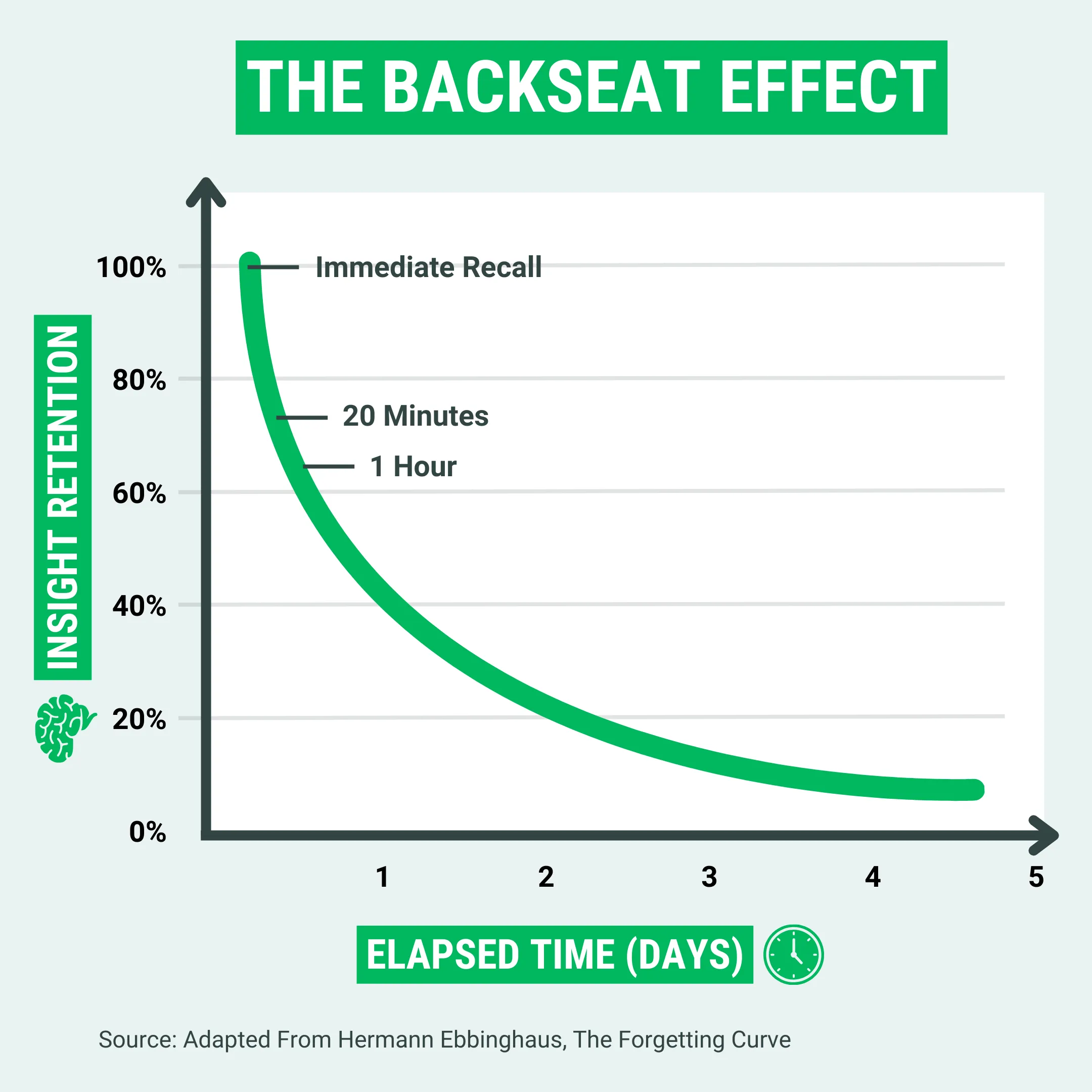
- Ebbinghaus’s Forgetting Curve shows that people forget up to 70% of what they learn within 24 hours unless it’s reinforced.
- Micro-coaching nudges—like the ones Cloverleaf delivers—help keep leadership concepts top of mind and ensure they’re applied continuously.
✅ Embedding Coaching Into Daily Work Makes It Scalable
- Leadership coaching shouldn’t be a separate initiative—it should be integrated into daily interactions.
- With ongoing, accessible coaching, leaders don’t just get support when they schedule it—they get continuous, relevant insights that shape how they lead every day.
Leadership coaching is most effective when it moves beyond one-size-fits-all approaches and becomes personalized, contextual, team-centered, and continuous.
Organizations that embrace these coaching principles by leveraging assessments, contextual insights, and continuous reinforcement—will develop stronger leaders, more engaged teams, and a leadership culture that scales across every level.
How to Scale Leadership Coaching Beyond the C-Suite
Most leadership coaching is still reserved for senior executives. Traditional coaching models—like one-on-one coaching engagements—are expensive, time-consuming, and difficult to scale. As a result, mid-level managers and first-time leaders often don’t get the support they need.
But leadership isn’t just a top-level function. If coaching is only available to a select few, organizations miss a massive opportunity to strengthen leadership across the board.
To scale leadership coaching in a way that’s both effective and sustainable, organizations need a model that:
✅ Supports leaders at every level, not just executives.
✅ Provides on demand, relevant coaching—not just scheduled sessions.
✅ Uses technology to make coaching accessible, personalized, and continuous.
Why Many Coaching Models Cannot Scale
One-on-one coaching has long been the standard, but it comes with significant limitations when it comes to scaling:
👉 High Cost: Executive coaching engagements can cost thousands of dollars per leader, making widespread adoption unrealistic.
👉 Limited Reach: One coach can only support a handful of leaders at a time, leaving many managers without guidance.
👉 Lack of Continuity: Coaching sessions happen in intervals, leaving gaps where leaders struggle to apply what they’ve learned.
Companies looking to expand leadership development across their organization need a more scalable, accessible, and embedded approach to coaching.
How to Scale Leadership Coaching Without Losing Impact
✅ Think Of Leadership Coaching Beyond The Executive Level
Leadership development shouldn’t just be for the top 10% of the company. Mid-level managers, first-time leaders, and high-potential employees also need structured guidance, feedback, and coaching.
👉 Instead of limiting coaching to a few individuals, organizations should make leadership coaching a core part of development at all levels.
👉 Group coaching, collective development, and technology-driven coaching nudges can make leadership support accessible to a much larger audience.
✅ Leverage Technology to Democratize Coaching Opportunities
Leadership coaching can be expensive, time-consuming, and hard to scale. One-on-one coaching engagements can cost thousands of dollars per leader, making it unsustainable to provide coaching across an entire organization.
Technology helps remove these barriers, making coaching more cost-effective, accessible, and scalable without sacrificing personalization.
👉 Reduce Cost Without Losing Impact
One-on-one coaching can cost thousands per leader. Scalable coaching tools provide consistent, high-quality coaching insights at a fraction of the cost.
👉 Eliminate Scheduling Bottlenecks
Coaching often relies on pre-scheduled sessions, leaving leaders without support when challenges arise. Digital coaching tools provide on-demand insights when leaders need them most.
✅ Shift from Episodic Coaching to Ongoing Development
Leadership coaching is less effective when it is experienced as one-and-done event. For real impact, coaching must be continuous, integrated, and reinforced over time.
👉 Micro-Coaching Nudges Keep Leadership Skills Top of Mind
Instead of relying on infrequent sessions, coaching should be woven into daily work through real-time insights and reminders.
👉 Leadership Development Must Align with Real-World Challenges
The best coaching happens in the moment—when leaders are making decisions, giving feedback, or navigating conflict.
By leveraging technology, expanding access, and making coaching continuous, organizations can equip every leader with the support they need to develop, lead effectively, and build stronger teams.
Coaching More Leaders, Strengthening More Teams
Leadership coaching has the power to transform organizations—not just by improving individual leaders but by creating stronger teams, better communication, and cultures where people thrive.
With new approaches and technology, coaching is no longer limited to a select few. It can be personalized, continuous, and embedded into daily work, making leadership development more impactful than ever before.
When more leaders get the coaching they need, workplaces become more connected, teams work better together, and cultures become places where people want to stay and grow.
Cloverleaf can help make this possible for your team. Your leaders can get the right insights at the right time—so they can lead with confidence, develop their teams, and create lasting impact.
See how Cloverleaf can strengthen your leadership coaching strategy.
I am not an athlete, but I like for my body to work well. Because I am motivated to be able to move easily and efficiently even as I age, I make exercise an important part of my weekly rhythms.
My exercise drug of choice is Orange Theory Fitness. Part of why I love their workouts (other than the amazing coaches) is that a wearable monitor tracks my data and allows me to see progress toward my goals.
Data-Driven vs. Traditional Approaches: A Game Changer in Fitness and Workplace Development
Traditional Fitness Regimes vs. Orange Theory Fitness: Fitness routines are traditionally based on generic programs with little customization. While beneficial for some, this approach often lacked the precision and personalization necessary for optimal results. Orange Theory Fitness revolutionizes this approach using real-time data to tailor workouts to individual fitness levels. Heart rate monitors and performance metrics allow for personalized intensity adjustments, ensuring each session is effective and aligned with personal goals.
Traditional Workplace Development vs. Cloverleaf: Similarly, traditional workplace development often involves generic training programs, one-size-fits-all workshops, and infrequent performance reviews. While providing a baseline of knowledge, these methods often fail to address individual employee needs, learning styles, or specific team dynamics. However, Cloverleaf uses behavioral assessments and continuous feedback loops to provide personalized insights customized for each employee and specific to every interaction between teammates. This approach leads to a more engaged and effective team by focusing on individual strengths and opportunities for collaboration.
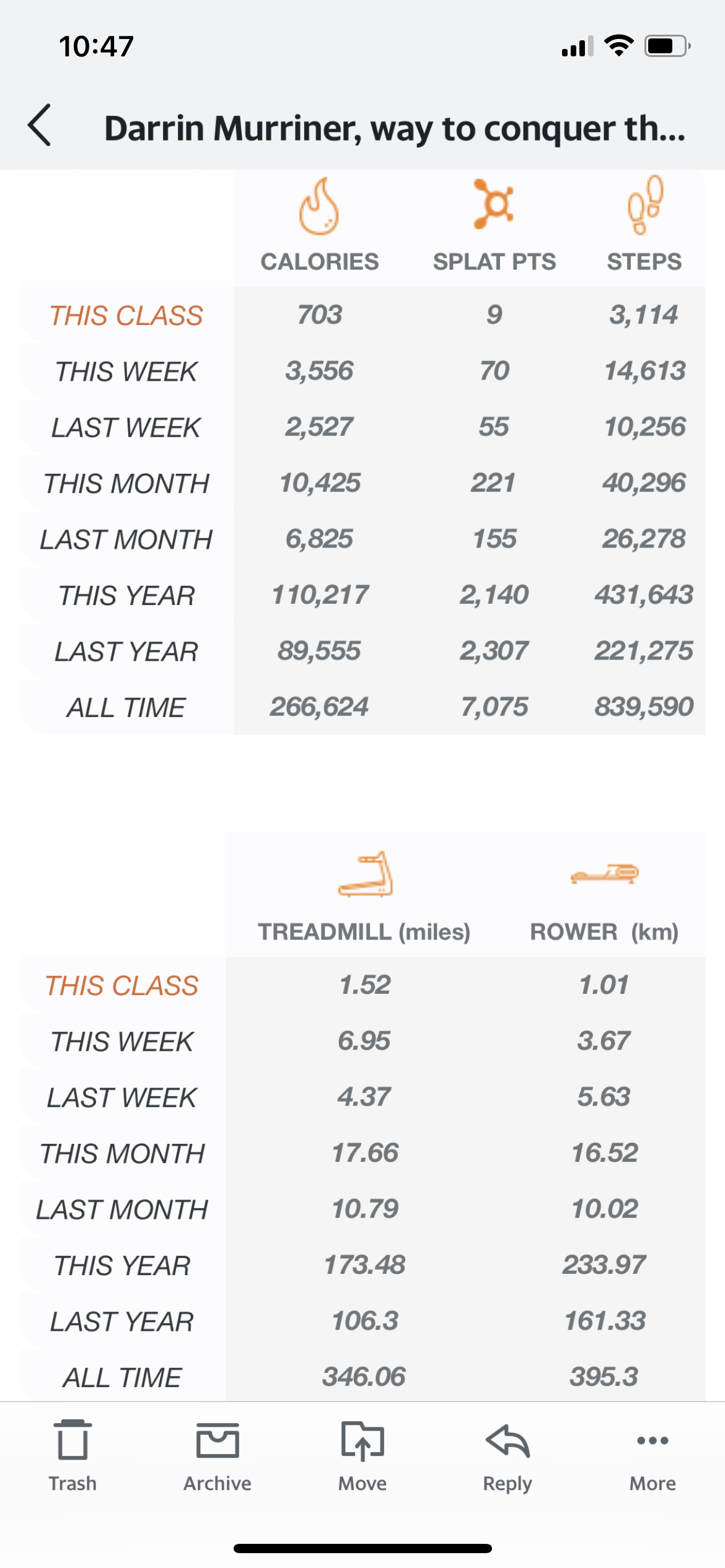
Because I have data on my workouts, I was able to set a goal this past year of increasing my running and rowing distance by 25% in 2023. When I set that goal, I had no idea that the data would show me that my heart had strengthened.
Looking at the emailed summary, you can see that I did, in fact, meet my goal. I increased my running distance by 63% and rowing distance by 45% while spending 7.5% less time in my peak heart rate zone. Said another way, my heart worked 7.5% less, and my body produced 45 and 63% more in 2023.
While this might seem like a humble brag or a testimonial for Orange Theory, this is neither. Instead, it is to highlight how data can help us effectively manage the things we thought were previously unmanageable. Data-driven methods ensure that efforts are targeted and relevant, leading to faster and more sustainable results in physical fitness and even professional development.
The Future of Data-Driven Development: What's Next (and, already here) For The Workplace
This is precisely what we are doing at Cloverleaf with workplace behaviors. Behaviors like self-awareness, communication, leadership approaches, and cognitive processing. Like Orange Theory, we use coaching, digital technologies, and a focus on the individual to scale change. But instead of physical health, we are making a meaningful impact on things like onboarding, teaming, leadership effectiveness, and collaboration.
Embracing the Future: Data-Driven Innovations in Workplace Development
Just as data can revolutionize our approach in several key areas of life, it also plays a pivotal role in addressing the evolving challenges of the modern workplace. New hurdles continually emerge, requiring innovative and data-informed solutions. Below are several of these challenges, along with some initial strategies to overcome them.
Enhancing Onboarding Experiences: Traditional onboarding often lacks depth in building team connections. The solution lies in innovative approaches that foster immediate rapport and integration, making new hires feel part of the team from the outset.
Expanding Coaching Access: Growth shouldn’t be limited to senior roles. A more inclusive approach involves providing personalized coaching to all levels of an organization, promoting a culture where every employee can develop and thrive.
Connecting Learning to Business Goals: Demonstrating the ROI of learning programs is a crucial challenge. Effective strategies involve aligning learning initiatives with business outcomes by ensuring that development efforts directly contribute to the organization’s objectives.
Supporting Managers in Team Leadership: Modern management goes beyond supervising tasks; it’s about empowering teams. Managers need tools and insights to lead, resolve conflicts, and drive team success effectively.
Building Cohesion in Remote Teams: Remote work can strain team dynamics. Solutions focus on creating tools and practices that maintain team cohesion and trust, ensuring effective collaboration despite physical distances.
Utilizing Behavioral Insights for Team Dynamics: Understanding each team member’s unique strengths and behavioral patterns is essential. Leveraging behavioral assessments can provide valuable insights, enhancing team harmony and productivity.
What difficult-to-measure goals do you have for yourself, your team, and your organization this year, and how can Cloverleaf help provide data and insight to help create healthy habits that lead to growth in the coming year?
Watch the video below to see how Cloverleaf is helping teams scale coaching, prove ROI, and development managers to be effective leaders.
HUMAN SKILL PROGRAMS ARE HITTING LIMITATIONS...
5 THINGS THIS FREE RESOURCE WILL TEACH YOU
- Close the widening gap between learning and on-the-job application
- Overcome the tension of pausing productivity for development opportunities
- Integrate learning so it is actually in the flow of work
- The evolution of human skill development
- What Automated Coaching™ is and how it works.
Two and a half years ago, I wrote a version of this piece advocating that the most important characteristic of a leader is an “others over self” focus. A genuine, attentive interest in the lives and motivations of the people you lead.
I still believe that.
Years of working with talent development leaders across hundreds of organizations, and years of behavioral data from Cloverleaf’s platform, have sharpened how I articulate what “others over self” actually looks like in practice.
The shorter version: it’s not a trait. It’s a behavior, repeated, with specific people, in specific moments.
Every TD leader has watched the same pattern play out. A high-potential manager goes through the leadership development program. They come back energized, with a binder full of frameworks and a clearer sense of their own working style. Two weeks later, they’re in a 1:1 with a direct report who’s underperforming and avoiding eye contact.
The frameworks don’t surface. The newly discovered self-awareness isn’t translating. Often the conversation goes the way it always has. This isn’t a knowledge problem. They know the frameworks. It isn’t motivation either. They came back wanting to do better. What they were taught was leadership in the classroom: frameworks, models, examples of what good looks like. Applying any of it at 10am Monday, in this 1:1, with the specific report who’s avoiding eye contact, is a different kind of work. One is learning. The other is leading.
The Center for Creative Leadership has stated for years that leadership is better understood as a social process, “a group of people working collectively to achieve results together,” and they’re right. Leadership is not just a social process in the abstract. It is a relational practice with specific people and groups in specific moments. The leaders who consistently get this right are the ones who do the preparation, repeatedly, for the actual person they’re about to interact with.
Get the 2026 AI coaching playbook to see how organizations are implementing AI coaching at scale.
58% of coaching conversations across every role tier are about another human
Cloverleaf saw 25,155 user-initiated coaching conversations in the first four months of 2026. When the conversation was clearly themed, 58% of the time the person opening the coach was thinking about another human being — a direct report, a peer, a stakeholder, a difficult colleague.
Not themselves. Not abstract strategy. A person.
The consistency is the most striking part. Individual contributors, team leads, managers, senior leaders, internal coaches, and undefined-role users — six tiers in total — all brought the same #1 or #2 question to the coach: “how do I work with this specific colleague?” The range across tiers was tight, between 54% and 61%. When something holds across every cohort that strongly, it becomes a helpful data point about how what the work of leadership actually requires.
More specifically: 55% of those relational coaching conversations named an actual person. People weren’t asking abstract questions about leadership theory. They were preparing for conversations with specific people. They were thinking about how best to give feedback to a specific person. They were getting ready for resolving conflict with specific people. That’s what the daily work of leadership actually consists of — and it’s why most leadership development, taught in the abstract, doesn’t transfer.
The industry consistently finds that only about 16% of what’s taught in traditional leadership programs transfers into observable behavior change on the job. And only 21% of employees report feeling consistently supported, recognized, or coached by their manager. Those two numbers describe the same gap from two sides — what gets taught versus what gets practiced. The nine characteristics below are built around what closes it.
Nine characteristics that define a good leader in 2026
1. Personalized leadership. They lead each direct report differently, on purpose.
Good leaders interact with their direct reports and teams as specific people, not generic roles. They can tell you what energizes their senior engineer, what wears down their newest PM, and which of their team members reads silence as agreement and which reads it as disapproval. This is what ‘others over self’ actually means at the behavioral level — and it’s the foundation that makes every other behavior on this list possible.
Why personalized leadership drives team engagement
Gallup’s research on engagement, drawn from millions of employee survey responses, concluded that 70% of the variance in team engagement scores is attributable to the manager. The leaders who consistently land that quality are the ones who treat each report as a specific person, not a generic role.
Beth processes feedback by going quiet for 24 hours before responding; Grant needs to dialogue back in real time to get to clarity. Same feedback, different delivery, much higher chance of behavior change.
Cloverleaf’s own coaching data shows this is exactly what managers open the coach to figure out — not how to give feedback in general, but how to give it to this particular person.
How to lead each direct report differently
Your DISC profile, your Enneagram type, your CliftonStrengths top five — those become even more useful when you know your team’s results as well as your own and can adjust your approach in real time. Assessment data makes can help leaders not only be personal, but relational too. The platform we built quantifies 350+ traits per person, mapped across the team you actually lead.
2. Preparing for each conversation. They think through what the meeting needs before they walk in.
Some leaders are naturally gifted at 1:1s. Most aren’t, and the teams that develop consistently don’t depend on the gifted ones. The 1:1 that goes well, regardless of who’s running it, is the one the leader prepared for. The leader spent ten minutes thinking about what they wanted to surface, what the report has been signaling for the past two weeks, and what tone the conversation needed to take. The 1:1 that goes badly almost always failed before it started. The leader walked in cold and improvised.
Why preparation separates good managers from great ones.
68% of managers have never received formal leadership training. Most of them are improvising every conversation. The 1:1 that goes well, and the manager whose team develops consistently, is almost always the one who treats the ten minutes before the meeting as part of the meeting. They do not fill every gap with email triage. They clear the bandwidth required to lead the conversation in front of them.
How to prepare for every 1:1.
Habits collapse under workload. Systems survive. A recurring calendar block before every 1:1. A brief pre-read template. A coaching nudge that arrives in Slack ten minutes before a flagged meeting, naming who’s about to walk in and what they need to hear. This is the part of leadership development that is almost never taught and almost always the difference between a manager who runs their team and a leader who develops it.
3. Adjusting your style to fit the person. They know their default, and they override it when the person in front of them needs something different.
Self-awareness on its own is overrated. Plenty of leaders can describe their own working style in detail and still fail at the moment of interaction. The behavior that matters in 2026 is the deliberate adjustment: knowing your defaults clearly enough that you can override them when the person you’re leading needs something different.
Why self-awareness alone isn’t enough.
Gallup reports that only 48% of managers strongly agree they have the skills they need to be exceptional in their role. The half who say they don’t are not lacking awareness. Many of them know exactly what they should do. They lack the practice of doing it. A naturally direct leader giving feedback to someone recovering from a difficult quarter. A naturally diplomatic leader who needs to deliver a hard no. The behavior is the deliberate override of your default style for the person who needs something different from you today.
How to adjust your style for each person on your team.
After every piece of assessment data you collect, ask the question: how does my default land on this person? If your DISC profile reads high D and high I, and your most senior report reads high S, then the way you naturally show up will probably feel rushed and abrupt to them, every time. Knowing your default is half the work. Choosing to show up with intentionality for the different individuals on your team is leadership.
4. Clear, honest feedback. They don’t soften the message, and they don’t deliver it harshly.
Two failure modes dominate manager feedback. The first is conflict-avoidance dressed up as kindness. The leader softens the message until the recipient can’t tell what’s being asked of them. The second is bluntness dressed up as honesty. The leader delivers the message technically correctly and leaves the person less able to act because they are processing the delivery rather than the substance. Good leaders avoid both by being clear about the content and intentional about the form.
Why most feedback never lands.
85% of employees say they do not receive helpful feedback. 70% receive none at all. That gap is rarely a content problem. The manager often knows what they want to say. What stops them is fear: fear of damaging the relationship, fear of the reaction in the room, fear that the conversation will go places they cannot control. Skills training teaches the script. It cannot make the manager willing to deliver it. The reason direct feedback is rare in most organizations is that bravery is rare, and bravery is what’s required to deliver the message when the conversation might cost something.
How to give honest feedback that lands.
Most managers wing the high-stakes conversation. The ones who don’t, the ones who write the two or three sentences they most need to say and rehearse them, sound noticeably more direct and noticeably less harsh in the room. This is also one of the highest-frequency things managers ask their AI coach for help with. Not feedback theory. The specific words they are about to use.
5. Circling back when you get it wrong. They go to the person after a conversation that didn’t land, instead of hoping it blows over.
Every leader gets it wrong. The leaders who maintain their team’s trust over time are the ones who notice when they have missed and address it, not the ones who somehow never miss in the first place. Almost no leadership program teaches repair, because repair requires reading the room after a conversation went sideways, and that work does not fit in a workshop.
Why repair builds more trust than perfection.
Most managers know when something landed badly. What separates the leaders who keep their team’s trust is what happens the next day. The leader who circles back, “I think I came in harder than was useful on Tuesday, here’s what I was actually trying to say,” is doing more for psychological safety in that sentence than an all-hands speech can deliver.
Repair takes bravery.
Most leaders default to “let’s see if it blows over” because the alternative requires admitting fault out loud, and admitting fault out loud is exactly what fear-based cultures train you to avoid. I have lived this. I am, by my own admission, the worst at pricing decisions in my own company. The reason I have built the organization the way I have is so that the people around me can repair what I would otherwise leave unaddressed.
How to circle back after a conversation goes sideways.
The cost of an unnecessary repair conversation is low. The cost of a missed one compounds. When you think a conversation landed wrong, assume it did. The repair is almost always cheaper than the silence.
6. Coaching your reports, not just directing them. They help their people find their own answers instead of always supplying the answer themselves.
There is a difference between a manager who is good at running their team and a leader who is good at helping the people on their team develop. Both make the numbers. Only one builds a pipeline of leaders behind them. The behavior is the active development of other people’s capability.
Why coaching builds capability faster than directing.
The 49-point gap is almost entirely a structural choice.
- Only 30% of organizations train their leaders to coach.
- Only 35% link coaching to performance reviews.
- Only 18% reward leaders who develop others.
- The 22% who get results do all of those things.
- The rest call it a priority and don’t operationalize it.
Ed Catmull built Pixar on the same principle (he writes about it in Creativity, Inc.): coaching at every level, not as a perk for the top performers. That structural choice is what made the studio’s creative consistency possible across two decades. Coaching becomes infrastructure when you offer it to everyone, and a perk when you reserve it for the few.
How to coach your reports instead of directing them.
The word coaching is overloaded. A useful working definition: coaching is the act of helping someone get to clarity about what they should do, not telling them what to do. The shift is from authority to facilitation, in the moments where facilitation serves the report more than it serves the leader’s calendar.
7. Staying steady when things get tense. They don’t amplify the team’s anxiety in uncertain moments.
When the organization is reorganizing, when quarterly numbers come in tight, when a key hire leaves, the team reads the leader before they read the announcement. The leader who is visibly anxious calibrates the team to anxiety. The leader who is visibly steady gives the team room to think clearly. In 2026, with AI disruption and macro uncertainty as constant background noise, this behavior has moved from helpful to essential.
Why leader anxiety travels through the team.
The team watches the leader’s nervous system as much as the leader’s words. Anxiety transmitted from the top measurably impairs the team’s ability to think clearly about the problem in front of them. Most of the worst calls in business history were not made by leaders who lacked information. They were made by leaders who couldn’t hold uncertainty without amplifying it. Steadiness is the practice of holding the room while the room is afraid. The team can tell the difference between that and suppression, and the difference is what determines whether they keep thinking clearly through the noise.
How to stay steady when the room is anxious.
Leaders who think through how they want to show up in a possible reorg before the reorg happens have meaningfully different conversations than leaders who improvise. The work is in the preparation, not in the performance.
8. Asking real questions, not loaded ones. They want to hear the answer, not deliver one they already had.
The leaders teams trust most are the ones who consistently ask the question that opens up the problem, not the ones with the strongest opinions. Performative curiosity is when the leader asks a question and waits to deliver the answer they had in mind already. Real curiosity is when the answer is genuinely up for grabs.
Why your first question shapes the entire meeting.
The opening of a 1:1 calibrates the entire conversation. The leader who starts with “here’s what I want to discuss” trains the team to deliver upward. The leader who starts with “what’s been most on your mind this week?” let’s the team know they’re there to think through things with them. The same dynamic plays out in project reviews, performance conversations, and skip-level meetings. The leader’s first question, more than anything else they say in the hour, decides whether the meeting builds the team’s thinking capacity or just consumes it.
How to ask real questions instead of loaded ones.
If you are under 1:3, fewer than one question for every three statements, your team is not being asked to think with you. They are being asked to comply with you. The fix is mechanical. Ask the question before you offer the take.
9. Walking your talk in small moments. The team reads the gap between what you say and what you do.
The fastest way for a leader to lose their team is to say one thing and do another. The loss happens in small ways more often than dramatic ones. The leader who preaches work-life balance and sends Slack messages at 11pm. The leader who says they want dissent and visibly shuts down the person who delivers it. The team reads the gap. The team always reads the gap.
Why the team watches the small moments more than the big ones.
Edelman’s annual Trust Barometer has documented for years that the gap between what leaders say and what they do is the most consistent driver of trust collapse, and that consistency on small promises is what rebuilds it. Psychological safety gets built in the response to the first person who raises a hard question in the next staff meeting, not in the all-hands speech that preceded it. The principle becomes operational the moment it costs something. That cost is usually the leader’s comfort, which is usually the leader’s fear of what the principle, lived out, will require of them.
How to close the gap between what you say and what you do.
Write down your three stated principles as a leader and ask one person on your team, someone who will be honest, to tell you where they see the gap between what you say and what you do. The exercise is uncomfortable. It is also the cheapest source of leadership growth available.
How to develop these nine behaviors, and what makes them stick
These nine behaviors are not new. Most leadership development programs teach versions of them. The gap between knowing them and practicing them is enormous, and it is not because the content is bad. It is because the structure is wrong.
Cloverleaf delivers about 65 million coaching moments a year across our customer base. The traditional development model reaches about 1.5% of the moments where the behavior actually happens. HR has roughly 220 touchpoints per employee per year. Employees have roughly 14,640 work interactions in that same year. Almost all of the conversations that test leadership happen outside the touchpoints that L&D was built to reach.
Your leadership development program is teaching the right things. The point here is that the program needs a layer that shows up after it ends, in the moments where the work happens.
Cloverleaf is structure-agnostic about which leadership framework you use. What we add is the behavioral layer that helps leaders practice the behaviors and develop characteristics that make them exceptional at their job.
The characteristics of a good leader have not changed much across years of organizational life. What has changed is our ability to see, in real behavioral data, that leadership is a relational practice rather than an individual trait. And most of the moments that test these behaviors are also moments that test the leader’s bravery. The two are not separable. The work of leadership development is, in the end, the work of helping leaders build the structure that lets them act bravely with the specific person in front of them.