Reading Time: 8 minutes

Los Angeles is a city where innovation and influence intersect, creating a vibrant and competitive business environment. As leaders navigate the complexities of industries ranging from entertainment to technology, the demand for executive coaching has surged. In fact, there were over 1.5 million online searches each month in 2024 by individuals seeking management or executive coaching services, underscoring the growing recognition of coaching’s value in leadership development. Loeb Leadership

In 2025, executive coaching in Los Angeles is characterized by several key trends:LinkedIn

  • Emphasis on Emotional Intelligence (EQ): Coaches are focusing on enhancing leaders’ self-awareness and empathy to improve decision-making and team dynamics. Connective Consulting Group+1Forbes+1
  • Integration of AI and Data Analytics: The use of technology in coaching is providing data-driven insights, allowing for more personalized and effective leadership development strategies. LinkedIn

These trends highlight the evolving nature of executive coaching in Los Angeles, where coaches are not only adapting to the changing business landscape but also driving transformation within it. The following list features 15 executive coaches who are at the forefront of these developments, providing the guidance and expertise that leaders need to thrive in today’s dynamic environment.

How We Chose These Coaches In Los Angeles

This list isn’t pay-to-play. It wasn’t compiled through nominations, submissions, or follower counts. It’s based on publicly available information, evaluated with intention.

We looked for:

  • Demonstrated expertise: Clear evidence of active coaching work through LinkedIn, thought leadership, media presence, or educational content
  • A defined coaching focus: From founder advising to DEI leadership to organizational development
  • Credibility indicators: Relevant certifications, consistent client work, and recognition within or beyond their industry
  • Professional presence: Clarity of message, consistency across platforms, and a visible commitment to the craft

This is not an exhaustive list. It’s a curated reflection of coaches who are actively shaping the leadership landscape in Los Angeles—with insight, integrity, and real-world results.

What Makes A Standout Executive Coach In 2025 

In Los Angeles, leadership isn’t one-size-fits-all, and great coaching reflects that.

This city demands more than frameworks or goal-setting routines. Leaders here are navigating high visibility, rapid pivots, cultural influence, and often, dual roles as both visionary and operator. The best coaches meet that complexity with clarity and depth.

The standout coaches on this list:

  • Ground their work in context, not generic playbooks
  • Navigate both strategic leadership and personal evolution
  • Work across industries—from entertainment and wellness to tech and social impact
  • Prioritize presence, adaptability, and trust over one-size-fits-all models

This isn’t about performance polish—it’s about transformational substance. These coaches help leaders do the actual work beneath the role: building confidence, communication, resilience, and self-awareness in a way that lasts.

What’s unique about coaching in LA?

Leadership in Los Angeles is rarely confined to a boardroom. It shows up on stages, in studios, at startups, and across social platforms. Influence matters here, but so does intention.

The best LA-based coaches understand the nuance of ambition in this city. They work with leaders navigating public visibility, creative expression, cultural impact, and business scale—sometimes all at once. Their clients don’t just need strategy. They need space, clarity, and someone who can challenge without scripting the outcome.

Get the free guide to close your leadership development gap and build the trust, collaboration, and skills your leaders need to thrive.

The 16 Best Executive Coaches In Los Angeles

These coaches don’t just coach leaders—they help shape culture, guide reinvention, and build clarity in some of LA’s most complex, high-visibility environments. From entertainment and tech to mission-driven startups, their impact runs deeper than titles. Each one brings a distinct blend of insight, presence, and practical wisdom to the table.

  • Focus Areas: Executive coaching, leadership development, Intelligent Leadership® framework

  • Certifications / Background: Recognized as the world’s #1 executive coach by Globalgurus.org in 2019, 2020, 2021, 2023, 2024, and 2025; developer of the Intelligent Leadership® Executive Coaching Certification Program 

  • Client Types or Industries: CEOs, senior executives, and organizations across various industries

  • Notable Media / Content: Author of multiple bestselling books on leadership; featured in podcasts and media outlets discussing leadership and coaching

  • Focus Areas: Executive coaching, leadership development, career coaching

  • Certifications / Background: Master Certified Coach (MCC) through the International Coach Federation (ICF); over 10,000 hours of coaching experience

  • Client Types or Industries: Executives and leaders across various sectors, including aerospace, automotive, banking, healthcare, and higher education

  • Notable Media / Content: Founder of Glacier Point Solutions; featured in various coaching and leadership publications

Rosalene Glickman, Ph.D.

LinkedIn
Website

  • Focus Areas: Executive coaching, leadership development, optimization strategies

  • Certifications / Background: Ph.D. in Psychology; over 30,000 hours of executive coaching; author of Optimal Thinking; former UCLA instructor; founder and CEO of The World Academy of Personal Development, Inc.

  • Client Types or Industries: CEOs, senior executives, and teams across industries including entertainment, consumer products, healthcare, energy, and government

  • Notable Media / Content: Author of the international bestseller Optimal Thinking; featured by Bloomberg, Fox News, CBS Weekend Magazine, and The New York Times

Dr. Thuy Sindell

LinkedIn
Website

    • Focus Areas: Executive coaching, leadership development, organizational psychology

    • Certifications / Background: Ph.D. in Organizational Psychology from Alliant International University

    • Client Types or Industries: Technology, insurance, startups, Fortune 500 companies

    • Notable Media / Content: Author of “Hidden Strengths,” “The End of Work as You Know It,” “Job Spa,” and “Sink or Swim”; contributor to Huffington Post and Psychology Today

  • Focus Areas: Transformational change, millennial engagement, leadership development

  • Certifications / Background: Bestselling author of Leadership’s Perfect Storm: What Millennials Are Teaching Us about Possibilities, Passion, and Purpose

  • Client Types or Industries: Over 600 businesses across 40 industries, including small businesses and Fortune 500 companies

  • Notable Media / Content: Co-founder of Sawubona Leadership; featured in various leadership podcasts and interviews

  • Focus Areas: Executive coaching, leadership development, career transitions, emotional intelligence

  • Certifications / Background: Professional Certified Coach (PCC) accredited by the International Coaching Federation (ICF); Certified Hudson Institute Coach; Hogan Certified Coach

  • Client Types or Industries: High-achieving female leaders, C-suite executives, emerging leaders, creative executives

  • Notable Media / Content: Author of “Rethinking Imposter Syndrome” on LinkedIn

Make Your Just In Time Learning More Impactful

See How High Performing Teams Use Tech To Equip Their Leaders
leadership development guide
  • Focus Areas: Executive coaching, leadership development, emotional intelligence

  • Certifications / Background: Professional Certified Coach (PCC) accredited by the International Coaching Federation (ICF); coaching accreditation from the Hudson Institute; certified in Hogan and Workplace Big Five profile assessments; over 25 years of operational leadership experience

  • Client Types or Industries: Executives and leaders across various sectors, including entertainment and marketing

  • Notable Media / Content: Featured in various leadership and coaching platforms

  • Focus Areas: Executive coaching, leadership development, organizational transformation

  • Certifications / Background: Former CFO and EVP of Operations at 20th Century Fox; extensive experience in leadership roles within the entertainment industry

  • Client Types or Industries: Entertainment, media, corporate leadership across various sectors

  • Notable Media / Content: Author of “The Missing Piece: Transforming Leadership with a High-Performance Mindset”; featured in Exeleon Magazine for empowering transformative leadership

Colleen Campbell, Ph.D.

LinkedIn
Website

  • Focus Areas: Executive coaching, career development, leadership transformation

  • Certifications / Background: Ph.D. in Clinical Psychology; over 20 years of experience in career and executive coaching

  • Client Types or Industries: Executives, emerging leaders, entrepreneurs across various sectors

  • Notable Media / Content: Author of “Career Compass: A Guided Journal for Discovering a Fulfilling Career Path and Designing a Life You Love”; featured in Women’s Health Magazine

  • Focus Areas: Conflict resolution, leadership development, cultural competence, career coaching

  • Certifications / Background: PharmD; Associate Certified Coach (ACC) through the International Coaching Federation; certified in Emotional Intelligence (EQ-i 2.0/EQ 360), Talent Optimization, and Designing Your Life

  • Client Types or Industries: Asian-American professionals, emerging leaders, healthcare and pharmacy professionals, nonprofit leaders

  • Notable Media / Content: Co-author of Secrets of Next-Level Entrepreneurs; featured on platforms such as All Ears English, Business RadioX, and The Ultimate Coach Podcast

Vanya Koonce, PCC

LinkedIn
Website

  • Focus Areas: Executive coaching, leadership development, team development, agile transformation

  • Certifications / Background: Professional Certified Coach (PCC) accredited by the International Coaching Federation (ICF); Master’s Degree in Organizational Psychology; Certified Scrum Master; Soft Skills Trainer; Mentor Coach Practitioner; qualification in Human Resources Development from UCLA

  • Client Types or Industries: Entrepreneurs, corporate leaders, teams across various industries

  • Notable Media / Content: Featured in Trusted Magazine’s Q&A on agile transformation and leadership coaching

Leslie Pogue, CPC

LinkedIn
Website

  • Focus Areas: Workplace development, personal coaching, mental wellness

  • Certifications / Background: Certified Professional Coach (CPC); Master of Arts in Psychology from Pepperdine University; pursuing MLS/MDR at Pepperdine Caruso Law

  • Client Types or Industries: Government agencies, corporate teams, individuals seeking personal development

  • Notable Media / Content: Author of 28 Days to Happy and The Positive Side of the Bad Stuff; host of “The Habit of Happy” podcast; member of the National Speakers Association

  • Focus Areas: Executive coaching, leadership development, personal growth

  • Certifications / Background: ICF-certified coach; Internal Family Systems (IFS) informed; M.A. in Organizational Behavior and Leadership

  • Client Types or Industries: Corporate executives, emerging leaders, individuals seeking personal development

  • Notable Media / Content: Founder of Growth In Sight; featured on Terawatt as an executive coach and leadership facilitator

  • Focus Areas: Diversity and inclusion strategy, talent acquisition, leadership development

  • Certifications / Background: PHR, SHRM-CP, CDR; former senior leader in Inclusion and Diversity at Apple Inc.; roles at LinkedIn, NBCUniversal, AOL, and MCI

  • Client Types or Industries: Technology, media, telecommunications

  • Notable Media / Content: Featured in The Washington Post and SHRM articles; keynote speaker at SHRM Diversity & Inclusion Conferences

Margaret Meloni

LinkedIn
Website

  • Focus Areas: Project management, leadership development, conflict resolution

  • Certifications / Background: Project Management Professional (PMP); MBA in Information Technology from California State University, Long Beach; Ph.D. in Religious Studies from University of the West

  • Client Types or Industries: IT professionals, project managers, corporate executives

  • Notable Media / Content: Author of “Carpooling with Death” and “Sitting with Death”; featured instructor on Coursera; recipient of UCLA Extension’s Distinguished Instructor Award

The Future of Coaching in LA Is Creative, Contextual, and Credible

In a city that thrives on storytelling and scale, coaching is becoming more essential—and more nuanced.

These 30 professionals represent the kind of coaching that lasts. Not trend-driven. Not performance for performance’s sake. Just deep, human work that helps leaders show up with clarity, courage, and integrity.

We’re proud to recognize them—and to keep learning from the ways they’re evolving leadership in Los Angeles.

FAQs

Why wasn’t I featured?
This is a curated list, not an exhaustive one. If you or someone you know is doing great work in coaching, reach out—we’re always listening.

How were these coaches selected?
All featured coaches were chosen based on publicly available content, professional credibility, and a clear coaching focus. No nominations or paid placements.

Is this a Cloverleaf partner list?
No. This list reflects our broader respect for the coaching profession. These coaches are not affiliated or sponsored—we’re simply highlighting great work where we see it.

Reading Time: 10 minutes

New York is a city built on ambition.

Founders, executives, and team leaders here are navigating scale, speed, and complexity on a daily basis. The stakes are high, and the pressure is constant.

Great coaching isn’t a luxury in this environment. It’s a competitive edge. The best coaches don’t just help leaders think clearly. They help them lead with purpose, adapt with resilience, and grow teams that thrive under pressure.

This list highlights 24 executive coaches in NYC who are doing precisely that. They may not all be household names, but they’re trusted by the people who make things happen. Their work runs deep. Their impact is lasting.

How We Chose These Coaches in New York

This list isn’t based on follower counts or paid placements. It’s grounded in credibility.

Each coach was selected using publicly available information—no nominations, sponsorships, or submissions. We looked for:

  • Demonstrated expertise: via LinkedIn, published content, media features, or thought leadership
  • A clear coaching focus: from executive development to founder advising to team dynamics
  • Credibility indicators: certifications, consistent client work, or peer recognition
  • Professional presence: a clear message, not just a polished brand

This is not an exhaustive list. It’s a curated snapshot of coaches who are actively shaping what leadership looks like in NYC right now—and where it’s heading next.

What Makes a Standout Executive Coach in 2025

Coaching isn’t one-size-fits-all, and the best coaches don’t try to be.

What sets standout coaches apart today isn’t just training or credentials. It’s how well they adapt to the context: the company’s culture, the leader’s style, the team’s dynamics, the moment in the business. It’s not about offering advice—it’s about asking the right questions at the right time.

These are coaches who:

  • Help leaders move between strategic decisions and personal growth without losing traction
  • Understand the stakes—whether it’s scaling a startup, leading through change, or rebuilding trust in a team
  • Bring both emotional intelligence and business acumen to the table
  • Know that sustainable growth requires both clarity and accountability

Great coaching doesn’t look the same for everyone. But it does leave a mark.

Get the free guide to close your leadership development gap and build the trust, collaboration, and skills your leaders need to thrive.

The 24 Best Executive Coaches In New York

These coaches bring more than insight—they bring results. Whether they’re guiding founders through scaling pains or helping senior leaders navigate complexity, each of the professionals below has built a coaching practice that blends depth, clarity, and credibility.

  • Focus Areas: Executive coaching, leadership development, organizational change, emotional courage

  • Certifications / Background: B.A. from Princeton University; M.B.A. from Columbia University; recognized as the #1 executive coach by Leading Global Coaches; ranked as a Top 30 thought leader by Thinkers 50 Radar

  • Client Types / Industries: CEOs and senior leaders in organizations such as Allianz, Twilio, Electronic Arts, CBS, Mars, Citi, and numerous VC-backed startups

  • Notable Media / Content: Host of the Bregman Leadership Podcast; regular contributor to Harvard Business Review; author of multiple best-selling books, including Leading with Emotional Courage and 18 Minutes

  • Focus Areas: Executive and career coaching, mid-career reinvention, leadership development, organizational effectiveness

  • Certifications / Background: Over 22 years of corporate experience, including significant roles during a company’s growth from 750 to 45,000 employees; extensive experience in hiring and leading top-tier teams

  • Client Types / Industries: Mid-career professionals, executives, and organizations seeking career advancement and leadership development

  • Notable Media / Content: Contributor to HuffPost on topics related to mid-career reinvention; developer of the “CareerDNA” coaching program

Michelle Arbid

LinkedIn
Website

  • Focus Areas: Conflict resolution, negotiation strategy, leadership development, organizational change

  • Certifications / Background: Master of Science in Negotiation and Conflict Resolution from Columbia University; Professional Certified Coach (PCC) accredited by the International Coaching Federation

  • Client Types or Industries: Government agencies, educational institutions, corporate leaders, nonprofit organizations

  • Notable Media / Content: Featured in Mediators Beyond Borders International’s Member Spotlight; contributor to Torch’s “Ask a Coach” series

Anna Marie Valerio, Ph.D.

LinkedIn
Website

  • Focus Areas: Executive coaching, leadership development, women in leadership, organizational change

  • Certifications / Background: Ph.D. in Psychology; former leadership development executive at IBM; author of Executive Coaching: A Guide for the HR Professional and Developing Women Leaders

  • Client Types or Industries: Senior executives and high-potential leaders across Fortune 500 companies

  • Notable Media / Content: Featured in Harvard Business Review and Psychology Today; frequent speaker on executive leadership and gender diversity in the workplace

  • Focus Areas: Executive coaching, leadership development, organizational strategy, talent management

  • Certifications / Background: Founding partner of JER HR Group; decades of experience in HR consulting and executive leadership; specializes in aligning talent strategy with business growth

  • Client Types / Industries: Nonprofits, education, corporate and government sectors

  • Notable Media / Content: Contributor to JER HR Group’s thought leadership on topics such as inclusive leadership, strategic HR, and board governance

  • Focus Areas: Corporate training, executive coaching, team building, strategic facilitation
  • Certifications / Background: iPEC, Corporate CoachU, Harvard/McLean Institute of Coaching, DiSC certified
  • Client Types / Industries: Creative agencies, tech firms, finance companies
  • Notable Media / Content: Offers executive, life, and career coaching; widely recognized for high-energy facilitation

  • Focus Areas: Organizational development, leadership strategy, executive coaching
  • Certifications / Background: Ed.D. in Adult Learning & Leadership, M.A. in Organizational Psychology (Columbia University)
  • Client Types / Industries: Organizations undergoing culture transformation or leadership change
  • Notable Media / Content: Published speaker and writer on leadership, learning, and development

  • Focus Areas: Executive coaching, leadership development, custom learning programs

  • Certifications / Background: Author of The Giving Game; experienced leadership facilitator

  • Client Types / Industries: Tech, media, finance, healthcare, and energy

  • Notable Media / Content: Speaker and contributor in learning and development thought leadership

  • Focus Areas: Executive coaching, leadership development, career coaching

  • Certifications / Background: Licensed clinical social worker; over 25 years of coaching experience

  • Client Types / Industries: Corporate executives, leaders across various industries

  • Notable Media / Content: Featured in The Wall Street Journal, Forbes, and CNN for expertise in leadership and career coaching

  • Focus Areas: Leadership development, executive coaching, organizational culture, diversity, equity, inclusion, and belonging (DEI&B)

  • Certifications / Background: Master of Science in Industrial/Organizational Psychology; over 25 years of experience in professional development facilitation and executive coaching

  • Client Types / Industries: Mid-sized to large law firms, corporate organizations across various industries 

  • Notable Media / Content: Appointed to the Board of the New York State Council for the Society of Human Resources Management (SHRM) in June 2024, focusing on promoting DEI&B within workplaces

Make Your Just In Time Learning More Impactful

See How High Performing Teams Use Tech To Equip Their Leaders
leadership development guide
  • Focus Areas: Executive coaching, leadership assessment, organizational development

  • Certifications / Background: Certified executive coach with a background in psychology

  • Client Types / Industries: Senior executives across various industries

  • Notable Media / Content: Published articles on leadership effectiveness and organizational culture

  • Focus Areas: CEO succession, high-performance coaching, C-suite transitions, board dynamics
  • Certifications / Background: M.B.A. from Queen’s University; M.A. in Psychology from the University of Victoria; profiled by Bloomberg Businessweek as “The CEO Whisperer”
  • Client Types or Industries: Global CEOs, COOs, and board directors across Fortune 500 and multinational organizations
  • Notable Media / Content: Featured in Forbes, Harvard Business Review, and Bloomberg; host of the C-Suite Intelligence podcast; co-author of Riding Shotgun: The Role of the COO and Your Career Game (Stanford University Press)
  • Focus Areas: Executive coaching, leadership development, team performance enhancement, scalable coaching solutions

  • Certifications / Background: Founded in 1996, headquartered in Redwood City, California; offers a range of leadership development programs including 1:1 coaching, group coaching, and consulting services

  • Client Types / Industries: Serves Fortune 500 companies, startups, and organizations committed to developing exceptional leadership

  • Notable Media / Content: Developed the C4X coaching platform, combining integrated 360 assessments with scalable content and metrics; leadership team includes Thuy Sindell, PhD, Founder and President of the Executive Coaching Division, and Milo Sindell, MS, President of the Coaching Scaled Division 

  • Focus Areas: Executive leadership coaching, technologist coaching, abrasive leader transformation

  • Certifications / Background: Extensive corporate leadership experience; certified executive coach

  • Client Types / Industries: Technology leaders, corporate executives

  • Notable Media / Content: Contributor to articles on leadership development and emotional intelligence

  • Focus Areas: Leadership development, executive coaching, organizational enhancement

  • Certifications / Background: Founder and President of Arden Coaching since 2007; extensive experience in leadership strategy

  • Client Types / Industries: Corporate executives across various industries

  • Notable Media / Content: Contributor to the Arden Coaching blog on topics like feedback processing and leadership strategies

High Level Executive Coaching

LinkedIn
Website

  • Focus Areas: Executive coaching, personal development, leadership transformation

  • Certifications / Background: Over 20 years of experience in creating breakthroughs and transforming lives

  • Client Types / Industries: Individuals seeking personal and professional growth

  • Notable Media / Content: Affiliations with organizations such as Inspire & Develop Artists, Staten Island Chamber of Commerce, and Covenant House

  • Focus Areas: Executive coaching for individuals, teams, and organizations

  • Certifications / Background: Founder of NYC Coach Collective; committed to The 10% Commitment initiative

  • Client Types / Industries: Corporate leaders seeking personal and professional development

  • Notable Media / Content: Advocates for integrating personal growth with professional success

Dr. Joel Mausner

LinkedIn
Website

  • Focus Areas: Executive coaching, leadership development, organizational consulting, career advancement

  • Certifications / Background: Ph.D. in Psychology; over 25 years of experience in organizational and leadership consulting

  • Client Types / Industries: Corporate leaders, healthcare executives, non-profit organizations, small business owners

  • Notable Media / Content: Active member of professional associations including the American and New York State Psychological Associations, the Society of Consulting Psychology, and the Organization Development Network

Anita Kishore, PhD, ACC

LinkedIn
Website

  • Focus Areas: Executive coaching, leadership development, emotional intelligence, mindfulness

  • Certifications / Background: Ph.D. in Chemistry from the University of Georgia; MPA from NYU Wagner School of Public Service; Associate Certified Coach (ACC) with the International Coaching Federation; certified in Hogan Assessment Suites, EQ-i2.0 Emotional Quotient Inventory, Leadership Circle Profile (LCP 360), and MBTI 

  • Client Types / Industries: Senior executives, government leaders, underrepresented leaders across various industries

  • Notable Media / Content: Instructor in Leadership at NYU, iCoachGlobal, and the National Institutes of Health (NIH); featured panelist at NYU Wagner’s Women in Consulting Panel

  • Focus Areas: Business management, organizational behavior, leadership development

  • Certifications / Background: Details about specific certifications or educational background are not provided in the available sources.

  • Client Types / Industries: Primarily involved in higher education, teaching undergraduate students in business management.

  • Notable Media / Content: No specific publications or media features are noted in the available information.

Danielle Gibson

LinkedIn
Website

  • Focus Areas: Executive coaching, leadership development, communication strategies, personal growth​

  • Certifications / Background: Extensive experience in coaching individuals and leaders to enhance communication and confrontational skills

  • Client Types / Industries: Professionals across various sectors seeking to improve assertiveness and leadership capabilities

  • Notable Media / Content: Author of insightful blogs on confrontation and leadership; offers workshops and individual coaching sessions

  • Focus Areas: Real estate coaching, business development, leadership training, social media marketing

  • Certifications / Background: Licensed Real Estate Associate Broker with over 15 years of experience. Creator of the G.E.M. Coaching Program, specializing in enhancing real estate agents’ marketing skills. EXIT Realty International Corporate Trainer. Holds multiple designations, including ABR, GRI, MCNE, SRS, PSA, e-PRO, CBR, ITI. Certified Speaker, Trainer, and Coach with the John Maxwell Team.

  • Client Types / Industries: Real estate professionals, entrepreneurs, business executives

  • Notable Media / Content: Featured speaker at various real estate conferences and events. Developer of training programs focused on sales, marketing, branding, and advanced social media lead generation strategies.

Milica (Mili) Ristic

LinkedIn
Website

  • Focus Areas: Leadership and mindset coaching, personal and professional development, entrepreneurship, women’s empowerment

  • Certifications / Background: Certified Consultant of the Proctor Gallagher Institute; over two decades of corporate experience; multilingual professional recognized for achievements in the sales industry

  • Client Types / Industries: Business leaders, entrepreneurs, professionals seeking personal growth, with a focus on empowering women

  • Notable Media / Content: Contributor to The Daily Drip; creator of the Female Fatal Academy; featured in Bold Journey Magazine

  • Focus Areas: Sales effectiveness, business growth strategies, organizational development

  • Certifications / Background: Over 30 years of experience in sales and business development; co-founder of Opus Partners, Inc.

  • Client Types / Industries: Various industries seeking to enhance sales processes and achieve growth

  • Notable Media / Content: Contributor to the Opus Partners blog, sharing insights on sales strategies and business growth

The Future of Coaching Is Credible, Contextual, and Human

New York City has always been a proving ground for leaders, and the same is true for coaches.

The individuals on this list aren’t just coaching frameworks. They’re listening closely, challenging thoughtfully, and showing up for the real work of growth. In a space that often gets crowded with surface-level advice, these professionals are setting a new standard—one built on substance, context, and trust.

We’re honored to spotlight them—and to continue learning from their example.

FAQs

Why wasn’t I featured?
This is a curated list, not an exhaustive one. If you or someone you know is doing great work in coaching, reach out—we’re always listening.

How were these coaches selected?
All featured coaches were chosen based on publicly available information, including content, credentials, focus areas, and the clarity of their online presence.

Are these paid placements?
No. This list is not sponsored, paid, or submitted. It’s grounded in independent research and guided by professional credibility, not popularity.

Reading Time: 8 minutes

Organizations have spent years trying to make learning more accessible.

And by most traditional measures, they’ve succeeded—LMS adoption is high, content libraries are full, and micro-learning is everywhere.

But despite all of that, behavior change remains elusive.

Employees still struggle to apply what they’ve learned.

Leaders still default to old habits in moments that matter most.

And learning professionals are left asking: Why isn’t any of this sticking?

This is the core tension behind Just-in-Time (JIT) learning. Originally developed as a way to deliver information in the moment of need, it promised a better way to support learners—less waste, more relevance, stronger application.

But the way JIT learning has been implemented hasn’t kept up with the complexity of work today. In many cases, it’s still just a content delivery model with a new name.

To understand what needs to change, it helps to look at where the model came from—and why it no longer meets the demands of modern teams.

Get the free guide to close your leadership development gap and build the trust, collaboration, and skills your leaders need to thrive.

The Origins Of Instructional Design

Formal instructional design emerged alongside the information revolution. IBM announced its first mass-produced computer—the IBM 650—in 1953. Just a few years later, Bloom’s Taxonomies of Educational Objectives laid the groundwork for structured learning models.

Both learning and technology took another leap in the 1990s with the rise of the Internet and the introduction of e-learning at scale.

This was also the era when the concept of “Just-in-Time” learning took hold. Writing for Chief Learning Officer, Bob Mosher—who, alongside Con Gottfredson, developed the influential “5 Moments of Need” model—later expressed some regret about how the idea was embraced:

From the learning community’s perspective, JIT was strictly a time issue; basically time saved on not attending class. It was about availability. But to our learners JIT meant something else. Say JIT to learners and they take it to a whole new level. For them it doesn’t just stop at availability. That’s the easy part. For them it’s an issue of context as well.

The material presented needs to be just the right amount of information about just the right topic to help them solve or learn something right in front of them at the right time. Try running that through your LMS and e-learning library. Few hold up to that promise and level of effectiveness. – [1]

Even in its early days, the gap between content availability and contextual relevance was clear. Learners weren’t just asking for faster access—they were asking for support in the moment they needed to act. And that’s where most systems, then and now, continue to fall short.

Make Your Just In Time Learning More Impactful

See How High Performing Teams Use Tech To Equip Their Leaders
leadership development guide

Why Just-in-Time Learning Needs to Be More Than Content Availability

Of the 5 Moments of Need — the learning framework introduced by Bob Mosher and Con Gottfredson — the first two, Learn New and Learn More, are considered good matches for traditional learning approaches like classrooms and content [2].

The remaining moments are more fragile. When someone needs to put their learning into practice (Apply), solve an unexpected problem (Solve), or internalize a new way of doing things (Change), most people won’t turn to a learning management system… Each of these three Moments of Need requires advanced L&D strategies that go beyond content libraries.

Moment 3: Help Learners Apply Classroom Learning

What is it?

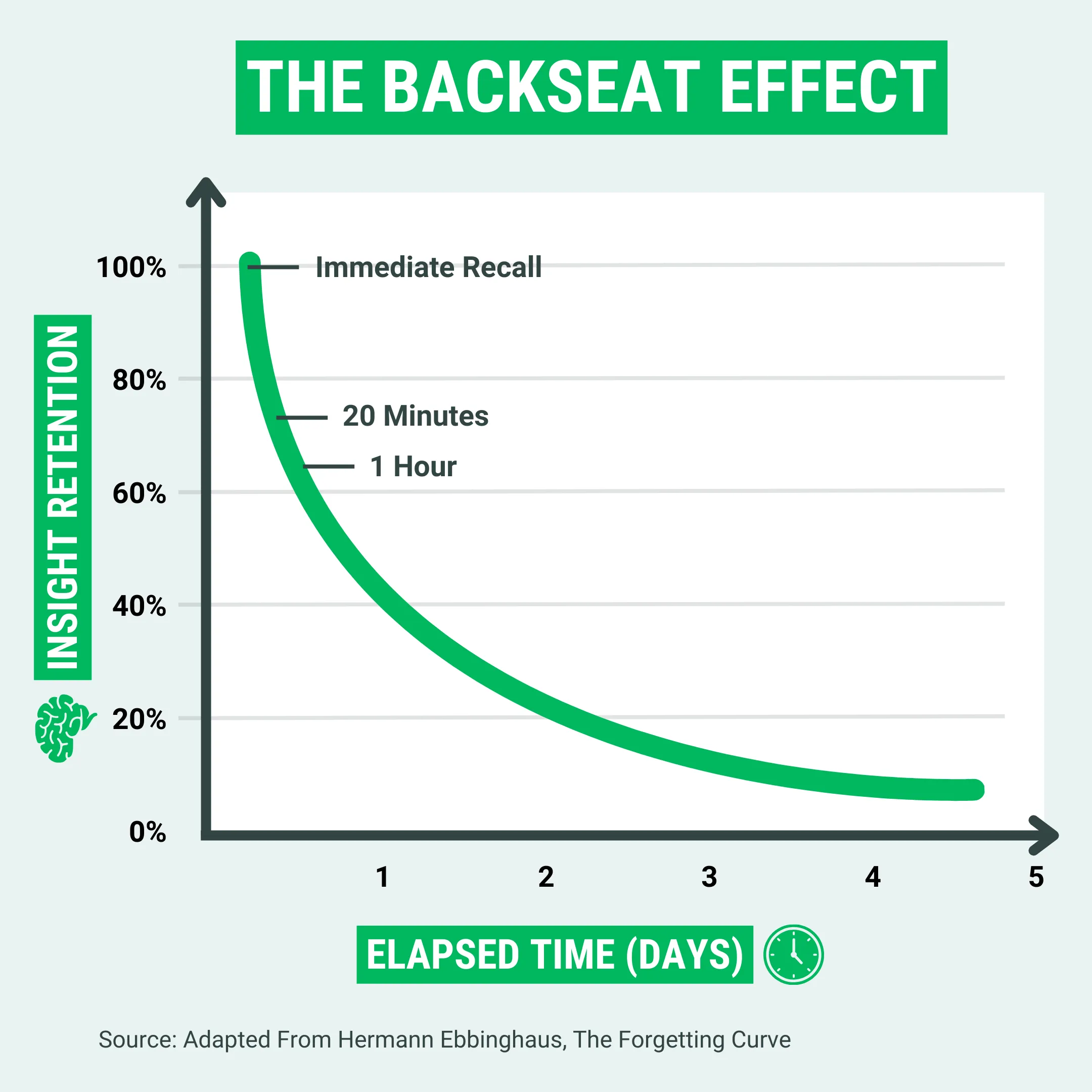
According to the Harvard Business Review, after receiving training from L&D, only 12% of employees use new learnings in their jobs [3]. The infamous “Forgetting Curve” suggests that by the time an employee walks out of a classroom, across campus, and to their desk, they will have lost 42% of the information they received.

Go to lunch?

By the time they return, the information loss grows to 56%. By the next day, the typical employee only retains about a third of their training. [3] This is why the Apply moment is so challenging, and why the Just-in-Time concept is so attractive.

What does good look like?

A really good strategy for Apply would enable employees to learn in the flow of work, based on their real, experienced context, and these learnings would be personalized to each learner.

What does the market look like?

A look at current offerings shows that most platforms that claim “Just-in-Time” are an evolved version of the eLearning strategy from the 90s. Yes, it is excellent to have courses available, and the switch to micro-learning formats may help employees digest more focused content. Sometimes these platforms offer integrations, but rarely so that employees can actually engage with learning in the tools they use every day.

Personalization looks more like red sauce offerings at the grocery — you can pick Chunky, Sage, or Meat Sauce. In fact, in many cases, these personalizations are simply a learning track, each for Individual Contributors vs. Managers.

What Needs to Happen Instead

Co-founder Kirsten Moorefield has repeatedly told the Cloverleaf product team, I don’t want users to spend time on the platform, I want them to get insights inside the tools they use every day. L&D Practitioners find that when they invest in human skill training for employees, Cloverleaf helps conquer the Forgetting Curve by providing true Just-in-Time learning in Slack, Microsoft Teams, and Email.

As a team of one supporting 2,000 employees, Cloverleaf’s coaching tools have empowered our leaders to develop their teams without constant hand-holding. It’s scalable, personalized, and impactful. — Dr. Erin Meyers

Cloverleaf learnings actually matter to employees because

  • They are short and impactful (driven by more than 7 years of internal refinement),
  • They are context-aware (Cloverleaf’s algorithms sync with users’ calendars and activity to deliver coaching on the most relevant teammates each day), and
  • They are personalized with the most individualized model of human personality available (Cloverleaf’s support across more than 12 industry-leading assessments enables unmatched depth of understanding).

As a result, learning doesn’t just get delivered—it gets used.

Cloverleaf helps turn new knowledge into daily action, accelerating leadership growth and reducing skill decay across the organization.

Moment 4: Help Learners Solve New Problems

What is it?

The original Just-in-Time marketing simply meant having content available whenever a learner wanted to access it. In theory, by hosting the right Just-in-Case content, companies could help learners solve new issues they encountered. The problem?

If you build it, they will come. Or will they? Don’t count on it. — Association for Talent Development [4]

The “Solve” moment is all about what happens when things break. L&D tools face two barriers in these moments:

  1. The employee needs a trigger to reach for support, and
  2. Stressed employees are likely to reject, or simply fail to recognize, learnings that don’t seem relevant to themselves and their context.

What does good look like?

The best solutions for the Solve moment will be available in employee tools to be encountered when difficult moments arise, will be able to provide useful learnings that clearly apply to the problem in question (context-aware), and should be personalized enough to resonate with a learner who may be feeling vulnerable (personalized).

What does the market look like?

Current offerings that can respond to the “solve” moment tend to look like content libraries or AI chatbots. Content libraries get in trouble on both fronts — they must be sought-out, so they aren’t, and they are never personalized enough to seem relevant in crisis.

Chatbots tend to be offered more in the flow of work, and would seem to be flexible enough to provide some context-awareness and personalization. The trouble with the current state of chatbots is that these qualities, and the learning they would seek to provide, are quite shallow.

L&D leaders cannot be certain what advice or models chatbots will offer up, and so cannot integrate this strategy with a broader organizational culture. The advice chatbots provide also may not resonate with users or be applicable to others who are involved because these bots have no awareness of personality.

What Needs to Happen Instead

Cloverleaf tries to be present in the tools users use each day, and therefore be available as a trigger in a moment of crisis. Daily Coaching considers users’ meetings, teams, and activity to provide a coaching tip each day on the teammate they are most likely to need coaching on.

Cloverleaf doubled our staff integration success. The tool bridges gaps in teamwork and collaboration, helping employees connect, grow, and perform better as a cohesive unit. — Kevin Mills, INSP

Quickly accessible from Microsoft Teams, Slack, Email, or Workday, Cloverleaf’s Insight Search feature enables users to ask a question in natural language, about themselves or a teammate, and get a highly-relevant, personalized insight to help them Solve their specific issue.

This means employees aren’t left guessing in moments of tension—and HR teams don’t have to step in every time something breaks.

Cloverleaf turns everyday friction into teachable moments—without interrupting the flow of work.

Moment 5: Help Learners Change, Break Habits, and Grow

What is it?

Today, more than ever, organizations face massive change from large economic forces, layoffs, and technology disruption. The fifth moment is about Change — once employees have deeply ingrained a particular view of the world or way of doing things, how can they break habits and learn a new way to do and see things?

Renowned business writer Tom Peters wrote an entire book called “Thriving on Chaos” with the thesis that embracing change is the number 1 challenge of modern business — but the businesses that succeed will learn to be excellent at it [5].

The nature of the “Change” moment is a steep challenge — breaking habits — at a time when resources are likely to be limited.

What does good look like?

Great solutions for the Change moment must provide consistent, affirming nudges in the flow of work, but also scale without requiring more staff time from strained L&D functions.

What does the market look like?

L&D functions provide critical support during organizational change, including by providing traditional offers to help employees learn the new lay of the land, but also by signaling continued investment and helping to close any new skills gaps.

Current L&D platforms tend to address “change” through these lenses — supporting content and addressing skill gaps. Frankly, there are few “Just-in-Time” offerings addressing this learner Moment of Need outside of the general 90s eLearning model.

What Needs to Happen Instead

Change management is a super power for Cloverleaf. During times of change, employees need to feel seen, which Cloverleaf regularly provides when delivering “spot on” tips and insights in Daily Coaching, in a true Just-in-Time fashion.

During periods like this, dealing with new teams becomes a first-order concern, and Cloverleaf is an excellent platform for new managers and teams to quickly move through Tuckman’s Stages of Group Development (forming, storming, norming, performing) [6].

1️⃣ First, alongside self tips, Cloverleaf’s Daily Coaching will provide daily insights into teammate personalities, with more tips provided for teammates based on reporting teams, project teams, and meetings.

2️⃣ Second, Cloverleaf provides personality insights on a team-wide basis. On a fresh team or even a single meeting, Cloverleaf can quickly spin up a dashboard showing each individual’s personality and providing recommendations and insights.

3️⃣ Third, Cloverleaf offers features specifically focused on team growth and formation, like Conversation Cards and Activities.

In times of transition, most tools focus on skills. Cloverleaf focuses on connection—helping new teams build trust faster, navigate uncertainty together, and sustain momentum even as conditions change.

It doesn’t just support change—it helps people lead through it.

Fulfilling the Promise of Just-in-Time by Meeting Learners in Their Moments of Need

While “Just-in-Time” began as a marketing term for freely-accessible content libraries, it has become an ideal that L&D professionals strive for. Mosher and Gottfredson’s 5 Moments of Need provides a model to understand the specific circumstances when Just-in-Time matters most.

When analyzed against each Moment of Need, current “Just-in-Time” solutions tend to fall short in many ways — the typical case being a content library that has adopted the micro-learning format and offers an integration or two without truly offering learning in the flow of work.

Cloverleaf’s platform has been developed for more than 7 years chasing an ideal of meeting learners with human skills and relation-based insights in their flow of work. Personalization is core to Cloverleaf’s strategies, and no other provider can match the deep, multi-faceted model of personality that Cloverleaf has. Cloverleaf’s impactful integration suite and quickly evolving AI platform power increasingly context-aware automated coaching that can meet learners in their moments of need to support and scale the best Learning and Development organizations on the planet.

Reading Time: 9 minutes

Leadership coaching is one of the most effective ways to develop strong, capable leaders—yet, in many organizations, it’s still reserved for executives. The reality is, leadership happens at every level. First-time managers, mid-level leaders, and senior executives all face moments where they need guidance, perspective, and support to navigate challenges and grow.

But leadership development doesn’t happen by accident. Great leaders aren’t just born—they’re shaped through self-awareness, feedback, and continuous coaching that helps them improve how they communicate, make decisions, and develop their teams.

Yet most companies don’t provide leadership coaching where it’s needed most.

👉 68% of managers have never received formal leadership training—leaving them to figure it out on their own. (Source: The HR Director)

👉 46% of managers have been asked to provide more constructive feedback, but only 28% feel HR has prepared them for it. (Source: Lattice State of People Strategy Report)

👉 Only 30% of HR leaders say their leadership programs are effectively preparing leaders for future challenges. (Source: Gartner: Top 5 Priorities for HR Leaders in 2025)

For leadership coaching to truly work, it can’t just be a one-off experience or a luxury for a select few. It needs to be practical, relevant, and integrated into the daily moments where leadership actually happens—whether that’s navigating team conflict, giving tough feedback, or adapting to change.

The question isn’t whether leadership coaching is valuable—it’s how to make it work for more people in a way that’s meaningful, actionable, and built to last.

Get the free guide to close your leadership development gap and build the trust, collaboration, and skills your leaders need to thrive.

What Is The Goal Of Leadership Coaching

Leadership coaching is the process of helping leaders improve how they interact with others, make decisions, and develop their teams. It’s not just about individual self-improvement—it’s about equipping leaders to create real impact in their organizations.

A great leader isn’t someone with all the answers. It’s someone who knows how to ask the right questions, adapt to different situations, and bring out the best in others. Leadership coaching provides structured guidance to help leaders grow—not in isolation, but in the context of their teams, their challenges, and their day-to-day decisions.

3 Ideas That Strengthen Leadership Coaching’s Impact

Most leadership coaching follows a traditional, one-on-one model—focused on individual growth, often reserved for executives or high performers. But practicing leadership isn’t just a top-level function—it can happens at every level of an organization.

✅ Leadership coaching should be accessible at every stage.

From first-time managers to senior executives. When mid-level leaders don’t get coaching, they’re left to figure things out alone, which weakens teams and slows progress.

✅ Leadership coaching isn’t just about the leader—it’s about the team.

Leadership doesn’t happen in a vacuum. Effective coaching helps leaders understand their teams’ unique dynamics, improve collaboration, and create an environment where people can thrive.

✅ Leadership coaching should be integrated into daily work—not just scheduled sessions.

Leaders don’t need advice weeks after a tough conversation—they need guidance in the moment, when it matters most.

Make Your Leadership Coaching More Impactful

See How High Performing Teams Use Tech To Equip Their Leaders
leadership development guide

Great Coaching Can Lead To A High-Performing Culture

🟢 Self-awareness that leads to action.

Leaders need more than just insight into their strengths, biases, and blind spots—they need to know how to apply that awareness in real interactions. Coaching ensures that self-awareness isn’t just theoretical, but something leaders can actively use to make better decisions and foster stronger teams.

🟢 A focus on building strong teams.

Coaching isn’t just about making a leader better—it’s about helping them bring out the best in others, develop talent, and build trust. When leaders are supported through coaching, they create environments where people feel heard, valued, and empowered to perform at their best.

🟢 Actionable feedback, not vague theories.

Effective leadership coaching offers practical, real-time insights leaders can apply immediately—not just high-level concepts about leadership. The best coaching doesn’t just teach theory; it helps leaders navigate the complexities of managing people, giving feedback, and driving change in the moment

🟢 Scalability and consistency.

Coaching should be continuous, relevant, and available to every leader—not a one-time experience for a select few. When coaching is integrated into daily work, it becomes a consistent driver of growth, rather than an occasional intervention.

The impact is real. One study found that for every $1 spent on coaching, companies saw a return of over $7. Coaching doesn’t just develop better leaders—it leads to smarter decisions, stronger teams, and better business outcomes. When leaders are equipped with the right coaching, they reduce costly mistakes, improve retention, and create cultures of accountability that drive long-term success.

Impactful leadership coaching strategies realize it isn’t just about developing individuals—it’s about changing how leadership happens in an organization. When development opportunities are embedded into daily work—instead of separate initiatives—the effects of coaching start to drive real, lasting change.

4 Principles That Make Leadership Coaching More Effective?

Coaching is about helping leaders apply new learning and discovery to improve team dynamics, decision-making, and workplace culture. But for coaching to drive lasting impact, it has to be personalized, relevant, team-centered, and continuously reinforced.

Let’s break down the key principles that make leadership coaching effective.

1. Personalization: Coaching Should Be Tailored to the Leader and Their Team

No two leaders—or teams—are the same. Coaching should be customized to individual strengths, leadership styles, and team dynamics rather than following a generic framework.

How Personalization Makes Leadership Coaching More Effective

✅ Self-awareness is At The Core Of Better Leadership

Leaders who understand their own tendencies, strengths, and blind spots can make better decisions, communicate more effectively, and create environments where people thrive.

  • Behavioral assessment platforms with tools like DISC, MBTI, or Enneagram help leaders understand their natural tendencies, communication styles, and decision-making patterns.
  • Strength-based assessments (like CliftonStrengths®) highlight what energizes leaders, helping them maximize their potential.
  • When assessment insights can be layered, even better! Leaders get a multi-dimensional view of themselves and their teams—leading to more targeted coaching and better results.

✅ Leadership Coaching Should Adapt to the Team, Not Just the Leader

Leadership isn’t just about self-improvement—it’s about building strong teams. Coaching should help leaders:

  • Recognize and adapt to different working and communication styles within their team.
  • Navigate team dynamics more effectively, building trust and collaboration.
  • Lead in a way that aligns with their team’s strengths—not just their own.

When leaders and teams can both be part of the coaching process, the impact is deeper and longer-lasting. Assessments are just one tool that can make coaching more personal, actionable, and relevant—leading to stronger teams and better leadership at every level.

2. Contextual Relevance: Coaching Should Happen When It Matters Most

Leadership isn’t learned in a vacuum. Leaders need coaching in the moments where leadership skills are required—when they’re giving feedback, navigating conflict, or making tough decisions.

⏳ Why Timing Matters in Leadership Coaching:

Often, coaching opportunities happen out of sync with the actual leadership challenges the individual is facing. A one-hour session weeks before or after a tough conversation doesn’t help a leader navigate it in real time.

Leaders need coaching in the moment, when decisions are being made, feedback is being given, and challenges arise—not weeks later when the details are fuzzy.

Leaders don’t have time to dig through notes from past coaching sessions. They need quick, relevant guidance when they’re about to have a one-on-one, handle a conflict, or make a big decision.

Digital coaching tools can integrate coaching insights directly into platforms like Slack, Outlook, Gmail, and team dashboards, so leaders get nudges right when they need them—not as an afterthought.

Instead of hoping leaders remember what they learned in a coaching session, automating coaching nudges makes insights part of their daily workflow, helping them adjust, improve, and lead better day in and day out.

3. Team-Centered Coaching: Leadership Coaching Should Strengthen the Entire Team

A leader’s success isn’t measured by their individual growth—it’s measured by how well they develop and empower their team. Coaching should help leaders strengthen collaboration, build trust, and bring out the best in others.

This shift from individual leadership coaching to collective leadership coaching is gaining momentum. Many organizations are recognizing that coaching shouldn’t just focus on one leader at a time—it should strengthen leadership across an entire team or organization.

Organizations Are Moving Toward Collective Leadership

  • According to DDI’s 2023 Global Leadership Forecast, only 12% of companies feel confident in their leadership bench strength.
  • To address this gap, progressive organizations are shifting toward group coaching and team-based leadership development that breaks down silos, encourages shared learning, and creates accountability among peers (td.org.)
  • Instead of viewing leadership as an individual skill, collective coaching builds leadership capacity across an entire organization—ensuring teams, not just individuals, are equipped to lead.

Leaders Need Coaching on How to Motivate, Delegate, and Give Feedback

  • Coaching is about equipping a leader to create an environment where people can thrive.
  • This includes how to provide feedback, resolve conflict, and navigate team challenges—not just how to improve their own leadership skills.
ebbinghaus forgetting curve and leadership development

4. Continuous Reinforcement: Coaching Should Be an Ongoing Process, Not a One-Time Event

One of the biggest gaps in leadership coaching is sustainability. Too often, coaching happens in isolated moments—a workshop, a quarterly session—but fails to create lasting behavior change.

How Continuous Coaching Strengthens Leadership Development:

✅ Reinforcement Drives Retention & Real Behavior Change

  • Ebbinghaus’s Forgetting Curve shows that people forget up to 70% of what they learn within 24 hours unless it’s reinforced.
  • Micro-coaching nudges—like the ones Cloverleaf delivers—help keep leadership concepts top of mind and ensure they’re applied continuously.

✅ Embedding Coaching Into Daily Work Makes It Scalable

  • Leadership coaching shouldn’t be a separate initiative—it should be integrated into daily interactions.
  • With ongoing, accessible coaching, leaders don’t just get support when they schedule it—they get continuous, relevant insights that shape how they lead every day.

Leadership coaching is most effective when it moves beyond one-size-fits-all approaches and becomes personalized, contextual, team-centered, and continuous.

Organizations that embrace these coaching principles by leveraging assessments, contextual insights, and continuous reinforcement—will develop stronger leaders, more engaged teams, and a leadership culture that scales across every level.

How to Scale Leadership Coaching Beyond the C-Suite

Most leadership coaching is still reserved for senior executives. Traditional coaching models—like one-on-one coaching engagements—are expensive, time-consuming, and difficult to scale. As a result, mid-level managers and first-time leaders often don’t get the support they need.

But leadership isn’t just a top-level function. If coaching is only available to a select few, organizations miss a massive opportunity to strengthen leadership across the board.

To scale leadership coaching in a way that’s both effective and sustainable, organizations need a model that:

✅ Supports leaders at every level, not just executives.

✅ Provides on demand, relevant coaching—not just scheduled sessions.

✅ Uses technology to make coaching accessible, personalized, and continuous.

Why Many Coaching Models Cannot Scale

One-on-one coaching has long been the standard, but it comes with significant limitations when it comes to scaling:

👉 High Cost: Executive coaching engagements can cost thousands of dollars per leader, making widespread adoption unrealistic.

👉 Limited Reach: One coach can only support a handful of leaders at a time, leaving many managers without guidance.

👉 Lack of Continuity: Coaching sessions happen in intervals, leaving gaps where leaders struggle to apply what they’ve learned.

Companies looking to expand leadership development across their organization need a more scalable, accessible, and embedded approach to coaching.

How to Scale Leadership Coaching Without Losing Impact

✅ Think Of Leadership Coaching Beyond The Executive Level

Leadership development shouldn’t just be for the top 10% of the company. Mid-level managers, first-time leaders, and high-potential employees also need structured guidance, feedback, and coaching.

👉 Instead of limiting coaching to a few individuals, organizations should make leadership coaching a core part of development at all levels.

👉 Group coaching, collective development, and technology-driven coaching nudges can make leadership support accessible to a much larger audience.

✅ Leverage Technology to Democratize Coaching Opportunities

Leadership coaching can be expensive, time-consuming, and hard to scale. One-on-one coaching engagements can cost thousands of dollars per leader, making it unsustainable to provide coaching across an entire organization.

Technology helps remove these barriers, making coaching more cost-effective, accessible, and scalable without sacrificing personalization.

👉 Reduce Cost Without Losing Impact

One-on-one coaching can cost thousands per leader. Scalable coaching tools provide consistent, high-quality coaching insights at a fraction of the cost.

👉 Eliminate Scheduling Bottlenecks

Coaching often relies on pre-scheduled sessions, leaving leaders without support when challenges arise. Digital coaching tools provide on-demand insights when leaders need them most.

✅ Shift from Episodic Coaching to Ongoing Development

Leadership coaching is less effective when it is experienced as one-and-done event. For real impact, coaching must be continuous, integrated, and reinforced over time.

👉 Micro-Coaching Nudges Keep Leadership Skills Top of Mind

Instead of relying on infrequent sessions, coaching should be woven into daily work through real-time insights and reminders.

👉 Leadership Development Must Align with Real-World Challenges

The best coaching happens in the moment—when leaders are making decisions, giving feedback, or navigating conflict.

By leveraging technology, expanding access, and making coaching continuous, organizations can equip every leader with the support they need to develop, lead effectively, and build stronger teams.

Coaching More Leaders, Strengthening More Teams

Leadership coaching has the power to transform organizations—not just by improving individual leaders but by creating stronger teams, better communication, and cultures where people thrive.

With new approaches and technology, coaching is no longer limited to a select few. It can be personalized, continuous, and embedded into daily work, making leadership development more impactful than ever before.

When more leaders get the coaching they need, workplaces become more connected, teams work better together, and cultures become places where people want to stay and grow.

Cloverleaf can help make this possible for your team. Your leaders can get the right insights at the right time—so they can lead with confidence, develop their teams, and create lasting impact.

See how Cloverleaf can strengthen your leadership coaching strategy.

Reading Time: 11 minutes

Think about the last time your organization used an assessment. Did it lead to meaningful, lasting change? Or did the results end up in a forgotten PDF, briefly discussed in a workshop, and never applied again?

Most assessment platforms promise to drive behavior change by providing deep insights into personality, leadership potential, and team dynamics. However, epiphanies and insightful information alone aren’t enough to create culture-shifting behavior change.

When insights remain locked in downloadable reports—rarely revisited or applied—they fail to make a lasting impact. People need continuous reinforcement and real-time coaching to integrate learning into their day-to-day interactions at work.

3 Common Experiences With Assessment Platforms

HR and L&D leaders invest time and money into assessments, expecting them to drive individual and team growth. But in most organizations, assessments follow a predictable, ineffective pattern:

🔹 One-dimensional insights: Many platforms rely on a single assessment, leading to an incomplete, surface-level understanding of employees. Real development requires a multi-layered view.

🔹 Static reports without real-world application: Insights sit in PDFs, failing to translate into daily actions that improve collaboration, leadership, or decision-making. Data without application is just noise.

🔹 Limited to hiring, missing long-term impact: Assessments are commonly used for hiring, but their greatest potential lies in leadership development, team collaboration, and continuous coaching—yet they’re rarely used this way.

This gap between insight and application is why leadership development remains a challenge. In fact, 74% of HR leaders say managers aren’t equipped to lead change (Gartner, 2025). Organizations need their assessment platform to do more than deliver insights—they need a system that actively guides behavior change, improves communication, and scales leadership development.

Get the full report to build a talent assessment strategy that works as hard as your team.

The Role of Assessment Platforms in Learning & Development

Standard assessment platforms weren’t built for long-term development. But today, assessments can (and should) function as more than one-time reports—they should be dynamic, integrated, and continuously reinforcing growth.

Technology can use assessments to:

Layer Insights – Combine multiple validated assessments for a multi-dimensional view of employees.

Embed In The Flow Of Work: Provide just in time coaching nudges in workplace tools.

Develop People At Scale: Help leaders and teams to grow collectively and build culture.

Assessment platforms are capable of more value and ROI. They can serve as ongoing coaching tools—helping employees, managers, and teams turn insights into daily action. By integrating assessment insights into workflows and reinforcing learning over time, organizations can finally bridge the gap between knowledge and behavior change.

The Standard Assessment Model Is Broken

Most assessment platforms focus on delivering insights—but insights alone don’t create change. HR and L&D leaders invest in assessments expecting them to improve leadership, team collaboration, and engagement, but without reinforcement, these insights quickly fade.

🔹 Insights Without Actionability: Employees take an assessment, receive a detailed report, and… then what? Without actionable follow-up, the data becomes a one-time event instead of an ongoing development tool.

🔹 Siloed & Disconnected: Many organizations use multiple assessments across different teams, but without a centralized platform, insights remain fragmented. This increases costs, creates inconsistencies, and prevents teams from building a shared language for collaboration.

🔹 Limited View of the Whole Person: Most platforms rely on a single assessment at a time, offering only a narrow slice of an employee’s strengths, communication style, or work preferences. Real development requires a multi-layered understanding that connects behavioral tendencies, motivations, and thinking styles.

🔹 Missed Potential Beyond Hiring: While assessments play a role in talent selection, their real power is in driving ongoing development—but most platforms stop at the hiring stage.

🔹 Difficult To Scale Development: HR teams and managers don’t have the time or resources to reinforce assessment insights for every employee manually. Coaching remains inconsistent and unscalable without technology to automate and integrate insights into daily workflows.

With these limitations, assessments become a checkbox exercise instead of a catalyst for lasting behavior change.

Organizations spend time and money on assessments with little long-term impact because platform capabilities remain static instead of dynamic and adaptive. For assessments to truly impact workplace culture, they must be embedded into the daily workflow, guiding behavior change in real time.

Bring Multiple Assessments Into One Dashboard for a Holistic View of People

Assessments are valuable tools for understanding individuals and teams—but their full potential is only realized when insights are integrated, layered, and continuously applied. Instead of relying on one-off assessments, a centralized platform enables organizations to use multiple validated tools to create a more complete, multidimensional understanding of employees.

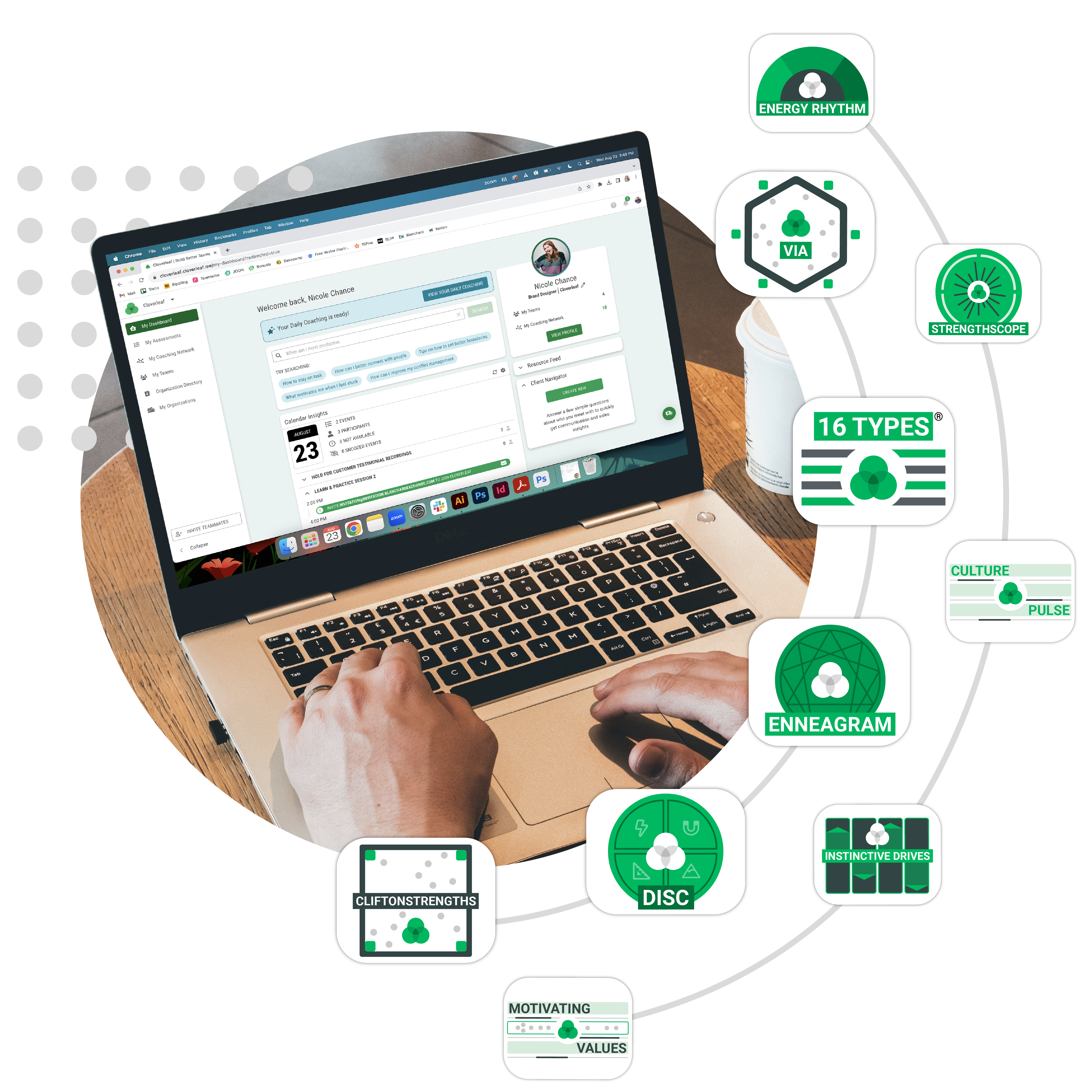
A comprehensive suite of assessments across four key categories provides a well-rounded understanding of individuals, teams, and workplace dynamics.

Behavioral – Understanding work styles, decision-making, and communication preferences.
Strengths – Identifying natural talents and energizing strengths.
Culture – Uncovering core values and motivational drivers.
Productivity – Optimizing work rhythms and energy patterns.

Each of these assessments contributes a unique perspective on individual and team dynamics, allowing organizations to gain deeper insights, enhance collaboration, and drive meaningful behavior change.

🧠 Behavioral Assessments To Understand How People Lead, Think, Communicate, and Work?

Behavioral assessments can provide insights into personality, cognitive preferences, and how individuals interact with others in different contexts. These tools help teams improve collaboration, communication, and leadership effectiveness.

16 Types (MBTI): Uncovers how individuals make decisions, process information, and engage with the world based on four preference pairs (e.g., Introversion vs. Extraversion). Helps teams better understand thinking styles and workplace interactions.

Enneagram: Explores core emotional drivers and motivations, revealing why people behave the way they do. This deepens self-awareness and enhances empathy, leadership, and conflict resolution.

DISC: Measures communication and behavioral tendencies in favorable and unfavorable situations. Helps individuals and teams navigate workplace dynamics, manage conflict, and improve collaboration.

HBDI (Herrmann Brain Dominance Instrument): Evaluates thinking styles to strengthen decision-making, problem-solving, and team collaboration by uncovering cognitive diversity.

💪 Strength-Based Assessments – What Are People’s Natural Strengths?

Strengths-based assessments identify what energizes individuals and how they contribute their best work. Unlike traditional assessments that focus on gaps or weaknesses, these tools help teams lean into their natural strengths for increased engagement and performance.

CliftonStrengths®: Identifies an individual’s top 5 strengths across four domains: Executing, Strategic Thinking, Influencing, and Relationship Building. Used for leadership development and high-performing teams.

Strengthscope®: Helps individuals discover the underlying qualities that energize them, allowing them to bring their best to work every day. Supports employee engagement and career growth.

VIA Character Strengths: Identifies positive character strengths across six categories, including Wisdom, Courage, and Humanity. Helps individuals and teams build resilience, self-awareness, and well-being.

🏛 Cultural & Motivational Assessments – What Drives People’s Actions and Decisions?

Understanding workplace culture is essential for building alignment, engagement, and shared purpose. These assessments measure values, motivations, and core beliefs to help organizations cultivate strong, values-driven teams.

Culture Pulse: Evaluates team and organizational values, norms, and behaviors to measure culture alignment and areas for growth.

Motivating Values: Assesses the core values that drive behavior, helping organizations align employees’ intrinsic motivators with company culture.

Instinctive Drives (I.D.): Reveals how individuals naturally approach tasks, problem-solving, and collaboration, providing practical strategies to improve effectiveness and reduce stress.

⏳ Productivity & Work Rhythms – When and How Do People Work Best?

Productivity assessments help individuals optimize their energy levels, focus, and work habits to inform peak performance times and opportunities.

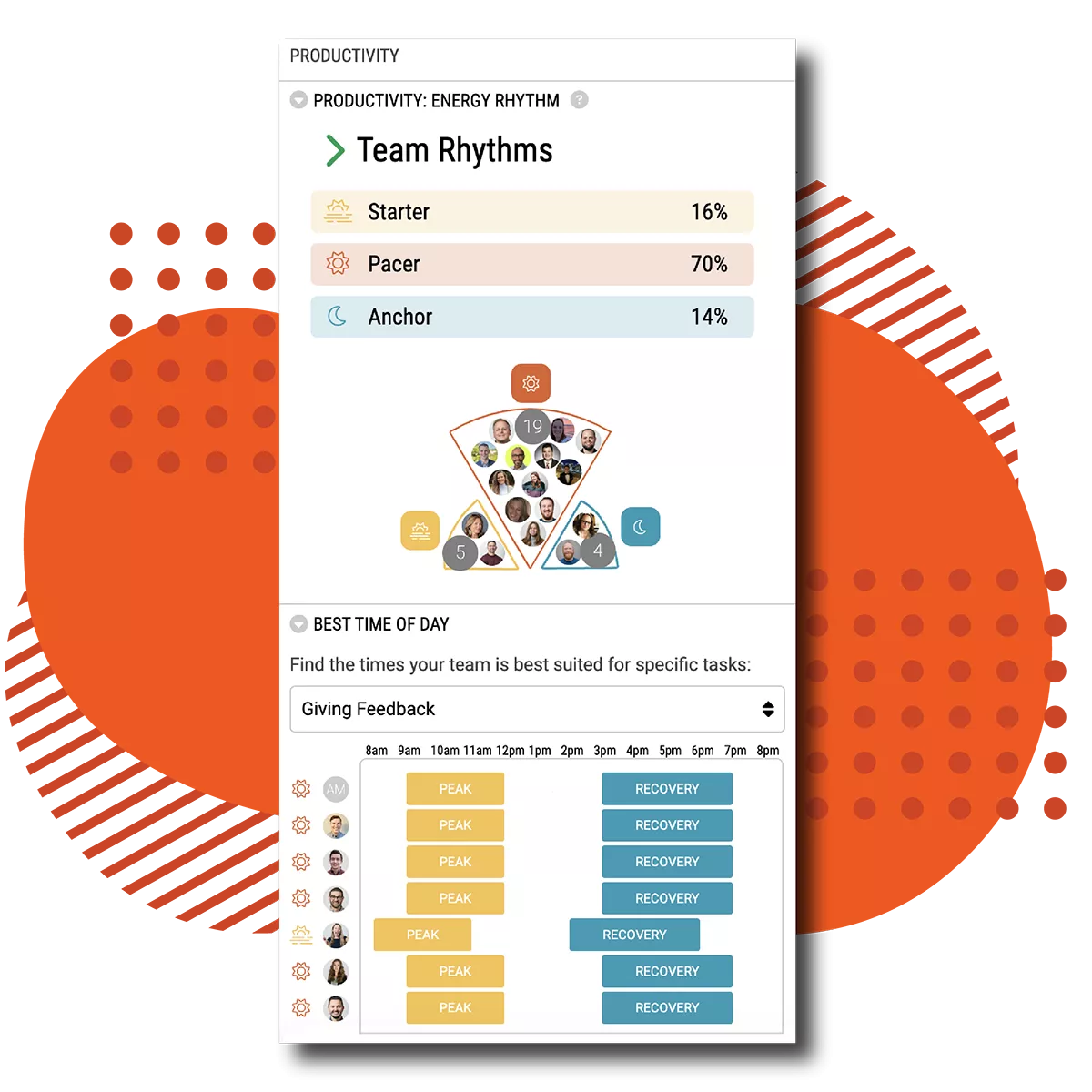
 Energy Rhythm: Identifies daily energy patterns to determine when employees feel most alert and productive. Helps optimize task management, meeting schedules, and work efficiency.

Is Your Talent Assessment Strategy Keeping Up?

See How Leading Teams Use Tech To Stay Ahead.
2025 State of Talent Assessment Strategy

Why Centralizing Your Assessment Strategy Matters

Many organizations invest in assessments, but their impact is diluted when insights, costs, and usage are scattered across multiple tools, vendors, and teams. Without a cohesive, scalable strategy, assessment data remains isolated, underutilized, or forgotten—limiting its potential to drive real behavior change and increasing unnecessary costs.

A centralized approach ensures assessments aren’t just one-time exercises but become ongoing coaching tools that shape leadership, teamwork, and culture—while optimizing investment and eliminating hidden costs.

The Benefits of a Unified, Scalable Assessment Strategy:

One dashboard for all assessments → No more managing multiple platforms or tracking down reports.

Layered insights for deeper understanding → Combine multiple assessments for a multi-dimensional view of individuals and teams.

Automated coaching in the flow of work → Deliver insights where and when they matter—inside Slack, Outlook, Gmail, and team meetings.

Cost efficiency & transparency → Consolidate spending, eliminate redundant vendor contracts, and negotiate better pricing with a centralized platform.

When assessments are centralized, layered, and continuously reinforced, they become more than just static personality insights. They evolve into dynamic coaching tools—actively shaping leadership, improving collaboration, and driving measurable growth across an organization while reducing wasteful spending.

Layering Multiple Assessment Learnings Creates A Rich, Dynamic Platform

Most assessment platforms are limited in functionality by isolated frameworks to understand people—whether it’s personality, communication style, or strengths. But people are multi-dimensional. No single assessment can capture the full complexity of how individuals think, work, and collaborate.

By layering multiple validated assessments, organizations can create a richer, more accurate picture of their people—leading to better coaching, stronger teams, and more effective leadership development.

One Assessment = Limited Insights. Multiple Assessments = A Complete Picture.

Consider how different assessments contribute unique but complementary insights:

16 Types

  • What it measures: How people process information, make decisions, and interact with the world
  • Why it matters: Helps teams understand different problem-solving approaches and communication styles

Enneagram

  • What it measures: Core emotional drivers and motivations
  • Why it matters: Provides deep insights into what fuels behavior, stress responses, and interpersonal dynamics

DISC

  • What it measures: Work style and communication tendencies
  • Why it matters: Helps teams navigate collaboration, conflict resolution, and leadership tendencies

StrengthsFinder

  • What it measures: Top 5 core strengths across four domains (Executing, Thinking, Influencing, Relationship-Building)
  • Why it matters: Helps individuals lean into their natural talents and leadership abilities

HBDI

  • What it measures: Cognitive thinking styles
  • Why it matters: Optimizes decision-making, innovation, and strategic problem-solving

Culture Pulse

  • What it measures: Values, beliefs, and organizational norms
  • Why it matters: Ensures teams align on culture, mission, and shared purpose

Energy Rhythm

  • What it measures: Daily energy patterns and focus levels
  • Why it matters: Helps optimize productivity, task management, and work schedules
Assessment
What It Measures
Why It Matters
16 Types (MTBI)
How people process information, make decisions, and interact with the world
Helps teams understand different problem-solving approaches and communication styles
Enneagram
Core emotional drivers and motivations
Provides deep insights into what fuels behavior, stress responses, and interpersonal dynamics
DISC
Work style and communication tendencies
Helps teams navigate collaboration, conflict resolution, and leadership tendencies
StrengthsFinder
Top 5 core strengths across four domains (Executing, Thinking, Influencing, Relationship-Building)
Helps individuals lean into their natural talents and leadership abilities
HBDI
Cognitive thinking styles
Optimizes decision-making, innovation, and strategic problem-solving
Culture Pulse
Values, beliefs, and organizational norms
Ensures teams align on culture, mission, and shared purpose
Energy Rhythm
Daily energy patterns and focus levels
Helps optimize productivity, task management, and work schedules

The Power of a Multi-Layered Assessment Approach

❌ Using just one assessment? You’ll get a glimpse of how someone operates.

💡Using multiple assessments? You’ll get a dynamic understanding of how someone might:

✅ Make decisions under pressure
✅ Communicate and collaborate in teams
✅ Find motivation and purpose at work
✅ Leverage strengths to succeed
✅ Think and solve problems

Rather than treating leadership development as one-size-fits-all, this approach adapts coaching to each individual’s needs—leading to better leaders, stronger teams, and measurable impact.

Is Your Platform Built for Layered, Continuous Development?

Most platforms force HR and L&D leaders to piece together insights manually across different tools. Cloverleaf solves this by integrating multiple assessments into one dashboard, allowing organizations to:

See assessment results side by side—understanding people from multiple angles.
Deliver daily, automated coaching based on combined insights.
Provide real-time, personalized development for employees, teams, and leaders.

Assessment technology can do far more than reveal insights—it can support real, sustained development when integrated into daily workflows. Assessments become powerful coaching tools that provide employees and leaders with personalized, in-the-moment guidance to improve communication, collaboration, and leadership effectiveness if layered and reinforced over time.

Rather than serving as one-time data points, assessment insights should be continuously applied—helping individuals grow, teams work better together, and organizations build a thriving culture of development.

How Cloverleaf Compares to Other Assessment Platforms

Organizations searching for an assessment platform often face a crowded market of tools that claim to improve leadership, team collaboration, and workplace performance. However, most platforms still rely on outdated, one-dimensional approaches that fail to deliver lasting impact. Cloverleaf takes a fundamentally different approach—transforming assessments from static insights into real-time, embedded coaching.

Other Assessment Platforms vs. Cloverleaf

Feature
Traditional Assessment Platforms
Cloverleaf
Assessment Focus
Typically rely on a single assessment (e.g., DISC, MBTI, or StrengthsFinder)
Layers multiple validated assessments for a multi-dimensional view
Report Accessibility
Provides a PDF report that is rarely revisited
Continuous coaching nudges reinforce insights in daily workflows
Use Case
Primarily used for hiring and selection
Designed for ongoing leadership, team development, and coaching
Scalability
Requires HR and L&D teams to manually interpret and deliver insights
Automated coaching scales leadership development without additional workload
Integration
Insights remain siloed in assessment tools
Delivers insights inside Slack, MS Teams, Outlook, and Gmail
ROI & Cost Transparency
Fragmented vendor costs, difficult to track usage across teams
One centralized platform reduces redundancy and optimizes investment

Feature: Assessment Focus

  • Traditional Assessment Platforms: Typically rely on a single assessment (e.g., DISC, MBTI, or StrengthsFinder)
  • Cloverleaf: Layers multiple validated assessments for a multi-dimensional view

Feature: Report Accessibility

  • Traditional Assessment Platforms: Provides a PDF report that is rarely revisited
  • Cloverleaf: Continuous coaching nudges reinforce insights in daily workflows

Feature: Use Case

  • Traditional Assessment Platforms: Primarily used for hiring and selection
  • Cloverleaf: Designed for ongoing leadership, team development, and coaching

Feature: Scalability

  • Traditional Assessment Platforms: Requires HR and L&D teams to manually interpret and deliver insights
  • Cloverleaf: Automated coaching scales leadership development without additional workload

Feature: Integration

  • Traditional Assessment Platforms: Insights remain siloed in assessment tools
  • Cloverleaf: Delivers insights inside Slack, MS Teams, Outlook, and Gmail

Feature: ROI & Cost Transparency

  • Traditional Assessment Platforms: Fragmented vendor costs, difficult to track usage across teams
  • Cloverleaf: One centralized platform reduces redundancy and optimizes investment

Common Gaps in Other Platforms

Many assessment platforms provide valuable insights—but insights alone don’t drive behavior change. Here’s where traditional solutions fall short:

One-and-Done Reports: Most assessments generate a report that is briefly reviewed in a workshop and then forgotten—leaving no long-term impact.

Siloed Insights: Many organizations use multiple assessments across different teams, but results remain disconnected, making it difficult to align teams or build a shared language for collaboration.

No Reinforcement or Real-World Application: Employees struggle to apply what they’ve learned in daily work interactions without continuous nudges and in-the-moment coaching.

Limited Use Cases: Traditional assessments are often used only for hiring decisions rather than developing employees and improving team dynamics over time.

High Costs & Lack of Transparency: Many organizations spend significantly on assessments without a clear understanding of ROI, as costs are spread across multiple vendors without central oversight.

Why Cloverleaf Is Different

Cloverleaf reinvented what is possible with assessment platforms by integrating multiple insights to reinforce learning through daily coaching nudges and embedding development into the flow of work.

Multi-Dimensional Insights, Not Just a Single Report
Instead of relying on one assessment, Cloverleaf combines multiple perspectives (DISC, MBTI, Enneagram, StrengthsFinder, etc.) to provide a more accurate, holistic understanding of individuals and teams.

Continuous Coaching, Not Just One-Time Feedback
Cloverleaf’s tech powered coaching nudges provide real-time, contextual insights—helping employees and managers turn knowledge into action.

Built for Team & Leadership Development, Not Just Hiring
While traditional assessments focus on candidate selection, Cloverleaf is designed for long-term growth—helping teams improve collaboration, communication, and leadership effectiveness.

Seamless Integration with Daily Tools
Insights shouldn’t live in PDFs. Cloverleaf delivers coaching tips inside the tools employees already use (Slack, Outlook, Gmail, MS Teams), ensuring learning happens in the moment, not in isolation.

A Single, Cost-Effective Platform for Assessments
By centralizing assessments into one integrated system, Cloverleaf helps organizations reduce redundant spending, simplify vendor management, and maximize ROI on assessment investments.

Most HR and L&D leaders know that assessments can be powerful tools for development—but only if they’re applied consistently and reinforced over time. Cloverleaf isn’t just an assessment provider; it’s a coaching platform that ensures assessment insights translate into action.

Organizations looking for the best assessment platform for talent development need more than just reports—they need a scalable solution that supports employees, managers, and teams at every stage of growth.

Next Steps for HR & L&D Leaders

For decades, assessments have been used to evaluate people—but the real opportunity lies in using them to develop people. The future of assessments isn’t just about collecting data; it’s about providing ongoing coaching that transforms insights into action.

Organizations that move beyond static reports and one-time debriefs will unlock stronger leaders, more engaged teams, and a culture of continuous growth. Assessments should not be an endpoint—they should be the starting point for leadership development, team collaboration, and long-term performance improvement.

Cloverleaf makes this possible by turning assessments into dynamic, on demand development tools—integrated seamlessly into everyday work.

💡 Is your current assessment strategy driving real behavior change?

If your assessments are still sitting in PDFs, disconnected from daily work, and failing to produce measurable outcomes, it’s time to rethink your approach. The best assessment platform doesn’t just deliver insights—it helps teams apply them, reinforce them, and grow from them.

☘️  Discover How Cloverleaf Transforms Assessments Into Actionable Development

By centralizing multiple assessments, embedding insights into workflows, and automating personalized coaching, Cloverleaf ensures assessments don’t just inform—they actively shape behavior, strengthen leadership, and improve collaboration.

FAQs

How Does Cloverleaf Centralize Assessments?

Cloverleaf unifies multiple industry-leading assessments into a single platform, including DISC, Enneagram, 16 Types, StrengthsFinder, and more. This eliminates the complexity of managing multiple vendors, ensuring all assessment data is integrated, easily accessible, and continuously applied for leadership and team development.

How Is Cloverleaf Different From Other Assessment Platforms?

Most platforms generate static reports that are rarely revisited. Cloverleaf goes further by embedding AI-powered coaching nudges into daily workflows, layering multiple assessments for a complete view of employees, and providing a centralized dashboard for managing assessments in one place—transforming insights into real-time, actionable development.

Can Cloverleaf Help Scale Leadership Development?

Yes! Many managers lack the time or tools to coach their teams effectively. Cloverleaf automates coaching, delivering personalized, just-in-time insights that help leaders grow without adding extra workload for HR. This ensures scalable, ongoing leadership development that aligns with real-world interactions.

How Does Cloverleaf Ensure Assessment Data Leads to Real Behavior Change?

Instead of relying on one-time workshops, Cloverleaf continuously reinforces learning through automated coaching nudges in Slack, Outlook, Gmail, and MS Teams. Insights are delivered when and where they’re needed, helping employees and managers apply them in real-work situations and improving communication, collaboration, and leadership.

What Types of Organizations Benefit Most From Cloverleaf’s Platform?

Cloverleaf is ideal for organizations that need to scale leadership development, improve team collaboration, and maximize the ROI of assessments. It’s especially valuable for:

HR & L&D teams managing multiple assessments and seeking an integrated solution.
Organizations investing in leadership & talent development but struggling with implementation.
Companies prioritizing continuous learning and just in time coaching.

What Results Can Organizations Expect From Using Cloverleaf?

Organizations using Cloverleaf see higher engagement, stronger leadership capabilities, and improved team collaboration. By integrating assessment insights into daily workflows, they also increase the ROI of assessments and reduce redundant costs from multiple vendors.

Reading Time: 11 minutes

Conflict is one of the biggest drains on workplace performance—yet most managers aren’t trained to handle it effectively.

📌 Civility Index Score: 46.1, with 65% of workers saying managers prioritize business goals over respectful treatment (SHRM).

📌 46% of managers are expected to provide more constructive feedback, but only 28% feel HR has adequately trained them to do so (Lattice State of People Strategy Report).

📌 Organizations that invest in leadership development to improve conflict resolution training—see an 11% increase in profitability (Gallup).

Despite the clear impact on engagement, productivity, and retention, conflict resolution is rarely treated as a core leadership competency. Instead of providing structured training, most organizations expect managers to navigate difficult conversations on their own—leading to avoidance, frustration, and unnecessary turnover.

Why This Approach Is Costing Companies More Than They Realize

Organizations that take a proactive approach to equip managers with conflict resolution skills and real-time coaching—see measurable business results:

Stronger team performance: Conflict becomes a source of innovation, not dysfunction.
Higher retention: Employees feel heard, valued, and supported in resolving challenges.
Faster decision-making: Issues are addressed productively rather than festering.

This article will explore why conflict resolution training for managers is challenging to implement, how to make conflict resolution a leadership strength, and the best strategies to help managers confidently handle tough situations.

Get the full guide to Talent Development in the Age of AI to empower your managers to navigate tough conversations with confidence.

The Heavy Costs of Poor Conflict Management

Workplace conflict isn’t just uncomfortable—it’s expensive. When tensions go unresolved, they erode trust, stall productivity, and increase turnover. Yet, many organizations fail to equip managers with the tools they need to navigate difficult conversations effectively.

📌 73% of HR leaders say their employees are experiencing change fatigue. Additionally, 74% agree that managers are not adequately equipped to lead change, further complicating transformation efforts (Gartner).

📌 91% of high-performing HR teams meet most or all of their managers’ needs—highlighting the impact of HR’s role in leadership support (Lattice).

📌 68% of employees say learning and development (L&D) initiatives are essential for engagement, but many organizations underinvest in developing the human skills managers need to improve conflict resolution (Lattice).

Without training training that can reinforce key insights concerning conflict resolution, managers often default to avoidance or reactive decision-making—both of which make problems worse. Instead of feeling confident to coach employees through disagreements, they sidestep difficult conversations or escalate issues to HR, leading to frustration, disengagement, and lost productivity.

Why Managers Struggle With Conflict Resolution

Most managers don’t avoid conflict because they don’t care—they avoid it because they don’t feel equipped to handle it well. Common challenges include:

Lack of training – Many managers are promoted for their technical skills, not their ability to navigate interpersonal challenges.
Fear of damaging relationships – Without guidance, managers worry that addressing conflict will harm team dynamics rather than improve them.
No reinforcement in daily work – Even when managers receive training, it’s often a one-time event rather than an ongoing skill-building process that is relevant to their context and the people they lead.

Organizations that invest in integrating conflict resolution training into leadership development see stronger teams, better decision-making, and higher engagement. The key is empowering leaders to develop conflict management as a core leadership skill.

7 Conflict Management Skills Every Manager Needs to Master

Conflict isn’t a problem to eliminate—it’s a reality to navigate. And how managers handle it directly impacts team culture, productivity, and retention.

Yet, most managers aren’t trained in conflict resolution. Many either avoid tough conversations or address issues reactively, only stepping in when tensions reach a breaking point.

Conflict resolution is a skill that can be learned, developed, and applied in everyday leadership. Here are seven essential skills managers need to turn workplace friction into productive dialogue and stronger collaboration.

Most conflicts aren’t really about the problem itself—they’re about how people feel about the problem. And nothing fuels frustration faster than feeling unheard.

1. Active Listening: Understand Before You Respond

Effective managers don’t just hear what’s being said—they engage, clarify, and ensure understanding by:

✅ Paraphrasing what they hear to ensure understanding.
✅ Asking clarifying questions to uncover deeper concerns.
✅ Acknowledging emotions before jumping into solutions.

💡 Conflict-Savvy Leadership: Before jumping into problem-solving, focus on validating the other person’s perspective. Reflect back what you’re hearing to confirm understanding and reduce defensiveness.

For example: Instead of immediately offering solutions, try saying, It sounds like you’re frustrated because ____. Am I understanding that correctly? This small shift helps build trust and encourages a more open, productive conversation.

2. Self-Awareness: Recognize Your Own Conflict Patterns

Managers can’t guide teams through conflict if they don’t understand how they personally react to tension. Do they avoid difficult conversations? Do they become overly direct? Do they default to appeasing others?

Self-awareness is the foundation of effective conflict resolution. Managers should:

✅ Identify their own natural conflict style (e.g., avoidant, competitive, collaborative).
✅ Recognize when emotions are driving their reactions.
✅ Learn how their personality impacts how they give and receive feedback.

💡 Conflict-Savvy Leadership: Managers who know they tend to avoid conflict can challenge themselves to lean into tough conversations earlier, preventing minor issues from escalating into bigger problems.

3. Emotional Regulation: Stay Grounded in the Moment

When tensions rise, so do emotions. But great managers don’t just control their tempers—they recognize emotions as information and respond thoughtfully.

Emotional agility means:

✅ Pausing before reacting to avoid escalating the situation.
✅ Separating emotions from facts to stay objective.
✅ Coaching employees through their own emotional responses.

💡 Conflict-Savvy Leadership: When a team member gets defensive during feedback, a skilled manager doesn’t force the conversation forward—they recognize the tension and reset the tone. Try saying, I can tell this is frustrating. Let’s take a step back—what’s your biggest concern? This simple shift can lower defensiveness and open the door for a more productive discussion.

4. Conflict Style Adaptability: Adjust Your Approach to the Situation

Not everyone handles conflict the same way. Some people are direct and assertive, while others prefer a more diplomatic, consensus-driven approach. The best managers adjust their approach based on the situation and the individuals involved.

Managers should try to:

✅ Recognize different conflict styles (e.g., avoidant, competitive, accommodating, collaborative).
✅ Adapt communication to match the preferences of their team members.
✅ Encourage self-awareness so employees understand their own conflict tendencies.

💡 Conflict-Savvy Leadership: Effective managers tailor their feedback approach based on individual communication styles. A highly direct employee may respond best to a straightforward, concise approach, while others may benefit from more context and encouragement. Recognizing these differences strengthens trust and ensures feedback is both constructive and well-received.

5. Framing Conversations Productively

How managers frame a conflict can determine whether it leads to resolution or resistance.

Instead of dwelling on the problem, effective managers reframe conflicts as shared challenges to solve together.

✅ Use neutral language to avoid triggering defensiveness.
✅ Frame disagreements as shared goals rather than opposing viewpoints.
✅ Shift from blame to solutions—what’s next, rather than what went wrong?

💡 Conflict-Savvy Leadership: Rather than solely focusing on differences, a skilled manager can bring together opposite parties by highlighting shared goals: It’s clear you both want this project to succeed—let’s find a way to leverage both perspectives. This reframing shifts the focus from opposition to collaboration, making resolution more productive.

6. Addressing Tension Early Instead of Waiting for a Major Issue

Most workplace conflicts don’t start as major issues—they build up over time.

Managers who address small tensions early can prevent full-scale breakdowns in communication and collaboration.

✅ Notice small signs of conflict before they escalate (e.g., passive-aggressive emails, changes in body language).
✅ Coach team members in the moment instead of waiting for formal interventions.
✅ Encourage real-time feedback to resolve tensions quickly.

💡 Conflict-Savvy Leadership: Small tensions, if ignored, can snowball into deeper issues. Proactive managers don’t wait for formal reviews—they step in early with curiosity and care.

For example: If two team members seem at odds in meetings, a quick check-in like, I’ve noticed some friction in discussions lately. What’s your perspective on what’s happening? opens the door for resolution before conflict escalates.

7. Creating a Culture Where It’s Safe to Disagree

Conflict isn’t inherently bad—but when employees fear retaliation, rejection, or judgment, they won’t speak up, leading to resentment and disengagement.

Managers set the tone for psychological safety by:

✅ Encouraging open, honest dialogue without fear of punishment.
✅ Leading with curiosity instead of defensiveness during disagreements.
✅ Modeling vulnerability—admitting when they’re wrong or need to learn.

💡 Conflict-Savvy Leadership: A culture of open dialogue starts with how managers handle disagreement. When employees feel safe to challenge ideas without fear, innovation and trust thrive.

For example: If a manager notices hesitation in meetings, they can reframe the space for input by asking, I want to make sure we’re considering all perspectives. What’s a concern or alternate viewpoint we haven’t explored yet? This small shift signals that differing opinions are not just tolerated—they’re valued.

Conflict Can Strengthen Teams—If Managed Well

Conflict isn’t a roadblock—it’s a turning point. How a manager responds determines whether it becomes a source of tension or a catalyst for growth.

Leaders who build these seven conflict management skills can create a culture where challenges spark innovation, where tough conversations build trust, and where disagreements lead to stronger, more aligned teams.

Conflict is inevitable—but dysfunction doesn’t have to be. With the right approach, managers can turn everyday friction into momentum for their teams and organizations.

How To Empower Managers To Develop Conflict Resolution Skills In 2025

Most organizations expect managers to handle conflict well—but they struggle to equip them to do it effectively. Most conflict resolution training does not lead to behavior change because it’s event-based, overly theoretical, and isolated from real team dynamics.

Conflict resolution isn’t a script to memorize—it’s a skill that must be practiced, refined, and reinforced in real moments. To truly empower managers, conflict resolution development must:

1. Embed in Daily Work, Not Treated as a Separate Initiative

  • Conflict management isn’t an abstract leadership theory—it’s a daily reality. Yet, most training happens in a vacuum, disconnected from actual workplace interactions.
  • Managers need reinforcing nudges to apply what they learn—before, during, and after difficult conversations.
  • Conflict resolution skills should be developed just like any other leadership skill—through repetition, reflection, and reinforcement in real situations.

💡 From Theory to Practice: Ungate training that teaches conflict management by using technology to support managers with insightful guidance when they need it most—before a tough conversation, after a miscommunication, or during a team disagreement.

2. Strengthen Collective Development, Not Just Individual Training

  • Conflict resolution isn’t just a manager’s responsibility—it’s a team skill.
  • When teams develop conflict skills together, they:
    ✅ Build a shared language for resolving tensions.
    ✅ Learn to navigate disagreements productively instead of avoiding them.
    ✅ Reduce reliance on managers as the sole problem-solvers.
  • Leaders don’t need to have all the answers—they need to create an environment where healthy conflict is normal and productive.

💡 From Theory to Practice: Instead of putting the full burden on managers, create opportunities for teams to practice conflict resolution together. Empower your people with tools that make collaboration and open dialogue stronger every day.

3. Personalize to Individual Strengths and Team Context

  • One size fits many leadership training often doesn’t work because every manager and team operates differently.
  • Effective conflict resolution training should be adapted to a leader’s natural style, their team’s unique communication norms, and the specific conflict they encounter most often.
  • Confidence is key—many managers know conflict resolution techniques but hesitate to use them. Development should focus not just on skills but also on building confidence to navigate tough conversations.

💡 From Theory to Practice: Provide managers with learning and development tailored to their personality, leadership style, and real challenges—so they can handle conflict in a way that plays to their strengths.

Most managers want to handle conflict well. To truly empower them, organizations need to:

✅ Make conflict resolution a daily practice, not a one-time event.
✅ Create team-wide accountability for managing conflict, not just put it on managers.
✅ Ensure training is personalized, practical, and confidence-building.

This approach will help managers move from conflict avoidance to conflict mastery—ultimately leading to stronger teams, healthier work cultures, and more effective leadership.

What If You Could Get Along With THAT CoWorker? Take A Tour Of Cloverleaf. 

The Patterns Behind Workplace Conflict (And How to Break Them)

Workplace conflict isn’t random—it follows patterns. When managers understand why tensions arise, they can address conflict before it escalates.

Here are seven common conflict triggers and how managers can navigate them effectively:

1. Communication Breakdowns

Miscommunication fuels most workplace tensions. Unclear instructions, assumptions, or missed cues create unnecessary frustration and misunderstandings.

What to do: Normalize clarifying questions. Instead of assuming alignment, encourage teams to double-check expectations early.

2. Unclear Expectations

Ambiguity around roles, priorities, and ownership leads to friction and finger-pointing.

What to do: Set clear expectations upfront and revisit them regularly—especially when priorities shift.

3. Workload Imbalance

When some team members feel overburdened while others seem underutilized, resentment builds.

What to do: Regularly check in on workload distribution and encourage transparency when people feel stretched too thin.

4. Personality & Work Style Differences

People approach work differently. Some prioritize efficiency and results, while others focus on process and collaboration. These differences can create tension if unrecognized.

What to do: Help teams understand each other’s communication styles and problem-solving approaches to prevent misinterpretations.

personality and behavioral assessments

Leverage Behavioral And Strength-Based Assessments For Greater Self-Awareness In Your Organization

Tools for assessment and personal growth can be pivotal when personality issues arise. These resources can aid individuals in recognizing their areas of expertise and areas for improvement, offering insights into varied approaches to work and communication.

5. Defensive Reactions to Feedback

When employees perceive feedback as a threat rather than a tool for growth, they may react with defensiveness or withdrawal.

What to do: Frame feedback as a dialogue, not a critique. Reinforce that feedback is about shared success, not personal judgment.

6. Inconsistent or Changing Processes

Frequent changes to policies, procedures, or leadership priorities can cause frustration and confusion.

What to do: Be transparent about why changes are happening, and give teams space to express concerns.

7. Past Work Experiences & Unspoken Assumptions

People bring past workplace baggage into new roles. Previous toxic work environments may cause them to assume the worst in difficult situations.

What to do: Create a culture where employees feel safe voicing concerns instead of making assumptions.

💡 Takeaway: Conflict isn’t about fixing people—it’s about creating clarity, alignment, and trust. Managers who recognize these patterns can turn tension into progress.

FAQs: Common Conflict Challenges & How to Handle Them

1. How do I know when to step in vs. let my team handle conflict on their own?

Step in when: The conflict is harming collaboration, causing disengagement, or becoming personal.
Let them navigate when: The disagreement is respectful, and team members are working toward a solution independently.

2. What if an employee refuses to engage in conflict resolution?

✅ Acknowledge their hesitation and explore why they’re resisting.
✅ Create a low-pressure, neutral space to discuss concerns.
✅ If needed, break the conversation into smaller steps rather than forcing an immediate resolution.

3. How can I help a team member who gets defensive during feedback?

✅ Make feedback specific, objective, and tied to shared goals.
✅ Acknowledge emotions without letting them derail the conversation.
✅ Shift from blame to curiosity: What feels frustrating about this feedback?

Final Thoughts: Conflict Is an Opportunity—If Managers Are Equipped to Handle It

Most workplace conflict isn’t about bad people—it’s about misaligned expectations, miscommunication, and missed opportunities for clarity.

Too often, organizations focus on minimizing conflict—but the real opportunity is learning how to use it productively.

A team that never disagrees? That’s not collaboration—that’s avoidance.

A manager who “keeps the peace” by shutting down tough conversations? That’s not leadership—that’s short-term damage control.

High-performing teams don’t eliminate conflict. They get better at having it.

✅ They challenge ideas without damaging relationships.
✅ They resolve tensions before they derail progress.
✅ They see conflict as a signal for growth, not a sign of dysfunction.

And they have managers who create the conditions for all of this to happen.

💡 The real shift in thinking? Conflict isn’t a problem to fix—it’s a skill to master.

When managers develop this skill, they don’t just reduce workplace tension—they build teams that trust each other, tackle challenges head-on, and drive better results together.

The future of leadership isn’t conflict-free. It’s conflict-capable.

How Does Cloverleaf Help Resolve Conflict In The Workplace

Cloverleaf helps teams move beyond reactive conflict management by providing context driven insights, coaching, and data-driven guidance that empower managers to anticipate, navigate, and resolve tensions before they escalate. The result? Stronger team dynamics, healthier communication, and a workplace where differences lead to innovation—not dysfunction.

conflict management tools

Core Conflict Management Solutions Delivered by Cloverleaf:

1. Anticipating Team Friction: Instead of reacting to conflicts, Cloverleaf enables proactive measures by helping you understand the sources of conflict for every person on your team.

2. Navigating Internal Blind Spots: When internal tensions rise, seeing the overarching issues is challenging. Cloverleaf offers an external lens, bringing clarity and solutions that might be missed from an inside viewpoint.

3. Bespoke Conflict Strategies for Unique Teams: Every team is distinct, and cookie-cutter solutions often fall short. Cloverleaf customizes its approach by merging assessment data and conflict resolution coaching, ensuring that strategies resonate with your organization’s specific needs.

4. Unearthing Deep-Rooted Conflict Triggers: Addressing surface-level issues without understanding the root causes is akin to applying a band-aid on a deep wound. Cloverleaf dives deep to unearth the real reasons behind conflicts, ensuring sustainable resolutions.

5. Skill Enhancement for Modern Managers: Beyond just resolving the current conflict, Cloverleaf’s Automated Coaching™ provides actionable insights, preparing managers for future challenges, enhancing communication, and fostering a culture of continuous learning and improvement.

6. Transforming the Narrative on Conflict: Instead of being seen as roadblocks, conflicts can be growth catalysts. Cloverleaf repositions the perception of conflict, making managers not just problem solvers but also enablers of team evolution and personal growth.