The Challenger: More Than Just Strong
You move through the world with confidence, presence, and undeniable strength. You don’t just accept things as they are—you challenge them, push limits, and refuse to back down when something isn’t right.
But here’s the thing—your drive isn’t just about power or control. It’s about protecting what matters, standing up for those who need a voice, and ensuring that fairness and truth win out. You don’t just seek strength for yourself—you instinctively use it to shield and support others.
Whether it’s leading fearlessly, pushing through obstacles, or calling out injustice, you’re wired to take action and make things happen.
But with that strength comes responsibility. The need to stay in control. The frustration when others don’t match your intensity. The instinct to go it alone instead of relying on others.
You’re not just about dominance—you’re about courage, loyalty, and impact. And that’s what makes you a true Challenger.
This guide will show you how to maximize your strengths, stay open to connection, and grow in ways that allow you to lead without carrying everything alone.
The Enneagram Guide To Healthy Teams
See How High-Performing Teams Use the Enneagram to Strengthen Collaboration
Core Motivations & Fears of Type 8s
A common misconception about Type 8s is that they’re just aggressive or domineering. In reality, Eights are driven by a deep desire to protect, lead, and create a world where strength and justice prevail. You are motivated by a need to be in control of your own life, ensuring that neither you nor the people you care about are vulnerable to harm.
Type 8s are known for their boldness, confidence, and ability to take decisive action in the face of uncertainty. You bring a commanding presence to any team or situation, unafraid to challenge authority or push boundaries when necessary. People look to you for leadership because of your resilience, decisiveness, and unwavering commitment to your values.
But beneath these motivations lie some powerful fears:
- Fear of being controlled—You don’t want to be at the mercy of others or feel like someone else is making decisions for you.
- Fear of vulnerability—Letting people in and showing emotional softness can feel like a risk. You’d rather project strength than expose weaknesses.
- Fear of injustice—You despise unfairness, especially when it affects people who can’t stand up for themselves. It’s hard to stay silent when you see wrongdoing.
- Fear of dependence—You pride yourself on your independence, and the idea of having to rely on others for support can feel unsettling.
In this guide, we’ll explore what makes Type 8s powerful forces for change, the challenges that can come with that strength, and how you can grow without losing your sense of autonomy and control.
Strengths of Enneagram Type 8: The Challenger
As a Type 8, your strengths don’t just make you a strong-willed person—they make you a fearless leader and protector. You’re not just about power and control; you bring courage, decisiveness, and an unshakable commitment to justice and independence.
Core Strengths of Type 8
☘️ Fearless & Decisive – You don’t hesitate when action is needed. Your ability to make tough calls, especially in high-pressure situations, makes you a natural leader.
☘️ Confident & Assertive – You step up when others shrink back. You aren’t afraid to voice your opinions and fight for what you believe in.
☘️ Protective & Loyal – You stand up for your people. Whether it’s your team, friends, or loved ones, you will go to battle for those who need you.
☘️ Independent & Self-Sufficient – You don’t like relying on others, and you take pride in your ability to handle things on your own.
☘️ Energetic & Action-Oriented – You don’t just sit back and wait for change to happen—you make it happen. You push forward, innovate, and drive results.
☘️ Resilient & Unstoppable – Challenges don’t break you; they fuel you. You’re willing to take risks and push through obstacles that would make others back down.
What This Means in Work & Life
Your strengths make you a natural leader, even if you don’t always intend to be. People respect your boldness, clarity, and ability to take charge. You thrive in environments where you can be in control of your own path and where your drive to challenge the status quo is valued.
But these same strengths can also turn into challenges if taken too far—over-controlling situations, resisting vulnerability, or intimidating others without meaning to (we’ll cover that in the next section).
💡 Coaching Insight: Your leadership style is powerful and direct, but the best leaders don’t just command—they empower. Experiment with:
✔ Instead of taking full control, Ask: “How can I support you in taking the lead on this?”
✔ Instead of assuming resistance means weakness, Try: “I want to understand your perspective—what’s your take on this?”
Your power is undeniable—but true strength comes from knowing when to push and when to step back.
Challenges & Growth Opportunities for Enneagram Type 8
Your boldness makes you a powerful force, but it can also make you a polarizing presence if unchecked. You operate with intensity and conviction, and while this makes you a fearless leader, it can also create unintentional conflict, burnout, or emotional detachment. So how do you harness your strength without alienating others or exhausting yourself?
⚠️ Common Challenges for Type 8s
👉 Struggling with Vulnerability – You see emotions as a potential weakness, which can lead to suppressing feelings or resisting deep connections.
👉 Overpowering Others – Your intense energy and direct approach can sometimes feel intimidating, even when you don’t intend it to. Others may hesitate to push back or share differing opinions.
👉 Resistance to Authority – You dislike being controlled, which can make it difficult to compromise or follow leadership decisions that don’t align with your vision.
👉 Difficulty Trusting Others – You prefer to rely on yourself, which can sometimes lead to micromanaging or pushing people away instead of collaborating.
👉 Fear of Losing Control – Change, unpredictability, or perceived limitations on your freedom can create stress and frustration.
🌱 Growth Strategies for Type 8s
✅ Embrace Strategic Vulnerability – Strength isn’t just about power—it’s about connection. Opening up, even in small ways, builds trust and deeper relationships.
✅ Balance Strength with Sensitivity – Your energy can be inspiring or overwhelming—notice how your intensity impacts others and adjust when needed.
✅ Practice Active Listening – Instead of assuming you know the best path forward, ask: What’s your perspective? Showing openness encourages collaboration.
✅ Let Go of the Need to Always Lead – Leadership doesn’t always mean control. Trusting others to step up can lighten your load and strengthen your team.
✅ Redefine Strength – True power isn’t about domination—it’s about influence, adaptability, and lifting others up.
💡 Coaching Insight: Type 8s thrive when they channel their power with purpose, using their boldness to protect, empower, and elevate others, not just to assert control. Try shifting from I have to handle this to How can I empower others to lead?
Type 8 at Work: Strengths & Strategies for Success
Enneagram Type 8s bring bold leadership, decisive action, and an unwavering drive to their work. Whether they’re leading a team, managing high-stakes projects, or pushing for change, Eights thrive when they have autonomy and authority. They are natural leaders who aren’t afraid to take risks or make tough calls.
How Eights Lead
✔ Lead with confidence and decisiveness—They take charge, make decisions quickly, and expect others to keep up.
✔ Empower and challenge others—They push their teams to be strong, independent, and resilient.
✔ Prioritize results over bureaucracy—Eights cut through red tape and push forward, even if it means breaking the rules.
✔ Defend their team fiercely—They protect those they trust and advocate for fairness and justice.
How Eights Work on a Team
✔ Bring energy and momentum—They push projects forward and encourage others to step up.
✔ Value direct, no-nonsense communication—They say what they mean and expect the same from others.
✔ Encourage independence—They want teammates who own their responsibilities and don’t need micromanaging.
✔ Can be intimidating—Without realizing it, their strong presence can make others hesitant to speak up.
Biggest Workplace Challenge:
🛠 Letting Go of the “If I Don’t Push, Nothing Will Happen” Mindset
Type 8s thrive on action and control, but constantly pushing can lead to burnout—both for themselves and their teams. Learning when to step back, listen, and trust others can lead to greater long-term success.
📍 Example: Imagine you’re leading a major initiative, and a team member suggests an alternative approach. Your instinct? Override them and move forward with your plan. But what if, instead, you asked:
✅ Tell me why you think this could work.
✅ How would you approach it?
By inviting input rather than controlling the outcome, you create a stronger, more engaged team—without sacrificing results.
Communication Style
✔ Direct and assertive—Eights don’t sugarcoat their words and expect honesty in return.
✔ Results-driven conversations—They focus on what needs to be done, not small talk.
✔ Can come across as intense or confrontational—Even when they don’t intend to be.
✔ Benefit from softening their approach—Balancing strength with emotional awareness helps build stronger connections.
Ideal Work Environments for Type 8s
Eights thrive in fast-paced, high-impact environments where they can lead, innovate, and drive change. Some of the best industries for Type 8s include:
✔ Entrepreneurship & Startups – The freedom to create and lead on their own terms.
✔ Executive Leadership & Management – Making big decisions and shaping the direction of a company.
✔ Law & Advocacy – Fighting for justice and influencing policies.
✔ Politics & Activism – Driving large-scale change and championing important causes.
✔ Emergency Services & Crisis Management – Thriving under pressure and making quick decisions.
☘️ How Cloverleaf’s Enneagram Tips Can Help You:
You don’t need another one-time personality report—you need real-time coaching insights that help you refine your leadership, improve communication, and balance your intensity with collaboration. Whether it’s learning to delegate, trusting your team, or pacing your energy, Cloverleaf helps you grow without losing your edge.
📍 Take the Free Enneagram Test & Get Personalized Coaching →
💡 Coaching Insight: Type 8s excel when they learn to balance power with partnership. Strength isn’t just about pushing through—it’s about knowing when to step back and let others lead, too.
Type 8 in Relationships: Communication & Emotional Growth
Enneagram Type 8s bring intensity, passion, and fierce loyalty to their relationships. They believe love is shown through protection, strength, and taking action. They are fiercely committed to those they care about but can struggle with vulnerability and emotional openness.
How Type 8s Express Care
✔ Through protection and loyalty—Eights stand up for those close to them and will stand up for them when needed.
✔ By taking charge—They often step in to handle problems, believing action is the best way to show care.
✔ Through direct communication—They speak their mind and expect honesty in return.
✔ By pushing others to be strong—They encourage loved ones to be independent and self-sufficient.
How Type 8s Receive Care Best
✔ Feeling trusted and respected—They want to know their strength is valued, not seen as “too much.”
✔ Being given space to be vulnerable—While they resist showing weakness, they appreciate safe, judgment-free support.
✔ They value confident, capable people—thriving in partnerships built on mutual respect and shared strength.
✔ Having loyalty reciprocated—They need to trust deeply before they let their guard down.
⚠ Potential Relationship Struggles
👉 Struggling to show vulnerability—Eights often avoid emotional openness because they see it as a weakness.
👉 Coming across as too intense—Their strong presence and directness can overwhelm more sensitive people.
👉 Taking control too often—They might override others’ opinions or decisions, assuming they know best.
👉 Pushing independence too hard—Eights want their loved ones to be strong but might dismiss emotional needs in the process.
Practical Relational Tip for Type 8s
💬 Shifting from Control to Connection
Eights often show love by taking charge, but this can feel controlling rather than caring to others.
Instead of stepping in to “fix” things, try allowing space for collaboration:
🚫 I’ll handle it.
✅ Would you like me to help, or do you just want to talk it through?
🚫 You need to toughen up.
✅ I know you’re strong—how can I support you right now?
🚫 Just do what I say.
✅ Let’s figure this out together.
🚫 I don’t need help.
✅ I appreciate you having my back—I know I don’t always say it.
By balancing strength with openness, Eights build deeper, more trusting relationships.
💡 Coaching Insight: Eights thrive when they see vulnerability as strength, not weakness. True power comes from letting people in, not just standing guard.
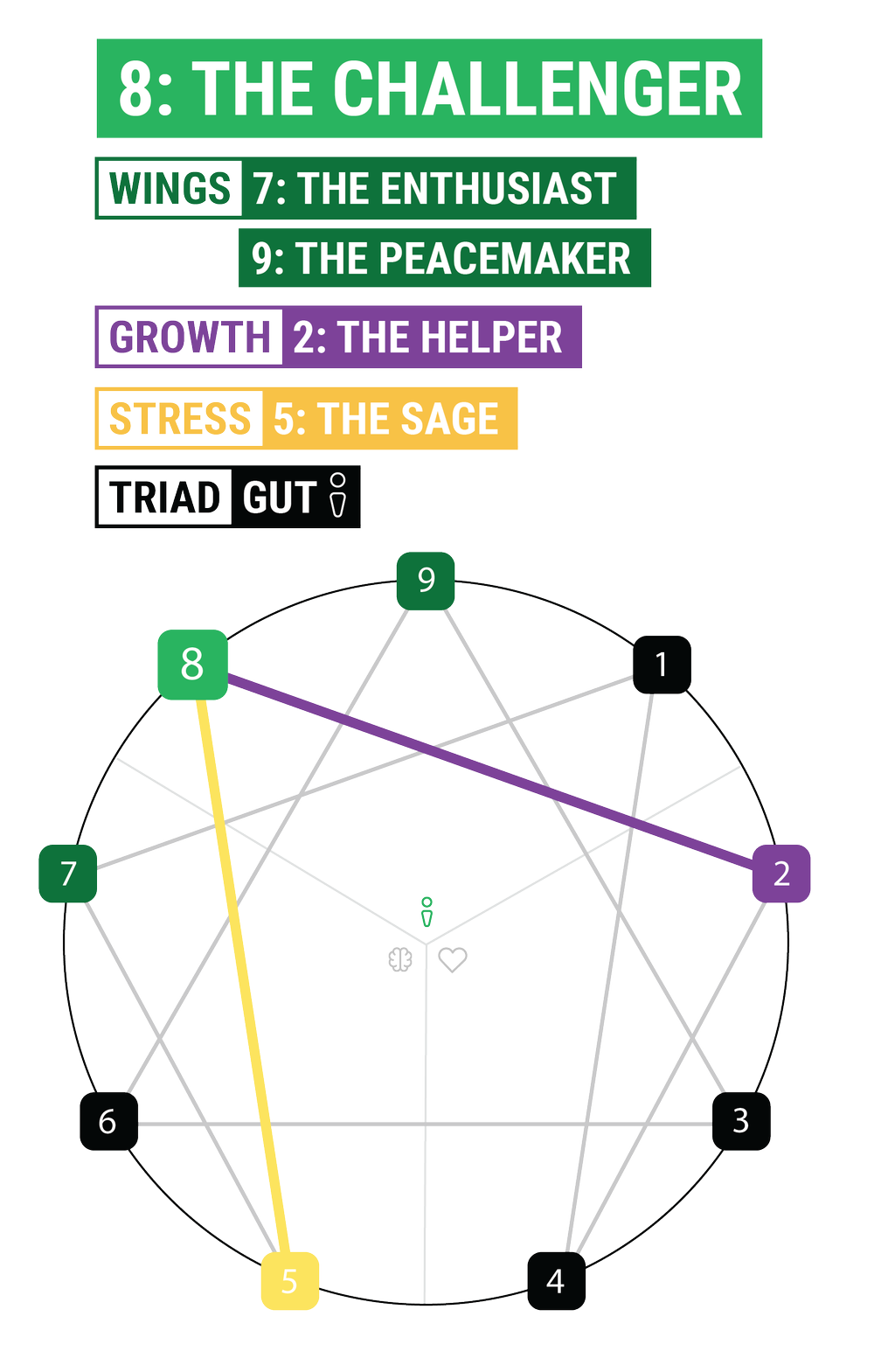
Stress & Growth Paths for Type 8s
Under Stress: When Control Becomes a Shield
When overwhelmed, Type 8s move toward the reactive emotions of Type 5. This can look like:
👉 Withdrawing to strategize → I’ll figure this out on my own.
👉 Becoming detached and overly analytical → I need all the facts before I act.
👉 Suppressing emotions → Feelings don’t solve problems.
👉 Doubting who to trust → I can’t rely on anyone but myself.
💡 Coaching Tip: Stress can push Type 8s into isolation and hyper-independence, making it harder to ask for help. If you notice yourself pulling away, pause and ask:
❓ Am I avoiding connection because I don’t trust others, or because I don’t want to be vulnerable?
❓ Who is one person I can lean on for support right now?
💭 Growth happens when you allow others to support you, not just when you stand strong alone.
In Growth: Embracing the Heart of Type 2
At their best, Type 8s integrate the compassion and relational warmth of Type 2. Growth looks like:
✅ Leading with both strength and heart—learning that power is more impactful when paired with care.
✅ Building trust through openness—allowing others to step up instead of doing everything solo.
✅ Balancing action with connection—understanding that relationships are as valuable as results.
✅ Using strength to uplift, not just to protect—channeling passion into advocacy, not just control.
💡 Coaching Tip: Try a “trust-building exercise” this week. Instead of taking over, ask yourself:
❓ What’s one way I can invite collaboration instead of assuming I need to lead alone?
❓ How can I show care in action—not just through strength, but through connection?
💭 True power comes not just from control but from empowering others.
Key to Managing Stress: The Power of Trust
The real growth path for Type 8s isn’t about losing strength—it’s about learning when to soften and let others in.
✔ Shift from independence to interdependence → Leadership isn’t about doing it all yourself—it’s about building strong teams you can rely on.
✔ Balance action with reflection → Strength isn’t just about pushing forward, it’s also about knowing when to pause.
✔ Redefine what power means → True strength isn’t just about being in control—it’s about using influence to create lasting impact.
💡 Coaching Insight: Type 8s thrive when they learn that trust doesn’t make them weak—it makes them even stronger. If you’re feeling overwhelmed, ask yourself:
❓ Am I holding on too tightly because I don’t trust others, or because I don’t trust myself to be vulnerable?
❓ What would happen if I let go, just a little?
💭 The fastest way to grow isn’t through more control—it’s through trust, connection, and knowing when to share the load.
Coaching Tips for Type 8s
1. Shift from Controlling to Empowering Leadership
Try this: Instead of taking charge in every situation, ask your team: What do you think is the best course of action? and let them lead.
💡 Coaching Insight: Type 8s are natural leaders, but true leadership isn’t just about taking control—it’s about developing others to step up with confidence. By trusting your team, you create a culture of empowerment, not just authority.
2. Reframing Conflict: From Confrontation to Collaboration
Try this: Before reacting to a disagreement, pause and ask: Am I trying to win this, or am I trying to understand?
💡 Coaching Insight: Type 8s are bold communicators, but directness can sometimes feel intimidating to others. Instead of pushing your point harder, approach conflict with curiosity—seeking mutual understanding instead of dominance.
3. Balancing Strength with Vulnerability
Try this: The next time you feel the urge to power through a challenge alone, share your thoughts with someone you trust and ask for their perspective.
💡 Coaching Insight: Type 8s are wired for independence, but showing vulnerability strengthens relationships. Letting others see your fears or uncertainties doesn’t make you weak—it makes you a more respected and relatable leader.
4. Channeling Energy into Strategic Patience
Try this: Instead of jumping into action immediately, ask yourself, Will this decision still feel right tomorrow?
💡 Coaching Insight: Type 8s thrive in fast-paced, high-pressure situations, but not everything requires immediate action. Practicing strategic patience allows you to make smarter, more sustainable decisions—without burning out or overwhelming your team.
How Cloverleaf Helps Type 8s Thrive
You already know how to take charge, make bold moves, and push through obstacles. But sustaining success without burning out—or pushing others away—requires more than just strength. It takes balance, trust, and strategic influence.
☘️Cloverleaf’s personalized coaching insights help Type 8s:
✅ Channel their intensity into leadership that empowers rather than overwhelms.
✅ Build trust and collaboration—leading with strength while allowing space for others to contribute.
✅ Recognize when to soften their approach—so passion doesn’t come across as forcefulness.
✅ Manage stress without powering through—learning when to push forward and when to pause.
👉 And the best part? These insights don’t sit in a report—you get them exactly when you need them. Whether it’s a reminder before a tough conversation, a coaching tip in your inbox, or a team insight inside your daily tools, Cloverleaf helps you to keep growing in real time.
The Enthusiast: More Than Just Fun-Loving
You bring energy, excitement, and possibility into every situation. Where others see limits, you see opportunities. You’re wired for adventure, always looking for the next big idea, experience, or challenge to keep life exciting.
But here’s the thing—your drive for excitement isn’t just about avoiding boredom. It’s about staying engaged, expanding your world, and making sure life is full of rich experiences.
Whether it’s brainstorming innovative solutions, motivating your team, or finding creative ways to navigate challenges, you have a gift for turning even the most mundane moments into something inspiring.
But with that excitement comes restlessness. The need to always move forward. The fear of missing out. The discomfort of staying in one place for too long. The voice in your head that says, “What if there’s something better out there?”
You’re not just about fun and spontaneity—you’re about vision. And that’s what makes you an Enthusiast. This guide will help you harness your strengths, find balance, and grow in ways that allow you to fully enjoy life—without constantly chasing the next thing.
The Enneagram Guide To Healthy Teams
See How High-Performing Teams Use the Enneagram to Strengthen Collaboration
Core Motivations & Fears of Type 7s
A common misconception about Type 7s is that they’re just thrill-seekers who can’t sit still. In reality, Sevens aren’t simply chasing fun for the sake of it. You’re driven by a deep need for freedom, possibility, and exploration—whether that’s through new ideas, experiences, or connections.
Type 7s are one of the most dynamic Enneagram types, bringing energy, optimism, and curiosity into everything they do. You thrive on variety and excitement, always looking ahead to what’s possible rather than dwelling on limitations. Your enthusiasm is contagious, making you a natural motivator and idea-generator on any team.
But beneath this drive for adventure lie some powerful fears:
- Fear of being trapped—whether in routines, commitments, or emotional pain. You crave movement and options.
- Fear of missing out—on experiences, opportunities, or a better path. This can lead to constantly seeking the next big thing.
- Fear of discomfort—whether physical, emotional, or psychological. Slowing down or sitting with difficult emotions can feel overwhelming.
This guide will help you understand what truly drives you, how to make the most of your strengths, and how to find deeper fulfillment—not just through chasing excitement but by fully engaging with the present moment.
Strengths of Enneagram Type 7: The Enthusiast
As a Type 7, your strengths don’t just make you energetic—they make you an inspiration to those around you. You’re not just about having fun; you bring vision, possibility, and innovation into everything you do.
Core Strengths of Enneagram 7
☘️ Optimistic & Resilient – You naturally see the bright side and bounce back quickly from setbacks, helping teams stay motivated.
☘️ Quick-Thinking & Adaptable – Your ability to think on your feet allows you to thrive in fast-changing environments and tackle unexpected challenges.
☘️ Creative & Visionary – You don’t just accept what is—you dream up what could be, bringing fresh ideas and innovative solutions to the table.
☘️ Charismatic & Engaging – Your enthusiasm is contagious, making you a natural leader in social situations and a motivator for teams.
☘️ Future-Oriented & Opportunity-Driven – You see potential everywhere, always looking for the next big thing to explore, build, or improve.
☘️ Spontaneous & Fun-Loving – You bring joy and excitement to any space, making work and life more engaging for those around you.
What This Means in Work & Life
- Your energy is a gift—you bring fresh ideas, excitement, and creative problem-solving to any project.
- Your adaptability makes you thrive in dynamic, fast-paced roles where change is constant.
- But—your desire for new experiences can lead to distraction or trouble following through.
- This guide will help you harness your enthusiasm while staying focused so you can maximize your impact without feeling scattered.
💡 Coaching Insight: Your visionary thinking is powerful—but great ideas need follow-through to make an impact. Try this:
✔ Instead of jumping to the next exciting idea, ask yourself: How can I bring this idea to completion?
✔ Before moving on, celebrate what you’ve accomplished—acknowledging progress helps build long-term success.
Challenges & Growth Opportunities for Enneagram Type 7
Your energy and enthusiasm make you a driving force, but your love for excitement can sometimes lead to distraction, impulsiveness, or avoidance of difficult emotions. You thrive when you’re engaged and inspired, but how do you stay grounded and follow through without losing your spark?
⚠️ Common Challenges for Type 7s
👉 Difficulty with Follow Through – You love new ideas and experiences, but sticking with commitments until completion can be a struggle.
👉 Avoiding Pain & Discomfort – You naturally seek joy and positivity, but this can lead to avoiding difficult emotions instead of working through them.
👉 Overcommitting & Scattering Focus – You say yes to opportunities quickly, but this can spread your energy too thin, making it hard to stay present.
👉 Restlessness & FOMO – You want to experience everything, which can make it hard to appreciate what’s in front of you without looking for the next thrill.
👉 Struggles with Routine & Structure – You thrive on freedom and variety, but sometimes structure is necessary to turn ideas into reality.
🌱 Growth Strategies for Type 7s
✅ Commit to Completion – Before starting something new, ask yourself: Have I finished what I already started? Small wins build momentum.
✅ Embrace ALL Emotions – Joy is powerful, but growth happens when you allow yourself to feel everything—even discomfort. Reflection builds resilience.
✅ Prioritize What Matters – Instead of saying yes to everything, identify what aligns most with your values and long-term goals.
✅ Find Joy in the Present – Excitement isn’t just in the next big adventure—it’s in deep connections, meaningful work, and small daily joys.
✅ Use Structure as a Tool – Balance freedom with routine. Set small goals and check in with yourself to stay focused without feeling trapped.
💡 Coaching Insight: Type 7s grow the most when they learn that joy isn’t just in chasing the next big thing—it’s in fully experiencing the moment they’re in right now.
✔ New Habit: Before jumping to the next project or distraction, pause and ask:
💬 What would it look like to see this through?
Type 7 at Work: Strengths & Strategies for Success
Enneagram Type 7s bring enthusiasm, creativity, and adaptability to the workplace. Whether they’re brainstorming new ideas, inspiring their team, or embracing change, Sevens thrive when they have freedom, variety, and opportunities for innovation. However, their fast-paced mindset can sometimes make it difficult to stay focused or follow through on long-term projects.
How Sevens Lead
✔️ Inspire teams with vision and enthusiasm—keeping morale high and energy fresh.
✔️ Encourage risk-taking and creativity, helping teams see possibilities others might miss.
✔️ Bring a sense of adventure to leadership, motivating people to think outside the box.
✔️ May struggle with follow-through, preferring to start new ideas rather than maintain ongoing projects.
How Sevens Work on a Team
✔️ Thrive in dynamic, fast-moving environments that offer variety and excitement.
✔️ Bring optimism and spontaneity—helping teams stay engaged and adaptable.
✔️ Prefer flexibility over rigid structure, which can sometimes make them seem unfocused.
✔️ Can struggle with routine or long-term planning, needing accountability to stay on track.
Biggest Workplace Challenge:
🛠 Overcoming the “Shiny Object Syndrome”
Sevens love new projects, new ideas, and fresh experiences, but sticking with commitments can be difficult. If you’ve ever jumped from one exciting idea to the next—leaving a trail of half-finished projects behind—you know this challenge well.
📍 Example: Imagine you’re leading a brainstorming session, and your team is excited about an innovative idea. Your instinct? Move on to the next big thing once the initial excitement wears off. But what if, instead, you chose one idea to follow through on completely? Seeing an idea come to life from start to finish can be just as exhilarating as starting something new.
Communication Style
✔ Energetic and engaging—Sevens bring life to conversations.
✔ Big-picture thinkers—they focus on possibilities rather than small details.
✔ Can be easily distracted—they may jump topics mid-conversation.
✔ Grow by practicing active listening and staying present in discussions.
Ideal Work Environments for Type 7s
Sevens thrive in workplaces that encourage innovation, flexibility, and personal growth. They do best in:
✔️ Creative industries (marketing, entertainment, design, entrepreneurship).
✔️ Fast-paced, ever-changing environments (startups, event planning, sales).
✔️ Roles that involve brainstorming, public speaking, or travel.
✔️ Companies that offer variety, excitement, and freedom to explore new ideas.
☘️ How Cloverleaf’s Enneagram Tips Can Help You:
You don’t need another one-time personality report—you need daily coaching insights that show up right when you need them. Whether it’s staying focused on long-term goals, creating structure without feeling restricted, or turning ideas into action, Cloverleaf helps you grow in a way that keeps your enthusiasm alive without losing momentum.
📍 Take the Free Enneagram Test & Get Personalized Coaching →
💡 Coaching Insight: Sevens thrive on excitement, but too many new ideas can lead to unfinished projects. Learning to channel inspiration into follow-through helps turn creativity into real impact.
Type 7 in Relationships: Communication & Emotional Growth
Enneagram Type 7s bring excitement, adventure, and spontaneity to their relationships. They believe care is shown through fun experiences, shared excitement, and keeping life lighthearted. Whether it’s planning a last-minute road trip or turning an ordinary moment into something memorable, Sevens naturally bring joy and playfulness into their relationships.
However, their avoidance of negativity or discomfort can sometimes create challenges in deeper emotional connections. When things get heavy or serious, they may instinctively distract, reframe, or move on to the next exciting thing—sometimes leaving their partner or loved ones feeling unheard.
How Type 7s Express Care
✔ Through shared experiences, adventure, and spontaneity—Sevens believe love is something to be enjoyed and celebrated.
✔ By encouraging optimism and positivity—lifting others up when they’re feeling down.
✔ Bringing humor and lightness to difficult situations—helping others see possibilities instead of problems.
How Type 7s Receive Care Best
✔ Feeling free to explore, dream, and be spontaneous—Sevens thrive when their sense of excitement is encouraged.
✔ Being accepted in both their joyful and serious moments—knowing they don’t always have to be the “fun one” to be loved.
✔ Having a safe space to process difficult emotions—without feeling rushed to “move on” or “look at the bright side.”
⚠️ Potential Relationship Struggles
👉 Struggling with emotional depth—Sevens prefer to focus on the positive, sometimes avoiding harder conversations.
👉 Commitment challenges—not necessarily in relationships, but in staying emotionally present instead of looking for an escape.
👉 Avoiding serious discussions—Sevens may deflect or distract rather than sit in discomfort.
Practical Relational Tip for Type 7s
Shifting from Escaping to Engaging
When things feel heavy, your instinct may be to lighten the mood, distract, or move on to something fun. But deep relationships require both joy and vulnerability. Instead of avoiding hard conversations, try leaning into them—one step at a time.
🚫 This is too serious. Let’s not dwell on it.
✅ I know this is important to you. I’m here to listen.
🚫 It’s not a big deal! Let’s go do something fun instead.
✅ I don’t like sitting in negative feelings, but I want to understand how you’re feeling.
🚫 Can we just focus on the good things?
✅ I know I focus on the positive a lot, but I also want to be present for the hard stuff.
By embracing both the highs and lows, Sevens create deeper, more meaningful connections—without losing their natural sense of joy.
💡 Coaching Insight: Sevens thrive when they allow space for all emotions, not just the positive ones. Instead of seeing discomfort as something to escape, try viewing it as part of the adventure of connection.
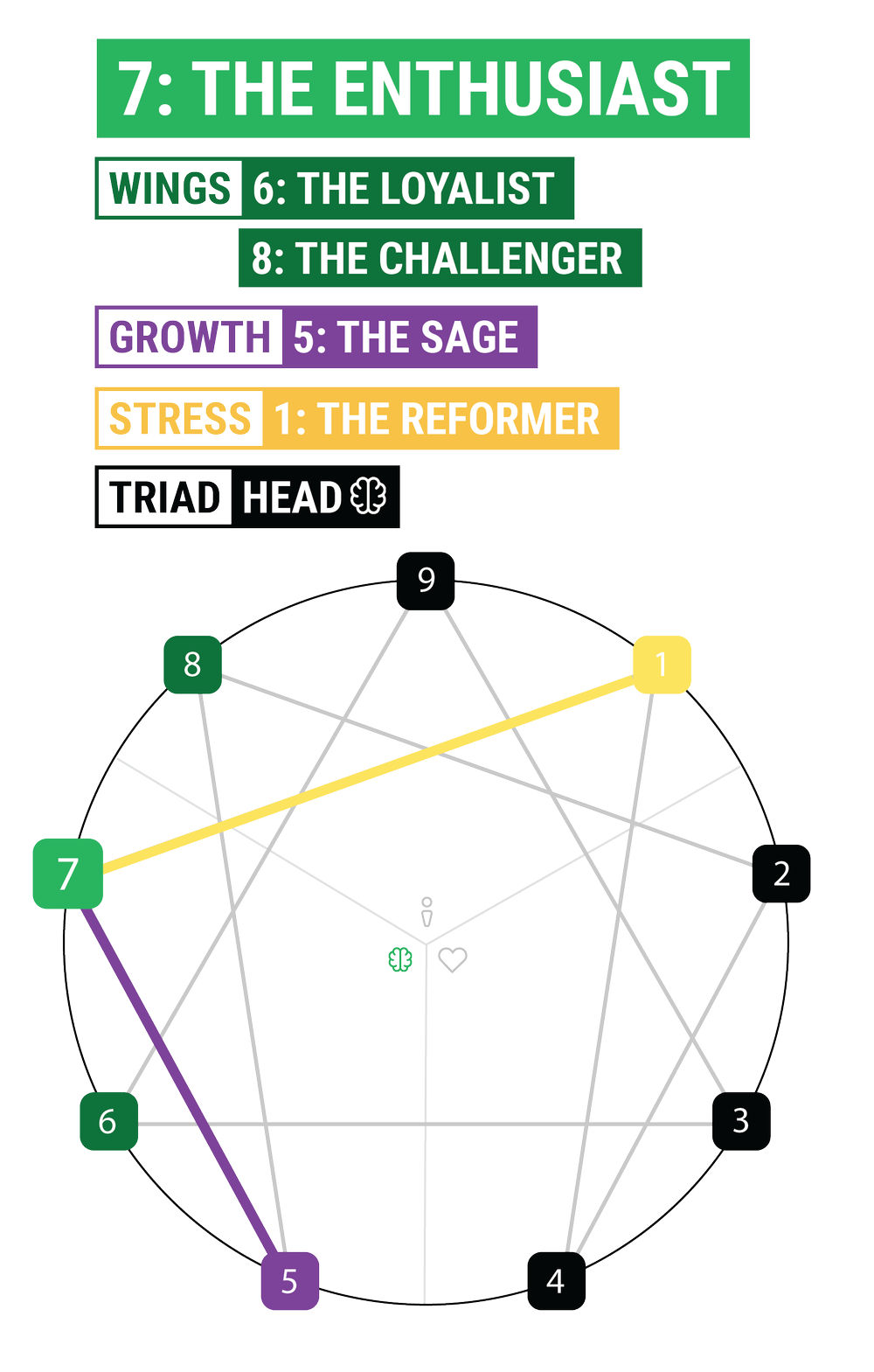
Stress & Growth Paths for Type 7s
Under Stress: When Restlessness Turns to Anxiety
When overwhelmed, Type 7s move toward the reactive emotions of Type 1. This can look like:
➡ Becoming overly critical → Why am I not handling this better?
➡ Feeling trapped → I don’t have an escape route—this is too much.
➡ Fixating on what’s wrong → Instead of looking for possibilities, focusing on limitations.
➡ Getting rigid and controlling → Trying to over-plan or force structure to regain a sense of security.
💡 Coaching Tip: Stress can make Sevens hyper-aware of what’s going wrong instead of what’s possible. When you catch yourself feeling stuck, pause and ask:
❓ Am I reacting to a real limitation, or am I just feeling restricted?
❓ What’s one small action I can take right now to feel a sense of movement?
Progress happens when you reframe control—not as planning every step, but as choosing your response in the moment.
In Growth: Embracing the Depth of Type 5
At their best, Type 7s integrate the focus and wisdom of Type 5. Growth looks like:
✔ Deepening instead of constantly expanding—sticking with something long enough to master it.
✔ Allowing space for quiet reflection—knowing that stillness isn’t stagnation.
✔ Being present in discomfort—realizing that avoiding pain doesn’t make it disappear.
✔ Committing to meaningful experiences—not just chasing the next exciting thing, but fully engaging in what matters.
💡 Coaching Tip: Try a “slow and steady” challenge this week. Instead of jumping to the next exciting idea, ask yourself:
❓ What’s one thing I can commit to exploring more deeply?
❓ How can I bring my full attention to this moment instead of looking for what’s next?
💭 Reminder: You don’t have to choose between adventure and depth—you can have both.
Key to Managing Stress: Finding Freedom in Focus
The real growth path for Type 7s isn’t about eliminating excitement—it’s about balancing it with presence.
✔ Shift from distraction to depth → Instead of chasing endless possibilities, commit to one and experience it fully.
✔ Redefine what “freedom” means → True freedom comes from choosing where to invest your energy, not avoiding commitment.
✔ Practice sitting with discomfort → Growth happens when you learn to hold both joy and challenge without running away.
💡 Coaching Insight: Sevens thrive when they balance spontaneity with reflection. If you’re feeling overwhelmed, ask yourself:
❓ Am I avoiding something important by staying busy?
❓ How would it feel to stay present with what’s here instead of chasing what’s next?
The fastest way to grow isn’t through constant movement—it’s through mindful engagement with the moment.
Coaching Tips for Type 7s
1. Shift from Distraction to Deep Engagement
Try this: Instead of bouncing from one idea to the next, pick one task or project to focus on fully this week. Set a timer for 30 minutes and commit to staying present—no multitasking, no distractions.
💡 Coaching Insight: Sevens thrive on excitement, but meaningful growth comes from depth, not just variety. Learning to engage fully allows you to experience the richness of the present moment instead of chasing what’s next.
2. Balancing Freedom with Follow-Through
Try this: Before saying yes to a new opportunity, pause and ask yourself: Does this align with my bigger goals, or am I just avoiding boredom?
💡 Coaching Insight: Sevens love to keep their options open, but too many options can lead to feeling scattered. Prioritizing what truly matters helps you experience freedom in a way that feels fulfilling, not just fleeting.
3. Turning Restlessness into Reflection
Try this: The next time you feel an urge to escape discomfort, pause and sit with it for 60 seconds. Ask yourself: What am I feeling right now? What do I actually need?
💡 Coaching Insight: Sevens tend to move away from discomfort too quickly. But sometimes, the growth you seek is on the other side of what you’re avoiding.
4. Strengthening Relationships by Staying Present
Try this: In your next conversation, challenge yourself to listen without thinking ahead to what you’ll say next. Let the other person finish completely before responding.
💡 Coaching Insight: Your enthusiasm is contagious, but sometimes your excitement to contribute can make others feel unheard. Practicing deep listening strengthens your relationships and helps you feel more connected.
How Cloverleaf Helps Type 7s Thrive
You already know how to bring energy, enthusiasm, and innovative ideas to the table. But sustaining success without burnout requires more than just excitement—it requires focus, follow-through, and balance.
☘️ Cloverleaf’s personalized coaching insights help Type 7s:
✅ Balance enthusiasm with follow through—so great ideas turn into real results.
✅ Stay present and engaged—learning to appreciate what’s happening now instead of chasing the next thrill.
✅ Improve emotional resilience—so challenges don’t feel like roadblocks to your happiness.
✅ Foster deeper connections—by learning to slow down and be fully present in relationships and teamwork.
👉 And the best part? These insights don’t just sit in a report—you get them exactly when you need them. Whether it’s a reminder before a meeting, a coaching tip in your inbox, or a team insight inside your daily tools, Cloverleaf helps you grow in real time—without losing your natural spark.
Want to learn about the rest of the Enneagram Types? Read more about the Enneagram:1,2,3,4,5,6,8, and 9!
Enneagram Type 6, The Loyalist: More Than More Than Security Seeking
You see what others don’t—the risks, the uncertainties, the hidden vulnerabilities. While others move forward without a second thought, you instinctively scan for what could go wrong, ensuring that nothing important gets overlooked.
But here’s the thing—your vigilance isn’t just about caution. It’s about protection, trust, and responsibility. You’re wired to anticipate challenges, create stability, and ensure that the people and systems around you are strong, secure, and prepared.
Whether it’s being the reliable team player, asking the tough questions, or spotting potential pitfalls before anyone else, you bring a depth of foresight and commitment that makes you invaluable.
But with that strength comes internal tension—the anxiety of the unknown, the pressure to stay prepared, and the fear of being let down. The voice in your head that says, What if I don’t see the problem in time?
You’re not just about loyalty and security—you’re about building trust, creating structure, and fostering resilience. This guide will show you how to maximize your strengths, navigate uncertainty with confidence, and grow in ways that let you trust yourself and others more deeply.
The Enneagram Guide To Healthy Teams
See How High-Performing Teams Use the Enneagram to Strengthen Collaboration
Core Motivations & Fears of Type 6s
A common misconception about Type 6s is that they’re just worriers who overthink everything. In reality, your cautious nature isn’t about fear for its own sake—it’s about preparedness, security, and trust. You’re motivated by a deep need to feel safe, supported, and part of something stable—whether that’s a team, a relationship, or a system you believe in.
Type 6s are one of the most loyal, responsible, and community-driven Enneagram types, making up a significant portion of over 883,560 Cloverleaf Enneagram respondents. You are the people who ask the necessary questions, anticipate problems, and ensure that no one is left unprotected or unprepared.
But beneath these motivations lie some powerful fears:
- Fear of uncertainty—Not knowing what’s coming next can leave you feeling anxious or uneasy.
- Fear of betrayal—You want to trust, but the idea of being misled or abandoned is unsettling.
- Fear of making the wrong decision—Doubt can creep in, making it difficult to fully trust yourself.
- Fear of lacking support—You thrive in teams and relationships where reliability is mutual.
In this guide, we’ll explore what makes Type 6s tick—your strengths, challenges, and how you can grow without feeling like you have to second-guess yourself or the people around you.
Strengths of Enneagram 6: The Loyalist
As a Type 6, your strengths don’t just make you dependable—they make you the backbone of trust, stability, and preparedness in any group. You’re not just about playing it safe; you bring loyalty, problem-solving, and a deep sense of responsibility to the people and systems you believe in.
Core Strengths of Enneagram 6
☘️ Loyal & Committed – You stand by the people, teams, and causes you trust, offering unwavering support.
☘️ Highly Responsible – You take commitments seriously and follow through, ensuring things get done the right way.
☘️ Strong Problem-Solver – You anticipate challenges before they arise, creating backup plans that keep everyone prepared.
☘️ Team-Oriented & Trustworthy – You value collaboration and thrive in environments where mutual support is key.
☘️ Cautious but Courageous – While you assess risks carefully, you also step up when needed, showing bravery in the face of uncertainty.
☘️ Deeply Intuitive About People – You have a strong sense of who can be trusted, helping build solid, reliable relationships.
What This Means in Work & Life
Your strengths make you an invaluable team player and leader—someone who brings stability, foresight, and trust to any group. You help create secure environments where people feel supported and prepared.
But these same strengths can turn into challenges if taken too far—overthinking, skepticism, or hesitancy to take action (we’ll explore this more in the next section).
💡 Coaching Insight: Your instinct to prepare and protect is powerful, but it doesn’t mean you have to carry the weight alone. The best leaders trust both their instincts and the people around them. Instead of feeling like you have to solve everything on your own, experiment with delegation:
Instead of taking on every problem yourself, ask: Who else can help with this?
Instead of assuming things might go wrong, consider: What’s the best-case scenario here?
Challenges & Growth Opportunities for Enneagram Type 6
Your loyalty, preparedness, and sense of responsibility make you a valuable team member and friend. But your desire for security can also create internal struggles. When uncertainty looms, your mind races with what-ifs, worst-case scenarios, and backup plans, making it hard to relax or trust the process.
So, how do you stay prepared without becoming consumed by worry?
⚠️ Common Challenges for Type 6s
👉 Overthinking & Worst-Case Scenarios – Your mind is constantly scanning for possible risks, which can lead to analysis paralysis or unnecessary stress.
👉 Difficulty Trusting Yourself – You often seek outside validation before making decisions, fearing you might miss something important.
👉 Skepticism Toward Change – You prefer stability and predictability, so sudden changes or unclear situations can feel overwhelming.
👉 Struggles with Confidence – You are deeply competent, but self-doubt can make you second-guess your abilities or hesitate before taking action.
👉 Emotional Reactivity in Stressful Situations – When anxiety builds, it can lead to either shutting down or becoming reactive, especially if you feel unsupported.
🌱 Growth Strategies for Type 6s
✅ Reframe Uncertainty as Opportunity – Instead of fearing what could go wrong, try asking: “What’s the best possible outcome?” Learning to expect good things builds confidence and reduces anxiety.
✅ Strengthen Self-Trust – Your instincts are sharper than you think. Try making small decisions without seeking outside input, and remind yourself of past times you handled things well.
✅ Challenge Fear-Based Thinking – When worst-case scenarios take over, pause and ask: Is this a real problem, or just my fear talking? This shift can help you separate perceived threats from actual ones.
✅ Lean Into Change with Small Steps – Instead of resisting change altogether, break it into manageable steps. Focus on what you CAN control, rather than what’s unknown.
✅ Acknowledge Your Strengths – You bring stability, dedication, and insight to any situation. Recognizing your value increases confidence and quiets inner doubt.
✅ Practice Grounding Techniques – When anxiety spikes, focus on what is real in the moment. Deep breathing, movement, or writing down three things you know to be true can help.
💡 Coaching Insight: Type 6s grow the most when they trust themselves as much as they trust their support systems. Learning to balance caution with confidence allows you to move forward without feeling stuck in fear.
Type 6 at Work: Strengths & Strategies for Success
Enneagram Type 6s bring dedication, preparedness, and strong problem-solving skills to the workplace. Whether they’re leading a team, analyzing risks, or ensuring tasks are done thoroughly, Sixes excel at keeping things running smoothly—especially in unpredictable situations.
How Sixes Lead
✔ Lead with caution and preparedness—ensuring stability before taking action.
✔ Are loyal and protective of their team, ensuring fairness and security.
✔ Encourage collaboration and group problem-solving, valuing input from others.
✔ Can sometimes hesitate before making decisions, second-guessing or seeking reassurance.
How Sixes Work on a Team
✔ Thrive in structured, well-organized teams where roles and expectations are clear.
✔ Help identify risks and challenges before they become problems.
✔ Are supportive teammates, offering loyalty and consistency.
✔ Can struggle with overanalyzing decisions, leading to hesitation or self-doubt.
Biggest Workplace Challenge:
🛠 Letting Go of “What If Everything Goes Wrong?” Thinking
Sixes are planners and troubleshooters, which makes them great at preventing problems before they arise. But sometimes, this anticipatory thinking turns into over-worrying—causing delays, indecision, or unnecessary stress.
📍 Example: Imagine you’re about to present a new initiative at work, but you keep running through every possible scenario where it might fail. Instead of trusting your preparation, you spend extra time refining details—when, in reality, you’re already ready.
✔ New Habit: Shift from What if this goes wrong? to What’s the best possible outcome?
✔ Reframe hesitation: Instead of second-guessing, set a decision deadline and commit.
Communication Style
✔ Thoughtful and precise in communication, ensuring clarity.
✔ Ask clarifying questions to make sure they understand expectations.
✔ Value collaboration and shared decision-making but may seek too much reassurance.
✔ Can benefit from trusting their instincts rather than over-explaining concerns.
Ideal Work Environments for Type 6s
Sixes excel in roles that value preparation, reliability, and structure. They thrive when they have clear expectations, trustworthy leadership, and a sense of job security. Some of the best industries for Sixes include:
✔ Security & Risk Management
✔ Healthcare & Emergency Response
✔ Finance & Compliance
✔ Project Management & Operations
✔ Education & Research
☘️ How Cloverleaf’s Enneagram Tips Can Help You:
You don’t need another one-time personality report—you need daily coaching insights that help you build confidence, trust, and resilience. Whether it’s learning to manage uncertainty, communicate with more assurance, or lead with confidence, Cloverleaf helps you grow without fear holding you back.
📍 Take the Free Enneagram Test & Get Personalized Coaching →
💡 Coaching Insight: Sixes thrive when they trust their instincts and lean into confidence instead of overanalyzing. Building self-trust helps prevent unnecessary stress and improves decision-making.
Type 6 in Relationships: Communication & Emotional Growth
Enneagram Type 6s bring loyalty, dependability, and a deep sense of commitment to their relationships. They believe love is shown through being there for others, offering protection, and creating a sense of security, but their desire for reassurance and certainty can sometimes create challenges in emotional connection.
How Type 6s Express Care
✔ Loyalty and steadfast support—They stand by their loved ones no matter what.
✔ Problem-solving and planning—They think ahead to prevent potential issues.
✔ Checking in and being thoughtful—They ensure their relationships feel safe and secure.
How Type 6s Receive Care Best
✔ Reassurance and consistency—They thrive when they know where they stand in relationships.
✔ Honest and direct communication—They appreciate clarity rather than ambiguity.
✔ Knowing they can rely on others—Trust is built through consistent follow-through.
⚠ Potential Relationship Struggles
👉 Overanalyzing the relationship—Sixes may second-guess where they stand, leading to unnecessary worry.
👉 Seeking too much reassurance—Wanting affirmation can sometimes feel overwhelming to their partner.
👉 Difficulty trusting fully—They may hesitate before fully opening up, waiting to see if someone is truly reliable.
Practical Relational Tip for Type 6s
Shifting from “Do You Really Recognize Me?” to “I Trust Our Connection”
Sixes naturally scan for potential risks in relationships, which can sometimes make them seek constant reassurance. Instead of overanalyzing, focus on trusting what is already there.
🚫 Are you sure everything is okay between us?
✅ I value our connection and want to make sure we’re both feeling good about things.
🚫 Do you recognize me?
✅ I appreciate you and everything you bring to this relationship.
🚫 What if something goes wrong?
✅ We’ve handled challenges before—I trust we’ll figure things out.
💡 Coaching Insight: Sixes thrive when they shift from fear of uncertainty to trust in connection. Practicing self-reassurance and focusing on what’s already solid helps deepen emotional bonds.
Stress & Growth Paths for Type 6s
Under Stress: When Anxiety Takes Over
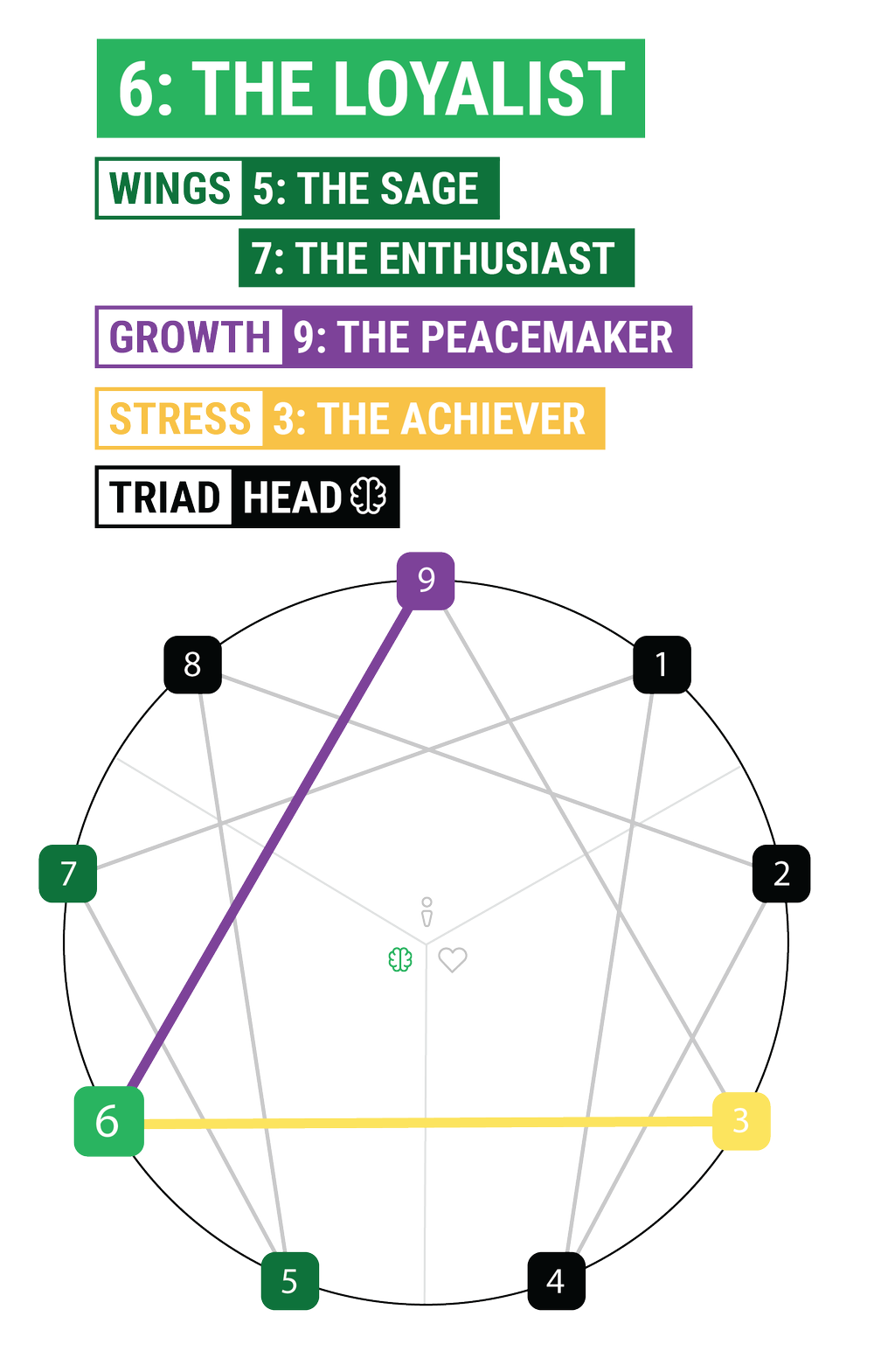
When overwhelmed, Type 6s move toward the reactive emotions of Type 3, becoming more anxious, overworked, and desperate to prove their competence. This can look like:
Overcommitting → If I stay busy, I won’t have time to worry.
Doubting their decisions → What if I made the wrong call?
Seeking excessive reassurance → Do you really think this will be okay?
Mentally preparing for worst-case scenarios → They may become hyper-vigilant, seeing problems before they happen—even when everything is fine.
💡 Coaching Tip: When stress kicks in, Sixes can pause and ground themselves by asking:
❓ Is this a real threat, or am I overestimating the risk?
❓ What past experiences prove that I can handle uncertainty?
Stress often trigger Sixes into believing they are powerless—but when they step back and trust their resilience, they can break the cycle of overthinking.
In Growth: Embracing the Steadiness of Type 9
At their best, Type 6s integrate the calm and trust of Type 9. Growth looks like:
✔ Trusting their inner wisdom—instead of looking for external validation.
✔ Letting go of unnecessary worry—recognizing that not every problem needs to be solved immediately.
✔ Finding peace in uncertainty—knowing that not everything needs a guarantee to work out.
✔ Responding with patience instead of reactivity—slowing down before jumping to worst-case scenarios.
💡 Coaching Tip: Try a grounding practice this week. Instead of second-guessing or seeking outside validation, ask yourself:
❓ What if I simply allowed things to unfold instead of anticipating problems?
❓ How can I respond with trust instead of tension?
💭 Reminder: You don’t have to eliminate all uncertainty to feel secure—you just need to trust that you’ll handle whatever comes your way.
Coaching Tips for Type 6s
1. Shift from Worry to Grounded Confidence
Try this: Instead of seeking reassurance from others, pause and ask yourself: What evidence do I have that I can handle this?
💡 Coaching Insight: Sixes thrive when they trust their own instincts. Instead of over-preparing or seeking constant validation, practice self-trust by recalling past successes—you’ve handled uncertainty before, and you will again.
2. Reframing Uncertainty: From Threat to Opportunity
Try this: The next time you feel anxious about change, replace What if this goes wrong? with What if this turns out better than I expect?
💡 Coaching Insight: Type 6s often anticipate worst-case scenarios, but many uncertainties bring growth, not danger. Training your mind to see possibilities—rather than just risks—helps you move forward with greater ease.
3. Building Inner Security Instead of External Dependence
Try this: Before seeking reassurance, take a deep breath and ask: What do I already know to be true?
💡 Coaching Insight: Sixes naturally look to authority figures, trusted friends, or mentors for validation. But real security doesn’t come from outside approval—it comes from trusting your own knowledge and experience.
4. Strengthen Your Leadership by Owning Your Voice
Try this: Instead of waiting for permission to speak up, practice stating your thoughts with confidence:
💬 I believe this approach will work because…
💡 Coaching Insight: Sixes are insightful, strategic thinkers, but their hesitation can sometimes keep them from fully stepping into leadership. Your ideas are valuable—practice trusting and sharing them.
By practicing self-trust, reframing uncertainty, and owning your voice, you’ll build greater confidence and resilience—without needing constant reassurance.
How Cloverleaf Helps Type 6s Thrive
You already know how to plan ahead, assess risks, and support your team. But thriving as a Six isn’t just about staying prepared—it’s about learning to trust yourself, embrace adaptability, and channel your strengths into confidence rather than worry.
☘️ Cloverleaf’s personalized coaching insights help Type 6s:
✅ Build self-trust—learn to rely on your own judgment instead of always seeking reassurance.
✅ Manage uncertainty with confidence—seeing change as an opportunity rather than a threat.
✅ Improve decision-making—balancing caution with action so you don’t get stuck in analysis paralysis.
✅ Strengthen leadership & communication—so your careful, strategic thinking translates into decisive, respected leadership.
👉 And the best part? These insights don’t sit in a report—you get them exactly when you need them. Whether it’s a reminder before a big decision, a coaching tip in your inbox, or a team insight inside your daily tools, Cloverleaf keeps you growing in real time.
Want to learn about the rest of the Enneagram Types? Read more about the Enneagram: 1, 2, 3, 4, 5, 7, 8, and 9!
The Sage: More Than a Thinker
You don’t just absorb knowledge—you pursue mastery. Where others skim the surface, you go deep, unraveling complexities, questioning assumptions, and seeking truth beyond what’s readily available.
Your mind is your most powerful tool, and you wield it with precision—analyzing, strategizing, and synthesizing information in ways that turn the abstract into the actionable. Whether it’s solving intricate problems, innovating behind the scenes, or uncovering hidden insights, you thrive when given the freedom to explore and think independently.
But with that independence comes the risk of detachment. The more you retreat into your inner world, the harder it can be to engage in the present. While others may crave connection, you often crave space—time to process, reflect, and conserve your energy. You may feel drained by excessive social demands or hesitant to engage in situations where you aren’t the expert.
You’re not just a thinker—you’re a Sage. Your wisdom isn’t just in what you know but in how you apply it. This guide will help you maximize your strengths, balance intellect with real-world connection, and thrive without feeling overwhelmed.
The Enneagram Guide To Healthy Teams
See How High-Performing Teams Use the Enneagram to Strengthen Collaboration
Core Motivations & Fears of Type 5s
A common misconception about Type 5s is that they are emotionally detached or socially withdrawn. In reality, Fives aren’t avoiding people—they’re preserving their energy. You’re motivated by a deep need for understanding, autonomy, and mastery. You don’t just want knowledge—you want to feel fully equipped before engaging with the world.
Fives make up a unique and highly analytical part of the Enneagram, often bringing insight, logic, and strategic problem-solving into their work and relationships. You thrive when you have the space to think, process, and explore ideas without pressure.
But beneath this quest for knowledge lie some powerful fears:
- Fear of incompetence—the worry that you won’t know enough or that others will expose a gap in your expertise.
- Fear of emotional overwhelm—feeling drained by social expectations or pressured to express emotions you’re still processing internally.
- Fear of dependency—avoiding situations where you might have to rely on others, preferring to be fully self-sufficient.
Your intellectual depth is a strength, but it can also lead to overthinking, withdrawal, or hesitation to engage before feeling “ready.” This guide will help you:
✔ Use your deep thinking skills in ways that make an impact—rather than keeping your knowledge to yourself.
✔ Balance logic with connection—so you can build relationships without feeling drained.
✔ Develop confidence in action—learn to apply what you know instead of waiting for the perfect moment.
Strengths of Enneagram 5: The Sage
As a Type 5, your strengths go beyond intelligence—you are a master of depth and precision. You don’t just skim the surface; you immerse yourself in knowledge, uncovering insights others overlook. Where some settle for broad understanding, you pursue expertise, seeking to know more, understand better, and refine your thinking.
Your independence and analytical mind give you a unique advantage. You can see patterns others miss, break down complex problems, and remain objective even in high-pressure situations. But this same depth can sometimes create distance, making it easy to retreat into your thoughts rather than engaging with people around you.
You’re not just an intellectual—you’re a visionary. This guide will show you how to maximize your strengths, share your knowledge effectively, and thrive without feeling drained.
Core Strengths of Type 5
☘️ Deep Thinker & Expert – You don’t just learn—you master topics through focused research and independent study.
☘️ Highly Observant – You notice details, patterns, and underlying systems that others miss.
☘️ Logical & Objective – You excel at analyzing situations without emotional bias, making you a trusted problem-solver.
☘️ Independent & Self-Sufficient – You thrive when working autonomously and managing your own time.
☘️ Great Problem-Solver – You enjoy intellectual challenges and finding innovative solutions others might not consider.
☘️ Strategic & Visionary – Your ability to see long-term implications and big-picture connections helps teams think ahead.
What This Means in Work & Life
Your intellectual depth makes you a valuable expert and strategist, whether you’re solving complex problems, innovating new ideas, or guiding teams toward informed decisions. You see connections others miss, making you an essential resource in any field that values analysis, research, and insight.
But these same strengths can sometimes lead to isolation, over-intellectualizing, or difficulty engaging in collaborative environments. You may prefer independence, but great ideas gain power when shared and applied.
💡 Coaching Insight: Your knowledge is most impactful when it’s accessible. Instead of keeping insights to yourself, practice sharing ideas before they feel “perfect.” Engage in discussions, test your theories, and trust that even unfinished thoughts can add value.
✔ New Habit: When analyzing a challenge, instead of researching alone, bring your ideas to a trusted colleague or team. They may add perspectives that refine your expertise without diminishing your independence.
Challenges & Growth Opportunities for Enneagram Type 5
Your depth of knowledge and independence make you a powerful thinker and problem solver—but they can also create distance between you and the world around you. You may prefer to observe rather than engage, and when overwhelmed, your instinct might be to retreat entirely.
⚠️ Common Challenges for Type 5s
👉 Withdrawing Instead of Engaging – When faced with social demands or emotional intensity, you may retreat into solitude, leading to disconnection from others.
👉 Over-Reliance on Knowledge – You may feel you need to “know enough” before acting, which can lead to paralysis by analysis or missing opportunities.
👉 Emotional Detachment – You tend to rely on logic over feelings, which can make emotional connection challenging for both you and those around you.
👉 Struggling to Set Energy Boundaries – You conserve your energy carefully, but too much self-protection can lead to isolation or keeping people at arm’s length.
👉 Fear of Incompetence – Your drive for mastery can lead to imposter syndrome, where you hesitate to contribute because you fear not being the absolute expert.
🌱 Growth Strategies for Type 5s
✅ Engage Before You Feel “Fully Ready” – You don’t need to have all the answers before contributing. Sharing your insights in real time helps you grow and refine your expertise.
✅ Practice Small Acts of Connection – You don’t have to be overly expressive, but making an effort to check in, ask questions, or participate can build deeper relationships without draining you.
✅ Balance Thought with Action – Instead of endlessly researching, set a small challenge: What’s one action I can take with what I already know?
✅ Acknowledge Emotional Intelligence as a Strength – Facts matter, but so do feelings. Practicing curiosity about emotions—yours and others’—helps you become a more impactful leader and teammate.
✅ Expand Your Definition of Competence – True mastery isn’t just about knowledge—it’s about applying what you know and being open to learning from others.
💡 Coaching Insight: Type 5s thrive when they realize that knowledge is most valuable when shared and applied. Instead of waiting until you feel completely prepared, experiment with engaging before you feel 100% ready.
💬 New Habit: Instead of retreating when faced with social or workplace demands, ask yourself:
What’s one small way I can participate today without feeling overwhelmed?
Type 5 at Work: Strengths & Strategies for Success
Enneagram Type 5s bring deep analytical thinking, intellectual independence, and strategic problem-solving to their work. Whether researching new ideas, designing innovative solutions, or offering unique perspectives, they thrive in environments where knowledge and expertise are valued. However, their tendency to work independently and conserve energy can sometimes make collaboration a challenge.
How Type 5s Lead
✔ Lead with knowledge and insight—Fives provide well-researched, strategic leadership.
✔ Encourage autonomy—They give their teams space to think and explore ideas rather than micromanaging.
✔ Value expertise over hierarchy—They respect competence and intelligence more than formal authority.
✔ May struggle with interpersonal connection—Because they prefer logic over emotion, they might overlook the importance of team dynamics.
How Type 5s Work on a Team
✔ Bring depth and analysis—Fives ensure decisions are backed by knowledge and critical thinking.
✔ Solve complex problems—They thrive when given intellectual challenges or the chance to uncover insights.
✔ Prefer independence—They work best when given space to focus without excessive meetings or interruptions.
✔ May seem distant or unapproachable—They can get so absorbed in thinking that they unintentionally disconnect from teammates.
Biggest Workplace Challenge:
🛠 Balancing Independence with Collaboration
Type 5s often prefer working alone to maintain focus and energy. But avoiding collaboration can limit their influence and make it harder for others to benefit from their expertise.
📍 Example: Imagine a team meeting where a major decision is being made. Your instinct? Stay quiet and observe. But what if, instead, you share your analysis early in the conversation? By offering insights in real-time, you shape decisions rather than simply analyzing them later.
Communication Style
✔ Precise and well-researched—Fives ensure their words are accurate and meaningful.
✔ Prefer written over verbal communication—They may find emails or reports more comfortable than spontaneous discussions.
✔ Logical and fact-driven—They avoid small talk and emotional discussions, which can make them seem distant.
✔ Grow by engaging more openly—Practicing active participation in conversations helps build stronger professional relationships.
Ideal Work Environments for Type 5s
Fives thrive in roles that require deep expertise, research, and independent thinking. They prefer structured, knowledge-driven environments where competence is valued over office politics.
✔ Research & Development—Science, tech, academia, and investigative journalism.
✔ Data & Strategy—Finance, analytics, cybersecurity, and engineering.
✔ Innovation & Problem-Solving—Entrepreneurship, consulting, and strategic planning.
✔ Creative & Technical Fields—Writing, filmmaking, programming, and design.
☘️ How Cloverleaf Can Help Type 5s Thrive at Work
You don’t need another personality test that just tells you about who you are—you need real-time coaching insights that help you apply your knowledge, engage effectively, and grow without feeling drained.
✅ Balance deep thinking with real-world application—turn knowledge into actionable impact.
✅ Improve communication & collaboration—so your insights are heard, not just kept to yourself.
✅ Develop leadership skills—without feeling like you have to be on all the time.
✅ Manage energy effectively—so you don’t burn out from too much engagement or retreat too far into isolation.
📍 Take the Free Enneagram Test & Get Personalized Coaching →
Type 5 in Relationships: Communication & Emotional Growth
Enneagram Type 5s bring depth, curiosity, and a thoughtful approach to relationships. They believe love is shown through understanding, intellectual connection, and shared curiosity rather than grand gestures or emotional intensity. They thrive in relationships where they feel respected, given space to process, and valued for their knowledge—but their need for privacy and independence can sometimes create emotional distance.
How Type 5s Express Care
✔ By sharing knowledge and insights – Fives connect through intellectual discussions, deep conversations, and problem-solving. They show affection by helping loved ones think through challenges logically.
✔ By offering space and respect – They don’t overwhelm with constant attention but instead honor a partner’s autonomy and expect the same in return.
✔ Through practical support – Fives show care by providing useful resources, researching solutions, or helping from behind the scenes rather than offering emotional reassurance.
💡 Coaching Insight: Fives express love through thoughtfulness rather than emotional gestures. If a Five shares an article with you, helps you solve a problem, or engages in deep discussion, it’s their way of showing they care.
How Type 5s Receive Care Best
✔ Respect for their need for alone time – Fives recharge in solitude and feel most appreciated when their space and independence are honored.
✔ Intellectual engagement – They love stimulating discussions, new ideas, and shared curiosity. A great conversation is more meaningful to them than surface-level small talk.
✔ Emotional patience – They take time to process feelings and may not immediately express emotions the way others expect—but that doesn’t mean they don’t care.
Practical Relational Tip For Type 5s:
Instead of saying, “You never express how you feel,” try recognizing their unique way of showing care.
🚫 “You never say ‘I love you’ first.”
✅ “I notice how much you think about what’s best for us, and I really appreciate that.”
⚠️ Potential Relationship Struggles
👉 Struggling to express emotions – Fives tend to analyze their feelings instead of verbalizing them, which can make them seem distant.
👉 Withdrawing instead of engaging – When overwhelmed, they retreat into their inner world rather than talking things through.
👉 Difficulty with emotional dependency – They fear being too reliant on others and may resist emotional support even when they need it.
Practical Relational Tip for Type 5s
Shifting from Withdrawing to Engaging
When relationships feel emotionally intense, your instinct is to retreat and process things alone—but your loved ones may misinterpret this as disinterest or emotional distance.
Instead of pulling away completely, try small steps to stay engaged while still honoring your need for space.
🚫 I need space. Just leave me alone.
✅ I need time to think, but I promise I’ll come back to this conversation.
🚫 Silently withdrawing from the conversation.
✅ I’m feeling overwhelmed, and I process better alone. Let’s check in later.
🚫 Avoiding emotional conversations because they feel draining.
✅ This is important to me too—I just need a moment to gather my thoughts before responding.
By communicating your need for space rather than disappearing, you help others feel secure in the relationship while still protecting your own energy.
💡 Coaching Insight: Fives don’t avoid connection—they just need time to process. Practicing small verbal check-ins can strengthen relationships without feeling emotionally overwhelmed.
Stress & Growth Paths for Type 5s
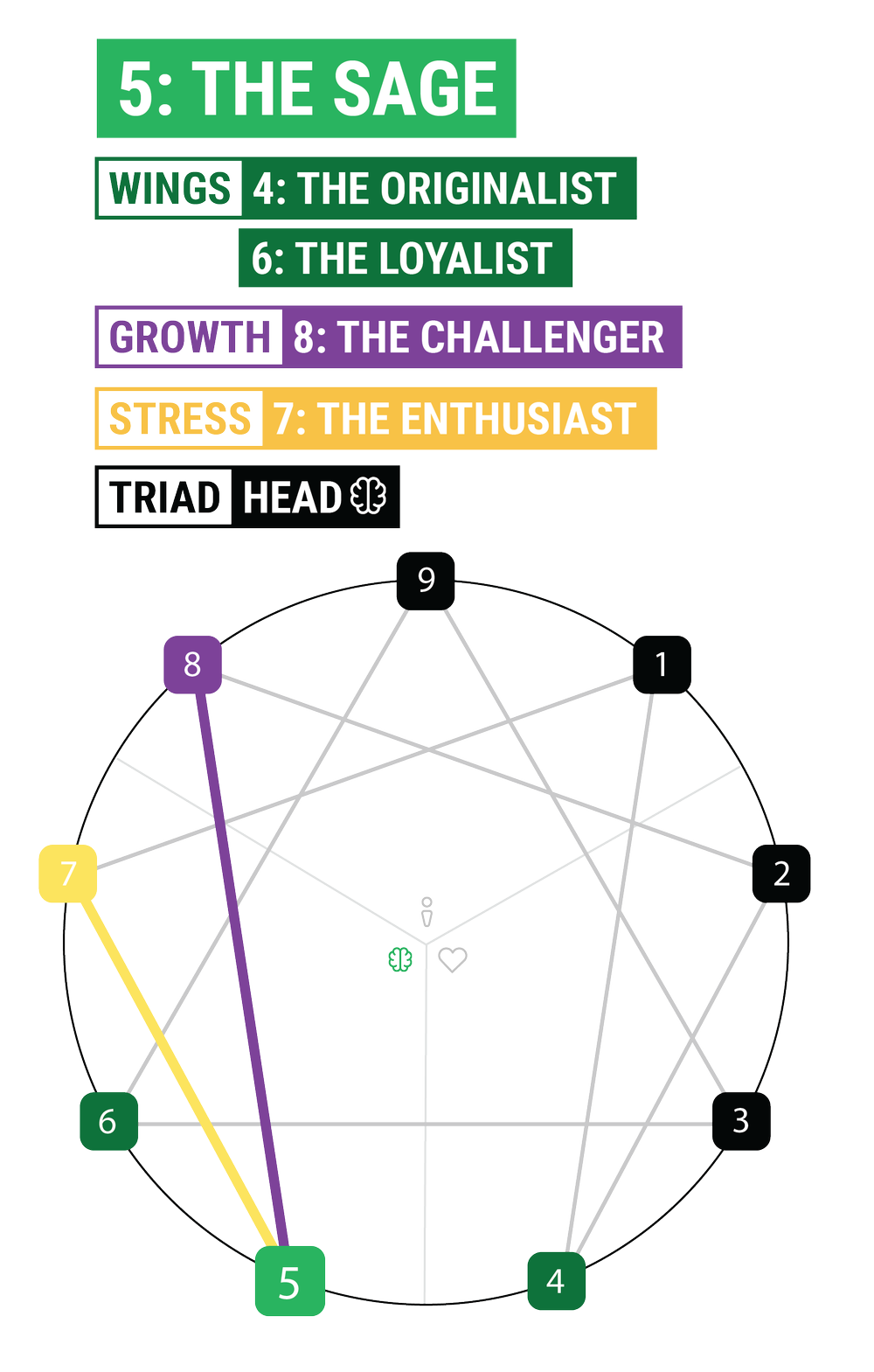
Under Stress: The Pull Toward Type 7
When overwhelmed, Type 5s move toward the reactive tendencies of Type 7. This can look like:
- Mental Overload → “There’s too much happening—I need to distract myself.”
- Avoiding Deep Engagement → “I’ll just focus on something interesting instead.”
- Scattered Thinking → Jumping from one topic to another instead of staying focused.
- Overindulging in Stimuli → Seeking entertainment, information, or distractions to avoid stress.
💡 Coaching Tip: Stress makes Type 5s retreat into mental busyness rather than emotional connection. When you catch yourself absorbing endless information but avoiding action, pause and ask:
❓ Am I learning to avoid, or am I learning to grow?
❓What’s one small action I can take instead of just analyzing?
Progress happens when you engage with the world, not just observe it.
In Growth: Integrating Type 8
At their best, Type 5s integrate the confidence and decisiveness of Type 8. Growth looks like:
- Turning Knowledge Into Action → Taking what you’ve learned and applying it in meaningful ways.
- Setting Boundaries with Strength → Protecting your energy without withdrawing completely.
- Engaging with the World Directly → Sharing your insights instead of keeping them to yourself.
- Building Inner Confidence → Trusting that you already know enough to contribute.
💡 Coaching Tip: Try a “Bold Action Challenge” this week. Instead of waiting until you feel ready, ask yourself:
❓ What’s one thing I know enough to act on today?
❓ How can I share my knowledge instead of just keeping it to myself?
💭 Reminder: You don’t have to master everything before engaging—you learn the most by doing.
Key to Managing Stress: Shifting from Retreat to Engagement
The real growth path for Type 5s isn’t about protecting your energy at all costs—it’s about learning to step into the world with confidence.
- Shift from collecting knowledge to applying it → Your insights are valuable when they’re shared.
- Reclaim your presence in relationships → Boundaries are healthy, but meaningful connection requires engagement.
- Redefine readiness → Growth doesn’t happen in isolation—it happens through action.
💡 Coaching Insight: Type 5s thrive when they balance reflection with real-world impact. If you’re feeling overwhelmed, ask yourself:
❓ Am I withdrawing because I need space, or because I’m avoiding something?
❓ What’s one simple way I can engage with the world today?
The fastest way to grow isn’t through more research—it’s through taking action and trusting yourself.
Coaching Tips for Type 5s
1. Shift from Research to Action
Try this: Instead of waiting until you know everything, commit to taking one action per day based on what you already know.
💡 Coaching Insight: Type 5s can get stuck in the cycle of endless research, believing they need to master a subject before contributing. But action is the best way to solidify knowledge. What’s one insight you can share or apply today?
2. Reframing Engagement: From Draining to Strategic
Try this: Before turning down a social or work-related interaction, ask yourself: Is this something that could be valuable in the long run? If yes, engage with a clear boundary in mind (e.g., setting a time limit).
💡 Coaching Insight: Type 5s often withdraw because they fear social interactions will be exhausting. But strategic engagement—rather than total isolation—helps you build connections without burnout.
3. Confidence in Knowledge: You Already Know Enough
Try this: When hesitation creeps in, ask this: Would I encourage a friend to share what they know if they were in my position? Then, apply the same encouragement to yourself.
💡 Coaching Insight: Fives often undervalue their expertise or hesitate to contribute until they feel completely prepared. You already have valuable insights—trust them and start engaging.
4. Building Trust in Collaboration: Sharing Instead of Withholding
Try this: Instead of assuming, No one will value my perspective, experiment with sharing just one insight in a meeting or conversation and observe the response.
💡 Coaching Insight: Type 5s may hold back in group settings, thinking others won’t appreciate their depth of knowledge. But your insights are valuable—sharing them helps strengthen your role as a trusted expert.
These small mindset shifts help Type 5s step into the world with confidence, turning their knowledge into real-world impact without feeling overwhelmed.
How Cloverleaf Helps Type 5s Thrive
You already know how to analyze deeply, think independently, and master complex topics. But turning knowledge into impact requires more than just research—it requires engagement, confidence, and real-world application.
☘️ Cloverleaf’s personalized coaching insights help Type 5s:
✅ Turn knowledge into action—so learning doesn’t stay theoretical but creates real impact.
✅ Engage strategically without burnout—helping you balance independence with meaningful collaboration.
✅ Communicate insights with confidence—so your expertise is heard, valued, and applied.
✅ Set boundaries effectively—allowing you to conserve energy while still building strong connections.
👉 And the best part? These insights don’t sit in a report—you get them exactly when you need them. Whether it’s a reminder before a meeting, a coaching tip in your inbox, or a team insight inside your daily tools, Cloverleaf helps you grow in real time—without feeling drained.
Want to learn about the rest of the Enneagram Types? Read more about the Enneagram: 1, 2, 3, 4, 6, 7, 8, and 9!
Enneagram Type 4, The Originalist: More Than a Dreamer
You see the world differently. Where others stay on the surface, you dive into the depths—exploring emotions, creativity, and meaning in ways most people never consider.
You don’t just feel things—you immerse yourself in them. Your emotions are rich, your ideas are unique, and your perspective is deeply personal. You naturally sense beauty, depth, and authenticity in every aspect of life.
But that same depth can sometimes feel isolating. It’s easy to believe no one fully understands you or that you must stand out to be truly valued. The desire to be seen as unique and special can become both your greatest gift and your deepest struggle.
You are more than your emotions, more than your creative pursuits, and more than your longing to be different. This guide will help you embrace your strengths, overcome challenges, and grow in a way that feels meaningful—without losing yourself in the process.
The Enneagram Guide To Healthy Teams
See How High-Performing Teams Use the Enneagram to Strengthen Collaboration
Core Motivations & Fears of Type 4s
A common misconception about Type 4s is that they are just overly emotional or dramatic. But at your core, you aren’t simply searching for feelings—you’re seeking meaning. You want to understand yourself and the world in a way that feels true, profound, and authentic.
Type 4s bring depth, creativity, and emotional insight to relationships, teams, and leadership. You don’t settle for surface-level thinking—you challenge people to go deeper.
But beneath this quest for authenticity lie some powerful fears:
- Fear of being ordinary—that without uniqueness, you might not be truly valuable.
- Fear of being misunderstood—that no one will truly “get” you.
- Fear of not having a clear identity—leading to deep self-exploration (or over-identification with emotions).
Fours make up a distinct and introspective part of the Enneagram world. Your ability to see what’s hidden, overlooked, or unspoken makes you a powerful force for creativity and transformation.
In this guide, we’ll explore your greatest strengths, challenges, and how you can grow while staying true to yourself.
Strengths of Enneagram 4: The Originalist
As a Type 4, your strengths don’t just make you creative—they make you deeply attuned to meaning, authenticity, and emotional depth. You’re not just about being unique; you bring a rare ability to see the world differently, articulate deep truths, and create beauty from raw experiences.
You instinctively sense what is real and meaningful in a way that others often overlook. Whether through art, storytelling, problem-solving, or leadership, you bring originality, depth, and emotional intelligence to your work and relationships.
But these strengths, if unchecked, can also become isolating. When you feel misunderstood or disconnected, you may withdraw or question your worth. Harnessing your strengths means channeling your creativity, staying engaged with the world, and embracing both individuality and connection—because you thrive when your unique perspective enriches others.
Core Strengths of Type 4
☘️ Deeply Expressive – You articulate emotions and ideas in ways that inspire others.
☘️ Authentic & Individualistic – You resist conformity, valuing what is real, unique, and deeply personal.
☘️ Creative & Imaginative – You see possibilities others miss, bringing innovation and artistry to everything you do.
☘️ Empathetic & Emotionally Aware – You connect deeply with others’ emotions and offer genuine support.
☘️ Intuitive & Insightful – You understand underlying motivations, hidden beauty, and deeper truths.
What This Means in Work & Life
Your strengths make you an artist of ideas, emotions, and possibilities. Whether through creative work, leadership, or personal relationships, you bring a depth and richness that others admire.
But these same strengths can also lead to isolation, self-doubt, or feeling disconnected from those who don’t share your depth.
💡 Coaching Insight: Instead of asking, How am I different? try asking:
💬 How can I share my depth in a way that brings connection rather than distance?
✔ New Habit: Shift from feeling separate from others to using your insights to create deeper relationships.
Challenges & Growth Opportunities for Type 4s
Your emotional depth and creativity are powerful—but they can also become overwhelming. When you focus too much on what’s missing or over-identify with emotions, it can lead to frustration, melancholy, or self-doubt.
⚠️ Common Challenges for Type 4s
👉 Struggle with Feeling Misunderstood – You may assume no one truly “gets” you, which can lead to withdrawing or feeling isolated.
👉 Comparing Yourself to Others – The fear of being ordinary can lead to envying those who seem more “special” or “successful”.
👉 Getting Stuck in Emotions – You experience feelings deeply, but sometimes sit in sadness too long instead of taking action.
👉 Longing for What’s Missing – You tend to focus on the ideal rather than appreciating what’s already present.
🌱 Growth Strategies for Type 4s
✅ Shift from “Unique” to “Valuable” – Being different isn’t the goal—making an impact is.
✅ Practice Action Over Idealization – Creativity is powerful when it leads to tangible expression.
✅ Recognize Emotions Without Over-Identifying – Feel deeply, but don’t let emotions define you.
✅ Find Meaning in the Present – Instead of longing for what’s missing, cultivate gratitude for what’s here.
💡 Coaching Insight: Type 4s grow when they realize that they don’t have to be different to be worthy.
💬 How can I use my emotions to create, not just to feel?
Type 4 at Work: Strengths & Strategies for Success
Enneagram Type 4s bring creativity, depth, and originality to their work. Whether leading a team, designing a strategy, or collaborating with others, they challenge conventional thinking and bring fresh perspectives to every project. Their ability to connect deeply with meaning and emotion makes them especially skilled in roles that require storytelling, vision, or artistic direction.
However, their strong emotions and desire for authenticity can sometimes make it difficult to focus on practical execution. Fours may withdraw when they feel misunderstood or struggle with comparing themselves to others, questioning whether their contributions are valuable.
How Type 4s Lead
- Bring creativity, emotional intelligence, and depth to leadership.
- Challenge teams to think differently and express their ideas fully.
- Lead with authenticity and passion, inspiring others with their vision.
- Can struggle with practical execution if they get lost in emotions or perfectionism.
💡 Coaching Insight: Type 4s thrive as leaders when they balance big-picture creativity with structured follow-through.
How Type 4s Work on a Team
- Offer unique insights and creative problem-solving—seeing possibilities others may overlook.
- Help teams connect on an emotional and meaningful level.
- Value authenticity and personal expression in their work.
- May withdraw if they feel their contributions aren’t appreciated or understood.
Biggest Workplace Challenge:
🛠 Balancing Emotion & Execution
📍 Example: Instead of waiting for the “perfect mood” to start a project, commit to taking action even when you don’t feel ready.
✔ New Habit: Experiment with structured deadlines to channel creativity into tangible results.
Communication Style
✔ Expressive and thoughtful—Fours communicate with depth and originality.
✔ Emotionally intuitive—They pick up on unspoken feelings and help others express themselves.
✔ Prefers meaningful dialogue—They avoid small talk in favor of deeper conversations.
✔ May struggle with criticism—Feedback can feel deeply personal rather than constructive.
💡 Coaching Insight: Fours grow as communicators when they learn to receive feedback as guidance, not judgment.
Ideal Work Environments for Type 4s
✔ Creative fields (design, writing, music, film, marketing, branding).
✔ Helping professions (counseling, coaching, psychology, HR).
✔ Mission-driven organizations where authenticity and values matter.
✔ Entrepreneurship & freelancing, where they can create independently.
☘️ How Cloverleaf Helps Type 4s Thrive:
✅ Helps turn creativity into tangible success with structured insights.
✅ Provides daily coaching to stay motivated and avoid emotional disengagement.
✅ Encourages healthy collaboration without losing individuality.
📍 Take the Free Enneagram Test & Get Personalized Coaching →
Type 4 in Relationships: Communication & Emotional Growth
Enneagram Type 4s bring depth, passion, and emotional insight into their relationships. They crave authenticity and want deep, meaningful connections—surface-level interactions don’t satisfy them. Whether in friendships, romantic relationships, or family dynamics, Fours express care by truly seeing and understanding others and hoping for the same in return.
But this depth of emotion can also bring challenges. Fours may withdraw when they feel misunderstood, or they may expect people to intuit their feelings without clearly expressing them. Their desire for uniqueness can sometimes make them feel like an outsider, even in close relationships.
How Type 4s Express Care
✔ Through deep conversations, emotional connection, and creative expression—Fours don’t just say “I care”; they find ways to express it meaningfully.
✔ By truly understanding others’ emotions—They instinctively notice unspoken feelings and validate others’ experiences.
✔ By offering unique, personal gestures—Fours go beyond typical displays of affection, creating deeply personal and meaningful experiences.
💡 Coaching Insight: Fours express care best when they balance deep emotions with clear communication, ensuring their feelings don’t remain unspoken.
How Type 4s Receive Care Best
✔ Feeling deeply seen and understood—They don’t just want to be loved; they want to be recognized for who they truly are.
✔ Having space to express their full emotions without being “fixed”—Fours don’t always need solutions; they need someone willing to sit with them in their emotions.
✔ Encouragement to balance emotions with action—Fours thrive when they have people who support their feelings but also help them take practical steps forward.
📌 Practical Relational Tip: Instead of assuming, They should know how I feel, try expressing it clearly.
🚫 If they really cared, they’d just know I’m upset.
✅ I’ve been feeling a little off today. Can we talk about it?
✔ New Habit: Practice stating feelings directly rather than expecting people to guess.
⚠️ Potential Relationship Struggles
👉 Struggling with emotional volatility—Fours feel deeply, and their emotions can shift quickly, which may confuse others.
👉 Fearing being misunderstood—They long to be deeply known, but this fear can make them withdraw instead of opening up.
👉 Comparing relationships to an idealized version—Fours can romanticize relationships and feel disappointed when reality doesn’t match their emotional vision.
📍 Example: A Four might feel let down when a partner or friend doesn’t respond as emotionally as they expect—assuming this means they don’t care enough rather than considering their different communication styles.
✔ New Habit: Pause and ask:
💬 Am I reacting to what’s actually happening, or to how I think things should feel?
💡 Coaching Insight: Real connection happens when Fours stay present in relationships instead of comparing them to an ideal.
Building Stronger Relationships as a Type 4
✅ Practice clear emotional expression—Let others know what you need instead of waiting for them to guess.
✅ Balance feeling with action—Emotions matter, but taking small steps forward keeps relationships strong.
✅ Stay present instead of idealizing—People may not always express care exactly as you envision, but that doesn’t mean the love isn’t real.
💬 Instead of asking, “Are they seeing me deeply enough?” try asking, “How can I appreciate the ways they already show care?”
Stress & Growth Paths for Type 4s
When stress hits, Type 4s can feel overwhelmed by their emotions and lose touch with their sense of identity. Instead of embracing their uniqueness, they may look for external validation, become emotionally reactive, or feel consumed by comparison. But real growth happens when Fours learn to channel their emotions into meaningful action and develop the discipline to bring their creative visions to life.
Under Stress: When Emotion Becomes Overwhelming
When overwhelmed, Type 4s take on the reactive tendencies of Type 2. This can look like:
☘️ Seeking validation through relationships → “If I help others enough, maybe I’ll feel worthy.”
☘️ Becoming emotionally reactive → Feeling too much and struggling to regulate emotions.
☘️ Over-focusing on what others think → Shifting from self-reflection to seeking reassurance from others.
☘️ Losing a sense of self → Comparing their life to others and feeling like something is always missing.
Biggest Stress Trigger: Feeling unseen, misunderstood, or like they lack a meaningful purpose.
💡 Coaching Tip: Stress makes Fours hyper-aware of what they lack. When you catch yourself spiraling into self-doubt, pause and ask:
❓ Am I looking for external reassurance, or can I give myself the validation I need?
✔ New Habit: Before seeking validation from others, ground yourself in what makes you valuable, regardless of outside approval.
In Growth: Turning Emotion Into Purpose
At their best, Type 4s integrate the discipline and structure of Type 1, transforming their creativity into something impactful. Growth looks like:
✔ Channeling emotions into action → Creating something meaningful instead of getting stuck in feelings.
✔ Balancing creativity with consistency → Using routine and structure to bring ideas to life.
✔ Focusing on purpose over comparison → Shifting from What do I lack? to What can I create?
✔ Trusting their inner worth → Recognizing that they don’t need to be different to be valuable.
💡 Coaching Tip: Ask yourself:
❓ How can I use my emotions as inspiration rather than a limitation?
New Habit: Make one small creative commitment each day—whether or not you “feel” ready.
Key to Managing Stress: The Power of Self-Trust
The real growth path for Type 4s isn’t about fixing their emotions—it’s about learning to use them wisely.
✅ Shift from external validation to self-acceptance → Your worth isn’t dependent on being different—it’s already there.
✅ Ground emotions in meaningful work → Use feelings as fuel for creativity, not just as something to process.
✅ Build structure and consistency → Small, steady actions bring dreams to life.
💡 Coaching Insight: Type 4s thrive when they embrace both emotion and action. If you’re feeling stuck, ask:
❓ Am I waiting for the right feeling, or can I take one small step forward today?
Coaching Tips for Type 4s
Type 4s are deeply creative, emotionally aware, and driven by authenticity. But real growth happens when Fours ground their emotions in action, develop consistency, and recognize that they are already whole—without needing to be different to be valuable. Here’s how to grow while staying true to yourself:
1. Shift from Over-Identifying with Emotions to Taking Meaningful Action
Try this: Instead of waiting to feel fully inspired before starting a creative project, commit to small, daily progress—regardless of mood.
💡 Coaching Insight: Type 4s often feel deeply, but meaningful work happens when creativity is paired with consistency. Emotion can inspire action, but it doesn’t have to dictate it.
New Habit: Set a 15-minute daily practice—whether that’s journaling, creating, or brainstorming ideas. Show up even when you don’t feel “ready.”
2. Stop Comparing & Start Creating
Try this: When you catch yourself comparing your journey to others, pause and ask:
💬 What unique perspective do I bring that no one else can?
💡 Coaching Insight: Fours thrive when they focus on what they have to express, rather than what they think they lack. Your worth isn’t found in being different—it’s in being fully yourself.
New Habit: Shift your mindset from They have something I don’t to I have something valuable to contribute.
3. Balance Depth with Lightness
Try this: Instead of getting lost in deep emotions, schedule time for something playful, simple, or lighthearted.
💡 Coaching Insight: Fours tend to seek intensity in emotions, but growth happens when you also embrace lightness, humor, and everyday joy.
New Habit: Once a week, do something purely for fun—watch a silly movie, play a game, or try an activity that brings lightness into your life.
4. Reframe Rejection as Redirection
Try this: Instead of taking criticism or setbacks personally, ask:
💬 What is this experience teaching me about my resilience?
💡 Coaching Insight: Type 4s feel deeply, and rejection can feel especially painful. But growth comes when you see challenges as stepping stones, not signs of inadequacy.
New Habit: After a setback, write down one lesson it taught you—then use it as fuel for your next step forward.
How Cloverleaf Helps Type 4s Thrive
You already know how to tap into deep emotions, creativity, and self-expression. But true growth happens when you channel your depth into action, embrace consistency, and trust your worth beyond feeling different.
☘️ Cloverleaf’s personalized coaching insights help Type 4s:
✅ Turn emotions into action—so creativity fuels momentum, not just introspection.
✅ Build confidence in their uniqueness—without relying on external validation.
✅ Stay consistent and follow through—so inspiration becomes tangible success.
✅ Balance emotional depth with practical steps—so feelings don’t become roadblocks.
👉 And the best part? These insights don’t sit in a report—you get them exactly when you need them. Whether it’s a coaching tip before a big project, a nudge to refocus, or a reminder to trust yourself, Cloverleaf helps you grow in real time.
Want to learn about the rest of the Enneagram Types? Read more about the Enneagram:1,2,3,5,6,7, 8, and 9!
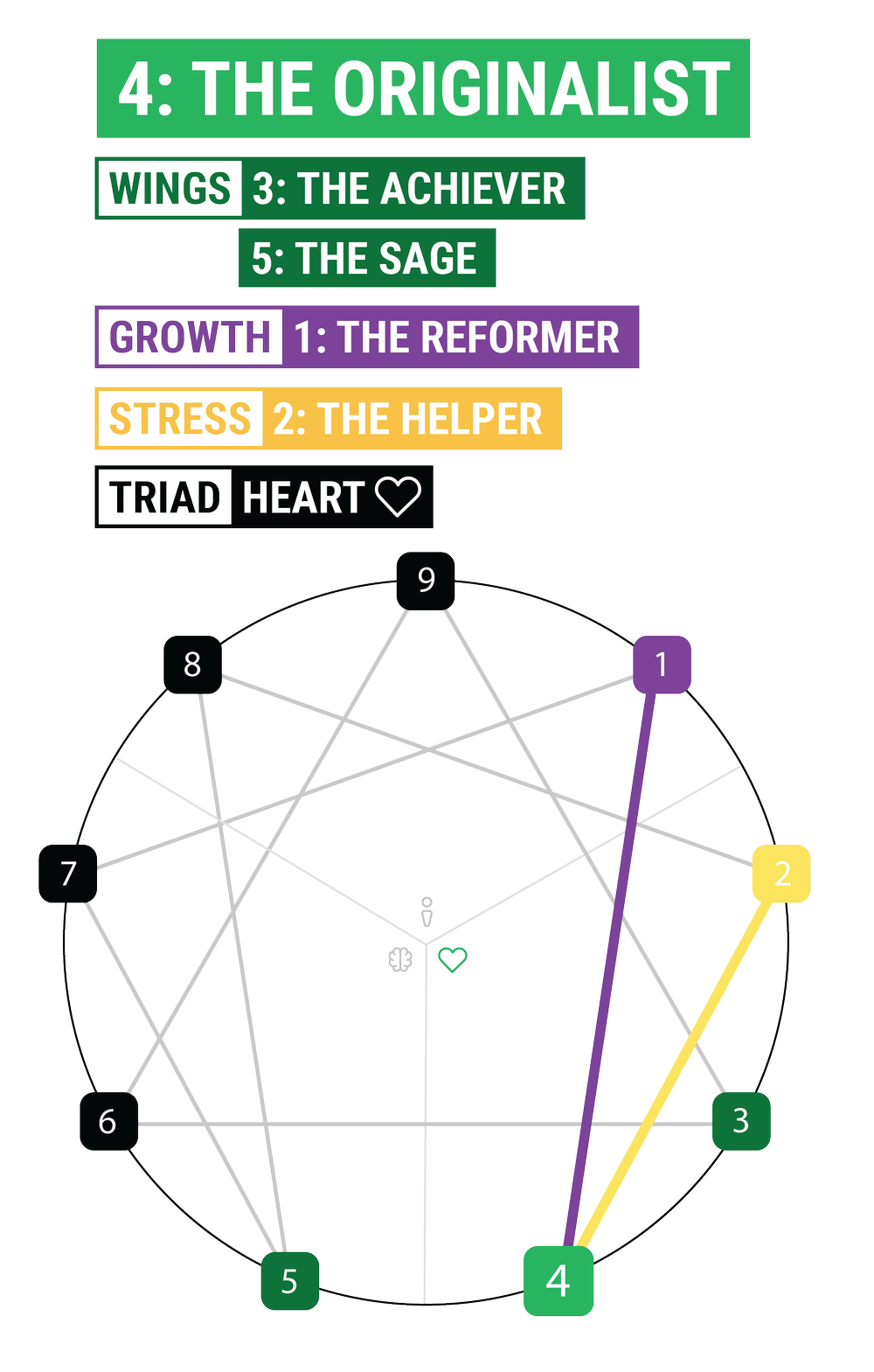
Enneagram Type 3, The Achiever: More Than a Performer
You don’t just set goals—you crush them. You see possibility where others see obstacles, and when things get messy or uncertain, you don’t hesitate. You step up, take action, and make things happen—not just for yourself, but for those around you.
Your optimism and adaptability mean you excel in high-stakes, fast-moving environments. You communicate with confidence, inspire people to stay motivated and focused, and know how to position yourself for success. You’re the one people look to when a team needs direction, a project needs execution, or a vision needs someone to make it real.
But here’s what most people don’t see:
- You fear falling short. Feeling unskilled or unprepared can be stressful—you prefer to show strength, even when you’re figuring things out behind the scenes.
- You struggle to slow down. You push hard for results, but resting feels unproductive—you may forget that taking breaks actually makes you more effective.
- You hesitate to show vulnerability. Letting others see your struggles feels risky, even though it’s what actually builds trust and connection.
Your ambition is a gift, but when it’s fueled by the need to prove yourself, it can lead to exhaustion, disconnection, and burnout. This guide will help you harness your strengths, grow in authenticity, and succeed in ways that feel fulfilling—not just impressive.
The Enneagram Guide To Healthy Teams
See How High-Performing Teams Use the Enneagram to Strengthen Collaboration
Core Motivations & Fears of Type 3s
A common misconception about Type 3s is that they’re just status-driven workaholics who only care about winning. But at their core, Threes aren’t just chasing success for the sake of it. You’re motivated by a deep desire to be valuable, admired, and seen as capable—whether that’s in your career, relationships, or personal achievements.
Type 3s are among the most ambitious and adaptable Enneagram types, making up a significant portion of high achievers across industries. Your ability to set goals, stay focused, and push through challenges makes you a natural leader, motivator, and competitor.
But beneath this drive for success lie some powerful fears:
- Fear of failure—that if you don’t succeed, you won’t be respected or valued.
- Fear of being exposed as incompetent—that others might see past your polished image to the flaws you try to hide.
- Fear of being unworthy without achievement—that your worth is tied to what you accomplish rather than who you are.
These fears can push you to constantly perform, achieve, and refine your image—sometimes at the cost of deeper self-awareness or emotional connection.
In this guide, we’ll explore what makes Type 3s tick, from your greatest strengths to the challenges that come with relentless ambition—and how you can grow without burning out or losing sight of your authentic self.
Strengths of Enneagram 3: The Achiever
As a Type 3, you don’t just dream about success—you make it happen. You’re wired for productivity, efficiency, and forward momentum, and you thrive in environments where progress and results are valued.
Your ability to adapt, communicate, and motivate others makes you a key driver of success in teams, organizations, and relationships. But with that strength comes the risk of burnout, over-identification with achievements, or prioritizing image over authenticity.
Core Strengths of Enneagram 3
☘️ Goal-Oriented & Driven – You set ambitious targets and have the energy and discipline to see them through.
☘️ Highly Adaptable – You adjust quickly to new challenges and excel in fast-paced, high-pressure environments.
☘️ Confident & Charismatic – You inspire and influence others effortlessly, making you a natural leader, salesperson, or motivator.
☘️ Efficient & Results-Focused – You have a keen ability to prioritize tasks, streamline processes, and find the fastest path to success.
☘️ Skilled Communicator – You understand how to present ideas effectively, build relationships, and persuade others to take action.
What This Means in Work & Life
Your ambition and adaptability make you a natural leader, someone who can turn vision into reality and rally people toward a common goal. You thrive in environments where performance is rewarded, and you enjoy the challenge of pushing yourself to be the best.
But success at all costs can come at a price—overworking, prioritizing image over authenticity, or chasing validation rather than fulfillment.
💡 Coaching Insight: Instead of asking, How can I prove myself? try asking:
💬 What does true success look like beyond external recognition?
✔ New Habit: Shift from seeking approval to seeking fulfillment, so you define success on your own terms, not just by what others applaud.
Challenges & Growth Opportunities for Type 3s
Your ambition and drive make you a powerhouse—but they can also become your biggest obstacles. When success becomes the only measure of your worth, you risk burnout, emotional disconnection, or constantly chasing the next win without real fulfillment.
So how can you continue achieving at a high level while maintaining authenticity and balance?
⚠️ Common Challenges for Type 3s
👉 Struggles with Authenticity – You may focus on appearing successful rather than being true to yourself, adapting your image to meet expectations.
👉 Overworking & Burnout – You push yourself relentlessly, often prioritizing productivity over personal well-being—but success means little if you’re too exhausted to enjoy it.
👉 Tying Self-Worth to Achievement – When your value feels tied to results, you may struggle with self-doubt when you’re not actively succeeding.
👉 Avoiding Vulnerability – You prefer to project confidence, but avoiding emotional depth can lead to shallow relationships or inner loneliness.
👉 Impatience with Slower Processes – You thrive on efficiency, but deep personal growth, relationships, and emotional processing can’t be rushed.
🌱 Growth Strategies for Type 3s
✅ Define Success on Your Terms – Ask yourself:
💬 What do I truly value beyond external achievements?
✔ New Habit: Shift from chasing applause to pursuing fulfillment—define success based on meaning, not just milestones.
✅ Prioritize Rest & Well-Being – Sustainable success requires balance.
💬 How can I schedule rest as intentionally as I schedule work?
✔ New Habit: Recognize that efficiency includes recovery, and burnout slows you down in the long run.
✅ Embrace Vulnerability – True confidence comes from being real, not just impressive.
💬 Who in my life truly knows me beyond my successes?
✔ New Habit: Practice sharing struggles or uncertainties with someone you trust—it strengthens, not weakens, your leadership.
✅ Practice Slowing Down – Growth isn’t just about getting ahead—sometimes, it’s about going deeper.
💬 Where can I trade speed for depth?
✔ New Habit: Give yourself space for reflection, creativity, and relationships that don’t serve an external goal.
💡 Coaching Insight: Threes grow when they realize they are still worthy, even when they aren’t winning.
💬 If I had nothing to prove, how would I live differently?
Type 3 at Work: Strengths & Strategies for Success
Type 3s thrive in environments where they can set goals, take initiative, and drive results. Whether leading a team, managing a project, or strategizing the next big move, Threes excel at making things happen. But their relentless drive for success can sometimes come at the cost of authenticity, work-life balance, and deep team connection.
How Threes Lead
- Inspire teams with vision, confidence, and results-driven leadership.
- Push for efficiency and innovation to keep projects moving forward.
- Can struggle with slowing down or prioritizing emotional connection over performance.
How Threes Work on a Team
- Highly productive and self-motivated—great at setting goals and helping others reach them.
- Thrive in fast-paced, competitive environments that reward ambition.
- May over-prioritize results over relationships, sometimes missing the human side of collaboration.
Biggest Workplace Challenge:
🛠 Balancing Success with Authenticity
Threes often feel pressure to project an image of success—even when they’re struggling.
📍 Example: Instead of curating a perfect image, try sharing real challenges with your team.
✔ New Habit: Vulnerability builds trust. Authenticity is a long-term advantage, not a weakness.
Communication Style
✔ Persuasive, direct, and engaging—Threes are excellent at selling ideas and rallying people.
✔ Goal-oriented and efficient—they get straight to the point, focusing on what needs to happen next.
✔ Can struggle with emotional depth—preferring action over deep conversations.
✔ Benefits from practicing transparency and open dialogue—not just saying what sounds impressive.
Ideal Work Environments for Type 3s
✔ Goal-driven industries (business, sales, marketing, entrepreneurship).
✔ Roles requiring leadership, communication, and strategic execution.
✔ Workplaces that offer recognition but also encourage work-life balance and self-reflection.
☘️ How Cloverleaf Helps Type 3s Thrive:
Threes receive daily coaching insights that remind them to:
✅ Slow down and embrace authenticity—success isn’t just about achievement.
✅ Balance productivity with personal fulfillment—work matters, but so do you.
✅ Define success on their own terms—beyond titles, awards, or external validation.
📍 Take the Free Enneagram Test & Get Personalized Coaching →
Type 3 in Relationships: Communication & Emotional Growth
Enneagram Type 3s bring drive, confidence, and a deep desire to succeed into their relationships. They believe care is shown through achievement, encouragement, and helping others reach their full potential. Whether it’s motivating a partner, sharing ambitious goals, or pushing a loved one toward success, Threes express care by doing and achieving together.
But this relentless pursuit of success can sometimes come at a cost. When Threes tie their worth to accomplishments, they may struggle with emotional depth, vulnerability, or slowing down to connect on a deeper level. At times, they may feel pressured to maintain an image of success rather than sharing their real emotions.
How Type 3s Express Care
✔ Encouragement and goal-sharing – Threes show care by motivating and supporting others to reach their full potential.
✔ Acts of achievement – They may demonstrate love through success, believing that providing and excelling benefits their relationships.
✔ Helping others shine – Threes take pride in boosting their loved ones’ confidence and celebrating their wins.
How Type 3s Receive Care Best
✔ Words of affirmation and recognition – Hearing “I see you and I’m proud of you” means everything to a Three.
✔ Being valued for who they are, not just what they achieve – They need reassurance that they are enough, even without success.
✔ Encouragement to slow down and be present – Having people in their life who remind them that rest and connection matter just as much as results.
⚠️ Potential Relationship Struggles
👉 Struggling with emotional openness – They may feel safer focusing on achievements rather than sharing emotions.
👉 Prioritizing success over connection – Can get caught up in goals and productivity, unintentionally neglecting deeper emotional bonds.
👉 Fear of failure or inadequacy – They may avoid talking about struggles out of fear it will make them look weak.
📍 Example: A Three might struggle to open up about stress at work, worried that admitting exhaustion could damage their image.
Practical Relational Tip for Type 3s
Instead of “How can I impress them?” try asking:
💬 “How can I be more present and real in this moment?”
💡Coaching Insight: Real connection isn’t about performance—it’s about authenticity.
Stress & Growth Paths for Type 3s
Enneagram Type 3s are known for their drive, ambition, and ability to adapt—but when stress kicks in, their need to succeed can backfire. Instead of powering through, Threes may find themselves disconnected from their deeper values, stuck in performance mode, or avoiding emotions altogether.
At their best, Threes learn to embrace authenticity, build deeper relationships, and define success beyond external recognition.
Under Stress: The Pressure to Prove Yourself
When overwhelmed, Type 3s take on the reactive traits of Type 9, withdrawing or disengaging rather than pushing forward:
- Feel lost without external validation → If I’m not achieving, who am I?
- Become emotionally disconnected → Avoiding deep introspection or tough conversations.
- Struggle with indecision or procrastination → Losing motivation when success isn’t immediately clear.
💡 Coaching Tip: Instead of numbing out, pause and reconnect with your deeper values. Try asking:
❓ “What truly matters to me beyond success?”
In Growth: Embracing the Depth of Type 6
At their best, Threes integrate the wisdom of Type 6, shifting from image-driven success to real, meaningful impact:
✔ Lead with integrity and authenticity, not just ambition.
✔ Find fulfillment beyond external validation—focusing on real contributions instead of just appearances.
✔ Strengthen relationships through trust and emotional depth—leaning on others instead of always presenting confidence.
💡 Coaching Tip: Ask yourself: Am I chasing success, or am I creating something meaningful?
Key to Managing Stress: Balancing Drive with Authenticity
The real growth path for Type 3s isn’t about working harder—it’s about learning to slow down, reflect, and trust that they are enough.
✔ Shift from external validation to self-trust → Success is about who you are, not just what you do.
✔ Lean into emotional depth → Sharing vulnerabilities creates stronger, more meaningful connections.
✔ Redefine success beyond achievements → Impact isn’t just about winning—it’s about making a real difference.
💡 Coaching Insight: Threes thrive when they realize they are worthy even when they aren’t “winning.”
Coaching Tips for Type 3s
Type 3s thrive on achievement and efficiency, but real growth comes from balancing success with authenticity. Here’s how to develop deeper fulfillment while maintaining your drive:
1. Redefine Success Beyond Achievements
Try this: Instead of setting external goals first, ask yourself:
💬 What truly fulfills me beyond achievement?
💡 Coaching Insight: Threes often define success by recognition and results, but lasting fulfillment comes from meaningful impact, not just accolades.
2. Balance Work & Well-Being
Try this: Schedule intentional time for rest and relationships, just like you would for work goals.
💡 Coaching Insight: Success isn’t just about hustle—it’s about sustainability. Pushing too hard leads to burnout, while balance fuels long-term performance.
3. Be Honest with Yourself & Others
Try this: Before responding to feedback or challenges, pause and ask:
💬 Am I showing up as my true self, or am I presenting what I think others want to see?
💡 Coaching Insight: Authenticity builds real success, not just the appearance of it. True confidence comes from honesty, not just performance.
4. Slow Down & Reflect
Try this: Instead of jumping to the next goal, take time to reflect on what you’ve learned before moving forward.
💡 Coaching Insight: Progress isn’t just about speed—it’s about depth. Threes grow most when they pause to acknowledge their progress, relationships, and personal growth.
How Cloverleaf Helps Type 3s Thrive
You already know how to set ambitious goals and achieve them, but real success isn’t just about results—it’s about sustainability, fulfillment, and authenticity.
☘️ Cloverleaf’s personalized coaching insights help Type 3s:
✅ Stay motivated without burning out—balancing drive with well-being.
✅ Build authentic relationships—learning to connect beyond accomplishments.
✅ Define success on their own terms—focusing on impact, not just recognition.
👉 And the best part? These insights don’t sit in a report—you get them exactly when you need them. Whether it’s a coaching tip before a meeting, a reminder to slow down, or guidance on leading with authenticity, Cloverleaf helps you grow in real time.