Reading Time: 7 minutes

Coaching in the workplace is the practice of helping people develop the capabilities they need to perform better at work, through structured conversations that focus on the learner’s own thinking rather than on transferring information from the manager downward.

A useful way to ground that definition is to draw the line between coaching and managing. Management is about control. Coaching is about discovery. A manager assigns tasks, monitors progress, and corrects mistakes. A coach asks questions that help someone solve a problem they’re carrying, often before that problem has fully surfaced. Both are necessary. Most organizations are good at one and improvising at the other.

The reality is that most organizations now treat coaching as essential. Coaching budgets are up. Leadership development sits at the top of Gartner’s HR priorities list three years running. Executive buy-in exists. The intent is everywhere.

And yet, in a 2026 study of 177 HR professionals conducted by the HR Research Institute and sponsored by Cloverleaf, 71% of organizations said leadership coaching is a strategic priority. Only 22% said it has actually improved their organization’s performance to a high degree. That gap is the practical question this article answers. What is workplace coaching, what does it look like when it works, and what is the 22% doing that the other 78% isn’t?

Bottom line: the difference is rarely about the coaching conversation itself. It is almost always about the system around the conversation. The four-day workshop is not the unit of behavior change. The Tuesday morning Slack message before the difficult 1:1 is. Most organizations have funded the workshop and skipped everything that makes the workshop stick.

Five different ways workplace coaching can take place

Workplace coaching is a structured form of development that helps employees, managers, and leaders solve real problems by being asked the right questions at the right moments. It is not training. It is not mentoring. It is not advice. The coach’s job is to surface insight that helps the person being coached think more clearly about a specific situation in their own work.

In practice, coaching in the workplace shows up in five recognizable forms.

  1. Manager-as-coach. The manager runs a regular cadence of 1:1s and uses them to develop the report’s capability over time. This is the form most organizations expect by default, and the form most managers receive no training in. According to the HR.com 2026 research, only 30% of organizations actually train leaders in how to coach effectively. The other 70% expect coaching to happen and never teach the skill.
  2. Peer coaching. Two colleagues at the same level coach each other on specific challenges. The research found 47% of organizations encourage peer-to-peer coaching, making it the second-most-common practice after expecting leaders to coach. Peer coaching is often the most underrated form because it reaches people who would otherwise never get coaching at all.
  3. Executive or external coaching. A senior leader works with a credentialed external coach over a defined engagement. This is what most people picture when they hear “coaching” because it is the form that has been studied the most. It is also the form that reaches the smallest percentage of any organization’s workforce, typically the top 1 to 3% of leaders.
  4. Mentoring. A more senior colleague shares experience and advice with a less senior one over time. Mentoring overlaps with coaching but is fundamentally different. Coaching focuses on the coachee’s own thinking and capability. Mentoring focuses on the mentor’s experience and recommendations. Both have value. They serve different leadership development purposes.
  5. AI coaching. AI-driven coaching delivers structured nudges, insights, and reflection prompts to employees in the flow of their work, grounded in behavioral assessment data and team context. The category is emerging fast and buyers are increasingly trying to evaluate which platforms actually deliver real coaching versus repackaged content. AI coaching is the only form that can reach every employee at the moment of need, which is why it is becoming the infrastructure layer underneath the other four.

Four research-backed gaps explain why 78% of organizations can’t prove coaching is working

If you walked into most organizations and asked why coaching isn’t working, the answer would cluster around three problems. The coaching is exclusive, mostly reserved for senior leaders. The coaching is disconnected from daily work, delivered in workshops and offsites that fade by Tuesday. The coaching is over-dependent on managers, who are asked to drive development on top of every other responsibility.

Those three observations are useful as a summary. The 2026 HR.com research makes them specific. Four research-backed gaps explain most of the underperformance.

1. Only 30% of organizations actually train leaders in how to coach.

55% expect leaders to coach. The math means roughly 25% of leaders are being asked to do something they were never taught. The research found that out of ten coaching skills measured, only two were rated proficient by a majority of leaders: sharing knowledge (62%) and building rapport (57%). Listening to understand sits at 47%, instilling confidence at 39%, practicing empathy at 39%. The skills coaching actually requires are the ones leaders are weakest in.

2. Only 35% link coaching to leadership performance reviews.

Coaching becomes something leaders are asked to do on top of everything they are actually evaluated on. When that happens, coaching loses every time the calendar gets full. 58% of HR professionals in the study said the number one barrier to coaching is “not devoting enough time.” That tends to be a prioritization signal, not a scheduling problem. Leaders tend to make time for what their organization measures and rewards.

3. Only 23% monitor and evaluate whether coaching is actually happening.

25% don’t measure coaching at all. When the most common method of measurement is asking the coachee whether they liked it (42% of organizations), the organization has no way to know if anything is changing. Participant satisfaction has been studied for decades and has almost no relationship to actual behavior change. The Kirkpatrick model has been telling L&D this since 1959.

4. Only 18% of organizations reward or recognize leaders for developing others.

68% of managers have never received formal leadership training. The leaders who do invest time in coaching their teams are doing it out of personal conviction, often in addition to a workload that nobody adjusted to make room for the work. Coaching becomes invisible labor.

These four gaps compound. An organization that does not train leaders, does not measure coaching, does not connect it to reviews, and does not reward leaders who develop others has not built a coaching program. It has built a coaching aspiration. The aspiration is real. The infrastructure isn’t.

Four practices that separate the 22% of orgs seeing coaching results from everyone else

The HR.com 2026 research separated higher-performing organizations from lower-performing ones and compared their practices. The differences were not subtle. Four practices distinguished the 22% reporting strong coaching results from everyone else.

1. They train leaders to coach, on purpose and over time.

Higher performers are three times more likely to say their leaders are well-trained in coaching skills (49% vs. 15%). They treat coaching as a learned skill that requires deliberate development, not a personality trait that some managers have and others don’t. Most leaders rate themselves as proficient at sharing knowledge and building rapport because those skills are intuitive. The skills coaching actually demands (disciplined listening, structured questioning, holding silence) are the ones that require training.

2. They measure behavior change, not satisfaction.

Higher performers track leadership performance improvement at more than twice the rate of lower performers (51% vs. 24%). They track career advancement trajectories (41% vs. 17%) and learning assessments (31% vs. 11%). Lower performers are nearly three times more likely to skip measurement entirely (33% vs. 13%). Measuring the real impact of coaching requires tracking what actually changed about how the person works, not whether they liked the experience.

3. They integrate coaching to the systems leaders already interact with.

Higher performers are more than twice as likely to integrate coaching into succession planning (39% vs. 17%) and to link it to performance reviews (46% vs. 28%). When coaching is part of how succession decisions get made and how performance gets evaluated, leaders engage with it because the rest of the system rewards it. When coaching is a standalone initiative, it gets crowded out by everything that does affect those outcomes.

4. They use technology to reach beyond the small percentage of leaders who happen to get coached by a human.

Higher-performing organizations are nearly twice as likely to use digital tools for coaching (51% vs. 27%) and over three times more likely to use in-session support tools (51% vs. 16%). Lower performers are three times more likely to use no technology at all (43% vs. 14%). Technology extends the reach of coaching; it doesn’t replace the coach. It creates the infrastructure that lets coaching reach every manager, not just the 1 to 3% who get paired with an external coach.

Coaching in the workplace is an infrastructure problem, not a program problem — and the organizations seeing results are running a system

Coaching in the workplace is an infrastructure problem, not a program problem. The same way payroll, performance management, and benefits enrollment are infrastructure problems. The organizations that succeed at coaching are operating a system, not running better workshops.

The shift, named directly, looks like three strategic shifts.

  1. From leadership-only coaching to team-wide development. Coaching extends beyond managers and becomes a practice that helps everyone improve.
  2. From generalized training to personalized, context-aware coaching. Employees get coaching that is relevant to their work, their strengths, and the specific people they are about to collaborate with.
  3. From training events to coaching in the flow of work. Development happens at the moment of need, in the tools people are already working in, instead of in a conference room three weeks before the moment that mattered.

The system has four components:

  1. Leaders trained in how to coach.
  2. Coaching connected to performance review and succession decisions.
  3. Measurable outcomes that track whether behavior is actually changing.
  4. And technology that lets coaching reach every manager, not just the elite few.

Higher-performing organizations use AI coaching at three times the rate

When any one of those components is missing, the others can’t compensate. A great training program in an organization that doesn’t measure anything produces nothing measurable. Excellent coach pairings for senior leaders in an organization that doesn’t develop frontline managers produces a leadership pipeline that’s wide at the top and empty in the middle.

The HR.com 2026 research found that only 16% of organizations currently use AI-driven coaching, but the higher-performing cohort is using it at three times the rate of lower performers. That gap is going to widen, and quickly. The reason is simple. The infrastructure problem that has prevented coaching from reaching every employee for the last forty years is now solvable, and it wasn’t before.

Real AI coaching grounded in behavioral data and team context can show up in the tools employees already use, at the moments those tools are open, with insights specific to the people the employee is about to interact with. Concretely:

  • Before a high-stakes meeting, AI coaching can surface what each teammate is most likely to respond to and what their working style probably needs.


  • During a difficult conversation, AI coaching can offer framing that helps the manager deliver feedback that lands, rather than just deliver it.


  • Leading a cross-functional project, AI coaching can flag where collaboration is likely to break down across team styles before the breakdown happens.

That is what coaching at scale actually looks like. Available to every employee instead of the top 1 to 3%.

The category is also full of products that claim AI coaching but deliver something closer to a chatbot wrapped around a content library. Talent leaders evaluating these platforms increasingly need a framework for separating the real coaching infrastructure from the noise.

Cloverleaf is built on the assumption that the bottleneck has never been the assessment data or the workshop content. It has been the activation. Assessment data sitting in a report does nothing. Workshop content forgotten three weeks later does nothing. The infrastructure that turns both into daily coaching, in the tools people already work in, with the specificity that comes from knowing who someone is and who they are meeting with, is what separates a coaching aspiration from a coaching program that actually moves the leadership pipeline.

See How Cloverleaf’s Platform Works

Reading Time: 10 minutes

When leadership fails to evolve, organizations pay the price. Misaligned priorities, disengaged teams, and slow decision-making can ripple through every layer of a business, creating costly delays and missed opportunities. Yet even as companies invest heavily in technology and technical skills, the critical human capabilities—like communication, adaptability, and emotional intelligence—often take a back seat.

For executive coaches, this presents both a challenge and an opportunity. It’s no longer enough to deliver value during sessions alone. True impact happens in the moments between meetings, where behaviors are shaped, decisions are made, and leadership growth truly takes root.

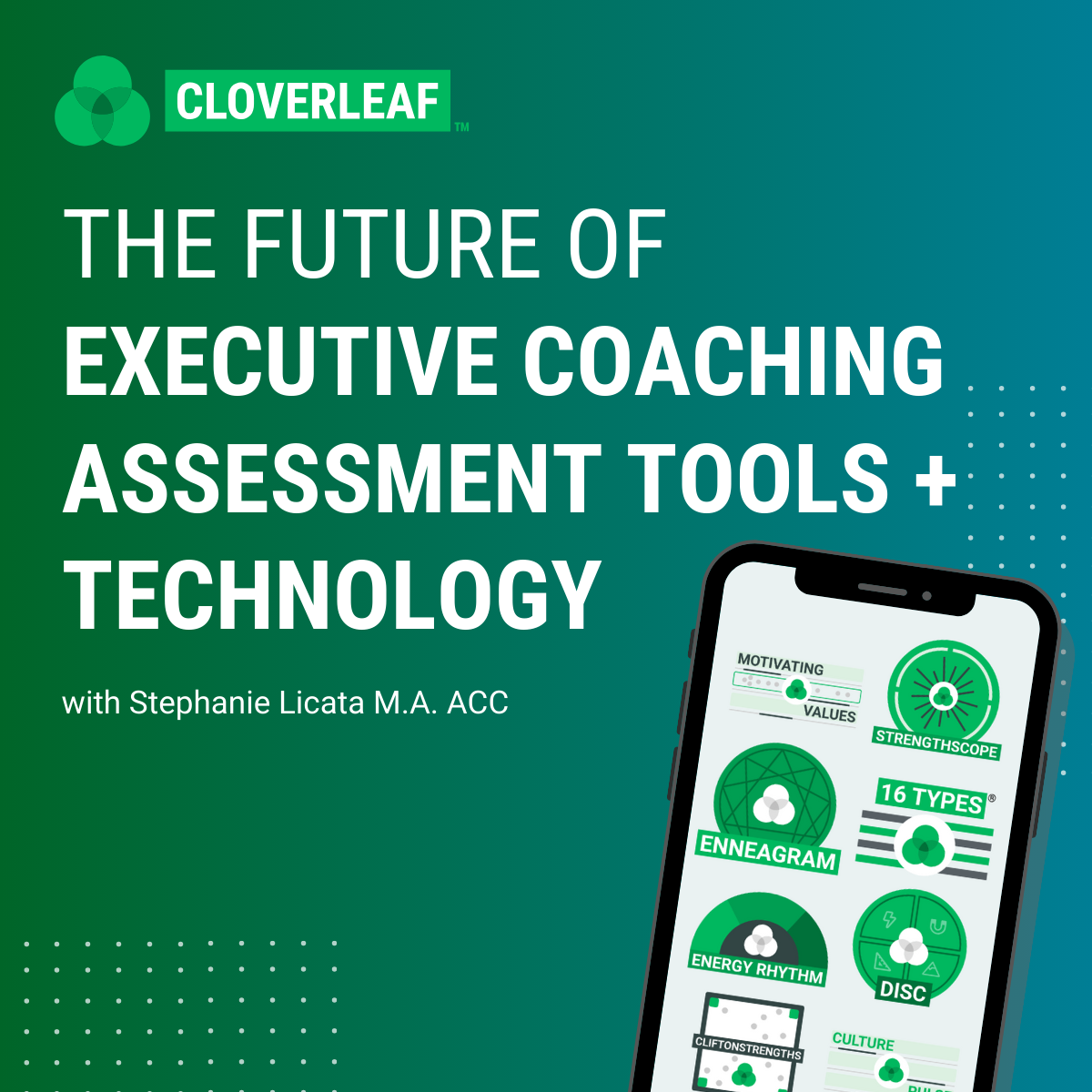
This is where executive coaching assessment tools can shine. By combining the depth of proven assessments (for example: DISC, 16 Types, Enneagram, and others) with the power of technology to automate just in time insights, coaches can amplify their influence—helping leaders align behaviors with business outcomes, even when you’re not in the room.

The Untapped Potential Of Executive Coaching Assessment Tools​

Leadership assessment tools have long been a cornerstone of executive coaching, but their true potential often goes untapped. For many coaches, these tools remain static—limited to diagnostic reports or one-off feedback sessions. Yet today’s most pressing leadership challenges—communication bottlenecks, low emotional intelligence, and burnout under constant change—demand a more dynamic approach.

Get the full report to build a talent assessment strategy that works as hard as your team.

See Cloverleaf’s Powerful Assessment Tools In Action

Executive leaders don’t need abstract personality reports—they need tools that help them show up better in their daily interactions, from critical decision-making meetings to one-on-one conversations with their teams.

Popular coaching assessments like DISC, 16 Types, and StrengthsFinder are powerful starting points, but their real potential lies in how they’re applied.

The challenge for coaches is ensuring that the insights uncovered during a session actually translate into meaningful action when it matters most.

Here’s the good news: technology is making it possible to move beyond static assessments. Digital coaching tools can integrate insights and data-driven insights from assessments into a leader’s daily workflow, delivering timely and personalized coaching nudges that reinforce behavior change and emotional intelligence.

These nudges don’t replace coaching sessions—they enhance them, giving leaders practical reminders to apply what they’ve learned in the real-world context of their workday.

How do different assessment tools support executive leaders’ most pressing challenges:

  • DISC: Communication bottlenecks are a common pain point for leaders managing diverse teams. DISC helps pinpoint where a leader’s communication style may be creating friction. When paired with technology, DISC insights can provide specific tips before meetings—like how to tailor messaging to the decision-makers in the room—resulting in faster alignment and stronger collaboration.
  • 16 Types (MBTI-Based): Leaders often face cognitive diversity in their teams, which can lead to misaligned priorities. MBTI helps leaders understand their own problem-solving style and how it complements (or clashes with) others. When integrated into a platform like Cloverleaf, these insights become actionable, reminding leaders to adjust their approach during critical conversations to foster better strategic outcomes.
  • Enneagram: Emotional blind spots can erode trust and hinder resilience in high-pressure situations. Enneagram reveals patterns of stress and motivation, helping leaders recognize and manage their triggers. With digital coaching, these patterns can be transformed into ongoing prompts—such as how to reframe challenges during periods of stress—building a foundation of emotional agility.
  • StrengthsFinder (CliftonStrengths): Leaders who lean into their natural strengths can inspire greater team engagement and performance. StrengthsFinder helps identify these strengths, and digital coaching ensures leaders have actionable reminders—like how to use a strategic mindset to resolve conflict—embedded directly into their day-to-day tasks.

Technology enables these assessments to go beyond diagnostic tools. By delivering just-in-time insights exactly when and where they’re needed—whether before a team meeting or via on-demand searchability—digital coaching platforms bridge the gap between awareness and action, helping leaders practice and refine key behaviors in the moments that matter most.

The result is a new way of thinking about assessments: not just as tools for discovery but as dynamic instruments coaches can use with their clients to create real change. By leveraging technology to personalize and contextualize these insights, coaches can extend their impact, ensuring leaders are equipped to overcome the complex challenges of their roles every single day.

Choosing and Applying the Right Assessment Tools

Assessment tools are not one-size-fits-all. For executive coaches, the value lies in choosing tools that align with both the unique needs of their clients and the goals of the organizations they lead. It’s not just about identifying strengths or stress triggers—it’s about matching the right tool to the right leadership challenge, ensuring the insights are actionable and lead to measurable change.

1. Tailoring Tools to Leadership Challenges

Each assessment brings a different lens to understanding leadership behaviors:

  • DISC is ideal for leaders navigating communication and collaboration challenges across departments.
  • 16 Types (MBTI-Based) works well for teams grappling with cognitive diversity and strategic alignment.
  • Enneagram is very helpful for leaders working through E.Q. development or managing high-pressure environments with diverse groups of people.
  • StrengthsFinder (CliftonStrengths) helps leaders shift focus from fixing weaknesses to maximizing their natural talents for team success.

2. Integrating Technology for Seamless Application

Traditional assessments provide foundational insights, but pairing them with digital coaching platforms transforms them into actionable tools. Digital platforms allow coaches to:

  • Provide leaders with timely coaching nudges that align with their daily challenges—reminders and actionable prompts delivered exactly when they can be applied to reinforce behavior change and emotional intelligence
  • Connect coaching outcomes to leadership’s core objectives by focusing on productivity gains, cost efficiency, and employee retention. Highlight measurable improvements, such as faster project delivery times, reduced turnover, or enhanced customer satisfaction, to showcase coaching as a strategic, long-term investment..
  • Ensure coaching insights remain impactful by integrating them into key workday moments, such as preparing for high-stakes meetings, delivering constructive feedback, or making critical decisions. This context-driven approach keeps growth tied to real-world leadership priorities.

3. Balancing Diagnostic and Developmental Use

While some assessments excel at diagnosing leadership tendencies, others provide more developmental guidance. For example:

  • Use DISC to diagnose communication bottlenecks, then integrate automated coaching nudges to help leaders refine their tone and messaging.
  • Combine StrengthsFinder with a digital coaching platform to reinforce daily application of a leader’s top strengths in complex team scenarios.

4. Leveraging Multiple Tools for Holistic Leadership Growth

No single assessment can capture the full complexity of a leader’s personality, behavior, and decision-making style. By combining multiple tools, coaches can create a richer, multidimensional view of a leader’s strengths, challenges, and potential. This holistic approach allows for more targeted coaching strategies that address the leader as a whole, rather than focusing on isolated traits or behaviors.

For example:

  • Broader Perspectives on Leadership Dynamics: Using tools like 16 Types and Enneagram together reveals both cognitive diversity and emotional tendencies, helping leaders navigate strategic decisions while staying attuned to team dynamics and interpersonal challenges.
  • Balancing Strengths with Adaptability: StrengthsFinder identifies where leaders excel naturally, while DISC highlights how their communication style impacts team interactions. Together, these tools ensure leaders can lean into their strengths while adapting their approach to meet the needs of different personalities and scenarios.
  • Aligning Insight with Action: Combining assessment tools equips coaches with layered insights, enabling them to connect abstract concepts—like personality traits or stress triggers—to specific leadership behaviors. This integration makes development plans more actionable and relevant to the leader’s unique challenges.

By weaving insights from multiple tools into a cohesive coaching strategy, coaches can help leaders uncover blind spots, amplify their strengths, and address areas for growth with precision. The result is a comprehensive development approach that not only enhances individual performance but also drives measurable team and organizational success.

coaching assessment tools

Increasing Impact With Digital Coaching Assessment Tools

Leadership growth doesn’t happen in a vacuum. It’s shaped by the moments that demand clear decision-making, thoughtful communication, and emotional resilience. For coaches, the challenge is to sustain that growth beyond scheduled sessions, ensuring that insights translate into consistent, actionable change. This is where continuous coaching—powered by digital platforms—comes into play.

1. Sustaining Momentum Between Coaching Sessions

Leadership coaching sessions often deliver a burst of valuable insights, but without reinforcement, those lessons can fade in the busyness of day-to-day leadership. Embedding coaching technology into your services helps ensure that the behaviors and strategies discussed in sessions are consistently reinforced through:

  • Just-in-Time Nudges: Timely reminders to apply key takeaways in real-world situations, such as preparing for a meeting or navigating a team conflict.
  • Contextual Insights: Coaching nudges tied to specific work scenarios, like giving feedback to a team member or managing cross-functional collaboration.

2. Turning Insights Into Daily Action

Even the most insightful assessments have limited impact if leaders can’t integrate them into their daily routines. Automated coaching bridges the gap between awareness and action by embedding growth into everyday workflows:

  • Digital platforms deliver actionable prompts directly into workplace tools leaders already use, like Slack or email.
  • Leaders receive reminders aligned with their schedules, ensuring they practice and refine behaviors during the moments that matter most.

3. Building Resilience and Adaptability

One of the most critical roles of a coach is helping leaders navigate uncertainty and change. By delivering consistent, real-time coaching, continuous coaching:

  • Reinforces stress-management strategies during high-pressure situations.
  • Helps leaders reframe challenges and stay adaptable in the face of shifting priorities.

4. Measuring Growth Over Time

Automated coaching also provides measurable insights into leadership development, allowing coaches to track progress and tie growth to business outcomes:

  • Competency Gains: Highlight improvements in communication, team alignment, or emotional intelligence.
  • Tangible Outcomes: Showcase how coaching has improved employee retention, accelerated project timelines, or strengthened customer satisfaction.

The Value of Automating Your Coaching In Your Client’s Day To Day

Continuous coaching doesn’t replace traditional coaching sessions’ deep, personal connection—it amplifies it. By reinforcing key lessons, supporting leaders in their day-to-day challenges, and making growth measurable, coaches can drive lasting leadership development and demonstrate clear ROI to their clients.

The Future of Executive Coaching: Leveraging AI and Data

The coaching landscape is undergoing a seismic shift. As organizations strive for agility and leaders face mounting pressures to navigate complexity, the demand for innovative coaching solutions is at an all-time high. At the heart of this transformation lies the integration of AI and data—two forces reshaping how coaches engage with clients, measure progress, and deliver sustained impact.

types of microlearning

Personalization at Scale: Beyond the One-Size-Fits-All Approach

AI-driven coaching platforms like Cloverleaf are bridging the gap between generalized advice and deeply personalized guidance. These platforms craft tailored coaching insights that evolve with the leader’s journey by analyzing individual assessments, behavioral data, and team dynamics. The result? Executive leaders receive nudges and prompts that align with their strengths and opportunities and the immediate demands of their day-to-day roles.

  • Example: Instead of broad recommendations on improving communication, AI identifies a leader’s upcoming team meeting and provides tips tailored to the personalities and preferences of the attendees. This shift transforms abstract concepts into actionable steps that drive real-world results.

Contextual Guidance: Coaching in the Flow of Work

Traditional coaching often pauses between sessions, leaving leaders to connect the dots independently. AI changes this by delivering context-specific insights precisely when and where they’re needed—whether during a high-stakes negotiation or while resolving a conflict within their team. This “in-the-moment coaching” ensures that learning is not just theoretical but immediately applicable, fostering faster behavior change and measurable outcomes.

  • Emerging Trend: As platforms integrate with tools like Slack, Teams, or email, coaching becomes a seamless part of a leader’s workflow, removing the friction of accessing development resources and embedding growth into their daily routine.

Measuring ROI Through Real-Time Data

For executive coaches, demonstrating value has often been a challenge. How do you quantify the impact of improved emotional intelligence or better communication? AI and data analytics are changing the game. Platforms now offer dashboards that track behavior shifts, team dynamics, and competency growth, tying coaching outcomes directly to metrics that matter, such as project completion rates, employee retention, and engagement scores.

  • Key Takeaway: Coaches can now present clear, data-backed narratives to their clients, showcasing how targeted interventions drive both individual and organizational success.

Preparing for the Future of Coaching

The adoption of AI doesn’t diminish the coach’s role—it amplifies it. By automating repetitive tasks and delivering timely insights, AI allows coaches to focus on what they do best: fostering deep, transformational growth in their clients. As these technologies evolve, the potential to integrate coaching with broader organizational systems—like HRIS platforms or performance management tools—will create a unified approach to leadership development.

A Paradigm Shift for Coaches

For executive coaches, the future isn’t about replacing in-person sessions with automation; it’s about reimagining how coaching can extend beyond the room. AI-driven tools empower coaches to amplify their reach and impact, ensuring leaders are equipped with the insights they need—right when needed. By embracing AI and data, coaches are not just adapting to a new era of leadership development—they’re helping define it.

Getting Started With Executive Coaching Assessment Tools

The integration of digital tools and assessments into your coaching practice doesn’t have to be overwhelming. With the right approach, you can enhance your services, provide measurable value to your clients, and make your coaching more impactful than ever. Here’s how to begin:

1. Define the Needs of Your Clients and Their Organizations

Before diving into tools, take a step back to clarify your coaching objectives:

  • What are your clients’ most pressing challenges? Are they struggling with communication bottlenecks, strategic alignment, or managing team dynamics?
  • What outcomes matter most to their organizations? Productivity, employee retention, and faster decision-making often top the list.

By identifying these priorities, you can select tools and methods that directly address both individual and organizational needs.

2. Select the Right Assessments for the Job

Not all tools are created equal, and the effectiveness of your coaching depends on aligning the right tools with your goals.

  • DISC: Ideal for improving communication and collaboration within diverse teams.
  • 16 Types (MBTI-Based): Helps navigate cognitive diversity and align strategic priorities.
  • Enneagram: Perfect for fostering emotional intelligence and self-awareness.
  • StrengthsFinder (CliftonStrengths): Encourages leaders to leverage their natural strengths while fostering team engagement.

Don’t stop at just using one tool. Consider how combining insights from multiple assessments can provide a holistic picture of your client’s leadership style and growth areas.

3. Introduce Digital Coaching Tools to Bridge the Gap Between Sessions

Digital platforms like Cloverleaf empower coaches to extend their influence beyond the traditional coaching model by embedding insights into the leader’s workflow. Here’s how to get started:

  • Onboarding Clients to the Platform: Help your clients navigate tools and understand how to use insights to their advantage.
  • Set Expectations: Explain how personalized coaching nudges will complement in-person sessions by reinforcing key behaviors in real time.
  • Integrate into Existing Workflows: Choose tools that integrate seamlessly into email, Slack, or Teams to keep coaching actionable and accessible.

4. Create Measurable Goals and Feedback Loops

Clients and stakeholders alike want to see the tangible impact of coaching. Build a framework for measuring growth:

  • Define Specific Metrics: Set clear goals such as improved team alignment, reduced conflict, or faster project delivery times.
  • Use Data Dashboards: Many platforms provide real-time data on client progress. Share these insights during sessions to celebrate wins and identify areas needing attention.
  • Implement Reflection Practices: Tools like Cloverleaf’s Reflections feature enable clients to track their own progress, fostering accountability and self-awareness.

5. Stay Ahead of the Curve

The world of coaching is evolving rapidly, and staying informed about emerging trends will keep your practice competitive:

  • Leverage AI and Automation: Learn how tools can provide just-in-time nudges, personalized coaching, and context-specific insights.
  • Stay Client-Centric: Regularly evaluate how your methods are serving your clients and adjust your approach based on their feedback.
  • Invest in Your Learning: Explore certifications or resources that deepen your understanding of digital coaching platforms and tools.

Getting Started is Easier Than You Think

The journey to integrating technology into your coaching doesn’t have to be daunting. By starting small—selecting a single tool or assessment to pilot—you can build confidence, refine your approach, and demonstrate immediate value. As you see success, you’ll be better equipped to scale your offerings and bring even greater impact to your clients and their organizations.

Executive coaching is evolving, and so are the tools that enable it. By integrating proven assessment methods with the power of technology, coaches can create a coaching experience that extends beyond the boundaries of a single session. Digital coaching platforms make it possible to deliver personalized, actionable insights at the exact moments when they matter most, empowering leaders to grow in real time while solving their most pressing challenges.

For coaches, the opportunity is clear: leverage these tools to deepen your impact, measure your results, and scale your expertise to support more clients and teams. By shifting from static assessments to dynamic, technology-driven solutions, you position yourself at the forefront of an industry that’s transforming how leaders learn, grow, and lead.

Ready to elevate your coaching practice? Discover how Cloverleaf’s Automated Coaching™ can help you integrate assessment tools, deliver measurable insights, and amplify your impact across entire organizations. Explore the possibilities and see how you can create meaningful, lasting change for your clients.

Reading Time: 9 minutes

Every year, companies pour thousands of dollars into interpersonal skills training—workshops, webinars, and leadership courses—all in the hope of building stronger teams. Yet, here’s the reality: those investments rarely stick. Employees return to their desks only to fall back into old patterns—miscommunications derail projects, team tensions simmer beneath the surface, and collaboration becomes a game of survival instead of synergy.

Sound familiar? That’s because most interpersonal skills training happens in a vacuum. It’s disconnected from the actual work employees do and the challenges they face daily. It’s a one-size-fits-all approach to problems that demand a deeply personal, contextual touch. No wonder leaders struggle to connect training efforts to tangible outcomes like faster project timelines, fewer misunderstandings, or higher team morale.

Talent leaders face an overwhelming challenge: embedding interpersonal skills into the flow of work, where they can actually drive meaningful change. But the good news? With the right strategies and tools, moving from one-off programs to a scalable, personalized approach that creates lasting, measurable impact is possible.

Soft Skills Disconnect

Why It’s Time To Rethink Interpersonal Skills Training Strategies

In today’s knowledge-based economy, human skills like communication, collaboration, and emotional intelligence are no longer “nice-to-have”—they’re essential for success. Yet, despite their critical role in driving organizational outcomes, these skills are often underdeveloped and underinvested in.

The Costs of Getting Interpersonal Skills Training Wrong

  • While 85% of job success stems from human skills, organizations spend only 27.6% of their training budgets on developing them.
  • Employees spend an average of 3.2 hours per day collaborating, yet a staggering 37% report receiving fewer than two hours of training—if any—on how to do it effectively. (Research: Harvard University, Carnegie Foundation, & Standford Research Center Source: National Soft Skills Association, nationalsoftskills.org)

The problem isn’t just underinvestment; there is a misalignment between traditional approaches and the realities of modern work. Workshops and courses, often treated as one-off events, are valuable, however, learnings can dissipate after returning back to work. This creates a gap between training investments and real-world application, leaving employees ill-equipped to navigate critical workplace challenges.

3 Areas Interpersonal Skills Training Has Room For Improvement

  1. It’s disconnected from daily work: Employees learn abstract concepts like ‘active listening’ or ‘conflict resolution’ during workshops but often lack the confidence or tools to apply these ideas in high-stakes situations, like mediating a disagreement between team members or making a split-second decision under pressure.
  2. It’s not contextual or personalized: Trainings often focus on principles for good reason, but what about the unique dynamics of specific teams? Miscommunication and unresolved tensions persist when training lacks personalization and context to consider how different working styles and roles shape collaboration.
  3. It’s treated as an afterthought: Despite their pivotal role in driving innovation and collaboration, human skills are often sidelined in favor of hard skills training, even as automation increases the demand for emotional intelligence.

Why Human Skills Are Non-Negotiable in a Digital Age

As digital transformation and automation continue to reshape industries, the value of human skills is skyrocketing. Work is increasingly about conveying abstract ideas, building trust, and navigating complex team dynamics—capabilities that cannot be automated. Yet, organizations persistently undervalue the interpersonal skills training needed to master these skills, leaving teams to rely on trial and error instead of equipping them for success.

When Training Fails, the Costs Are Measurable

Employees leave training sessions inspired but still need tools to reinforce their development on demand. They still need help translating abstract principles into actionable behaviors, and as a result, the effort invested in training often fails to deliver measurable outcomes. Training that feels disconnected from an employee’s day-to-day work isn’t just ineffective—it can breed frustration, as people may perceive it as a waste of time.

Interpersonal Skills Training Must Become Dynamic

To close this gap, organizations must adopt a smarter, more integrated approach. Interpersonal skills training should:

  1. Solve Real-Work Challenges: Focus on the specific situations employees encounter, such as navigating a conflict or leading a cross-functional team.
  2. Adapt to Individual and Team Needs: Use tools like assessments for deeper nuance and insights to surface the unique dynamics of each person and team.
  3. Integrate Into Daily Workflows: Provide just in time coaching nudges inside the tools employees already use, such as Slack, Microsoft Teams, or email.

By shifting to a contextual, personalized approach, talent development leaders can empower teams to build better habits, grow stronger relationships, and drive measurable improvements in performance.

Adult learners want learning that matters to them right now. This means the content has to relate not only to the challenges they are facing but also to the specific team and interpersonal dynamics that they are navigating, which differ from person to person and from organization to organization. This is why pre-packaged programs or role based training on leadership and conflict can, at times, provide diminished value.

Ready To Scale Human Skill Development?

See How Tech Can Help Your Team Make Personal Development a Daily Practice

The Real Problems Interpersonal Skills Training Still Struggle To Solve

Challenges like recurring miscommunications, unresolved conflicts, and mismatched working styles derail projects, strain relationships, and diminish team trust. Training initiatives frequently promise to improve how employees “communicate better” or “work as a team,” but the real challenge isn’t awareness of concepts—it’s driving meaningful, lasting behavioral change when it matters most.

Don’t overlook the real culprit behind workplace tension: employees’ lack of self-awareness. Without an understanding of how their behaviors impact others, individuals unknowingly contribute to breakdowns in communication, missed deadlines, and recurring frustrations. This lack of awareness creates ripple effects that stall collaboration and erode trust, leaving teams grappling with the same persistent issues despite repeated training investments.

interpersonal skills training for employees

Employees Will Struggle to Change Without Self-Awareness

It’s easy for training approaches to categorize interpersonal skills as a list of universal best practices without consideration of the unique dynamics that each individual experiences throughout their day.

Employees might leave a workshop with vague recommendations to “listen more actively” or “manage conflicts constructively,” but these principles lack the personal context needed to translate them into action. Without tools that illuminate why they respond to pressure the way they do—or how their behavior impacts others—employees are left guessing how to apply what they’ve learned.

Self-awareness isn’t just recognizing one’s strengths and weaknesses; it’s understanding how those traits show up in day-to-day interactions. Employees with high self-awareness can anticipate how they’ll respond under stress and proactively adjust their behaviors.

Self-awareness develops—it grows through feedback, reflection, and intentional action. When nurtured, it helps employees align their behaviors with organizational goals, creating stronger collaboration and improved outcomes.

Teams Can’t Flourish If They Don’t Understand Each Other

Interpersonal challenges don’t exist in isolation. Team dynamics—the collective interplay of personalities, communication styles, and behaviors—can amplify or undermine individual efforts. Other-awareness empowers people to understand and adapt their approaches based on their teammates’ behaviors, communication style, and work preferences.

Imagine a workplace where people function with more other-awareness:

  • A leader with a direct communication style might realize their approach can feel blunt or intimidate more reserved team members, prompting them to adjust their approach.
  • A team member with a deep preference for structure might find ways to collaborate more flexibly with others who are more comfortable with less structure.
  • During a brainstorming session, employees might consciously draw out quieter team members by leveraging their knowledge of team members’ strengths.

When employees understand their teammates’ strengths, preferences, and working styles, differences become opportunities for synergy rather than sources of tension.

Awareness Creates A Positive Ripple Effect On Team Performance

High-performing teams don’t just happen—they’re built on trust, mutual respect, and adaptability. Self and team-awareness lay the groundwork for these qualities, driving tangible improvements in communication, productivity, and collaboration.

  • Teams with high awareness make decisions faster, with less conflict.
  • People communicate with greater clarity, reducing errors and misunderstandings.
  • Individuals anticipate challenges before they escalate, addressing them proactively instead of reactively.

On the other hand, a lack of awareness creates bottlenecks and stalls progress. Misunderstandings become frequent, team members struggle to align on goals, and frustrations build. Over time, this erodes trust and diminishes morale—critical issues that even the most skilled leaders struggle to overcome without addressing the root cause.

We’ve all experienced how low self and other awareness can impact performance:

  • A team member who consistently misses deadlines might not realize how their communication style unintentionally leaves expectations unclear.
  • A manager who struggles to resolve tension between direct reports might not recognize their tendency to avoid conflict, leaving issues to fester rather than addressing them head-on.
  • Or, in high-pressure situations, employees may default to old habits, repeating the same behaviors that cause friction and inefficiency in team dynamics.

The root of workplace challenges isn’t just skill gaps—it’s a lack of self- and team awareness that keeps employees stuck in patterns of miscommunication, unresolved conflict, and inefficiency. Breaking this cycle requires more than topical content or role based training delivered in dispersed programs.

How Personalized Nudges Can Activate Interpersonal Skills

Workplace challenges in communication and collaboration often aren’t due to a lack of training but the struggle to put that knowledge into practice when it matters most. People need coaching nudges that help them address their specific obstacles and align with their roles and team dynamics.

Tools like DISC, CliftonStrengths, or Enneagram become invaluable. Technology can use these assessment results to provide micro coaching to give team members a deeper understanding of their behavioral tendencies, such as communication styles, decision-making approaches, or stress responses. These valuable insights transform from static information into dynamic, personalized coaching to contextualize how to use self awareness—with actionable nudges embedded into the workday.

How Do Personalized Coaching Nudges Result In Behavior Change?

  • A team leader preparing for a contentious meeting gets a nudge to pause during discussions and ensure every voice is heard, addressing their tendency to dominate conversations.
  • One individual juggling cross-departmental collaboration receives a reminder to leverage their relational strengths to build rapport and reduce friction.
  • Another team member under pressure to meet a tight deadline is prompted to recognize their emotional triggers and apply strategies to stay calm and focused.

These timely coaching nudges, integrated into tools like Slack, Microsoft Teams, or email, ensure that employees aren’t just learning—they’re actively adapting. Cloverleaf’s Automated Coaching™ delivers this level of personalization by pairing behavioral data with actionable guidance. Employees receive support precisely when and where they need it, building better habits over time.

Why Context Matters More Than Content

Interpersonal skills training often falls short because it focuses on broad advice instead of addressing the unique realities employees face. To meet today’s workforce challenges, training must go beyond theory and integrate into the natural flow of work—tailored to individual behaviors, team dynamics, and the high-pressure moments where these skills are critical.

It’s not enough for employees to simply recognize their own tendencies; they must also learn to adapt in real time to the needs of their roles, teammates, and specific challenges. This level of personalization ensures that training doesn’t just educate—it helps transform how teammates interact and collaborate.

For talent leaders, supporting self- and team awareness through contextualized coaching can achieve measurable results by:

  • Equip employees with actionable understanding of their own behaviors and how those behaviors affect team outcomes.
  • Ensure coaching happens when it’s most impactful, such as before a critical meeting or during a collaborative project.
  • Help teams navigate differences, leveraging them as strengths rather than obstacles.

Without embracing these principles, organizations risk perpetuating the same cycles of miscommunication and misalignment, despite ongoing investments in training programs. Contextualized coaching bridges the gap, delivering tangible, sustainable improvements in team performance.

Meeting the Challenge of Growth Without Losing Impact

As organizations grow, the challenge is twofold: scaling interpersonal skills training—and doing so without losing the personal relevance and day-to-day applicability that make such training effective.

Traditional methods, like in-person workshops or e-learning modules, can lack the context of individuals evolving dynamics. These approaches require significant resources, struggle to engage distributed teams, and miss connecting learning to the moments where it’s needed most: employees’ actual work.

When training is disconnected from real-world contexts, a frustrating gap emerges. Employees may understand what to do in theory but often lack the tools or confidence to apply those lessons effectively in critical situations.

The Scalability Problem with Traditional Methods

Traditional training approaches face three major hurdles when it comes to scaling effectively:

  • Time-intensive workshops: Employees are pulled away from their responsibilities, and balancing packed schedules with lengthy sessions can lead to disengagement.
  • Generic content: One-size-fits-all programs ignore the nuanced needs of individual teams and working styles, making it difficult for employees to connect training to their specific roles.
  • Distributed teams: In hybrid or remote setups, centralized training becomes increasingly difficult to manage, further widening the gap between learning and application.

The Scalable Solution: Embedded, Personalized Coaching

Organizations must adopt solutions that seamlessly integrate training into employees’ daily routines to meet the needs of a growing and diverse workforce. The key is shifting from one-size-fits-all programs to embedded, personalized coaching that delivers targeted insights when and where employees need them most.

For true scalability, interpersonal skills training must be:

  • Integrated into workflows: Development shouldn’t feel like a burden. Rather, it should have opportunity in the midst of experiences alongside those we work with.
  • Tailored to individuals: Training should adapt to unique needs, offering personalized insights that resonate with employees’ specific challenges.
  • Timely and relevant: Learning needs to be delivered at critical moments, such as before a high-stakes meeting or during a collaborative project, ensuring employees can act on what they’ve learned.

By embedding personalized coaching into daily workflows, organizations can create scalable, impactful training that are relevant and actionable—no matter the size or structure of their workforce.

Build Better Teams, One Insight at a Time

Ready to scale interpersonal skills training? Cloverleaf’s Automated Coaching™ empowers teams with the tools they need to adapt, collaborate, and thrive. Discover how personalized coaching can deliver measurable results for your organization.

Reading Time: 9 minutes

One of the most pressing challenges for coaches and consultants today is proving the measurable impact of their work. Coaching, while transformational for individuals and teams, often delivers its most profound results in areas that can seem intangible—qualities like improved self-awareness, enhanced communication, and better conflict resolution. These competencies shape the fabric of high-performing teams. Yet, many leadership teams struggle to see the ROI because traditional metrics don’t easily capture the link between these human-centered skills and hard business outcomes. To bridge this gap, coaches must focus on competency-based coaching, which allows for measurable, high-impact results that resonate with organizational goals.

Recent research underscores an urgent need for this targeted approach to development. According to Gartner, although 76% of organizations are increasing their investment in leadership coaching and programs, only 36% of HR leaders feel these initiatives effectively prepare leaders for the future. This shortfall highlights the competency gap—a gap that coaching is uniquely equipped to address. Similarly, Deloitte’s studies show that 87% of employees view human skills like adaptability and communication as essential to career advancement. Yet, only a slim majority feel that their organizations recognize these skills’ importance. For today’s organizations, the stakes are high: in a rapidly evolving work environment, leaders who lack key competencies can limit a team’s productivity, engagement, and adaptability.

This article makes the case that coaching can directly bridge this competency gap by focusing on targeted, measurable growth in the skills that leadership teams value most. By identifying and developing specific competencies, coaches can empower employees to reduce costly mistakes, communicate more effectively, and make faster, better decisions—transformative improvements that extend beyond individual growth and influence organizational culture and business results.

With the right tools, coaches can go beyond anecdotal evidence and demonstrate their value with insightful data on competency growth. By tracking improvements in areas like conflict resolution or collaboration, coaches can show leadership concrete results that tie directly to productivity, efficiency gains, and engagement and retention metrics. Through this competency-driven approach, coaching emerges not just as a developmental resource but a data-backed, strategic investment that drives sustainable growth and competitive advantage for the organization.

The following offers a practical guide for coaches to demonstrate coaching ROI in a way that resonates with leadership priorities. It provides the data, strategies, and real-world examples needed to make coaching’s impact unmistakable.

Get the High Impact Coach Crash Course to see how to build a coaching business that delivers more value, serves more clients, and grows more revenue without burning you out.

the impact of coaching

The New Metric To Measure The Impact Of Coaching

For experienced coaches, demonstrating the ROI of coaching through competency growth means showing leadership not just the qualitative benefits but quantifiable change that aligns with business objectives. Metrics that matter to leadership—like productivity, team efficiency, and engagement—are often shaped by core competencies such as self-awareness, conflict resolution, communication, and collaboration. If coaches can connect improvements in key competencies, they can also provide leadership with concrete evidence of coaching’s value by linking personal development directly to organizational performance.

Quantifying Core Competencies To Prove Coaching ROI

Traditional tools like surveys can capture sentiment, but they rarely prove a direct link between development programs and performance outcomes. Leaders in talent development are increasingly seeking ways to measure the actual impact of coaching beyond satisfaction scores, which often lack the depth needed to demonstrate ROI. Rather than defining ROI in terms of immediate financial returns, coaching ROI is best measured through competency growth—the foundation that empowers employees to make better decisions, communicate more effectively, and collaborate productively.

By quantifying improvements in core competencies like self-awareness, conflict resolution, communication, and collaboration, coaches can provide leadership with concrete evidence of coaching’s value. This approach positions coaching as a strategic investment that directly drives key business outcomes, such as productivity, engagement, and operational efficiency.

See How Cloverleaf Increases Coaching ROI

Identifying Key Competencies as Performance Drivers

While leadership teams may be interested in productivity metrics, it’s essential to demonstrate how competencies like self-awareness, communication, and collaboration directly contribute to improved. Here’s how coaches can measure and communicate their impact:

A. Self-Awareness: Self-awareness helps employees recognize their tendencies and adapt their behavior accordingly, leading to more intentional and balanced decision-making. Cloverleaf’s platform further enables this growth, with recent studies showing an 18% increase in feelings of value and recognition among teams using Cloverleaf’s Automated Coaching™, creating an environment of accountability and enhanced job satisfaction that leaders can quantify.

B. Conflict Resolution: Conflict resolution is integral to productivity, as unresolved workplace conflict can become a significant drain on resources. A study from CPP Global found that workplace conflict costs U.S. companies approximately $359 billion annually due to time lost managing disputes. Another study by Pollack Peacebuilding Systems found that conflict negatively affects productivity, with employees spending more time resolving conflicts. Coaches who focus on building conflict resolution skills help teams address issues proactively, saving time and reducing project delays.

Cloverleaf’s platform allows coaches to track conflict resolution improvements. A recent study reported a 36% increase in perceived high-quality teamwork among teams using automated coaching tools.

C. Communication: Misunderstandings and inefficiencies can cost teams nearly a full workday each week—an average of 7.47 hours—due to lost time from poor communication (Grammarly State of Business Communication). Cloverleaf’s Automated Coaching™ provides real-time data on communication effectiveness, with recent data showing a 31% improvement in the quality of communication and collaboration. This metric offers leaders concrete insights into how coaching enhances workflow efficiency and reduces rework time, allowing teams to reclaim lost productivity.

D. Collaboration: Collaboration creates innovation and improves project outcomes by combining diverse perspectives. Yet, studies show that only 27.6% of training budgets are dedicated to soft skills like collaboration.Teams that use tools to improve collaboration through personalized, ongoing coaching about working with cross-functional teams and managing different work styles have experienced a 36% increase in quality collaboration, leading to improved cross-functional communication and faster project timelines—outcomes that directly support leadership’s goals of efficiency and innovation.

measuring coaching effectiveness

Reevaluating ROI in Coaching: Competence as the True Metric

For coaching to demonstrate its full value, ROI should be redefined in terms of competency development rather than direct financial gain. Competency growth lays the foundation for the performance improvements leadership wants to see, yet these skills must be applied meaningfully within the organization. As noted in recent insights, ROI in coaching truly materializes when leaders support the implementation of these skills in daily operations, reinforcing the idea that coaching is a long-term investment in both human capital and organizational resilience.

To align coaching with strategic goals, coaches and leaders can collaborate to design assessments that capture skill application in ways that resonate with business needs. For example, a leader who has received coaching in conflict resolution could track improvements in project timelines or reductions in turnover—metrics that connect competency development to clear business value. As Szilvia Olah insightfully notes in this LinkedIn post, ROI in L&D isn’t about money in, money out; it’s about building competence that drives performance. When leaders understand and support this concept, they create an environment where coaching delivers actionable, data-backed outcomes that impact the bottom line.

By focusing on measurable competency growth, coaches can present coaching as a strategic asset that enhances productivity, efficiency, and engagement—demonstrating ROI in theory and practical, quantifiable outcomes that leadership values.

How to Connect Coaching Impact Directly to Competency Gains and Business ROI

To make coaching’s value unmistakable to leadership, connect competency gains to the metrics that matter most to the organization’s bottom line. Focus on how coaching impacts productivity and performance. Use data points, like improvements in project delivery times or reductions in turnover, to demonstrate how coaching contributes to key business goals.

1. Individual-Level Impact: Self-Awareness Drives Smarter Decisions

Show the Value: Increased self-awareness empowers employees to make better decisions, minimizing costly errors and boosting accuracy.

Make It Measurable: Track post-coaching metrics such as error reduction and improved efficiency. Regularly updated, these metrics demonstrate sustained impact.

types of microlearning

2. Team-Level Impact: Conflict Resolution and Collaboration Fuel Efficiency

Show the Value: Effective conflict resolution and collaboration lead teams to complete projects faster, with fewer resources.

Make It Measurable: Use tools like Cloverleaf’s Automated Coaching™ to capture teamwork improvements, presenting clear data on project timelines, cost reductions, and team satisfaction.

Case Study: Real-World Results with Automated Coaching™

Context: A large financial services firm leveraged Cloverleaf’s Automated Coaching™ to enhance both individual and team performance.

Results: Employees improved decision-making, reducing errors by 18%. Teams completed projects 20% faster and cut resource use by 12%. The firm also saw a 10% rise in engagement and a 15% drop in turnover over a one-year period.

Key Takeaway for Leadership: Present these metrics as cumulative benefits that show ongoing impact on both performance and cost savings.

3. Align Competency Gains with Leadership’s Priorities

Show the Value: By focusing on productivity gains, cost efficiency, and employee retention, connect coaching outcomes to leadership’s core objectives.

Make It Measurable: Highlight how coaching has improved project delivery times, reduced turnover, or enhanced customer satisfaction. Use data to reinforce competency growth as a long-term investment.

4. Craft a Narrative of Sustained Value

Show the Value: Emphasize competency growth as an ongoing organizational asset that builds resilience and agility.

Make It Measurable: Support your narrative with quarterly or annual updates, creating a continuous ROI story that reinforces coaching’s role in long-term growth.

Demonstrating Coaching’s Lasting Value through Competency-Driven ROI

By linking competency gains to measurable outcomes, coaches can offer leadership a clear picture of coaching’s tangible impact on the organization’s most important goals.

To keep coaching top of mind as a strategic asset:

  1. Prioritize Relevant Metrics: Continuously connect coaching outcomes to the metrics that resonate most with leadership—whether that’s project efficiency, employee retention, or improved decision-making.
  2. Make Data-Driven Reporting Routine: Establish a consistent reporting cadence, using data to show how coaching’s benefits accumulate over time and adapt to the organization’s evolving needs.
  3. Emphasize Long-Term Growth: Remind leadership that competency development is an ongoing journey that builds the organization’s resilience, adaptability, and competitive advantage.

Taking these steps can empower coaches to prove the ROI of coaching and position it as an essential, sustained contributor to business success.

automated coaching technology

Using Coaching Technology to Prove Competency Growth in Real-Time

For coaches and consultants who already bring incredible value to their clients, finding additional ways to measure the ongoing impact of coaching between sessions can be challenging. Cloverleaf’s Automated Coaching™ creates a powerful way to extend the impact to help clients see measurable development. By delivering ongoing, personalized insights directly into the flow of work, Automated Coaching™ helps coaches demonstrate growth in essential competencies like communication, collaboration, and conflict resolution—providing proof points that reinforce the value of coaching and matter to leadership.

1. Extend Impact Beyond Sessions: Measurable Daily Development with Automated Coaching™

While scheduled sessions allow for deep dives into personal and professional growth, automated coaching tools provide ongoing development opportunities through daily, actionable nudges delivered directly within the tools your clients use every day. On average, Cloverleaf users experience nine micro-coaching “moments” each day, building on what they’ve learned in sessions to reinforce continuous engagement with coaching and growth in competencies like communication, collaboration, and self-awareness.

Cloverleaf Product

2. Track and Visualize Impact with Personalized Dashboards

Cloverleaf’s Automated Coaching™ dashboards give coaches a way to demonstrate the value of their work through real-time data on individual and team competency growth. These dashboards offer clear, visual insights into how coaching shapes behaviors over time in key areas such as conflict resolution, teamwork, and communication.

Coaches can use this data to:

  • Quantify Skills Development: Show clients or organizational leaders how team competencies are improving with tangible metrics.
  • Demonstrate Business Value: For example, track how improvement in conflict resolution skills leads to fewer project delays or how better communication reduces rework time—specific metrics that reveal the financial and operational benefits of coaching.

3. Personalize Coaching Focus for Relevant, Targeted Guidance

Coaching is most impactful when it’s relevant to the individual’s unique role and goals. Cloverleaf’s Coaching Focus feature allows coaches to personalize daily coaching insights for each user, aligning with specific objectives to make development both actionable and directly applicable. Whether a team lead is enhancing their feedback skills or a team member is building collaboration capabilities, Automated Coaching™ tailors insights to make growth continuous and meaningful.

Example: A team leader focused on improving communication receives targeted guidance on adapting to each team member’s preferred communication style. This not only enhances their growth but also strengthens team cohesion, providing both immediate and long-term value to the leader’s development journey.

4. Embedding Competency Growth into Daily Workflows

By delivering coaching insights directly within day-to-day workflows, Cloverleaf empowers coaches to create a continuous learning experience that complements their live sessions. Automated Coaching™ reinforces coaching goals, making growth more measurable and actionable:

  • Context-Specific Microlearning: Delivered when and where it’s needed, these insights help individuals apply skills in real time, keeping development momentum strong.
  • Research-Backed Precision: Automated Coaching™ delivers insights rooted in well-established assessments and proven research, ensuring that each coaching moment is accurate, relevant, and tailored to real growth needs.

Proving ROI with Continuous, Data-Backed Competency Growth

Cloverleaf’s Automated Coaching™ gives coaches the tools to provide evidence-based updates on progress, making it easier to present coaching as a measurable, strategic investment. With data on competency development and tools to drive improvements in key areas, coaches can share regular updates with clients or leadership, proving coaching’s long-term ROI and demonstrating the sustained value of their work.

Positioning Your Coaching as an Essential Driver of Organizational Success

Coaches, your expertise shapes competencies that drive not only individual growth but also the larger goals of any organization. By partnering with convincing and measurable data from tools like Cloverleaf’s Automated Coaching™, you can take your impact even further—bridging the gap between development and demonstrable business results.

Take the Next Step: Use this guide as your blueprint for demonstrating coaching ROI in a way that truly resonates with leadership. Quantify the improvements you see in essential competencies, craft stories that connect growth to measurable outcomes, and position your work as a core contributor to organizational success.

Coaching isn’t just valuable; it’s vital. Let your results speak for themselves—proving that coaching is more than a program; it’s a strategic asset driving productivity, resilience, and long-term growth.

Ready to make your coaching more scalable—and your outcomes more visible?

The High-Impact Coach Crash Course shows you how to grow your business, reinforce client results between sessions, and connect your work to outcomes organizations care about.

👉 Start the Free Crash Course and learn how to scale your coaching without adding more hours—or losing your edge.

Reading Time: 9 minutes

Are you responsible for developing leadership and talent across an organization of hundreds—or even thousands—of employees?

You know how important coaching is for improving performance, fostering growth, and retaining top talent. But here’s the problem: how do you make that coaching truly personalized for each individual without adding a massive burden to your already full plate?

Scaling personalized coaching is one of the biggest challenges leaders face today. While there are countless development platforms out there promising personalization, most fall short when it comes to delivering insights that feel relevant and timely to each individual.

Leaders often end up with generic advice that’s loosely tied to broad milestones or role changes, leaving employees feeling disconnected from the coaching process. In modern organizations where efficiency and effectiveness matter more than ever, personalization at scale isn’t just a “nice-to-have”—it’s a necessity.

Why Personalization Matters To Your Leaders

A one-size-fits-all approach to talent development will struggle to resonate with participants. People want—and need—coaching that reflects their unique challenges, strengths, and daily work contexts.

Generic coaching content not only feels impersonal, but it can also lead to missed opportunities for growth, poor engagement, and even higher turnover.

Personalized coaching, on the other hand, ensures that each employee receives guidance tailored to their specific needs, making it far more impactful.

Most organizations struggle to provide individualized support at scale. Traditional coaching programs require time, money, and manual effort—resources that are in short supply. That’s why the ability to automate personalized coaching has become so crucial.

Automating real-time, context-specific insights allows organizations to deliver tailored support to every employee without burdening their leaders. This kind of personalization is meaningful and can transform your talent development strategy, making it scalable, relevant, and deeply impactful.

The Evolution of Personalized Coaching

Coaching has undergone a significant transformation over the past few decades. Historically, coaching was reserved for senior executives and was often and only delivered through face-to-face programs that focused on broad leadership skills or milestones like promotions. As companies recognized the value of coaching for leadership development, the approach started to shift towards more tailored methods.

One of the key moments in this evolution was adopting a coaching leadership style in the late 1990s, which emphasized individual challenges and goals rather than a programmatic model. This shift was driven by an understanding that people respond better to personalized feedback. Fast-forward to today, coaching has become increasingly data-driven, thanks to the rise of digital coaching tools that allow organizations to collect and analyze behavioral data in real time.

Solutions like automated coaching represent the next phase in this evolution. Platforms like Cloverleaf use technology to provide personalized feedback available at any moment that is specific to the person and their team. This approach moves away from previous methods of sharing coaching or advice during scheduled times or only if people hit job role changes.

See How Cloverleaf Scales Talent Development

ai in coaching

4 Trends That Are Shaping The Future Of Personalized Coaching

1. AI-Powered Coaching:

Generative AI and other technologies are being used to support and enhance coaching efforts. Rather than replacing human coaches, AI acts as a “co-pilot,” offering personalized nudges and prompts to reinforce valuable learning that happens in development programs or during coaching sessions. This extends the coaching process beyond scheduled meetings, ensuring that individuals receive continuous, tailored support.

measuring coaching impact

2. Data and Performance Metrics:

Leaders want to know the real impact of coaching. It’s not just about new learning or positive feedback—what matters is whether coaching is actually moving the needle on team performance. Is there a measurable change in behavior and skill application? What’s the return on investment (ROI)? Beyond sentiment and new knowledge, organizations need to see if people’s behaviors are changing in ways that improve the business.

Learning in the Flow of Work

3. Contextualization:

Unlike traditional coaching, available at predetermined times, contextual coaching delivers situation-specific guidance based on an employee’s current work challenges and interactions.

This approach ensures that coaching is actionable and relevant to what’s happening right now, allowing employees to apply the advice immediately, whether it’s before an important meeting or during a critical project, or whenever is best for the individual.

Contextual coaching integrates learning and development into the flow of work, making it both timely and impactful.

This trend is becoming essential as organizations strive to provide more targeted support without adding unnecessary friction to employees’ day-to-day tasks.

4. Remote and Hybrid Coaching:

The shift toward remote and hybrid work environments has pushed coaching to evolve. Virtual coaching, already gaining traction before the pandemic, has now become standard. This trend is further escalated by tools that provide micro coaching moments to ensure each team member receives timely, tailored coaching tips based on their current work challenges and team dynamics throughout their day.

The Demands For Personalization Are Pressing

Despite the advancements in coaching, many platforms struggle to deliver truly personalized coaching at scale. A common issue is that much of the “personalization” offered by many platforms is topical—often limited to role-based advice or broad, milestone-driven coaching. These solutions tend to trigger generic content based on fixed objectives, leading to disengaged participants who don’t feel that the coaching is truly relevant to their immediate needs.

In contrast, automated coaching solves these issues by offering timely, specific advice that is relevant to the individual’s behaviors, strengths, and current work situation. Rather than giving broad, general feedback, it provides coaching that’s action-oriented and contextual because it is about what is happening in the moment. This way, organizations can offer personalized coaching to everyone without overloading their leaders.

By understanding this evolution and leveraging technology, Talent Development Leaders can address the challenges of scaling personalized coaching to drive behavior change and improve performance across their organizations—without overwhelming themselves in the process.

See How Cloverleaf Scales Personalized Coaching

Take a look at Cloverleaf’s key features that can empower your people, build trust, and scale development effortlessly.

The 3 Necessary Components of Effective Personalized Coaching

For personalized coaching to be meaningful and drive behavior change, there are three essential elements to consider: aligning with individual needs, helping employees manage emotions and relationships, and providing support during key moments of work.

Each of these components ensures that coaching becomes practical and relevant, offering insights that people can apply right away to their unique challenges.

1. Resonance with Individual Needs:

For personalized coaching to be effective, it must genuinely connect with each person’s unique challenges and goals. Automated coaching platforms can layer behavioral assessment data like DISC, Enneagram, or 16 Types to better understand how people think, communicate, and approach tasks. This isn’t just about labeling personality traits—it’s about using those insights to provide advice that fits how an individual works in specific situations.

For example, someone who tends to be more detail-oriented may struggle in fast-paced environments. Automated coaching can recognize this tendency and send reminders or strategies to help them manage their workload more effectively in those moments. Likewise, for someone who thrives on collaboration but finds themselves in a remote working situation, the platform can suggest ways to stay connected and communicate more effectively with their team.

This process is powerful because the advice doesn’t come as a generic suggestion, like “work better with your team,” but as specific, situational guidance that feels relevant to what they’re dealing with right now. This could be a tip about managing time before a deadline or a suggestion on how to better frame an idea in a meeting with a team member who thinks differently. In short, it’s advice that feels useful immediately, helping employees put it into practice in the moment.

By providing this type of direct, situation-specific guidance, automated coaching tools make it easier for team members to take what they learn and use it right away, ensuring that the coaching feels both timely and effective.

2. Assist With Managing Emotions and Relationships in Real Time

Another aspect of effective personalized coaching is understanding how emotions and relationships influence workplace success. Emotional Intelligence (EQ) is about recognizing and managing your own emotions, as well as understanding how others feel and react in different situations. Automated AI coaching technology can consider this by analyzing an employee’s emotional tendencies, such as how they handle stress, communicate under pressure, or lead a team.

Rather than simply giving generic advice, these platforms offer specific, emotionally-informed tips that help employees manage difficult conversations, reduce stress, or adapt their leadership style based on their emotional strengths and challenges.

What makes this approach powerful is that it delivers insights exactly when they’re needed. So, instead of waiting for a coaching session to discuss these challenges, employees receive timely suggestions—for example, a quick reminder to take a breath and stay calm before a high-stakes conversation. Emotional intelligence coaching helps employees stay grounded in the moment and improve how they respond to stressful situations, leading to better team interactions and overall performance.

In high-pressure scenarios, like giving feedback to a team member or handling a tough client call, this coaching helps employees navigate their emotions effectively. By receiving a helpful nudge—like a suggestion to approach the conversation with empathy or patience—they can adjust their behavior accordingly, ensuring their emotional response aligns with their goals for the interaction.

3. Getting Guidance When You Need It

One of the most valuable aspects of modern coaching technology is its ability to deliver advice that fits a person’s exact situation. In the past, coaching often relied on set times, like scheduled sessions, quarterly reviews, or weekly meetings. But these broadly dispersed times don’t always match up with the challenges employees encounter day to day.

Automated coaching can provide specific advice exactly when it’s needed so that the guidance is contextual. Employees no longer have to wait for formal meetings to get helpful input. Instead, they can receive coaching during the moments that matter—while they’re working on a project or navigating a tricky conversation with a teammate.

For instance, imagine an employee working on a tight deadline with a teammate with a different communication style. Individuals can populate personalized coaching tips in real time on how to better approach that teammate to collaborate more effectively right then and there. This approach means coaching becomes part of the daily workflow, making it easier for employees to apply what they learn.

Effective personalized coaching relies on the ability to provide employees with advice and guidance that fits their unique needs, challenges, and emotional awareness, nudged to them or available on demand.

Platforms that can bridge the gap between traditional, scheduled coaching sessions and the immediate demands of the workplace are necessary.

By using data from behavioral assessments, these platforms can offer tailored insights that help individuals and teams adapt their communication, leadership styles, and emotional responses, with access help when it is needed or preferred.

Practical Steps for Automating Personalized Coaching

Before introducing any coaching platform, it’s essential to identify where personalized coaching will have the greatest impact. This process requires assessing the specific needs of your organization to ensure coaching is targeted to areas that need it the most. Key areas to consider include:

  • High-turnover teams: Coaching can be pivotal for teams struggling with retention. It helps create a stronger connection between individuals and the organization, improving engagement.
  • First-time managers: New leaders often need extra support in building leadership skills and navigating team dynamics. Automated coaching can provide timely, actionable feedback to help them grow more quickly.
  • Internal conflict and low morale: If your organization is experiencing internal conflict or a poor culture, coaching can help team members improve communication, collaboration, and overall team dynamics.
  • New or cross-functional teams: Teams that are newly formed or undergoing changes in structure often benefit from automating personalized coaching to help individuals understand each other’s work styles and enable better communication.

Assessing these needs helps ensure that coaching is introduced in areas that make the most immediate and visible difference.

Selecting a Coaching Platform

Not all coaching platforms do the same things; selecting the right one is critical for success.

When evaluating potential tools, you should consider:

  • Integration into daily workflows: Look for platforms that integrate with tools your teams already use to ensure coaching is seamlessly delivered in the flow of work.
  • Behavioral insights: Ensure the platform provides data-driven coaching that can adapt to the individual needs of your employees.
  • Scalability: Consider whether the platform can handle the size of your organization and provide consistent, personalized coaching at scale without burdening leaders.
  • Contextual: Choose a platform that delivers timely, actionable support so employees receive the coaching when it’s most relevant to their work challenges.

For more information on choosing the right platform, you can refer to Which People Development Software Is Best for Your Team, which offers a deeper dive into various options.

Rethinking The Possibilities Of Personalized Coaching For Your Team

As the workplace evolves with more remote and hybrid environments, automated coaching provides a solution that meets modern demands, offering scalable, emotionally informed, and context-specific feedback that makes a real impact. For Talent Development Leaders, the path to successful coaching at scale is clear: leverage technology to provide meaningful, personalized support to every employee, no matter where they are.

Automating personalized coaching is not just a way to streamline leadership development—it’s a critical approach to scaling meaningful, real-time feedback that aligns with each employee’s unique needs and work context.

By embracing technology that offers tailored insights, organizations can overcome the common pitfalls of traditional coaching models, such as generic advice and disengagement.

Platforms like Cloverleaf enable leaders to deliver personalized, actionable coaching without adding to their workload, making it possible to improve both individual and team performance.

Reading Time: 10 minutes

Being an executive, leadership, or team coach is deeply rewarding when clients are engaged and committed to implementing the changes they seek. However, the actual coaching work happens between sessions—when clients must turn those conversations into action. Coaches often struggle to maintain engagement as client dynamics shift, with personality, leadership style, or external factors complicating the process.

Sustaining client engagement is complex, with dynamics shifting based on personality, leadership style, or external circumstances. Often, coaches simply hope the impact of a session sticks as clients navigate their day to day.

What if you could guarantee that engagement doesn’t erode but deepens? By embedding continuous coaching into daily workflows, you can create lasting behavior change and elevate your coaching engagements.

Coaches can inspire tangible behavior change by elevating engagements beyond surface-level interaction, helping clients achieve the lasting, valuable outcomes they came for. In this article, you’ll learn how to shift from hoping clients stay engaged to ensuring they do.

Get the High Impact Coach Crash Course to see how to build a coaching business that delivers more value, serves more clients, and grows more revenue without burning you out.

coaching engagement strategies

The Secret To Coaching Engagement That Inspires Real Behavior Change

One of the biggest hurdles in coaching is maintaining client engagement between sessions. It’s not just about attendance—it’s about ensuring clients continuously apply their learning in real-world scenarios. Clients may struggle to apply what they’ve learned in real-world scenarios without sustained engagement. The 2023 ICF Global Coaching Study revealed that 57% of coaching clients are sponsored by their organizations, meaning companies heavily invest in outcomes, not just participation​.

Ready To Increase Your Coaching Impact?

Coaches who focus on authentic engagement see the greatest success. According to the same ICF study, coach practitioners have experienced a 60% increase in annual revenue since 2019, mainly due to their clients’ ongoing development. However, maintaining high engagement requires tools supporting client and organizational goals.

Coaches who experience growth understand that engagement is the cornerstone of success. However, there’s often confusion between engagement, satisfaction, and outcomes. Satisfaction may mean meeting a client’s basic expectations, but engagement is about deep, sustained participation that leads to measurable change. Engagement is the continuous, active participation that fuels results, while satisfaction is passive and tied to expectations. Outcomes are the measurable changes your client experiences.

To create this kind of sustainable engagement, you need the right tools. Tools like automated coaching help coaches strengthen the link between engagement and outcomes through data-driven insights, delivered precisely when and where your client needs them—right in their daily workflow. This way, engagement isn’t just a byproduct of a conversation but an ongoing, personalized interaction that keeps clients moving toward their goals.

Key Takeaway: Focus on tools that facilitate consistent, relevant engagement, ensuring clients stay invested in their journey toward measurable results.

Key Factors for Sustainable Coaching Engagement

Engagement in coaching is rooted in proven psychological and organizational theories. These key factors ensure clients stay committed and motivated:

  • Autonomy, Mastery, Purpose: When clients feel empowered to make decisions, gain new skills, and see a clear sense of purpose, engagement flourishes.
  • Psychological Safety: Create a space where clients feel secure enough to explore and take risks in their leadership journey.
  • Continuous Growth: Align coaching with their daily workflows, ensuring that new behaviors are consistently reinforced.

Employees engaged in continuous learning within their daily workflow are 39% more productive and 23% more ready to take on new responsibilities​. Enabling coaching in the daily routines of clients maximizes the effectiveness of coaching impact because it can directly align with their goals and work relationships.

effectiveness of coaching

Enhancing Coaching Engagement with Automated Support

True transformation in coaching doesn’t happen with surface-level conversations. To create long-term, meaningful change, coaches must dive deep into their client’s unique needs and goals—whether it’s leadership, team dynamics, or personal development. For executive and team coaching, combining challenging conversations with actionable insights that push clients toward growth is essential.

Often, clients leave a powerful coaching conversation only to struggle with implementing the insights they’ve gained when they’re back in their busy work environment. Without consistent follow-up or guidance, the momentum from a coaching session can quickly fade, and clients might revert to old habits, leading to slower progress and frustration for both coach and client.

To overcome this challenge, coaches need tools to provide support and reinforcement between sessions, helping clients stay on track even when not meeting face-to-face. This gap is where automated coaching comes in—a concept many coaches may not yet be familiar with but can transform the coaching experience.

Shift your coaching business from hourly billing to predictable revenue

Ready to finally move beyond hourly limits? Let’s start building your profitable coaching business today

Visual banner for the Profitable Coach Crash Course by Cloverleaf—free 5-day email course to build a scalable coaching business

What is Automated Coaching, and How Does It Work?

Automated coaching uses technology to deliver timely, personalized insights and tips to clients when you’re not present. Platforms like Cloverleaf send daily or weekly bite-sized coaching nudges to help clients use human skills based on their goals, team dynamics, or individual development needs. 

This additional support allows clients to practice the principles you discussed in your sessions while receiving helpful nudges to initiate behavior change. Coaches can embed real-time, personalized learning into their clients’ everyday workflows to transform surface-level conversations into lasting, behavior-changing engagements.

How Automated Coaching Complements In-Person Coaching To Increase Engagement

Automated coaching isn’t meant to replace in-person coaching—it’s meant to enhance it. Think of it as an extension of your practice, designed to provide continuous support and reinforce your coaching principles when you’re not in the room. Consider that digital coaching tools can strengthen your client engagement:

  • In The Moment Reinforcement: Instead of relying solely on weekly or monthly check-ins, clients receive immediate, actionable insights that align with the goals you’ve set during your sessions. This keeps the learning fresh and relevant.
  • Building Accountability: Automated coaching provides structured, ongoing prompts that hold clients accountable. It’s like an assistant to your coaching to help them consistently apply what they’ve learned.
  • Customizable to Client Needs: Platforms like Cloverleaf tailor the feedback based on real-time team dynamics or individual performance. This means the coaching tips are always personalized and relevant to what’s happening in your client’s work environment, leading to more engaged and empowered clients.

How to Integrate Automated Coaching into Your Practice

1. Start with Personality and Behavioral Assessments:

One of the most effective ways to ensure engagement is to clearly understand your client’s unique working style. Cloverleaf’s DISC, Enneagram, and other behavioral assessments provide coaches with a layered understanding of the client’s strengths, motivations, and growth areas.

Coaches can also save time and effort in preparing for coaching sessions by reviewing the dashboards before the session to design powerful questions. After reviewing these results, ask your client reflective questions: How do these insights align with your leadership style? Where do you see room for growth?

2. Set Specific and Action-Oriented Goals:

Engagement thrives when clients have clear, actionable goals. Coaches can partner with automated coaching tips to generate insights based on their clients’ daily tasks or team dynamics, using this data to set specific and attainable short-term and long-term goals.

For example, if a client struggles with delegation, use Cloverleaf to spark discussions about ideas for improving their delegation efforts over time—access tangible ideas relevant to the individual for tapping into their strengths and collaborating with their teammates.

3. Embed Continuous Feedback Loops:

Engagement doesn’t happen overnight, it requires ongoing attention. Integrate Cloverleaf’s automated coaching into daily or weekly touchpoints, offering leaders bite-sized tips and feedback on their interactions and meetings.

For instance, weekly bite-sized tips tailored to your client’s specific challenges can help them focus on their goals. Cloverleaf’s Reflections feature prompts clients to review their actions between sessions to bridge the gap between coaching conversations so that learning is continuously applied.

Rethinking Customization: Coaching for Maximum Impact

Addressing the increasingly complex challenges today’s leaders face is also a complicated task for coaches. While personalization has always been a cornerstone of executive coaching, it’s time to push beyond the idea that customization begins and ends with in-person sessions.

Can You Coach Without Being Present?

What if you could guide your clients when they aren’t in the room? Cloverleaf’s personalized insights make it possible. Imagine your client encountering a challenging team dynamic at work. Traditionally, they’d wait until your next session to discuss it. But with automated coaching, you can deliver real-time, tailored feedback to help them navigate the issue at the moment it occurs.

It’s not just about adjusting your approach based on personality data during in-person sessions. Automated coaching tools extend that customization, bringing behavioral insights to life every day. For example, Cloverleaf can send regular prompts that help your clients become more aware of their communication style, team dynamics, and real-time decision-making processes. This capability keeps your coaching alive for day-to-day micro-moments of growth rather than relying solely on high-level, scheduled meetings.

Initiating Change in Leadership Coaching & Development

By aligning on demand insights with the unique needs of your clients, you create a continuous coaching experience that challenges traditional models. Leaders no longer have to rely solely on what’s discussed during the session—they can receive real-time, automated coaching that nudges them to act in alignment with their goals at critical moments.

Key Takeaways for Coaches

  • Challenge traditional coaching models by integrating real-time, automated feedback into your client’s workflow.
  • Leverage tools like Cloverleaf to extend your influence beyond the session, helping clients apply coaching principles in the moment.
  • Move beyond one-size-fits-all coaching by offering continuous, timely personalization. This will ensure that your clients are engaged with their development every day, not just during sessions.

Measuring Coaching Success Must Go Beyond Satisfaction Tools

Many coaches rely on post-session satisfaction surveys or client feedback forms to measure the success of their engagements. However, surface-level metrics like these only provide a snapshot of client perception and don’t capture real behavioral change or the depth of engagement necessary for sustained growth. The challenge is that these measures often reflect how a client feels in the moment, not how effectively they are applying coaching insights in their day-to-day actions.

coaching and leadership development

Supplement Satisfaction Scores With Tracking Real-World Engagement

Post-session surveys may give you feedback on how clients feel about a session, but they fall short when it comes to measuring long-term change. To accurately understand how engaged your clients are, you need to track whether they consistently apply the insights from coaching in their daily work. Tools like Cloverleaf’s Reflections allow you to review the frequency and depth of client engagement between sessions, to track actions, goals, or the frequency of using daily tips.

Cloverleaf makes it easy to take a data-driven approach to measuring engagement. With its built-in insights dashboard, coaches can track progress, see which coaching tips resonate most with clients, and identify trends in team dynamics through tools like the Thinking Styles Comparison. Integrating this data into your coaching strategy allows you to continuously refine your approach, ensuring your clients are engaged and seeing measurable performance improvements over time.

How Coaches Use Cloverleaf To Provide Even More Value to the Coaching Experience

Working with a hospitality manager who faced challenges connecting with a team member who was recently caught up in some conflict with multiple team members, I decided to use Cloverleaf’s Thinking Styles Comparison feature. Instead of getting caught up in the details and drama of the situation, this tool helped us focus on understanding the unique communication styles at play. What happened next was remarkable. By tailoring coaching questions to the insights provided, the client quickly recognized how different their team member’s approach was. With this newfound clarity, we crafted a personalized communication strategy that transformed their relationship completely. Within just weeks, frustration evolved into genuine collaboration—because the plan was built around who they are as individuals, not just generic advice. – Cloverleaf Coach Partner

Client engagement between sessions is crucial but should be client-driven. I believe their insights should guide their actions. To support this, I provide relevant exercises or articles that align with their goals, along with offering check-ins via email or short 15-minute calls.

Cloverleaf’s weekly automated coaching emails are invaluable—my clients love them! They are always spot-on, and I encourage micro-goals based on the insights. Paired with Cloverleaf’s Reflections feature, clients track their growth through a “digital journal” that aligns with the insights gained during our 1:1 sessions. Recently, I led two leadership workshops focused on creating mission and vision statements. Cloverleaf was instrumental in aligning the team, energizing them individually and collectively, and clarifying communication and leadership direction. It helped the team create clear, passionate mission statements, making the process fast, effective, and enjoyable. – Cloverleaf Coach Partner

Successful coaching doesn’t stop with insights shared during a session—it extends into how clients engage with those insights in their daily work. Cloverleaf’s tools, particularly the Thinking Styles Comparison and automated weekly coaching tips, empower coaches to provide personalized, actionable feedback that drives ongoing engagement beyond the traditional coaching framework.

A Central Emerging Trend in Coaching Engagement: Technology Driven Support

As the coaching industry rapidly evolves, the increasing reliance on technology-driven micro coaching solutions is one of the most transformative trends. Tools like Automated Coaching™ are transforming how insights are delivered to clients, providing real-time, personalized guidance that seamlessly integrates into their daily workflows. Unlike traditional coaching models that rely solely on scheduled sessions, these technological solutions offer continuous, bite-sized coaching at the precise moment it’s needed most.

This shift toward coaching in the flow of work is essential for meeting the demands of modern workplaces, where quick decision-making and agility are critical. By delivering context-specific insights directly to clients during their workday, automated coaching platforms help foster immediate application and behavior change, leading to more impactful results.

Additionally, the demand for data-driven personalization is growing, as clients expect coaching that is finely tuned to their unique strengths, challenges, and professional contexts. By leveraging AI and data analytics, coaches can now provide tailored experiences that reflect the individual needs of each client. This level of personalization not only enhances engagement but also improves outcomes by ensuring that clients receive coaching that is relevant, timely, and deeply aligned with their specific goals.

For coaches to stay relevant and effective, embracing these technology-driven solutions is rarely optional—it’s essential. The ability to offer clients on demand support and data-driven personalization will be a key differentiator in an industry where agility and ongoing engagement are critical. As clients continue to expect coaching that is tailored, immediate, and seamlessly integrated into their work lives, those who adopt these trends will be better positioned to deliver results that resonate.

How To Adapt Your Coaching Engagement Strategy

Client needs are evolving, and the expectations for what a coaching relationship should deliver have shifted dramatically. As a coach, you may feel the pressure to provide immediate, actionable insights while still maintaining the personal touch that makes coaching so effective.

How do you balance these demands? By embracing scalable, technology-driven solutions that don’t just supplement your coaching sessions but integrate into the daily workflow of your clients. Tools like automated coaching offer the ability to deliver real-time feedback and insights when they’re needed most, allowing you to be there for your client, even when you’re not in the room.

But technology alone isn’t enough. As more clients expect coaching tailored to their unique work environments, your coaching model must stay flexible. This means offering dynamic coaching sessions that can shift and adapt based on behavioral trends and client needs. Continually learning and integrating tools that enhance human connection rather than detract from it will set you apart. Coaches who adopt this mindset will thrive in the ever-changing landscape of professional development.

Keeping Clients Engaged Between Meetings

Your coaching work is only as effective as the engagement you maintain between sessions. One of the biggest challenges coaches face is helping clients maintain momentum once a session ends. How often have you finished a powerful conversation with a client only to worry that the insights gained will fade away in the daily rush of work?

At its core, coaching is about guiding clients toward their full potential—and sustained engagement is key to making that happen. When clients stay engaged, they’re not just experiencing fleeting moments of inspiration; they’re making long-term changes that impact their work, relationships, and personal growth.

To make your coaching effective, you need the right mix of human connection and real-time tools to ensure your clients are learning, reflecting, and applying insights in a way that creates real change. It’s not about replacing the human element of coaching—it’s about enhancing it. The future of coaching lies in the ability to deliver deeply personalized experiences that resonate well beyond your sessions, driving results that last.