Core Motivations & Fears of Type 1s
A common misconception about Type 1s is that they’re just rigid perfectionists who can’t let things go. In reality, Ones aren’t obsessed with rules for the sake of rules. You’re motivated by a deep internal compass that pushes you to uphold fairness, justice, and improvement—whether that’s in your work, relationships, or personal growth.
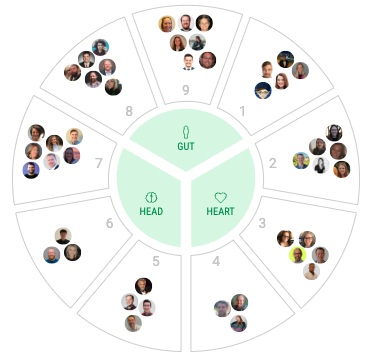
Type 1s are one of the most common Enneagram types, making up 15% of over 883,560 Cloverleaf Enneagram respondents. You’re the people who keep teams and organizations running with integrity, helping to build systems that work not just efficiently but ethically.
But beneath these motivations lie some powerful fears:
- Fear of being morally flawed—that you might be “bad” or “not good enough.”
- Fear of making critical mistakes—especially those that could compromise your integrity or let others down.
- Fear of disorder or failure—when things feel out of control, it can trigger deep frustration and stress.
- Fear of unfairness or corruption—seeing people or systems operate dishonestly is especially painful for you.
In this guide, we’ll dive deep into what makes Type 1s tick—your strengths, challenges, and how you can grow without feeling like you have to carry the weight of the world alone.
Strengths of Enneagram Type 1: The Reformer
As a Type 1, your strengths don’t just make you a reliable person—they make you a force for good in the world. You’re not just about structure and order; you bring integrity, discipline, and a clear vision for how things should be.
Core Strengths of Enneagram 1
☘️ High Integrity – You hold yourself to high moral and ethical standards. If you say you’ll do something, you mean it.
☘️ Reliable & Responsible – People know they can count on you to follow through, meet deadlines, and do things the right way.
☘️ Driven by Purpose – You don’t just work hard for the sake of it. You believe in meaningful work and want to contribute to something bigger than yourself.
☘️ Sharp Attention to Detail – Whether it’s catching a small mistake or refining a process, you have an eye for accuracy that others appreciate.
☘️ Efficient & Organized – You thrive on structure and naturally create order out of chaos, making you an essential part of any team or project.
☘️ Passionate About Improvement – Whether it’s yourself, your work, or the systems around you, you’re always looking for ways to make things better.
What This Means in Work & Life
Your strengths make you a natural leader, even if you don’t see yourself that way. You set the bar for quality and help others operate at their best. But these same strengths can also turn into growth areas if taken too far—perfectionism, burnout, or being too critical (we’ll cover that in the next section).
💡 Coaching Insight: Your high standards set the bar for excellence—but they don’t have to be a solo effort. The best leaders create a culture of shared responsibility rather than carrying the weight alone. Instead of stepping in to ‘fix’ things, experiment with coaching:
- Instead of doing it yourself, Ask, ‘What support do you need to get this right?’
- Instead of correcting a mistake silently, Say, ‘Here’s one way to make this even better next time.’
Challenges & Growth Opportunities for Enneagram Type 1
Your drive for excellence makes you a powerful force—but it also makes you your own toughest critic. You hold yourself to a higher standard than anyone else, and that relentless pressure can leave you feeling frustrated, overworked, or even resentful. So how do you maintain your high standards without sacrificing your well-being?
⚠️ Common Challenges for Type 1s
👉 Perfectionism & Self-Criticism – You set high standards, but when things don’t go as planned, you can be hard on yourself and others.
👉 Struggles with Delegation – Because you like things done right, it’s hard to trust that others will meet your standards. This can lead to taking on too much and feeling resentful.
👉 Frustration with Imperfection – You see how things should be, and it can be exhausting when reality doesn’t match your ideals. Rigid thinking can make it difficult to adapt.
👉 Work-Life Balance Struggles – Your deep sense of responsibility makes it hard to “turn off” work mode. Relaxation can feel unproductive, but it’s essential for your well-being.
👉 Unexpressed Anger & Resentment – Type 1s often repress their frustration, leading to simmering resentment. Learning to express your emotions in a healthy way can improve relationships and reduce stress.
🌱 Growth Strategies for Type 1s
✅ Challenge Your Inner Critic – Instead of focusing on what’s wrong, practice acknowledging what’s working. Self-compassion helps you grow without burnout.
✅ Embrace “Good Enough” – Perfection isn’t always necessary. Ask yourself: Will this still be effective if it’s 90% done?
✅ Practice Letting Go – You don’t have to fix everything. Focus on what you can control, and release what you can’t.
✅ Delegate & Trust Others – Perfection isn’t a solo act. Letting go of control can actually make you more effective in the long run.
✅ Prioritize Self-Care – Rest, creativity, and play aren’t distractions—they make you sharper and more balanced. Schedule time for things that bring you joy.
✅ Express Frustration Before It Builds Up – Instead of repressing anger, find healthy ways to voice your concerns without criticism—it will strengthen your relationships.
💡 Coaching Insight: Type 1s thrive when they have clear expectations and high standards, but their inner critic and perfectionism can lead to burnout. Building in self-compassion and flexibility allows them to sustain long-term success without feeling constantly overburdened.
Type 1 at Work: Strengths & Strategies for Success
Enneagram Type 1s bring a structured, ethical, and disciplined approach to their work. Whether leading a team, managing projects, or driving change, they hold themselves (and others) to high standards and ensure things are done the right way.
How Ones Lead
- Lead by example—hardworking, ethical, and principled.
- Expect excellence but may struggle to delegate.
- Motivate teams by upholding fairness and integrity.
How Ones Work on a Team
- Ensure consistency, structure, and follow-through.
- Organize tasks, create efficient systems, and uphold accountability.
- Can become frustrated when others don’t match their work ethic.
Biggest Workplace Challenge:
🛠 Letting Go of the “If I Don’t Do It, It Won’t Be Done Right” Mindset
Type 1s are incredibly reliable leaders, but that can sometimes translate into taking on too much. If you’ve ever stayed late fixing someone else’s work instead of coaching them to improve, you know this struggle well.
📍 Example: Imagine you’re leading a project, and a teammate submits a draft that’s good but not perfect. Your instinct? Fix it yourself. But what if, instead, you gave clear, constructive feedback and let them refine it? This not only frees up your time but also develops a culture of shared excellence rather than solo perfectionism.
Communication Style
- Thoughtful and well-structured in their messaging.
- Focused on accuracy and clarity, but can come across as too direct or critical.
- Benefit from softening feedback and recognizing effort over just results.
Ideal Work Environments for Type 1s
You thrive in environments that value structure, integrity, and precision—where work is done thoroughly, not just quickly. Some of the best industries for Type 1s include:
✔️ Law & Compliance
✔️ Education & Academia
✔️ Research & Policy Development
✔️ Healthcare & Medicine
✔️ Nonprofits & Ethical Advocacy
☘️ How Cloverleaf’s Enneagram Tips Can Help You:
You don’t need another one-time personality report—you need daily coaching insights that show up right when you need them. Whether it’s learning to give feedback effectively, delegating with confidence, or balancing high standards with self-care, Cloverleaf helps you grow as a leader without sacrificing who you are.
📍 Take the Free Enneagram Test & Get Personalized Coaching →
💡 Coaching Insight: Ones can become resentful if they perceive others as less committed or disciplined at work. Managing expectations, focusing on progress over perfection, and recognizing different work styles help prevent burnout and frustration.
Type 1 in Relationships: Communication & Emotional Growth
Enneagram Type 1s bring steadfast commitment, responsibility, and deep care to their relationships. They believe love is shown through doing the right thing, showing up consistently, and helping others improve—sometimes without realizing how their high standards can come across.
How Type 1s Express Care
- Through acts of service, dependability, and unwavering loyalty.
- Helping their partner or loved ones stay organized, disciplined, and on track.
- Offering constructive feedback and problem-solving (though it may feel like criticism to others).
How Type 1s Receive Care Best
- Feeling appreciated for their efforts and high standards.
- Being told they are “good enough” just as they are—not just for what they do.
- Having their values and sense of integrity affirmed by those they care about.
⚠ Potential Relationship Struggles
- Unintentionally critical—because they care deeply, they may focus on how things can improve rather than celebrating what’s already good.
- Can become frustrated when partners or loved ones don’t share their level of discipline or attention to detail.
- May have a hard time relaxing and simply enjoying the moment.
Practical Relational Tip for Type 1s
Shifting from Criticism to Connection
When you care about someone, you want to help them improve—but your feedback can sometimes feel like a report card instead of encouragement.
Instead of focusing on what’s wrong, shift to what’s possible:
🚫 ‘That’s not the right way to do it.’
✅ ‘Want to see a trick I use to make this easier?’
🚫 ‘Why didn’t you just do it this way?’
✅ ‘I’d love to understand how you approached this—can you walk me through it?’
🚫 ‘You never listen to my advice.’
✅ ‘Hey, I noticed something that might help—want to hear it?’
By reframing correction as collaboration, you encourage change without making people feel judged.
💡 Coaching Insight: Ones prefer direct, constructive conversations but can struggle with receiving feedback that feels like criticism. Learning to see feedback as helpful, not personal, allows for deeper connection and growth in relationships.
Under Stress: When the Inner Critic Takes Over
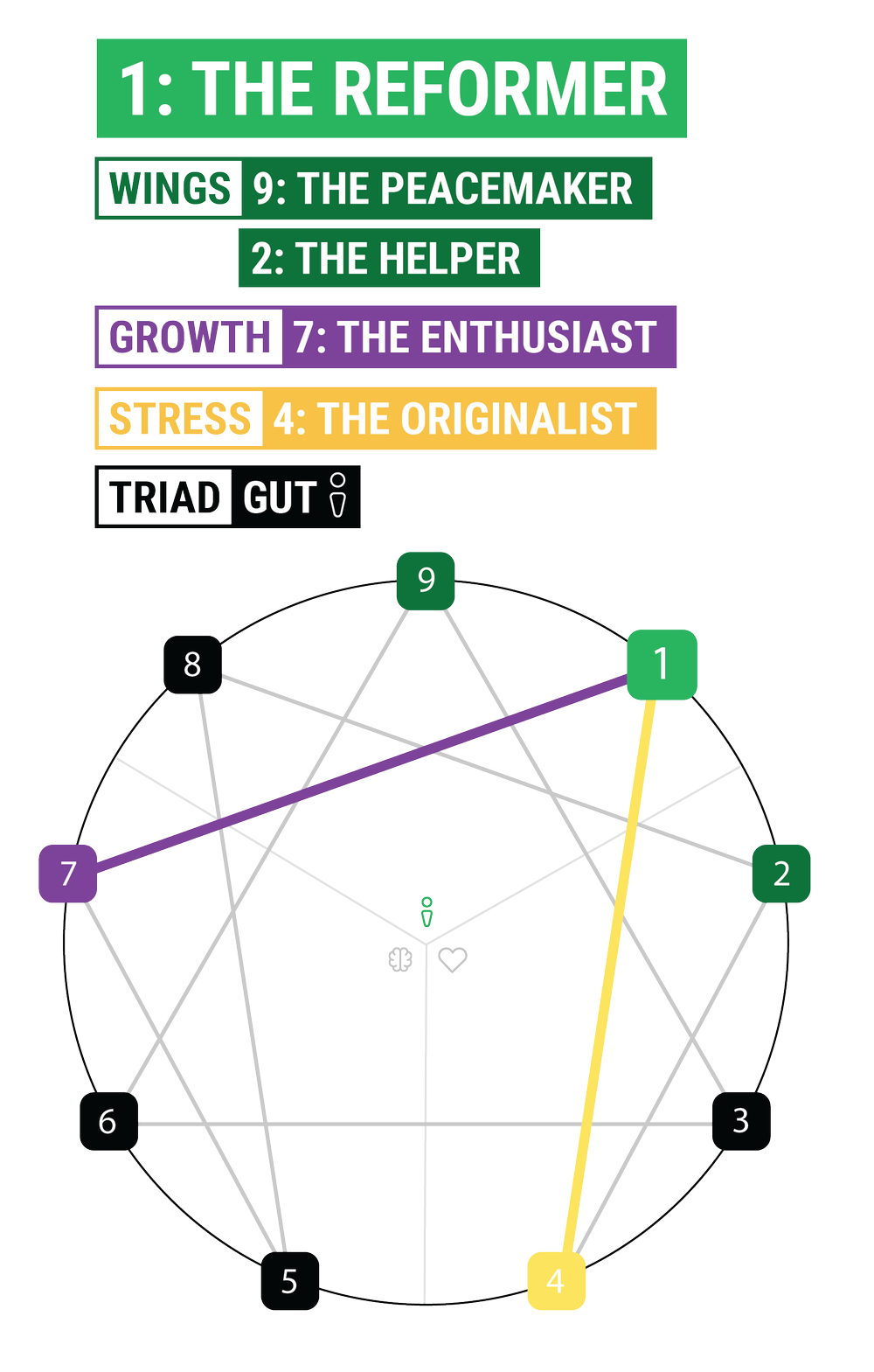
When overwhelmed, Type 1s move toward the reactive emotions of Type 4. This can look like:
- Feeling misunderstood → “No one else seems to care as much as I do.”
- Becoming overly self-critical → “I should be able to handle this better.”
- Withdrawing or isolating → “If I can’t do it right, I won’t do it at all.”
- Frustration turning inward → Instead of expressing anger, they may spiral into resentment, shame, or melancholy.
💡 Coaching Tip: Stress makes Type 1s hyper-aware of flaws—both their own and others’. When you catch yourself ruminating or feeling isolated, pause and ask:
❓ Am I being fair to myself? Would I say this to a friend?
❓ What is one thing I can let go of right now?
Progress happens when you allow yourself to be human, not just ‘right.’
In Growth: Embracing the Joy of Type 7
At their best, Type 1s integrate the lightness and adaptability of Type 7. Growth looks like:
- Letting go of rigid control and trusting the process.
- Finding joy in spontaneity instead of needing every step planned.
- Experimenting instead of perfecting—knowing failure is part of learning.
- Balancing responsibility with play—realizing rest fuels productivity.
💡 Coaching Tip: Try a “healthy risk” this week. Instead of over-preparing or over-editing, ask yourself:
❓ What’s one thing I can say ‘yes’ to without overanalyzing?
❓ How can I approach this with curiosity rather than pressure?
💭 Reminder: You don’t have to choose between high standards and joy—you can have both.
Key to Managing Stress: The Power of Imperfection
The real growth path for Type 1s isn’t about lowering standards—it’s about recognizing when ‘good enough’ is actually good enough.
- Shift from self-criticism to self-compassion → Talk to yourself the way you would mentor someone else.
- Schedule joy, not just work → Give yourself permission to enjoy the process, not just the outcome.
- Redefine ‘progress’ → Improvement isn’t about fixing everything—it’s about learning and adapting.
💡 Coaching Insight: Type 1s thrive when they balance discipline with self-kindness. If you’re feeling overwhelmed, ask yourself:
❓ Am I holding myself to an impossible standard?
❓ How would I handle this if I weren’t afraid of mistakes?
The fastest way to grow isn’t through more control—it’s through trust, adaptability, and giving yourself grace.
Coaching Tips for Type 1s
1. Shift from Overworking to Sustainable Impact
Try this: Instead of taking on everything yourself, identify one task per week that you can delegate—without rewriting or fixing it afterward.
💡 Coaching Insight: Type 1s excel at quality control, but burnout happens when they don’t let others contribute. Delegating isn’t about lowering standards—it’s about helping others step up.
2. Reframing Feedback: From Critique to Collaboration
Try this: Before giving feedback, ask yourself: Am I focusing on improvement, or does this sound like criticism? Then, start with a positive affirmation before offering guidance.
Coaching Insight: Ones often expect direct feedback but struggle when receiving it—practicing curiosity instead of defensiveness can help. Instead of jumping to correction, try asking: “Can you walk me through your thought process?”
3. Self-Compassion as a Tool for Growth
Try this: When your inner critic gets loud, pause and ask, Would I say this to a friend? Reframing self-talk builds resilience and prevents burnout.
💡 Coaching Insight: Ones’ harsh self-judgment leads to stress—building self-compassion helps them sustain high standards without the guilt. Try celebrating wins before moving to what needs fixing.
4. Building Trust in Teamwork: Learning to Let Go
Try this: Instead of correcting a teammate’s approach immediately, ask them about their thought process first. You might find their method is just different—not wrong.
💡 Coaching Insight: Ones feel most frustrated when others don’t share their level of discipline—but learning to appreciate different strengths makes them stronger leaders. Try noticing what’s working before pointing out what’s not.
How Cloverleaf Helps Type 1s Thrive
You already know how to set high standards and push for excellence. But sustaining success without burnout requires more than just hard work—it requires balance, adaptability, and trust.
☘️ Cloverleaf’s personalized coaching insights help Type 1s:
✅ Balance perfectionism with adaptability—learning when “good enough” is truly enough.
✅ Improve communication & feedback skills so guidance feels supportive, not critical.
✅ Develop leadership without micromanaging—trusting others while still upholding integrity.
✅ Reduce stress and embrace flexibility—so high standards don’t come at the cost of well-being.
👉 And the best part? These insights don’t sit in a report—you get them exactly when you need them. Whether it’s a reminder before a meeting, a coaching tip in your inbox, or a team insight inside your daily tools, Cloverleaf keeps you growing in real time.