
87% of employees say poor communication is their biggest workplace challenge. Only 48% feel they truly understand their coworkers. When people don’t feel understood, misalignment grows, feedback gets misinterpreted, and collaboration suffers — and team dynamics become more about navigating personalities than actually doing great work together.
That’s why HR leaders, executive coaches, and Talent Development teams reach for personality assessments like the Enneagram. The framework is excellent — it surfaces motivations, decision-making patterns, and stress responses that explain why people work the way they do. But the framework alone isn’t enough.
If you’ve ever rolled out a personality assessment to a team, you’ve probably seen the same pattern: people take it, the report sparks a few “aha” moments, and within a few weeks the report gets saved (or forgotten) — and nothing really changes. That’s not a flaw in the Enneagram. It’s the gap between knowing your type and applying that knowledge in the moments where behavior actually forms.
A decade of research by organizational psychologist Tasha Eurich found that 95% of people believe they’re self-aware, but only about 10–15% actually are. That gap closes only when self-awareness becomes a shared team practice — which requires the Enneagram to live in daily work, not in a binder six months after the workshop.
Ways to use the Enneagram in the workplace
Unlike other personality tools, the Enneagram doesn’t just tell you how people behave—it uncovers why they do it. This makes it especially powerful for:
- Teamwork → Understanding what motivates colleagues and how they respond under stress.
- Communication → Learning how to tailor feedback and collaboration styles.
- Leadership → Helping managers lead with awareness, adapting to different work styles.
But knowing someone’s type doesn’t magically fix team dynamics. That’s where most teams get stuck — they have the knowledge but no clear way to act on it. As Peggy Murriner’s analysis of how companies use the Enneagram and AI to develop leaders explains: “the manager doesn’t need it at the workshop — they need it Tuesday at 9:50, before the 1:1 with the direct report whose work just got publicly questioned.” Insight that isn’t accessible at the moment of need can’t help change behavior.
Looking for ready-to-run team activities? See 4 Effective Enneagram Team Building Activities for Facilitators & Leaders — the action-oriented companion to this article. This article covers the type-by-type reference; the companion covers four specific activities you can run with your team.
Get the Enneagram in the workplace playbook
See How High-Performing Teams Use the Enneagram to Strengthen Collaboration
The Enneagram reveals more than what’s visible on the surface. You may think you know someone by the personality traits and patterns they display — but without knowing their internal motivations, you can’t truly support or lead them as a teammate.
When teams discuss Enneagram types at work, they open the possibility for empathy, compassion, and understanding. A team that works well together performs better, communicates more clearly, and finds more meaning in the work. Starting that conversation is harder than it sounds — many people resist being vulnerable in professional settings. The long-term payoff usually outweighs the short-term discomfort.
4 Reasons To Use The Enneagram With Your Team
By openly discussing and comparing Enneagram types, you can better understand yourself and others and gain insight into motivations and behaviors. You’ll see an overall improvement in conflict resolution, teamwork, and morale.
1. You Spend A Significant Amount Of Time Together
You likely find that you spend more time with your work team than any other group in your life. The relationships you build with these people can benefit you both short and long-term.
2. Healthy Work Relationships Reduce Stress
A positive working relationship with your team dramatically reduces the stress and mental energy you exert during a typical workday.
As a result, you spend less time thinking about how to avoid conflict and more time focused on decision-making, which will help your team become efficient.
3. Psychological Safety Leads To Better Performance
When you know team members deeper, collective self-doubt goes out the window, and members become more confident when everyone gets to show up at work as their authentic selves.
4. Feeling Connected As A Team Strengthens Collaboration In The Workplace
Having a personal connection with your teammates is essential because you will feel supported. It’s common for people to feel the need to be self-sufficient in the workplace, but true harmony lies with a team that understands interdependency.
Each Enneagram Types At Work
Recognizing one another’s communication style, habits, and strengths
Your work habits and communication strategies depend primarily on fear and internal motivations. When you identify these in yourself and others, you will have better self-awareness and a heightened appreciation for teamwork.
Below are the nine Enneagram types, their communication, and how each personality can “show up” at work.
Select The Enneagram Type You Want To Learn About:
Enneagram Ones at Work
Enneagram Type Ones are referred to as The Reformer. This personality type values hard work, self-control, and setting high standards. They find motivation by being or doing things “right” and fear being imperfect or perceived as wrong.
They’re detail-oriented and typically the person you go to when dealing with difficult situations that require accuracy, quality control, and improvement.
Communication Style
Polite, thoughtful, detailed, and well-formulated. Ones should be mindful that they can become demanding because they have high expectations. Encouraging a One to share their perspective openly can help the team mitigate potential risks.
Under Stress: Move to Four
Stress impacts Ones with a sense of hopelessness, and they become their own worst critics.
When Secure: Move to Seven
When Ones feel secure, they lighten up and are more spontaneous.
Type Ones are people of practical action who are always concerned with doing the right thing. One’s are efficient, organized, and dependable to complete the task.
They do things in a professional, honest and ethical manner. Ones have a knack for creating structures that allow others to thrive.
Enneagram Twos at Work
Enneagram Twos at Work
Enneagram Type Twos are known as The Helper. They are positive, people-oriented individuals invested in the feelings and needs of others. Twos are motivated by being needed and fear feeling rejected by others.
Communication Style
Relational, caring, demonstrative, and supportive. The perceived health of their relationships influences how they communicate with others. They prioritize expressing care and are grateful when others do the same; a thank you can go a long way.
Under Stress: Move to Eight
Stress causes Twos to become aggressive (especially when they don’t feel
appreciated), resulting in attempting to blame or control others.
When Secure: Move to Four
When Twos feel secure, they are more transparent and exhibit creative potential. They can feel and express their full range of emotions responsibly.
This type demonstrates caring and thoughtful behavior and makes it a point to be there whenever you need them. Twos are terrific in roles that require strong people skills, anticipating the needs of others, and social interaction.
A Type Two’s strength can also surface as a weakness. Twos may lack boundaries, losing sight of their ideas, needs, and priorities with lower self-awareness.
They are consummate team players, always opting for self-sacrifice over self-promotion and happy to take on extra work when others are overloaded or in a jam.
Twos are attentive, appreciative, generous, warm, playful, and nurturing. They usually have a large circle of acquaintances and fiercely guard relationships.
Enneagram Threes at Work
Enneagram Type Threes are referred to as The Achiever. These individuals tend to be ambitious, highly productive, and appear as the symbol of success in the workplace.
Threes value appreciation and recognition. Hard work, goal-oriented, organization, and decisiveness are trademarks of this type. They are motivated by admiration and are fearful of lacking value to others.
Communication Style
Straightforward, efficient, focused, and confident. They prepare for meetings to ensure they are clear and goal-focused. It is important to them for others to reciprocate respect and value while communicating.
Under Stress: Move to Nine
Stress can cause Threes to lose focus and be preoccupied with busy work.
When Secure: Move to Six
When Threes feel secure, they are more committed and loyal. They find it easier to identify their emotions and connect with others.
In pursuit of success, Enneagram Threes may railroad others in the workplace, become workaholics, and struggle with accountability.
Threes are energized by being productive, achieving success, and avoiding failure. They can be playful, giving, responsible, and well-regarded by others in the community.
Threes can complete work efficiently and competently to ensure they reach personal goals. A Three has a keen ability to size up tasks and understand the dynamics of work groups. They can also inspire and motivate other people to excel.
Enneagram Fours at Work
Enneagram Type Fours are creative, unconventional individuals within a team known as The Originalist. Fours are motivated to express their individuality and demonstrate fear when perceived as ordinary. They value authenticity and stand by their beliefs.
Communication Style
Intense, authentic, creative, and empathetic. Fours have a strong desire to be understood and want to know how those around them feel.
Enneagram Fours value relationships and connections with other people. They seek to experience authentic feelings and to be understood. This type avoids the ordinary and searches for deeper meaning in their work.
Under Stress: Move to Two
When experiencing stress, Fours can become overly dependent upon others and seek assurance.
When Secure: Move to One
When Fours feel secure, they act on their ideals, practice organization, and use self-control.
Fours can also be empathetic in relationships, supportive, gentle, playful, passionate, and witty. They are self-revealing and can form bonds quickly with others.
Type Fours have an innate talent for identifying and expressing a sense of harmony within their surroundings. They have a gift for helping others to see beauty in their work and are great teammates to help identify unexpected solutions to problems that others may overlook.
Enneagram Fives at Work
Enneagram Type Fives are known as The Sage. They are thoughtful, cerebral types who see and interpret the world through information. Fives are motivated by a desire to be competent. They strive to be capable in all aspects and fear looking uninformed.
Fives are independent thinkers and typically enjoy working alone to process and have time to problem-solve. They are good listeners, observant, and help others understand the truth more soberly and objectively.
Communication Style
Brief, professional, objective, and reserved. Fives rely on research, insight, and knowledge before communicating and, therefore, may need time to share the next steps or ideas. This type appreciates the patience and willingness to listen to new perspectives while conversing.
Under Stress: Move to Seven
Stress can cause Fives to be easily distracted and disorganized. It can also cause them to detach themselves from the team.
When Secure: Move to Eight
When Fives feel secure, they will exude more energy and action, take the initiative, and be decisive.
Fives are kind, perceptive, open-minded, self-sufficient, and trustworthy to teammates. They have strong analytical skills and are good at problem-solving. Fives can be very helpful when teams need objectivity, clarification, or exploration of new ideas.
Enneagram Fives are naturally open and receptive to new facts and impressions, discovering new ideas, research, and innovations – particularly those that are provocative, surprising, unconventional, and profound.
Enneagram Sixes at Work
Enneagram Type Sixes are referred to as The Loyalist. They value preparedness and are dependable individuals you can trust with important decisions. This type is most motivated by stability and fears lacking direction.
Sixes possess excellent problem-solving skills and thrive on helping to create solutions. They are adept at identifying potential problems and researching viable solutions.
Communication Style
Inquisitive, witty, logical, and ironic. Sixes prefer to focus on the task at hand and typically are relational in their approach. They appreciate when others value their input and interpret their concern as a desire for the project’s success.
Under Stress: Move to Three
Stress can cause Sixes to discredit their feelings or drive them toward workaholic tendencies.
When Secure: Move to Nine
When Sixes feel secure, they can reframe unnerving thoughts, accept others, and lower their suspicions.
Sixes are warm, playful, open, loyal, supportive, honest, fair, and reliable. They are cooperative individuals willing to do what it takes to support the team.
Sixes value experience and data when considering new solutions or next steps. When deciding, a Six will often look to a book, leader, or institution for reliable answers.
Enneagram Sevens at Work
Enneagram Type Sevens are known as The Enthusiast. They are spontaneous, imaginative, charming people who bring fun to the workplace. They’re motivated to be happy and are fearful of experiencing limitations.
Sevens have a positive outlook on life, and their enthusiasm proves a valuable asset to their team. They see opportunities others may miss but can be impulsive and fail to see projects through.
Communication Style
Fast-paced, energetic, visionary, and confident. Sevens like to keep conversations upbeat. When communicating with them, look for areas of agreement and opportunities that foster synergy.
Under Stress: Move to One
Stress can lead Sevens towards criticism, fault-finding, and narrow-mindedness.
When Secure: Move to Five
When Sevens feel secure, they accept the good and the bad. They can slow their pace and focus.
Sevens are lighthearted, generous, outgoing, and caring. They enjoy sharing new experiences with friends and teammates. This type typically radiates joy and optimism, expresses childlike astonishment, and experiences life as a gift.
Enneagram Eights at Work
Enneagram Type Eights are referred to as The Challenger. These individuals stand up for what they believe in and care about justice. Eights find motivation in remaining in control and fears appearing weak or vulnerable.
Eights often emerge as natural leaders because they are action-takers and can sometimes overstep boundaries to move work forward; however, this can cause relational strain with teammates.
Communication Style
Authoritative, direct, bold, and strategic. Eights communicate in a straightforward, passionate manner. They are comfortable with debate and rarely avoid conflict. To connect with an Eight, share honestly and openly, without hesitation.
Under Stress: Move to Five
Stress causes Eights to withdraw and become rigid. They will lose touch with their emotions and ignore signs that it is time to take a break.
When Secure: Move to Two
When Eights feel secure, they become relatable to others, exhibiting warmth and compassion.
Type Eights are self-reliant, strong, and independent. They can also be loyal, caring, cheerful, and generous. Eights will take the initiative and prefer to be in charge to exercise the freedom to choose what they believe is the right course of action.
Eights can also give others a sense of strength through their positive support. They instinctively know when something is “off” within the environment and do not hesitate when sharing their opinion.
This type often is a source of strength for others, likes to protect the weak, and develops a tremendous sense of responsibility.
Enneagram Nines at Work
Enneagram Type Nines are known as the Peacemaker. They are mediators of the group and thrive when helping differing parties resolve conflict. Their motivation stems from a desire for peace of mind and fears of experiencing overwhelming strife.
Nines can handle difficult conversations and remain level-headed. They are commonly the person people go to when they need a resolution or a second opinion concerning a pressing issue.
Their feelings do not drive them; they have keen instincts that help them gather wisdom to share. Nines are not confrontational but can navigate conflict to ensure both sides feel understood.
Communication Style
Affirming, supportive, easygoing, and diplomatic. Nines are open to others and value their opinions. They enjoy meaningful conversation and appreciate when others reciprocate the same.
Nines can become passive and indecisive when they do not feel understood; therefore, inviting their input is a great way to ensure you receive their counsel.
Under Stress: Move to Six
Stress impacts Nines with a sense of anxiety and indecisiveness. They can begin to overcommit and doubt their abilities.
When Secure: Move to Three
When Nines feel secure, they tend to be more practical, productive, focused, and confident.
Nines want to keep the peace, connect with others, and avoid conflict. Typically, Nines are kind, gentle, reassuring, supportive, loyal, and nonjudgmental. This type can exhibit various characteristics, from gentle and mild-mannered to independent and forceful.
They have excellent listening skills, are objective, and excel at unbiased mediation with the ability to see and appreciate the positive aspects of both sides.
Which Enneagram types work best together?
Each Enneagram type has the potential to work well with others. Of the nine styles, no two are inherently more compatible than the others. Instead, each individual must choose to be understanding and compassionate to the needs of the other.
Different situations and circumstances could call out different characteristics in each type. You can work well with anyone by acknowledging what motivates them and leveraging those strengths.
Using the Enneagram at work helps you become a better team — not by segregating or partnering with people most similar to you, but by understanding the differences that matter when work gets hard.
The Enneagram is most helpful to your team when the insight makes it back into the moments where behavior is forming. That’s the gap modern AI coaching is built to close. As Kirsten Moorefield’s piece on AI coaching with behavioral assessment integration explains, organizations with 1,000+ employees use an average of 20 different assessment tools — most of them sitting unused after the initial debrief.
A team that knows the Enneagram and a team that can successfully apply it will work noticeably different together
The first kind of team has nine type descriptions in a folder somewhere. People reference their type when they want to explain themselves. New hires don’t get inducted into the language because nobody’s quite sure how. The Enneagram becomes the personality test that ran for a quarter and faded.
The second kind has the language alive in their day-to-day. The team’s type map is current. Managers know that their Type 6 lead asks questions as commitment, not resistance. They know that their Type 9 colleague needs space to surface the dissent that the team most needs to hear. New hires get type-aware coaching before their third 1:1, not eighteen months in.
The Enneagram doesn’t change a team. The team changes itself by using what the Enneagram surfaces. The companies that get sustained value from any of this don’t have a better assessment — they have a system that can deliver the assessment insight back in front of people on Tuesday morning, when it is most helpful to the individuals on the team.
Frequently asked questions
How does the Enneagram help in the workplace?
The Enneagram helps in the workplace by giving teams a shared vocabulary for behavioral differences that would otherwise read as personality flaws. When a Type 8’s directness is named as a Type 8 pattern (not “she’s intense”), and a Type 9’s quiet thoughtfulness is named as a Type 9 pattern (not “he’s checked out”), conflict depersonalizes. The Enneagram also reveals the why behind workplace behavior — motivation, stress responses, and growth patterns — which makes feedback, collaboration, and leadership development meaningfully more specific.
What are the 9 Enneagram types at work?
The 9 Enneagram types at work are:
Type 1 (The Reformer — detail-oriented, ethical, structure-builder),
Type 2 (The Helper — relational, supportive, anticipates others’ needs),
Type 3 (The Achiever — ambitious, goal-oriented, decisive),
Type 4 (The Originalist — creative, authentic, finds deeper meaning),
Type 5 (The Sage — analytical, independent thinker, problem-solver),
Type 6 (The Loyalist — preparedness-focused, reliable, stress-tests plans),
Type 7 (The Enthusiast — spontaneous, optimistic, sees opportunities),
Type 8 (The Challenger — direct, action-taker, natural leader),
and Type 9 (The Peacemaker — mediator, level-headed, sees both sides).
How do you use the Enneagram for leadership?
Use the Enneagram for leadership by mapping each direct report’s type, then adjusting your communication and feedback style to fit how that type processes information and responds under pressure. A Type 5 needs context and processing time before commitment; a Type 8 needs the issue named directly; a Type 9 needs space to feel heard before pivoting to solutions. The leverage isn’t in knowing the types abstractly — it’s in having the type-specific guidance available before the 1:1, before the difficult conversation, before the team meeting. Static reports rarely accomplish that; in-the-flow coaching does.
Why does the Enneagram matter for team performance?
The Enneagram matters for team performance because most team conflict isn’t a values mismatch — it’s a behavioral-difference mismatch the team doesn’t have language to name. When the Enneagram becomes part of the team’s working vocabulary, friction depersonalizes (“she’s not being difficult; that’s a Type 1 pattern showing up under pressure”), feedback becomes more accurate to the individual, and managers can anticipate where their team will get stuck before it happens. Tasha Eurich’s research found that 95% of people believe they’re self-aware while only 10–15% actually are — shared frameworks like the Enneagram are how teams close that gap.
How does Cloverleaf turn the Enneagram into daily coaching?
Cloverleaf integrates Enneagram insights directly into the tools your team already uses — Slack, Microsoft Teams, Outlook, and Workday. Instead of static reports, managers receive coaching nudges before 1:1s, during difficult conversations, and after team meetings — tailored to each direct report’s type. Cloverleaf’s AI Coach also pairs the Enneagram with other validated assessments (DISC, CliftonStrengths, 16 Types, Insights Discovery) for a fuller picture of how each person tends to communicate, decide, and handle stress.
Take the free Enneagram assessment on Cloverleaf to see your type and get personalized insight, or see how Cloverleaf’s AI Coach brings type-aware guidance into the tools your team already uses.
The Enneagram is a useful tool for building stronger, more connected teams. By understanding each person’s core motivations, communication styles, and stress responses, teams can improve collaboration, resolve conflict more effectively, and create a culture where everyone thrives.
But knowing your type isn’t enough. The hard part — and the part most teams get wrong — is making Enneagram insight show up in the daily moments that actually shape how a team works together. According to a DDI webinar poll cited by Peggy Murriner in her piece on choosing the right personality assessment, 53% of HR and L&D professionals say the top reason personality assessments fail to drive development is “lots of data, but no clear next steps.” The data exists. Nobody knows what to do with it.
The four activities below are designed to close that gap. Each one is an action you can run with your team this month, paired with the underlying logic for why it works. They help your team:
- ✅ Understand each other’s work styles for better collaboration.
- ✅ Navigate conflict with more awareness and empathy.
- ✅ Run more productive meetings by leveraging different strengths.
- ✅ Reinforce Enneagram insight in the flow of work — not just at the workshop.
If you’re looking for a type-by-type reference (how each Enneagram type shows up at work — communication style, stress responses, strengths, growth patterns), see How to Use the Enneagram in the Workplace to Develop All Nine Types. This article focuses on what to do as a team. The companion article covers what each type is.
Creating space for these conversations might feel uncomfortable at first, but the long-term benefit of a more cohesive, engaged team makes the effort worth it.
Get the Enneagram Guide To Healthy Teams to see how high performing teams use the enneagram to improve teamwork.
4 Enneagram team building activities
1. Use a messaging channel to share what the team is learning about different types
Start a Slack channel, Microsoft Teams thread, or recurring email digest where teammates share what they’re learning about themselves and one another. Affirming and recognizing new insights is a low-effort, high-leverage way to celebrate and reinforce a healthy team culture.
Why this works:
A decade of research by organizational psychologist Tasha Eurich found that 95% of people believe they’re self-aware, but only about 10–15% actually are. That gap closes only when self-awareness becomes a shared team practice — not an individual exercise. A teammate who hears their colleagues describe what they’re learning about themselves gets calibration data they can’t generate alone. Over time, the team builds a shared language for behavioral differences.
Self-awareness has business consequences. A Korn Ferry study of 6,977 professionals across 486 publicly traded companies found that organizations with self-aware leaders consistently outperformed peers on financial measures. The “soft” stuff isn’t soft — it’s the foundation of how decisions get made under pressure.
How to run it:
- Create a dedicated channel — #enneagram-learnings, #what-i-noticed-this-week, whatever feels right for your culture.
- Seed it with three or four prompts from the team lead in the first two weeks: “This week I noticed my Type 6 default kicked in when [specific situation]. Here’s what I tried instead.”
- Invite — don’t require — participation. Vulnerability that’s mandated stops being vulnerable.
- Refresh prompts monthly so the channel doesn’t become stale.
The activity reinforces the Enneagram insight your team has already absorbed. The channel becomes the system that keeps the insight active and visible after the workshop ends.
2. Build an enneagram type map to indicate each team member’s number
Recognizing the makeup of your team illuminates strengths and growth areas, helps you anticipate how different team members will react in shared situations, and gives the team a quick reference when conflict surfaces.
Why this works:
Behavior change research consistently shows that insight which isn’t reinforced at the moment of application doesn’t change behavior. Within a week of a typical workshop, participants retain as little as 20% of what they learned. A team Enneagram map fights against learning decay by giving the team an artifact they can return to in real moments — before a 1:1, during a tense Slack thread, when staffing a project.
What makes learnings from the Enneagram stick is having the type-level insight available the moment someone needs it.
How to run it:
Path A: DIY (for teams not yet using a behavioral platform)
- Confirm each team member’s type (with their consent — Enneagram type is personal data, not org chart data).
- Build the map as a Notion page or shared doc that’s editable, not a static PDF.
- Add a one-line “what they typically need” note next to each name (e.g., “Type 5: needs context before commitment; appreciates async processing time”).
- Share it with the team and revisit it quarterly — types don’t change, but team composition does.
Path B: Activate Cloverleaf’s Team Enneagram dashboard
If your team is already using Cloverleaf — or you’re evaluating it — the Team Enneagram view does this work automatically. Each team member’s headshot appears placed on the Enneagram symbol at their type. The dashboard surfaces the team’s triad distribution at a glance: how much of your team sits in the Head Triad (Types 5, 6, 7 — analytical, planning-focused), the Gut Triad (Types 8, 9, 1 — instinct, action-oriented), and the Heart Triad (Types 2, 3, 4 — relational, image-aware).
That triad-level read often reveals patterns the team doesn’t consciously see. A team that’s 46% Head / 29% Gut / 26% Heart will spend more energy stress-testing plans than executing them. A team weighted toward Heart will spend more cycles managing how things land than what gets decided. Knowing the distribution explains friction patterns the team would otherwise misread as personality issues.
The dashboard is live — when team composition changes, the map updates. When new members take the assessment, they appear automatically. And because it lives inside the same platform that delivers coaching nudges in Slack, Teams, Outlook, and Workday, the type-level insight is available in the moments where behavior is forming — not stored in a doc someone has to remember to open.
👉 Learn more about how Cloverleaf’s AI Coach works →
3. Facilitate team discussions using questions that highlight strengths
Block time on the calendar for a focused team discussion using prepared conversation starters. The structure prevents the “we’ll discuss it sometime” pattern that kills good intentions, and the questions themselves should pull strengths forward rather than lead with gaps.
Why this works:
A landmark meta-analysis by Kluger and DeNisi examined 607 studies on feedback and found that roughly one in three feedback conversations actually decreases performance afterward — not because the feedback was wrong, but because the framing made it land as a threat to identity rather than as information. When Enneagram-themed discussions are framed around what’s wrong with each type (“Type 1 perfectionism is annoying,” “Type 8 directness is too much”), the framework becomes a vehicle for identity threat instead of self-awareness. The fix is structuring the conversation around strengths and contributions, not flaws.
How to run it:
Designate a 60-minute meeting. Pose two or three of these questions and rotate through team members:
- When you make decisions, how does your type’s natural lens show up? Where does it serve the team well?
- Share a specific moment when you noticed a teammate using their type’s strengths in a way that helped the work.
- What’s one positive example of how Enneagram awareness has helped you collaborate with someone on this team?
- Describe what conditions help you do your best work — and how your type explains those preferences.
- What unique contribution do you notice each teammate making? Be specific.
- What about your type’s motivation pattern affects how you show up under pressure?
- In what way is shared self-awareness changing how this team operates day-to-day?
Limit the conversation to two or three questions per session. Depth beats coverage.
4. Use technology to activate Enneagram insight in the flow of work
Most assessment platforms stop at the report — and that’s where most Enneagram team programs lose momentum. The activity instructions above all share a common dependency: they require team members to remember the insight at the moment that matters. That’s a lot to ask of someone preparing for a hard 1:1 at 9:50 on a Tuesday morning.
Why this works:
Modern AI coaching platforms can deliver Enneagram insight directly into the tools your team already uses. As Peggy Murriner’s analysis of how companies use the Enneagram and AI to develop leaders explains, the manager doesn’t need the insight at the workshop. They need it Tuesday at 9:50, before the 1:1 with the direct report whose work just got publicly questioned. They need it Thursday afternoon, before they reply to the cross-functional partner who has been pushing back.
Static reports put the entire burden on the team member to remember what they read, interpret it correctly, and apply it in the moment. Most won’t — not because they don’t care, but because they’re moving between six meetings and a full inbox. As Kirsten Moorefield’s piece on AI coaching with behavioral assessment integration makes clear: when validated assessments are integrated as a foundational data layer, AI coaching can move from pattern-based guidance to personalized, context-aware insight that helps people respond more effectively in real moments of stress, pressure, and teamwork.
How Cloverleaf brings Enneagram insight into the flow of work:
- A shared team dashboard so everyone can see how different types interact, communicate, and make decisions
- Coaching nudges in Slack, Microsoft Teams, Outlook, and Workday — arriving before 1:1s, during difficult conversations, and after team meetings
- Specific guidance on how each teammate handles stress and growth based on their type, surfaced when it’s relevant
- Integration with the validated assessments your organization already owns — DISC, 16 Types, CliftonStrengths, Insights Discovery — not just Enneagram in isolation
That’s the architecture of activation: the data your team already has becomes context that arrives at the moment it matters, instead of a report that get’s lost in a folder.
👉 Take the free Enneagram assessment on Cloverleaf to start, or see how Cloverleaf turns assessment results into daily coaching for your team.
How to ensure the impact of Enneagram activities influences your team
The four activities above can help change how your team talks about itself.
What it could be less effective at changing, on their own, is how your team behaves on Tuesday morning.
A lot of teams can run incredible Enneagram offsites — the kind where two people who’ve been quietly resenting each other for a year finally see what’s been happening between them. Real understanding. Real apologies. Real intent to do things differently.
A week later, they’re right back where they started.
That isn’t a problem with the framework. The Enneagram is doing exactly what it’s supposed to do. The problem is what team members are expected to do with it once the meeting ends — essentially, “remember this in the moments it matters, while you’re rushing between calendar blocks and Slack threads.”
That’s a lot to ask of anyone.
The four activities are great starting points. The system that puts the insight in front of the team at the moment it matters is what makes them stick.
What’s one moment in your team’s week where the right insight, at the right time, would actually change what happens next?
The Enneagram Guide To Healthy Teams
See How High-Performing Teams Use the Enneagram to Strengthen Collaboration
Most teams that use the Enneagram follow the same arc. The workshop is good — sometimes genuinely moving. People recognize themselves. A few pairs have the kind of conversation you only have when you finally have language for what’s been happening between you. There’s energy in the room.
Then quarter-end hits. The urgent crowds out the important. The framework gets pulled up occasionally, usually to explain someone’s behavior after the fact. Within a few months, the Enneagram has become a noun — “I’m a Four” — instead of a verb.
This isn’t a motivation problem. It’s a structure problem. The insight is there. What’s missing is a set of enneagram coaching questions designed for real workplace moments — the 1:1, the feedback conversation, the team meeting where tension is simmering just below the surface.
This guide is for managers, coaches, and HR leaders who already know the Enneagram and want to use it more intentionally in team settings. It’s organized around five actual use cases, adds type-specific coaching questions for all nine types, and covers how to ask different questions depending on which triad you’re working with.
If your team hasn’t taken the Enneagram yet, start with the free Enneagram assessment — knowing each person’s type is the prerequisite for everything that follows.
The Enneagram Guide To Healthy Teams
See How High-Performing Teams Use the Enneagram to Strengthen Collaboration
Two elements that determine whether an Enneagram question gets a real answer or a rehearsed one
Not all Enneagram questions are equal. Generic prompts like “what resonates with your type?” produce surface-level answers. The questions that actually shift something are the ones that connect type to a specific real situation — a recent decision, a current challenge, a moment this week that felt like the type showing up.
Two structural elements help. First, someone needs to be processing and someone needs to be listening — what the original Enneagram conversation framework called the processor and the listener. The processor’s job is to elaborate, resist the one-sentence answer, and stay curious about what they’re discovering. The listener’s job is harder: resist the urge to relate, respond, or redirect. When a listener says “me too,” the processor stops processing and starts performing.
Second, the best enneagram discussion questions for work are specific about timing. “When you’re under stress” is more useful than “in general.” “Before you replied to that email” is more useful than “in conflict situations.” The more the question anchors to something that already happened, the more honest and useful the answer becomes.
One more thing worth naming: type is a pattern, not an identity. The Enneagram is most useful when it’s treated as a lens for understanding a recurring behavior — not a label that explains everything. Questions that invite reflection (“does this feel true?”) land better than questions that assume (“as a Type 8, you must…”). The goal is self-awareness in service of behavior change, not self-categorization.
Enneagram questions for five team situations: 1:1s, feedback, conflict, collaboration, and kickoffs
The questions below are organized around five workplace situations where Enneagram insight is most useful. They can be used in 1:1s, team meetings, coaching sessions, or as reflection prompts before a significant conversation.
Opening a team conversation
These work well at the start of a team meeting, a new project kickoff, or whenever you want to establish a shared language without requiring deep vulnerability right away. They’re lower-stakes entry points.
- Which two or three lines from your type description are most true for you right now — this week, not in general?
- Give one example of a time this month when your type showed up at its best. What was the situation?
- What does your type tend to need from teammates when a project is under pressure? Be as specific as you can.
- What’s a collaboration pattern you’ve noticed in yourself that people on this team probably don’t know about?
Exploring core motivations and fears
These go deeper and work best when there’s already some psychological safety in the room. They’re the questions worth making time for — the ones that explain the “why” underneath behavior people have been interpreting as personality or attitude.
- Your type’s core fear is [X]. In what ways has that fear shaped a decision you’ve made at work in the last 90 days — not a dramatic decision, a small one?
- Your type is motivated by [X]. Think about the last time you felt genuinely energized by your work. What was true about that situation that aligned with your motivation?
- Where do you think your motivation could actually hold you back on this team — not theoretically, but specifically?
- As a coworker, what is the best way I can support you when your core fear is active? What does that look like in practice?
Reference guide: Core fears by type
1: being wrong or imperfect
2: being unwanted or unloved
3: being worthless or without achievement
4: having no unique identity
5: being incompetent or depleted
6: losing support or direction
7: being limited or in pain
8: being controlled or vulnerable
9: being in conflict or disconnected
Stress and growth patterns
The Enneagram’s arrows describe where each type moves under stress (disintegration) and toward growth (integration). These patterns are often the most actionable part of the framework for teams, because they explain behavior that seems inconsistent or out of character. For more on how this works, see the full breakdown of Enneagram arrows.
- When you’re under significant stress, what does your behavior look like to other people? Is what you’re showing on the outside matching what’s happening on the inside?
- Your type moves toward [disintegration type] under stress. Can you give an example of when you’ve seen that pattern in yourself at work? What triggered it?
- Your type moves toward [integration type] in growth. What conditions at work tend to bring out that version of you? Can we create more of those?
- What’s a signal that would tell your teammates you’re moving into stress — something they could notice and gently name for you?
Working styles and collaboration
These are practical enough for weekly use — in team meetings, project retrospectives, or at the start of any new working relationship. They turn Enneagram insight into operational clarity.
- What does a productive week look like for you, and how much of that is driven by your type?
- What kind of feedback actually changes your behavior — and what kind makes you defensive even when you know it’s right?
- Where on this team do you see a natural synergy between your type’s strengths and someone else’s? Where do you anticipate friction?
- What’s one thing about how you process information or make decisions that, if your teammates understood it, would reduce unnecessary friction?
Feedback and conflict
These are the highest-stakes questions — reserve them for contexts where trust is established and the conversation has been set up intentionally. They produce the most behavior change when they land well.
- When you receive critical feedback, what’s your default move? Push back, withdraw, accommodate, reframe? Is that move serving you?
- Think of a conflict you’ve had at work where you didn’t like how you showed up. What was your type doing — and what would growth have looked like in that moment?
- What does it look like when you’re in a conflict and you’re handling it well, given your type?
- What’s something a teammate could say or do that would help you get back to your best self during a difficult conversation?
Type-specific coaching questions for all nine types
Generic questions are a starting point. The questions below go deeper — each pair is designed specifically for that type’s core motivational pattern. Use them in 1:1s or coaching conversations where you know the person’s type and want to go beyond the surface. For context on how each type shows up at work, see Enneagram types at work.
Type 1 — The Reformer
- Where are you holding yourself to a standard no one else in the room agreed to? What would it look like to let that standard be lower?
- Between conviction and condemnation — which is driving you right now? How can you tell?
Type 2 — The Helper
- What’s something you need right now that you haven’t asked for? What’s making it hard to ask?
- Where are you helping in a way that’s costing you? Is the cost sustainable?
Type 3 — The Achiever
- Set aside what you’ve accomplished. What do you want people to know about who you are?
- Where are you working harder than the goal requires — and what does it feel like to slow down?
Type 4 — The Originalist
- What’s something ordinary about your situation right now that might actually be valuable — that you might be overlooking because it doesn’t feel significant enough?
- When you imagine yourself at your best in this role, what are you doing differently from what you’re doing today?
Type 5 — The Sage
- What would you contribute to this decision right now if you felt you already knew enough? What’s actually stopping you?
- Where are you holding back energy or insight that this team needs? What would it take to put it in the room?
Type 6 — The Loyalist
- What’s a decision you’ve been circling for longer than necessary? What would it look like to trust your first read?
- When you imagine the worst-case outcome of this situation, what are you actually preparing for — and is that preparation protecting you or keeping you stuck?
Type 7 — The Enthusiast
- What’s something worth finishing that you’ve been avoiding finishing? What does staying with it require of you?
- What does this project look like if it’s just hard — not fun, not exciting — and you do it anyway?
Type 8 — The Challenger
- Where are you protecting yourself by being in charge? What would it look like to let someone else carry this?
- When was the last time you let someone see you uncertain about something? What happened?
Type 9 — The Peacemaker
- What do you actually want here — not what would keep the peace, not what would make everyone else comfortable, but what do you want?
- Where are you staying quiet to avoid conflict? What’s the cost of that silence for you and for this team?
How gut, heart, and head types respond to Enneagram questions differently — and what to ask each
The Enneagram’s three triads — gut types (8, 9, 1), heart types (2, 3, 4), and head types (5, 6, 7) — describe where each center of intelligence is centered. This shapes not just what people need from a conversation, but how they respond to the questions themselves. For a deeper look at triad dynamics, including how the centers of intelligence differ, that’s covered in full on the triads article.
Gut types (8, 9, 1) — center on instinct and body
Gut types process through action, reaction, and gut instinct. They often know what they think before they can articulate it, and they can feel interrogated by questions that push toward analysis before the body has had a chance to register. With gut types, give the question more space. Ask, then wait. Don’t fill the silence.
Questions that work well: ones anchored to specific recent situations, not abstract patterns. “What happened?” lands better than “what does this pattern tell you?”
Heart types (2, 3, 4) — center on feeling and image
Heart types are processing relational meaning constantly. They notice how the conversation is going, whether the room feels safe, whether the questioner actually cares about the answer. Questions that feel transactional or clinical will produce closed, performative answers.
Questions that work well: ones that acknowledge the relational stakes. “I want to understand how this has been landing for you” opens a Type 2 more than “what’s your communication style under stress?” The warmth in the setup changes what comes back.
Head types (5, 6, 7) — center on thinking and strategy
Head types process through analysis. They often need to think through the question before they can answer it well — and they may resist questions that feel like they’re being asked to commit to something before they’ve had time to think. Questions posed in advance tend to produce better conversations than questions posed in the moment.
Questions that work well: ones with room to explore, not just declare. “What are the possibilities you’re seeing?” gives a Type 7 more to work with than “what’s your decision?” Frame questions as inquiries, not tests.
How Cloverleaf delivers type-aware coaching before the meeting — without the manager having to remember
There is a real ceiling to what a question list can accomplish. It requires someone to remember to use it. It requires the manager to know each person’s type, hold the relevant coaching question in mind, and find the right moment to ask it — usually while they’re also running the meeting, managing the deliverable, or trying to land the feedback in a way that doesn’t blow up the relationship.
Most teams that sustain Enneagram insight after a workshop do it because the insight found a way into their daily work — not as a separate conversation, but as a coaching layer that shows up when it’s relevant.
A calendar reminder before a 1:1 that names the direct report’s type and suggests an opening question. A coaching nudge in Slack that surfaces a specific person’s stress patterns before a difficult conversation. An insight in Outlook that tells a manager how a Type 4 on their team is likely to receive the feedback they’re about to send.
That’s what Cloverleaf does — it puts type-aware coaching in the tools managers are already using, before the moments that matter. The Enneagram doesn’t have to live in a workshop binder. It can show up in the ten minutes before the meeting, where the insight actually changes what happens. For a closer look at how AI coaching and the Enneagram work together, see how companies are building the Enneagram into leadership development programs.
Cloverleaf integrates with Slack, Microsoft Teams, Outlook, and Calendar, as well as HRIS systems and Workday — delivering personalized coaching based not just on type, but on the full assessment profile (DISC, 16 Types, CliftonStrengths®, and more) and the specific people in the conversation. For teams that have already invested in the Enneagram, the question is whether those results are sitting in a PDF or showing up when they can do something.
See How Cloverleaf’s Platform Works
Frequently asked questions
What are the best Enneagram coaching questions for a 1:1?
The most useful 1:1 enneagram coaching questions are anchored to something real that’s currently happening — a project, a relationship, a challenge the person is navigating. Start with one of the stress/growth questions (“what does stress look like for you right now, given your type?”) or a motivation question tied to the current situation. Avoid abstract type questions (“tell me about your core desire”) early in a 1:1 — they tend to produce practiced, theoretical answers rather than live reflection.
How do I use Enneagram discussion questions without it feeling forced?
Setup matters more than the question itself. Name what you’re doing and why: “I want to spend a few minutes thinking through this with the Enneagram in mind — not to analyze each other but to understand what’s actually going on.” That frame separates Enneagram conversations from generic icebreakers. It also signals that you’re looking for something honest, not something impressive.
What Enneagram questions work best for team conflict?
For team conflict, the most useful enneagram questions for teams are the ones that connect behavior to the type’s stress pattern — not to assign blame, but to create a shared explanation for what happened. “When your type is under pressure, it moves toward [X]. Does that match what you experienced in that situation?” That question depersonalizes the conflict without minimizing it. See also: Enneagram activities for teams for additional facilitation formats.
How often should we use Enneagram coaching questions as a team?
Quarterly is the minimum to keep the framework alive; monthly is better for teams actively using it for development. The most effective pattern is lighter and more frequent: one type-relevant question in a weekly team check-in, or a monthly 1:1 that spends fifteen minutes on a single type-specific prompt. The goal is to make Enneagram insight part of how the team talks about work — not a scheduled event.
Can I use these questions if I'm not an Enneagram-certified coach?
Yes — most of these questions don’t require deep certification to facilitate well. What they require is familiarity with each person’s type and genuine curiosity about the answer. If you’re managing a team and each person knows their type, you have enough to start. For more complex applications — Enneagram coaching at the leadership level, group debriefs, integration into talent reviews — working with a certified practitioner adds value.
Three ways to start putting these Enneagram questions to work
If your team doesn’t have Enneagram results yet, start there: the free Enneagram assessment takes about fifteen minutes and gives each person enough to begin using these questions immediately.
If your team has results but isn’t using them, the Enneagram Guide to Healthy Teams is a practical starting point for how high-performing teams structure ongoing use of the framework.
And if the challenge is scale — getting type-aware insight in front of every manager before every meeting, not just the ones who remember to look — that’s the problem Cloverleaf was built to solve. See how it works →
For more on applying the Enneagram in specific workplace contexts: Enneagram types at work covers all nine types in depth. Enneagram activities for teams has structured facilitation formats for groups. Enneagram and AI for leadership development covers how companies are building the Enneagram into leadership programs at scale. And if you’re looking for broader team-building questions beyond the Enneagram, 68 team building questions across DISC, Enneagram, 16 Types, and CliftonStrengths.
How we work has fundamentally changed in the last few years, with remote work becoming an increasingly common aspect of the modern workplace. As teams grow more geographically dispersed, companies face new challenges in managing remote employees and maintaining effective collaboration.
One of the most significant challenges remote employees face is the development of professional familiarity, which entails gaining insight into their colleagues’ work habits, strengths, values, and preferences related to their jobs. – fastcompany.com
At the heart of successful remote collaboration lies the ability to foster self-awareness and emotional intelligence within team members, which is essential for building strong connections and overcoming the social distance that can arise in displaced team environments.
This blog post will explore the importance of self-awareness and emotional intelligence in remote collaboration and strategies for engaging and motivating globally-dispersed teams.
As remote work continues to evolve and expand, organizations must understand the challenges and opportunities this new way of working presents. One key challenge in a hybrid work model is managing the social distance between team members working from home or in remote locations, which can lead to feelings of isolation and disconnectedness.
Organizations can reduce social distance, improve communication, and promote a more cohesive and collaborative work environment by developing self-awareness and emotional intelligence in remote team members.
In the following sections, we will delve deeper into the social distance, explore the benefits of fostering self-awareness and emotional intelligence in remote teams, and provide practical strategies and tools to enhance remote collaboration and communication. Additionally, we will discuss methods for engaging and motivating globally-dispersed teams to create a more inclusive and effective remote work culture.

Understanding Social Distance In A Geographically Dispersed Team
Social distance refers to the emotional connection, or lack thereof, among team members, particularly in remote work environments. As teams become more geographically dispersed, the potential for increased social distance can hurt team dynamics, leading to feelings of isolation and a lack of cohesion within the group.
Negotiation and leadership experts have long advocated for perspective-taking—attempting to understand your counterpart’s thoughts, feelings, and motives. The result is reduced social distance. – hbr.org
If employees feel disconnected, it becomes more challenging to establish trust, maintain open communication, and foster a sense of belonging, which are all crucial for effective team collaboration.
The Challenge Of Connecting And Coordinating In Dispersed Teams
In dispersed teams, connecting and coordinating with one another can be daunting. Differences in time zones, work schedules, languages, and cultural backgrounds can all contribute to the challenges of remote collaboration. As a result, team members may find it difficult to develop strong working relationships, share knowledge effectively, and stay aligned with their colleagues’ goals and priorities. This can lead to miscommunication, confusion, and a decline in overall team productivity.
In response to the diverse needs of its global community, Cloverleaf is refining its platform by integrating core features and functions in multiple languages. Currently, users can select Spanish or German within their dashboard and enjoy the Cloverleaf experience in their chosen language. This enhancement aims to provide a more inclusive and accessible experience for users worldwide.
HUMAN SKILL PROGRAMS ARE HITTING LIMITATIONS...
5 THINGS THIS FREE RESOURCE WILL TEACH YOU
- Close the widening gap between learning and on-the-job application
- Overcome the tension of pausing productivity for development opportunities
- Integrate learning so it is actually in the flow of work
- The evolution of human skill development
- What Automated Coaching™ is and how it works.
Reducing social distance in remote work environments is essential for promoting effective collaboration and fostering a positive team culture.
EI is all about empathy, inclusion, and respect — traits that are more important than ever at a time when managers and employees have no idea what challenges their colleagues are facing… – forbes.com
Addressing social distance is a crucial management task for leaders of asynchronous teams, as it can directly impact overall performance and success. By minimizing social distance, leaders can help their virtual teams feel more connected, engaged, and supported. This, in turn, can lead to improved communication, a better understanding of colleagues’ perspectives, and increased teamwork toward shared goals.
Fostering Self-Awareness And Emotional Intelligence In Dispersed Teams
Self-awareness refers to an individual’s understanding of their emotions, strengths, weaknesses, and thought patterns. At the same time, emotional intelligence encompasses the ability to recognize, interpret, and manage one’s own and others’ emotions effectively.
Both self-awareness and emotional intelligence in the workplace are critical components of successful remote collaboration. They enable teammates to navigate complex interpersonal dynamics, adapt to diverse communication styles, and empathize with their colleagues’ perspectives.
The Benefits Of Self-Awareness And Emotional Intelligence In Remote Work
Developing self-awareness and emotional intelligence can significantly improve remote team collaboration in at least four impactful ways:
Better Communication: Teammates with emotional intelligence are more likely to express their thoughts and feelings clearly and constructively, facilitating open and honest dialogue within the team.
More Collaboration: Self-aware individuals are better equipped to recognize their strengths and weaknesses, enabling them to contribute more effectively and collaborate more closely with their teammates.
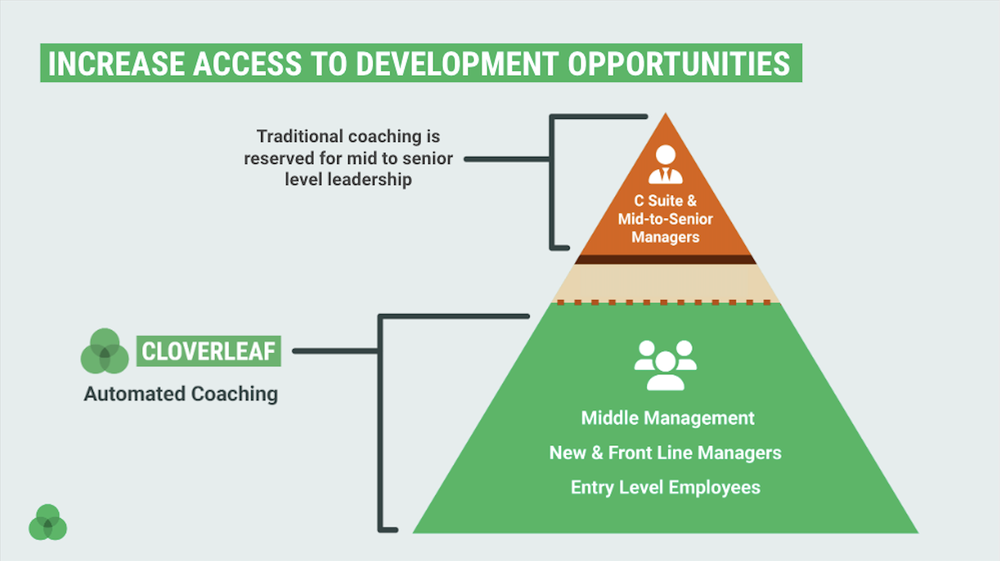
Cloverleaf’s assessment-driven coaching helps team leaders and members to adapt their leadership, communication, and behavior in real-time. The insights help teams uncover and leverage employee strengths and potential. Plus, individuals can see how diverse or similar their team is and how they complement one another.
Less Conflict: An essential aspect of cultivating high emotional intelligence within a team is consciously attempting to understand situations from each member’s unique viewpoint. Emotional intelligence helps teammates identify and address potential conflicts before they escalate, fostering a more harmonious workplace.
Stronger Adaptability: Emotional intelligence serves as a foundation for adaptability. Emotionally intelligent individuals can more easily adapt to changes and challenges, making them invaluable assets in the dynamic landscape of geographically dispersed teams.
3 Practices For Engaging And Motivating Globally-Dispersed Teams
To cultivate a robust sense of unity and teamwork within remote workers, consider adopting the following approaches: promoting transparency, nurturing a sense of community, and encouraging knowledge-sharing.
Embrace Transparency To Strengthen Trust
Establish Clear Goals And Expectations: Clearly define team objectives and individual responsibilities, ensuring everyone is aligned and working towards common goals.
Encourage Regular Communication: Promote remote communication among teammates through various channels, such as video calls, instant messaging, and check-ins.
Use A Coaching Approach: Adopt a leadership mentality responsive to employees’ needs, providing guidance, encouragement, and recognition when appropriate.
Cultivate Inclusivity: Encourage your team to be open to diverse perspectives, experiences, and ideas.
Facilitate Community-Building
To facilitate community-building among geographically dispersed teams, focus on implementing activities that effectively bridge the social distance between teammates. These activities can help foster trust, empathy, and a sense of camaraderie.
Examples include engaging icebreaker questions, scheduling virtual social events, organizing cross-functional projects, and offering training sessions to strengthen team-building, communication skills, and emotional intelligence skills.
Team Building Questions: Kick-off virtual meetings with icebreakers to help people get to know each other better.
Virtual Lunches Or Coffee Breaks: Schedule regular virtual social events where teammates can connect and chat informally.
Collaborative Problem-Solving: Consider projects that benefit from cross-functionality to streamline processes, brainstorm, and improve workflow.
Workshops And Training: Provide virtual training sessions to enhance team-building, effective communication, and emotional intelligence skills.
Encouraging Knowledge-Sharing
Encouraging a culture of knowledge-sharing and ongoing learning is essential for maintaining connectedness, engagement, and motivation within dispersed teams. To foster this culture, consider the following:
Creating A Centralized Knowledge Repository: Utilize a cloud-based platform like Google Drive or Dropbox where teammates can access relevant information, share files, and whiteboard.
Utilize Easy-To-Use Communication Tools: Implement user-friendly collaboration tools like Slack, Zoom, Asana, or Trello so that it is easy to contribute, find, and access information.
Hosting Virtual ‘Show and Tell’ Sessions: Designate regular team meetings to showcase projects and share learnings.
Celebrating Team Achievements: Acknowledge individual and team accomplishments regularly to help reinforce a sense of purpose and pride in the team’s work.
The Importance of Continuous Learning and Adaptation
As remote collaboration continues to evolve, so too must the strategies and practices used to manage and support dispersed teams. To stay ahead of the curve, organizations and team leaders must commit to reassessing virtual collaboration and procedures to ensure they remain effective.
Equally important is fostering a culture of ongoing learning and professional growth among employees, empowering them with the support, tools, and skills to excel in a virtual environment.
The momentum behind the global shift to remote work continues to grow, driven by organizations embracing flexible working arrangements to adapt to their employees’ diverse needs and preferences.
This reality underscores the importance of developing innovative tools, techniques, and best practices to facilitate effective collaboration among coworkers, regardless of their physical location.
Placing emphasis on self-awareness, emotional intelligence, and community-building within dispersed teams enables organizations to maintain agility, productivity, and success in the constantly changing landscape of work. As geographically dispersed teams unite individuals with diverse backgrounds, cultures, and experiences, it is essential for organizations to foster environments that appreciate this diversity and encourage understanding, empathy, and mutual respect among team members.
I love a good team-building question. I’ve watched a room full of strangers engage in meaningful discussion in a short amount of time because somebody asked the right one. And I’ve watched teams who have known each other for years stay stuck behind their politeness because the questions in the room remain boring, cheesy, or unitentional.
Most articles on team-building questions read the same way. A hundred and fifty prompts about pineapple on pizza, your favorite Marvel character, what color crayon you’d want to taste. Some of them are fun. None of them are doing the work you actually need done.
The problem with most team-building questions isn’t that they’re frivolous. It’s that they ignore the data your team already has, and so they leave the most useful conversations on the table.
This article opens with a curated list of general, fun questions for the times you just need to get people talking. Then two sections built around specific high-stakes moments — a new manager joining a team, a team coming out of a hard change. Then four sections mapped to the assessments your team has most likely already taken: DISC, Enneagram, 16 Types, and CliftonStrengths. The assessment-anchored questions are not icebreakers. They are activation.
What makes a team-building question worth asking
Good team-building questions encourage open communication, mutual understanding, and a sense of camaraderie among team members.
7 Qualities Of Good Team Building Questions
1. Promote Openness and Sharing: Framing questions to help encourage team members to share personal insights, experiences, and preferences can build trust and understanding among team members.
2. Be Inclusive and Respectful: The questions should be inclusive, considering team members’ diverse backgrounds and experiences. They should avoid sensitive topics that might make someone uncomfortable.
3. Foster Connection and Relatability: Effective team-building questions often relate to everyday experiences or interests, making it easier for team members to find common ground and connect on a personal level.
4. Encourage Positive Interaction: They should be light-hearted and fun, avoid contentious topics, and focus on eliciting positive responses that can lead to laughter and bonding.
5. Be Varied and Flexible: A mix of questions about personal preferences, hypothetical scenarios, and light-hearted choices keeps the activity engaging and caters to different personalities.
6. Align with Team Goals: The questions can also be tailored to align with specific team goals or themes, such as collaboration, creativity, or problem-solving.
7. Safe and Comfortable: They should create a safe space for sharing, where team members feel comfortable and not judged or put on the spot.
In essence, good team-building questions are those that not only break the ice but also lay the foundation for meaningful, more cohesive team relationships. They should be enjoyable and engaging and contribute to a better understanding and appreciation of each team member’s unique qualities.
Effective icebreakers help put people at ease and encourage open communication, making them a helpful tool for any team-building activity.
Many people cringe or worry that team-building may feel awkward. However, picking the right questions for team-building can help ensure you avoid negative reactions to the discussion. Ideally, effective icebreakers cut through social tensions as teams gather in person or in remote environments.
Get the 2026 AI coaching playbook to see how organizations are implementing AI coaching at scale.
68 team building questions for the workplace
12 fun team building questions that actually get co-workers talking
Below are twelve questions for the moments when you just want some fun options to open a meeting or help your team get to know each other. These questions are specific enough to teach you something, light enough to start with.
- When a project deadline shifts unexpectedly, what’s the first thing you do?
- What’s a piece of work feedback you received that actually changed how you operate?
- What’s a small habit you’ve built into your workweek that most people on the team don’t know about?
- When you’re stuck on something, are you more likely to talk it out, walk away, or push through alone?
- What’s a part of your job that you wish you got to do more of?
- Describe the kind of meeting that drains you. Describe the kind that fills you up.
- Who on this team has changed how you think about your work in the last year?
- What’s a decision you made early in your career that still shapes how you work today?
- What’s something you’ve learned about your own working style in the last six months?
- When was the last time you felt like you were doing your best work? What was different about that period?
- What’s a kind of recognition that actually lands for you — and one that doesn’t?
- If a new teammate joined next week, what’s the one thing you’d want them to know about how to work with you?
8 questions for a new manager joining your team
When a new manager steps into a team, the first 1:1s and team meetings are some of the most consequential conversations they’ll ever have with their people. The ones who use questions well will help them begin to learn in those first conversations to lead each person differently — and that’s almost entirely what the first 90 days are actually for. These questions are designed for those early 1:1s — and for the new manager’s first team meeting.
- What’s the most important thing for me to understand about how you like to work in your first thirty days with me?
- Tell me about a manager you worked well with. What did they do that made the relationship work?
- Tell me about a manager who didn’t work for you. Without naming them — what did the relationship miss?
- How do you want feedback delivered? Quick and direct, in writing, in person, with time to process — what works for you?
- What’s something this team does well that I should not change in my first ninety days?
- What’s something on this team that’s been frustrating you that I’d benefit from knowing about now?
- When you’re at your best at work, what’s true about your week? What’s making that possible?
- If we were sitting here a year from now and you were happier in your role than you are today, what would have changed?
These types of these questions can help the new manager begin to understand the information they need to actually lead each person differently — and to model from day one that this is a relationship where the manager listens before they direct.
8 questions for a team navigating change or uncertainty
In 2026, it seems every team is going through something — a reorg, a layoff round, a new strategic direction, a major AI rollout, a missed quarter. The instinct in those moments is usually to push past the discomfort and get back to execution. That’s can be a mistake. Stress, change, and conflict all activate the same part of the brain. If your team is operating from that activated place and nobody’s named it, decisions get worse, trust thins, and the post-change recovery can take twice as long as it needed to. These questions help your team name what’s actually happening and reset together.
- What’s a part of this change that’s actually working for you? Naming this matters — change isn’t all loss.
- What’s a part of this change that’s making your job harder right now? Be specific about which part.
- What’s something you’re worried about that you haven’t said out loud to the team yet?
- When you imagine the team three months from now on the other side of this, what does a good version of that look like?
- What’s one decision we could make as a team this week that would give us more clarity going forward?
- Who on this team has been carrying more than they should be lately? How can we redistribute it?
- What’s one thing leadership could communicate that would change your experience of this transition?
- What’s one piece of how we used to work that we shouldn’t carry into the next version of this team?
What’s good about these questions is that they don’t pretend the change isn’t happening. They acknowledge the disruption, ask the team to be honest about what they’re carrying, and move toward a shared picture of what the next version looks like. That’s the work that lets a team stay together through hard quarters.
Team-building questions to use with your favorite assessment
If your team has taken DISC, Enneagram, 16 Types, or CliftonStrengths® — or all four, since they each surface different things — the questions below are designed to bring that data into the conversation. They don’t ask anyone to recite their type. They ask the things that the assessment has already started telling you, in language your team can actually use in a meeting.
10 questions to use with your team’s DISC results
DISC measures observable behavior across four quadrants: Dominance, Influence, Steadiness, Conscientiousness. It’s the assessment I reach for first when a team needs a shared language for communication style and conflict patterns.
People have a natural style and an adapted style, and the gap between them is often where workplace friction lives. Use these when your team has taken DISC and you want the data to start showing up in how they actually work together.
- When a project deadline shifts unexpectedly, what’s your first instinct: protect the original plan, rally the team around the change, lock in on what’s still in your control, or audit what changed?
- What pace of decision-making feels comfortable to you, and at what point does the pace tip into rushed or stalled?
- When you’re in a meeting and you disagree with the direction, do you say it in the room, in the hallway after, or in a Slack message that evening?
- What does a ‘good’ email from a teammate look like to you — short and direct, warm and personal, detailed and thorough, or asking the right question?
- When you give feedback to a teammate, do you tend to lead with the headline, with the relationship, with the context, or with the data?
- What does it look like when you’re under pressure? Specifically: how do you behave that’s different from your normal self?
- What’s a working style on this team that’s different enough from yours that you have to consciously adjust for it?
- When you receive a big piece of work to do, do you start by mapping it out, by talking it through, by checking in with the people involved, or by doing the first task to get momentum?
- What does respect look like to you in a working relationship? Naming this matters — the four quadrants experience respect differently.
- If you had to teach a new teammate one thing about how to communicate with you effectively in your first week, what would it be?
The first eight questions roughly map across D, I, S, and C tendencies — but the point isn’t to use these questions to make guesses about each other’s type from the answers. The point is to surface the working patterns DISC describes, in everyday language, so the team can see them, name them, and adjust around them.
10 questions to use with your team’s Enneagram results
Enneagram is different from DISC. DISC can help indicate what a certain style might do. The Enneagram can help you understand why they’re doing it — the motivational driver underneath the behavior. The framework has nine types organized across three centers of intelligence (gut, heart, head), and the magic is in seeing how those centers show up differently in a team room.
Types don’t lock people into identity. Type is a pattern. Right now, for this person, in this moment, here’s what could be going on. Not ‘this is who they are forever.’
- When you’re stressed, what’s the part of yourself that takes over — the part that needs to fix it, the part that needs to feel connected, or the part that needs to figure it out alone?
- What’s a fear that quietly shapes how you make decisions at work? Naming the fear changes how it operates.
- When you imagine your best day at work, is it a day where you accomplished a lot, helped someone, kept the peace, made something new, or got recognized for the work?
- What’s a pattern you’ve noticed in yourself that you’d like the team to know about, so they can help you when it shows up?
- When this team disagrees, what’s your default move — push for the answer, look for what everyone has in common, withdraw to think, or find the gap nobody’s named yet?
- What’s something you’d say yes to in your work that you secretly wish you could say no to? Where does that ‘yes’ come from?
- What’s the kind of work feedback that actually changes you — and what kind makes you defensive even when you know it’s true?
- When was the last time you felt truly seen at work? What did the person do or say that made it land?
- If you had to describe the way you want to grow this year in one sentence, what would it be?
- What’s one thing about how you’re motivated that, if your manager understood it, would change your week immediately?
Two notes. First, these questions don’t ask anyone to name their type. The data is already in the assessment. The questions are for the conversation that follows. Second, every type has an arrow on the Enneagram — a direction the type moves toward in growth and a direction it moves toward in stress. The framework is about movement, not classification. If your team is treating type as identity, the questions above can help shift that into the more useful frame: pattern, not personality.
10 questions to use with your team’s 16 Types results
16 Types — Cloverleaf’s MBTI-style assessment grounded in Carl Jung’s preference framework — surfaces cognitive habits and energy patterns in a way DISC and Enneagram don’t. Where does a person draw energy from (Introvert / Extravert), what kind of information do they trust most (Sensing / Intuition), how do they make decisions (Thinking / Feeling), and how do they prefer to organize the world (Judging / Perceiving)? Use these when your team has taken 16 Types and you want to surface the cognitive differences that are usually invisible until they cause friction.
- After a long meeting, do you need quiet time to process, or do you need to talk it through with someone to land on what you actually think?
- When you receive a new initiative, do you want the full picture and the why first, or the concrete next steps and the details?
- When you make a decision that affects another person, what weighs more in the moment — the logic of the situation, or the impact on the person?
- Do you prefer to keep a plan open and adjust as you learn, or to close the plan early and execute against it?
- Where do you do your best thinking — in a room with other people, in your own head, walking around, or in writing?
- What kind of information makes you trust an answer: data and precedent, or pattern and possibility?
- When someone gives you feedback, what helps it land — clear logic, warmth and care, specific examples, or framing the bigger picture?
- What does a ‘productive day’ feel like to you, physically? Some types feel it as energy and engagement, others as quiet focus.
- What’s something about how you process meetings that the team probably doesn’t know but should?
- Is there a part of your work where the way you naturally process is at odds with how the team operates? Where does that show up?
The hidden value of 16 Types in a team conversation is that it puts cognitive and energy differences into language. A teammate who needs to leave a meeting to think isn’t disengaged; they’re an introvert processing. A teammate who keeps reopening a plan you thought was closed isn’t being difficult; they’re a perceiving type holding the door open for new information. Naming those patterns is what makes the assessment actually change how the team works.
10 questions to use with your team’s CliftonStrengths® results
CliftonStrengths® is different from the other three. DISC, Enneagram, and 16 Types describe how you tend to operate. CliftonStrengths® describes what you’re best at and what comes naturally. The 34 themes organize across four domains — Executing, Influencing, Relationship Building, and Strategic Thinking — and a team that has visibility into the domain mix across its members can delegate, partner, and grow in ways a team without that data simply can’t. Cloverleaf brings your Gallup CliftonStrengths® results into one platform alongside DISC, Enneagram, and 16 Types so a manager can see the full picture in one view.
- What’s one of your top five strengths that comes so naturally you’ve underestimated it as a strength?
- Which of your strengths shows up most clearly when you’re at your best, and which one shows up most when you’re stressed?
- What’s a kind of work you find genuinely energizing? Which of your strengths is doing the work in that moment?
- Where in your week do you have to operate against your top strengths? What’s the cost of that, and what’s the workaround?
- What’s a strength on this team that’s not yours but that you wish you could borrow more often?
- Which two of your top strengths combine into your signature move — the thing you do that nobody else on the team does quite the same way?
- When you’re collaborating with someone whose strengths are very different from yours, what’s the conversation you wish you could have but haven’t had yet?
- What’s a piece of work this team is doing right now where the domain mix (executing, influencing, relationship building, strategic thinking) is uneven? What’s the gap costing us?
- What’s a strength you have that’s been mistaken for a personality trait — that you’d want the team to recognize as a strength, not just ‘how you are’?
- If you could design one thing about your role to lean into your top strengths more deliberately, what would you change?
These questions take CliftonStrengths® from the individual report into team practice. The data is most useful when it’s relational — when a manager can say to a teammate, ‘I notice you tend to use your Activator and Communication strengths together; what would it look like if you led that part of the project?’ Strengths in a drawer help no one. Strengths in conversation start to compound.
See How Cloverleaf’s Platform Uses Assessments To Build Teams
Asking the right questions can help teams build trust and collaborate with coworkers
These questions are a starting point. The deeper work — building a coaching culture that actually moves leadership performance, strengthening the leadership pipeline across managers and senior leaders, and tying coaching to measurable business outcomes — is what we put together in the 2026 Leadership Coaching and Mentoring Playbook. It’s the resource for HR leaders trying to improve leadership performance and build a coaching culture that drives results, not just engagement scores. Download it, take what’s useful for your team, and let me know what lands.
If you’re a TD or HR leader investing in personality assessments and leadership coaching, the question that matters more than which assessment to use is what your team does with the data after the workshop. Pair every assessment investment with a way to bring the data into daily work. That’s how leadership coaching actually moves the leadership pipeline, and how a new manager survives the first 90 days without learning the hard way.
Personality tests for employees can reveal insights into unique traits and work styles that can be invaluable for building culture and collaboration. Some critics argue that these tests may oversimplify complex human behavior, lack reliability, and validity, and suffer from self-report bias.They also raise concerns about potential stereotyping, pigeonholing, and limited growth opportunities that might arise from assigning individuals to personality types.
At Cloverleaf, we believe personality tests can be tremendous sources of data and learning that can be used to significantly improve workplace performance. The way organizations use these assessments is evolving; dynamic data usage and continuous refinement make personality tests more actionable and insightful than ever before.Ever since their inception, assessments have been a static, one-time experience. Meaning users complete a list of predefined questions that translate into a final score that lives on in perpetuity… Thanks to automation, asking additional assessment questions over time is becoming feasible. Assessments can be refined as users engage in additional contexts, such as interactions with specific colleagues or while dealing with certain challenges. – Scott Dust, Forbes Council Member
A balanced approach to tests, while considering their limitations, considers the valuable insights into employees’ strengths, motivations, and preferences. Understanding an employee’s personality inventory can help ensure they are in roles that are an ideal job fit. For example, a more introverted person who doesn’t like speaking in public will most likely not get a job that requires them to do so. Having the right personality for the job or organization will result in a better job fit and bring many benefits—including reduced turnover. – peopledynamics.co
By tapping into the power of behavioral and strength assessments, managers and coworkers can develop more understanding about each other, strengthen collaboration, and reduce conflicts. Embracing assessment tools in the workplace can ultimately lead to a more successful organization and unlock your team’s full potential.
Key Takeaways:
-
Assessment tools can provide profound insight to build understanding, strengthen collaboration, reduce conflicts, and unlock team potential for a more successful organization.
-
When selecting assessment tools for employees, leaders must consider relevance, validity, ease of use, and ways to make the insights actionable.
-
Leaders can use personality assessment to identify employees’ strengths, motivations, and preferences to strengthen organizational performance.
-
The basic practice of “treat others how they want to be treated” can help team members to feel heard, seen, and valued.
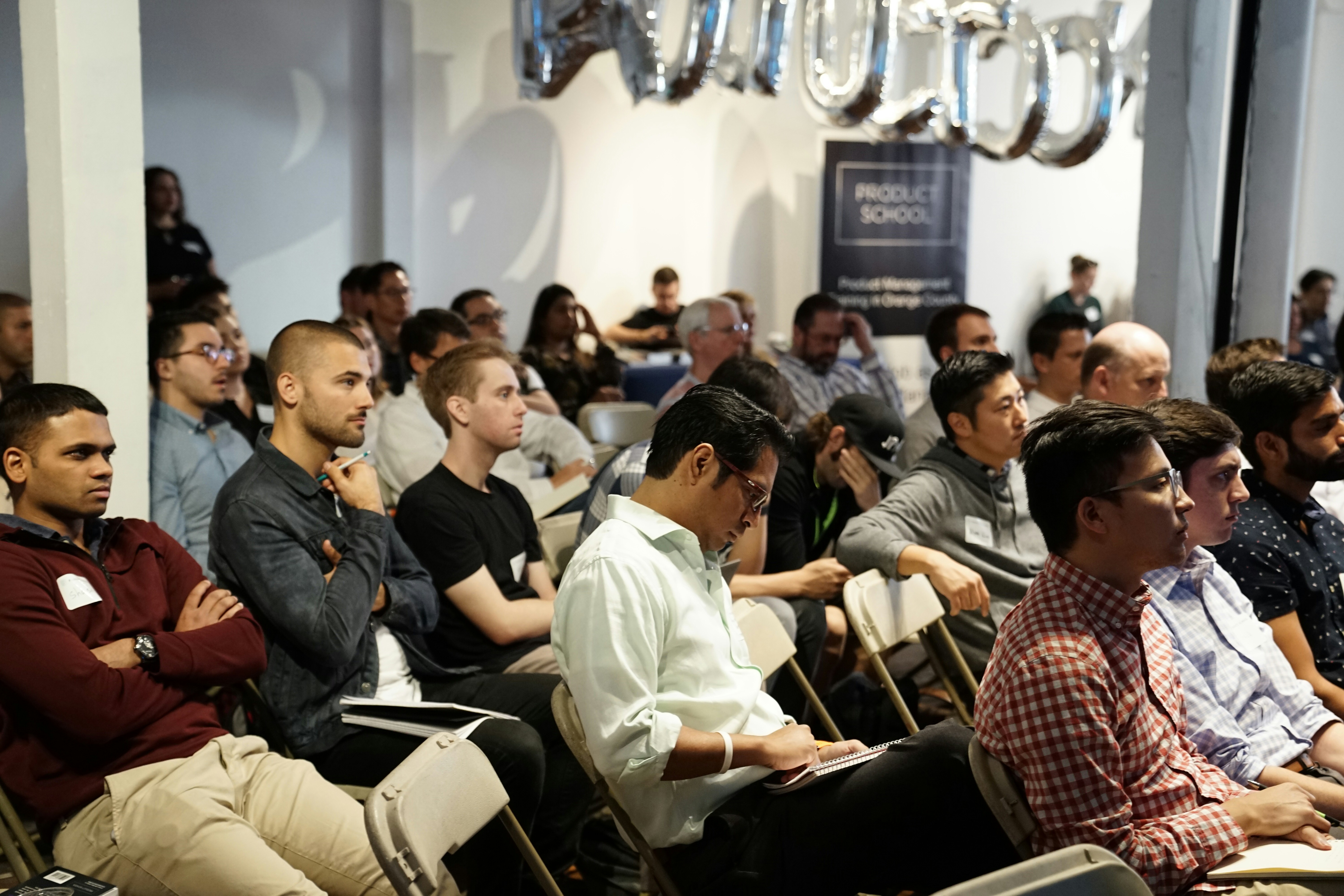
5 Personality Tests For Employees That Improve Teamwork
Teamwork can make work fun, but to get there, team members truly need to understand each other. Personality tests can bridge the gap that often exists between different personality types. People are complicated, each with their own unique ways of thinking and doing. Think of these assessments as the roadmap to navigating the diverse landscape of your team, highlighting the best paths for collaboration and identifying potential roadblocks.
We’re often asked which personality tests are best for the workplace, and we like to start with these five because of the unique insights each one provides. When combined, these layered insights create a comprehensive understanding of each individual and the dynamics that exist within a team.
The five we recommend starting with are:
16 Types
DISC
Enneagram
CliftonStrengths®
VIA
16 Types (MBTI)
The Myers-Briggs Type Indicator (MBTI) categorizes individuals into 16 distinct personality types based on preferences in four areas: Introversion/Extraversion, Sensing/Intuition, Thinking/Feeling, and Judging/Perceiving. Developed by Isabel Briggs Myers and Katharine Cook Briggs, this assessment draws from Carl Jung’s theory of psychological types. It’s invaluable for understanding how individuals consume information, learn, and reach conclusions.
Learn About The 16-Types Assessment
Key Benefits
The MBTI reveals how team members prefer to process information and make decisions. It highlights their mental habits and decision-making engines, offering a deeper understanding of their intrinsic motivations. By recognizing these habits, leaders can create buy-in, minimize miscommunication, and build trust within their teams.
Use Cases
Individual Growth: Helps individuals uncover their unique cognitive preferences, empowering them to understand how they best process information and make decisions. This self-awareness allows them to leverage their strengths, develop more effective strategies for personal growth, and increase their job satisfaction.
Team Dynamics: Enhances team dynamics by revealing the diverse thinking and communication styles within the group. By understanding these differences, teams can reduce friction, foster mutual respect, and collaborate more effectively, leading to a more cohesive and harmonious working environment.
Leadership Development: Enables leaders to tailor their management style to align with each team member’s natural preferences. By adapting their approach, leaders can boost engagement and productivity, creating an environment where everyone feels valued and understood. This empathetic leadership fosters a motivated and high-performing team.
Disc
DISC is a quick and easy-to-remember assessment that measures four traits: Dominance, Influence, Steadiness, and Conscientiousness. By observing your team’s communication styles and level of activity in conversations, you can better understand their needs and motivations. Adjusting your approach based on their DISC profile can improve collaboration and productivity.
Key Benefits
DISC helps teams quickly recognize how each member communicates, responds to challenges, and influences others. By observing these traits, leaders can better grasp the underlying motivations and needs of their team members.
Use Cases
Individual Growth: Provides individuals with insights into their behavioral tendencies, helping them understand how they interact with others and respond to various situations. This awareness allows them to improve their interpersonal skills and adapt their behavior to different contexts, enhancing their overall effectiveness.
Team Dynamics: Improves team communication by identifying the different behavioral styles within the group. By understanding these styles, teams can tailor their interactions to be more effective, reducing misunderstandings and strengthen collaboration.
Leadership Development: Helps leaders manage their teams more effectively by understanding each member’s behavioral style. Leaders can use this insight to tailor their communication and management strategies, ensuring they meet each individual’s needs. This leads to a more engaged and productive team, with members who feel understood and supported.
enneagram
The Enneagram is a versatile assessment that identifies nine distinct personality types, each with unique emotional drives and perspectives. It serves as a lens for understanding socio-emotional motivators, providing deep insights into why individuals behave differently when pursuing the same goals or facing the same challenges.
Key Benefits
The Enneagram helps teams understand the core motivations driving each member’s behavior, promoting empathy and reducing conflicts. It reveals why individuals behave differently under similar circumstances and offers valuable insights into group dynamics, decision-making environments, and conflict resolution.
Use Cases
Individual Growth: Provides deep insights into an individual’s core motivations and emotional drivers. This understanding allows individuals to recognize their strengths and areas for growth, fostering greater self-awareness and personal development. It helps them navigate their behaviors and relationships more effectively.
Team Dynamics: Enhances team dynamics by promoting empathy and understanding among team members. By recognizing the different motivations and perspectives within the team, members can better appreciate each other’s contributions and work together more harmoniously.
Leadership Development: Equips leaders with a profound understanding of their team members’ core motivations. This insight allows leaders to address conflicts and challenges with empathy and precision, creating a more harmonious and productive workplace. Leaders can tailor their approach to meet the emotional needs of their team, fostering a more engaged and committed workforce.
Cliftonstrengths®
Strengths-based assessments, such as CliftonStrengths®, Strengthscope, or VIA, help individuals tap into their innate talents and abilities. Unlike traditional personality assessments, strength-based assessments focus on what people naturally do best, helping them to understand and develop their innate abilities. By leveraging these strengths, individuals can enhance their performance, engagement, and overall satisfaction at work.
Key Benefits
CliftonStrengths® reveals individuals’ natural talents, providing a roadmap for personal and professional growth. It helps employees recognize what energizes them and how to apply their strengths to achieve their goals. Understanding these talents allows for more effective teamwork and leadership.
Use Cases
Individual Growth: Helps individuals identify and develop their innate talents, turning them into strengths. This focus on what they naturally do best can boost their confidence and engagement, leading to higher job satisfaction and personal growth.
Team Dynamics: Enhances team dynamics by helping members understand and appreciate each other’s unique strengths. By leveraging these strengths, teams can collaborate more effectively, fill gaps, and achieve better results.
Leadership Development: Empower leaders to build a strengths-based culture within their teams. By focusing on each team member’s strengths, leaders can enhance engagement and performance, creating a motivated and high-performing team. This approach helps leaders bring out the best in their team, driving success and satisfaction.
via
The VIA (Values in Action) Strengths assessment is a tool that measures an individual’s character strengths, focusing on 24 unique qualities organized under six core virtues: wisdom, courage, humanity, justice, temperance, and transcendence. By identifying these strengths, the VIA assessment helps individuals recognize and utilize their innate qualities to contribute effectively to their personal and professional lives.
Key Benefits
The VIA assessment enhances personal fulfillment and well-being by helping individuals understand and leverage their core character strengths. This deeper self-awareness not only boosts individual confidence but also promotes a collaborative and supportive team environment where everyone’s unique qualities are valued and utilized.
Use Cases
Individual Growth: Empower individuals by providing deep insights into their core character strengths, such as wisdom, courage, and humanity. This self-awareness can increase confidence and well-being to enable employees to align their actions with their values and achieve greater personal fulfillment. By focusing on their unique strengths, individuals can navigate their career paths more effectively and find greater satisfaction in their roles.
Team Dynamics: When team members recognize and value each other’s unique character strengths, they build stronger, more supportive relationships. This positive environment encourages collaboration and mutual respect, which can improve team performance and support a cohesive working atmosphere.
Leadership Development: Providing leaders with understanding can help them create a healthy culture. By aligning team roles with individual strengths, leaders can boost morale and productivity to build a more engaged and committed team. Leaders can leverage these strengths to address challenges effectively and inspire their teams to achieve common goals.
Overview: Different Personality Assessments Reveal Different Things About Employees
Selecting personality tests for employees is a powerful way to unlock your team’s full potential and create a thriving culture. By understanding each team member’s unique strengths, motivations, and work preferences, you can inspire collaboration, minimize conflicts, and ensure that tasks are assigned in a way that maximizes performance and job satisfaction.
16 Types (MBTI) offer insight into how employees process information, learn, and make decisions. By understanding how an individual’s brain works, managers can effectively assign tasks and optimize workplace dynamics.
DISC Assessment: Focused on observable behavior, DISC identifies distinct work styles, making it invaluable for managers to understand and support their employees. It’s beneficial when time is limited and a quick evaluation is needed.
Enneagram: This assessment delves into the underlying motivations that drive an individual’s behavior. By comprehending these driving forces, managers can tap into their employees’ strengths and provide tailored support, leading to improved performance and job satisfaction.
Strengths Assessments: These identify employees’ unique talents that, when developed, result in exceptional performance. Recognizing and leveraging these strengths can help employees excel with less effort, ultimately benefiting the entire team.
Cloverleaf offers a range of assessments, including free options. We recommend starting with 16 types, DISC, Enneagram, and strengths assessments. These can provide valuable insights into team strengths and opportunities for growth. Click here to start a free trial or take a test.
Do Want A Team That understands Each Other?
Introduce them to some of our assessments and experience automated coaching to learn something new about yourself and your team.
- Unlock your team's full potential and try Cloverleaf today.
How To Use Behavior Assessments To Coach People At Work
Using personality assessments with employees can provide invaluable insights into individual strengths, communication styles, and areas for growth. Learn how Cloverleaf integrates the insight and learning from behavioral and strengths assessments into your daily workflow to deliver personalized and actionable coaching tips in real-time.
How To Increase The Value Of Your Assessment Strategy With Automated Coaching
When deciding which personality tests to use with your team, consider the following factors to ensure you maximize their value:
-
Relevance to the workplace: Choose assessments focusing on traits directly impacting work performance and collaboration. With Cloverleaf, these insights are integrated into daily workflows, making the relevance even more apparent.
-
Validity and reliability: Opt for tests with strong scientific backing to ensure accurate and consistent results. Cloverleaf uses behavioral and strength-based assessments with reliable data that drive meaningful development.
-
Ease of use and interpretation: A good test should be easy to administer and understand. This helps individuals quickly apply the insights they gain to their everyday work interactions. Cloverleaf’s Automated Coaching™ simplifies this process, offering intuitive dashboards and personalized feedback that helps individuals quickly apply insights to their everyday work interactions.
-
Actionable insights: The best test results provide practical recommendations for improving communication, collaboration, and team performance. With Cloverleaf, these insights don’t just sit in a report—they come to life through ongoing, contextual coaching tips delivered directly within your team’s workflow tools.
Assessments
Validated behavioral and strength-based assessments you’re probably already using.

Insight search
Ask questions about yourself and teammates to get strategies specific to your context.

Coaching Tips
Effortlessly receive timely, actionable coaching nudged into your tools every day.
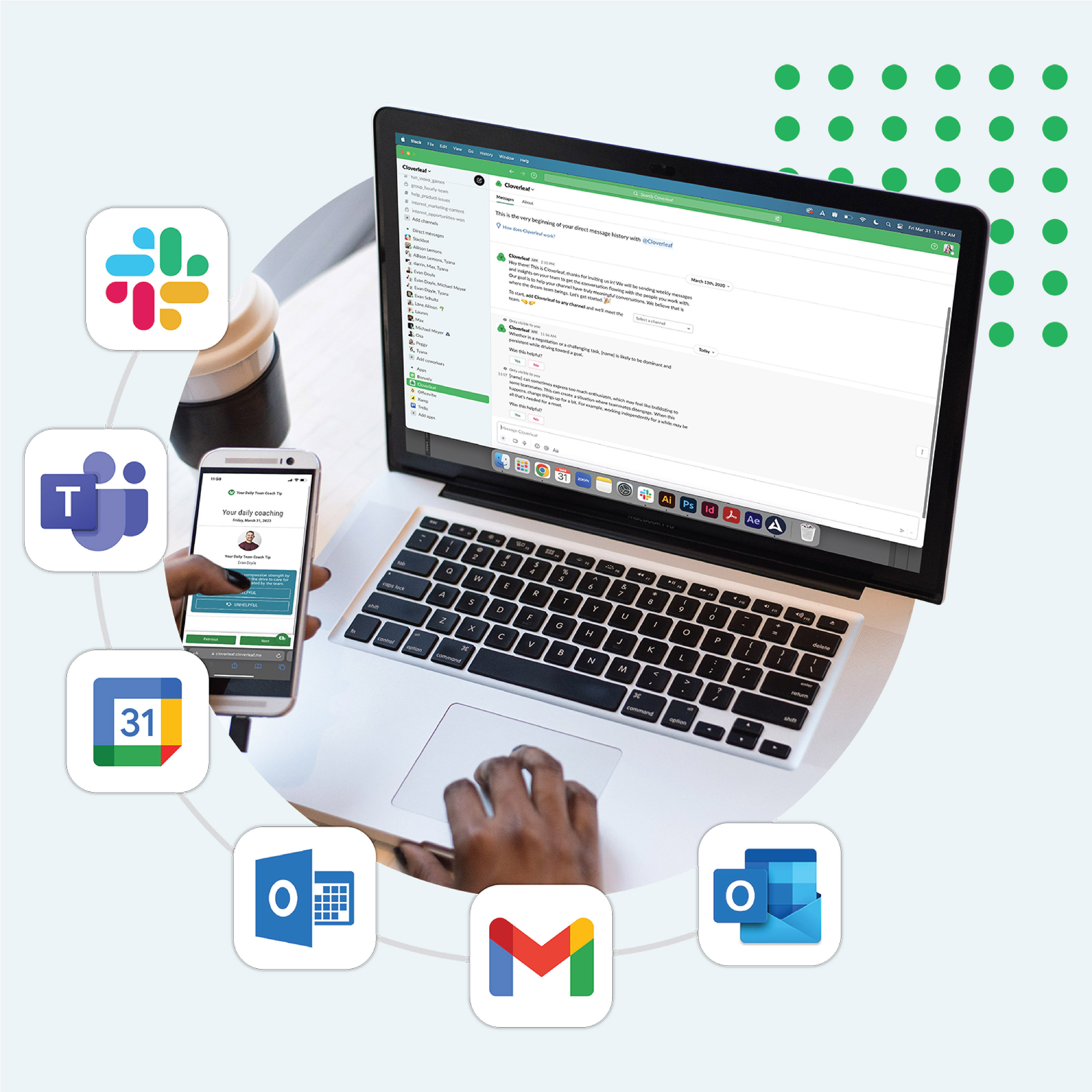
Reflections
Personalized prompts to spark introspection for application and growth.

Side-by-Side Comparisons
Reveal similarities and differences among team members to improve collaboration.
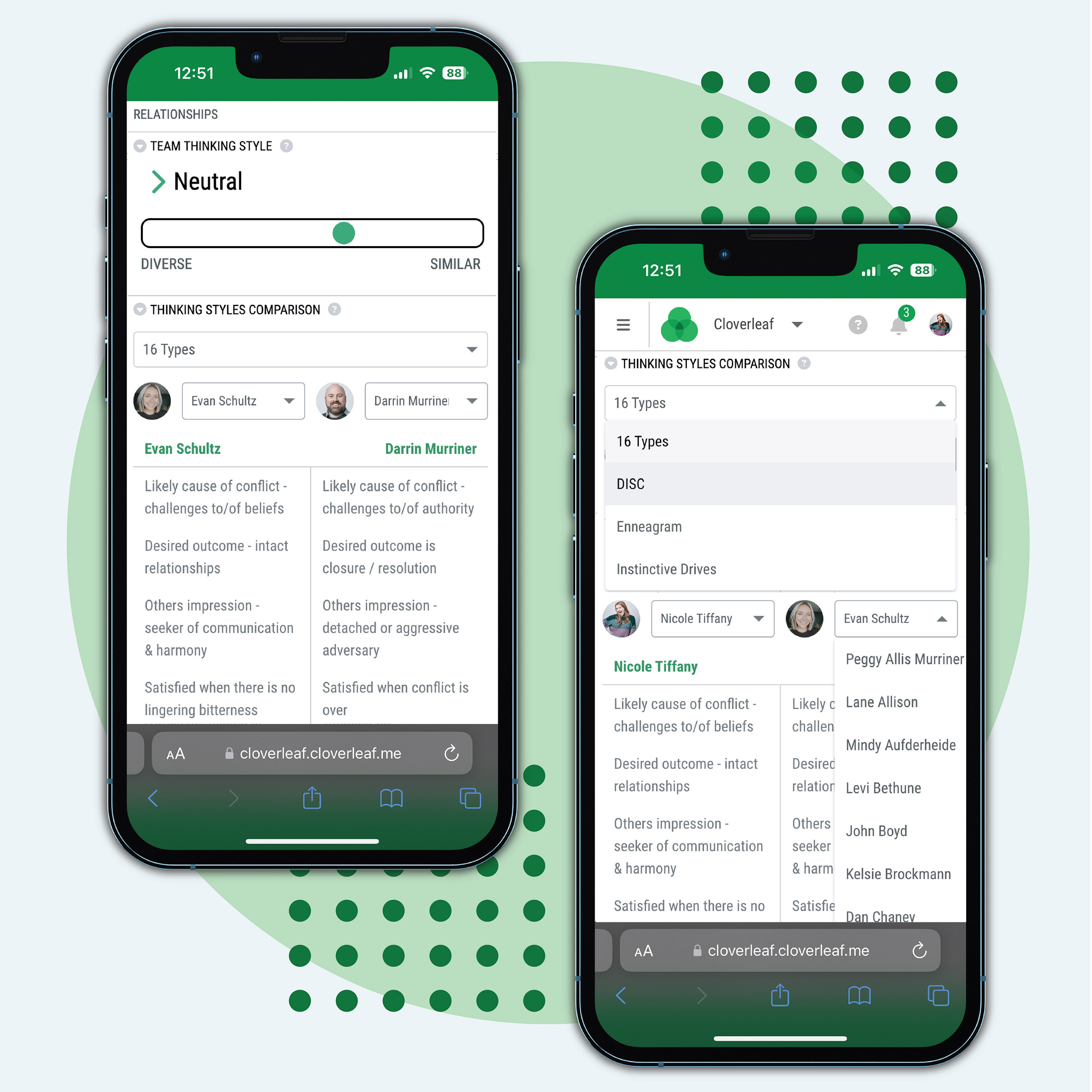
Team Dashboard
A comprehensive view of your team’s behaviors, strengths, and areas to develop.

Why Use Personality Tests Within The Workplace?
The Purpose of Personality Tests For Employees
Ideally, personality tests help organizations provide a common language, improve communication, reduce tension, reveal strengths and weaknesses, and identify growth opportunities. With Cloverleaf’s Automated Coaching™, these benefits are not just theoretical—they become a dynamic part of your team’s everyday interactions.
When employees understand their personality traits and those of their teammates, they can approach each other more effectively. This can transform potentially tense situations into constructive conversations. Cloverleaf brings these insights to life by delivering personalized coaching tips that guide employees on how to interact based on real-time contexts and the people they will interact with that day.
Assessments are tools for personal and professional development. They help individuals understand themselves, manage their behavior, and learn how to adjust their communication style according to their teammates’ preferences. Cloverleaf ensures these insights are continuously reinforced through ongoing coaching, making personal and professional growth a daily practice.
8 Benefits of Personality Assessments in the Workplace
-
Increase Communication: Personality assessments can build self and other awareness. This understanding helps people express their needs more clearly and work more effectively towards shared goals. Improved communication leads to fewer misunderstandings and smoother interactions, creating a more cohesive team environment.
-
Encourage Collaboration: Teams can more easily collaborate by understanding each team member’s unique strengths, motivations, and communication styles. When team members appreciate each other’s contributions, they can work together more effectively, leveraging diverse perspectives to achieve common goals.
-
Personal and professional development: Self-awareness gained from personality assessments can be a catalyst for personal and professional growth. Individuals can identify their strengths and areas for improvement and set goals that align with their natural talents and preferences.
-
Psychological safety: When team members feel understood and can communicate in their most natural state, they experience a higher level of psychological safety. This safe environment encourages open dialogue, innovation, and risk-taking, which are essential for a thriving workplace.
-
Strengthen Trust: Understanding each other’s personalities and motivations helps build stronger relationships and trust within the team. When team members know what drives their colleagues, they can empathize with different perspectives and build a more supportive and cohesive environment.
-
Boost Productivity: Teams can enhance productivity and performance by leveraging each person’s strengths and adapting communication styles to their needs. When individuals work in ways that align with their natural abilities, they are more efficient and effective, driving better results for the organization.
-
Employee Satisfaction: Encouraging individuals to utilize their strengths and align their work with their passions leads to higher job satisfaction and engagement. When employees feel valued for their unique contributions, they are more likely to be motivated and committed to their work, resulting in increased retention and a more positive workplace atmosphere.
-
Team Building: Understanding each person’s motivations and strengths helps create more balanced and effective teams. Managers can assign tasks that align with each member’s skills, recognizing and leveraging individual talents to optimize team performance. This ongoing process ensures that teams remain dynamic and adaptable to changing needs.
Automated Coaching™ ensures your team experiences these benefits to the fullest by turning static assessment data into dynamic, ongoing development tools. Automated Coaching™ integrates personality insights into daily workflows, providing real-time, personalized coaching tips that help individuals and teams continuously grow and adapt. By layering insights from multiple assessments, Cloverleaf offers a comprehensive view of each team member, enhancing communication, collaboration, and productivity. This continuous support ensures that the benefits of personality assessments are not just realized once but are reinforced and expanded over time, creating a more engaged, effective, and satisfied workforce.
It turns out the golden rule of “treat others how you want to be treated” can be taken a step further in the workplace. Instead, strive to “treat others how they want to be treated” to improve communication, strengthen relationships, and increase team effectiveness.
Personality Tests Help You Take The Golden Rule A Step Further
It turns out the golden rule of “treat others how you want to be treated” can be taken a step further in the workplace. Instead, strive to “treat others how they want to be treated” to improve communication, strengthen relationships, and increase team effectiveness.
Understanding your team members and the dynamics of your work environment is crucial for moving from self-awareness to successful collaboration. By recognizing that different situations may require you to adapt your natural tendencies—whether it’s being more urgent in communication, asking more questions, or carefully choosing your words when giving feedback—you can significantly enhance team collaboration.
Making these minor adjustments, where you invest extra energy to adapt to your teammates’ needs or the context of the situation, is part of personal development and self-management. The ultimate goal of providing personality tests for employees is to help them better understand themselves, their team, and their environment and manage their behaviors, expectations, and actions accordingly. This approach ensures the most positive and productive outcomes for both their team and themselves.
Recognizing your unique strengths and choosing to act differently out of kindness, generosity, collaboration, and the desire to achieve more can make you more effective and help you thrive both at work and in your personal life. Personality assessments are powerful tools that provide insight into these strengths and areas for growth, enabling you to make informed decisions and achieve desired outcomes.
Assessments are tools for understanding all your options, enabling you to make the best choices and achieve the desired outcomes. By increasing emotional intelligence, you can unlock your full potential and become a more effective leader, teammate, and individual. Cloverleaf’s Automated Coaching™ enhances these insights, transforming them from static data into dynamic, ongoing development tools. Integrated into your daily workflow, Cloverleaf’s coaching tips and personalized advice help you and your team continuously grow and adapt to become more engaged, collaborative, and high-performing.
Want To Use Personality Tests To Scale Development?
Find Out How To Quickly:
- Close the gap between learning and on-the-job application
- Personalize growth to individual strengths and needs
- Integrate learning so it is actually in the flow of work
- Develop human skills fast enough to solve business problems
- Prove the ROI of your development programs